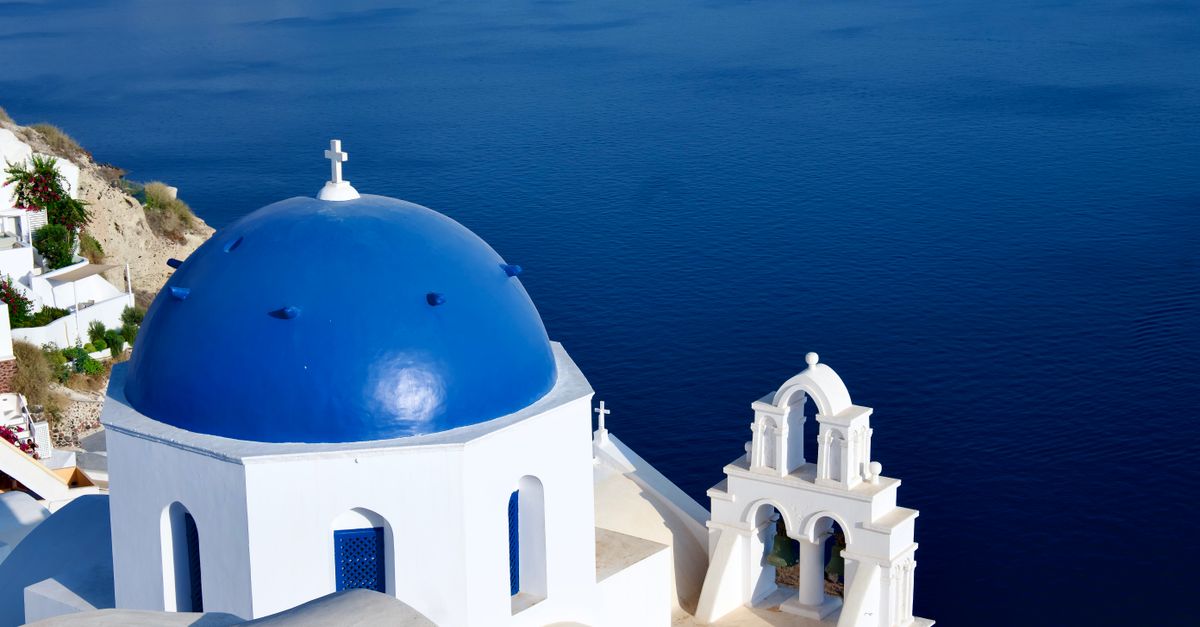
Cyclades
Photo: Yuliya Rudavska / Pexels
The Verdict
The iconic Greece — but the famous names are only part of the story, and the quieter Cyclades are often the better trip.
Why go
This is the Greece anchored in popular memory: whitewashed cubic houses, blue church domes, dry scrub-covered hillsides, and the Aegean opening out in every direction. Days here follow an unhurried, salt-caked rhythm dictated by ferry schedules, sheltered coves, and shaded taverna courtyards. Travelers spend their mornings navigating flagstone alleys or coastal paths, their afternoons on windward or leeward beaches, and their evenings lingering over local goat cheeses, chickpeas baked in earthenware, and carafes of dry white wine. The trade-off is stark between reputation and reality. High-profile ports like Santorini and Mykonos face crushing cruise ship traffic, inflated dining bills, and intense summer heat. The archipelago works best when you look past the headliners toward islands like Naxos, Sifnos, or Milos, where traditional village life, uncrowded swim spots, and agricultural heritage remain intact beneath the sun-bleached landscape.
Understand the place
The archipelago most people picture when they think of Greece: whitewashed cube houses, blue domes, bare hills and the deep Aegean blue.
Where to swim
Beaches

Sarakiniko
Blinding-white volcanic rock sculpted into smooth lunar curves above the sea, with a shipwreck and cliff-jumping spots nearby. Unlike any other beach in Greece.
“Essential if you're on Milos — a lunar landscape of white volcanic rock bent into smooth curves above the sea, unlike any beach in Greece.”

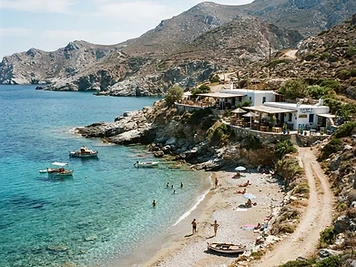
Agali Beach
A sandy-pebble cove on the road between Chora and Ano Meria, with clear water and a few tavernas built into the slope.
“A small cove with tavernas on the cliff behind it, and the easiest good swim on Folegandros.”

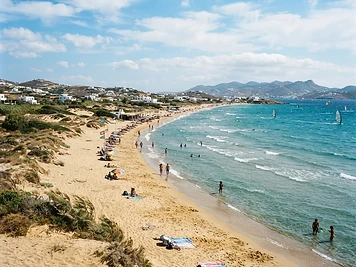
Chrissi Akti (Golden Beach)
A long sandy beach on the south-east coast of Paros, and the island's windsurfing centre when the meltemi blows.
“Paros' best sand, with a bar scene that is about boards rather than posing. Windsurfers get the afternoon; swimmers get the morning.”

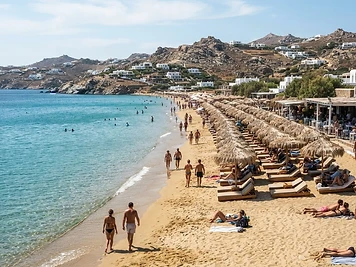
Elia Beach
A broad south-coast beach of golden sand, with sunbeds along the back and enough length to escape them.
“The best of the south-coast beaches for a full day: sand, clear water, and enough space to get away from the rows of umbrellas.”

Firiplaka
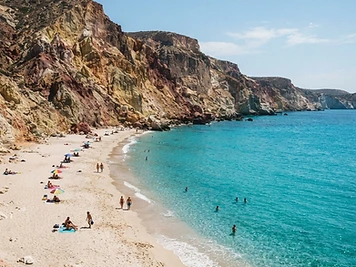
A pale-sand beach under towering volcanic cliffs of ash-white, ochre and rust, in the south of Milos.
“The most beautiful beach on Milos, and there is no shade of any kind. Bring water, bring an umbrella, leave before four.”

Galissas Beach
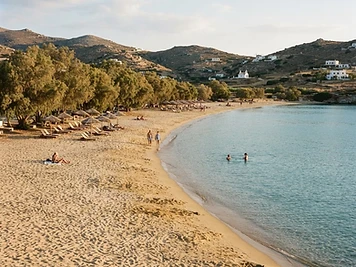
A wide south-facing sandy bay on the west coast of Syros, shallow and organised, fifteen minutes by bus from Ermoupoli.
“The best sandy beach on Syros for swimming, and the one the town buses actually reach.”

Katergo Beach
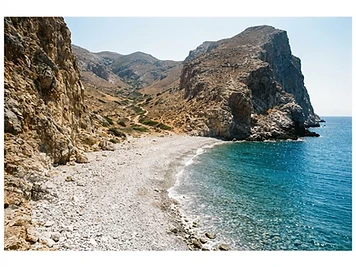
A remote pebble beach at the end of a dry valley on Folegandros, reached by boat from the port or by a rough path from Chora.
“Pebbles, deep blue water and cliffs on both sides — the best beach on Folegandros and one of the best in the Cyclades.”

Kini Beach
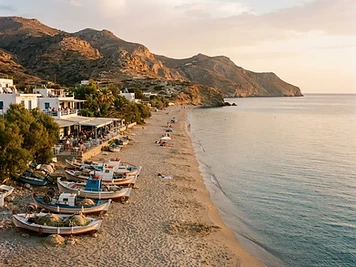
A broad sandy beach on the west coast of Syros with fishing boats at one end, tavernas behind and the sun setting over the water.
“A long sandy beach facing west, quieter than Galissas, with the sunset straight down the bay.”
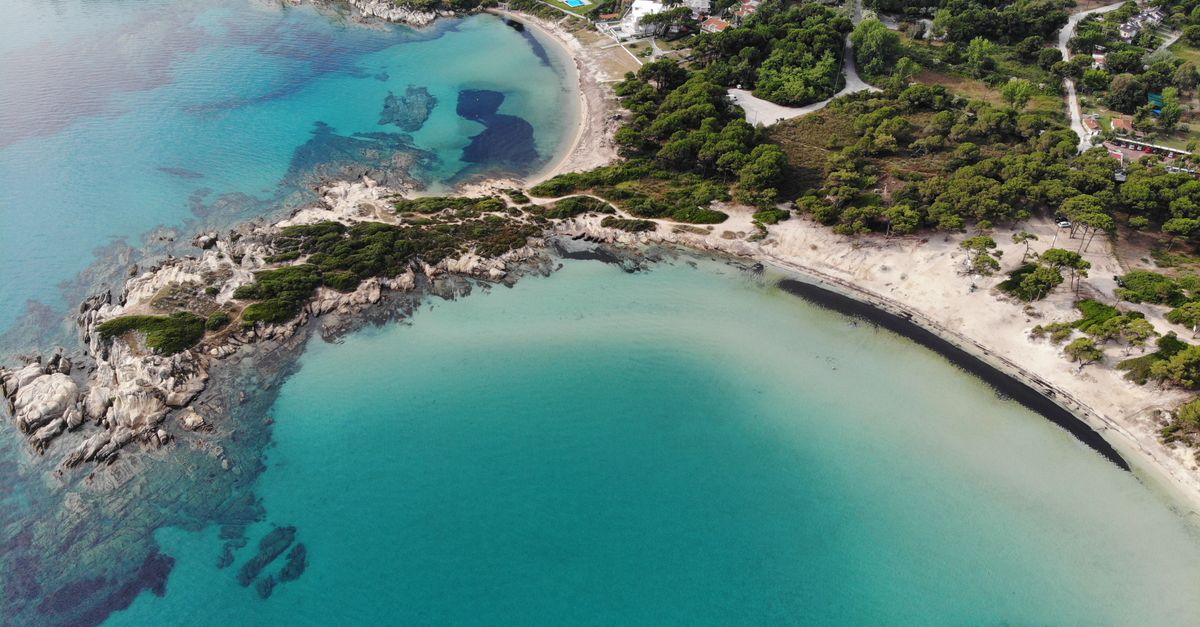
Kolymbithres
Rounded granite boulders carving out small sandy coves and natural pools. Paros' most distinctive beach, looking more sculpted than natural.
“Recommended — smooth granite boulders forming sculpted sea pools, the most distinctive beach on Paros.”

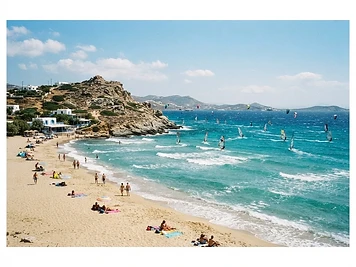
Mikri Vigla
Two sandy beaches separated by a low headland on the west coast of Naxos, and the island's windsurfing centre.
“Naxos' best all-round beach: sand, clear water, and a headland that gives you a choice between wind and shelter.”
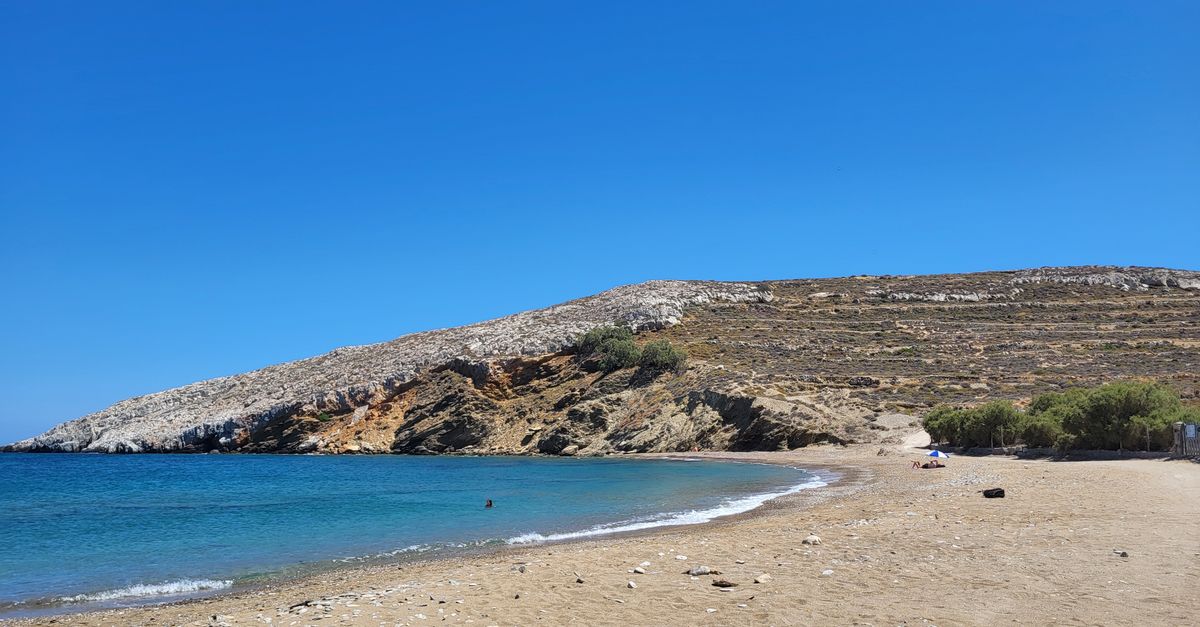
Plaka Beach
Long, easy stretch of soft sand and shallow water with tavernas and rooms behind it. One of the Cyclades' most relaxed beaches, and a reason to base in Naxos.
“Recommended — one of the longest, easiest sandy beaches in the Cyclades, and a reason to base in Naxos.”

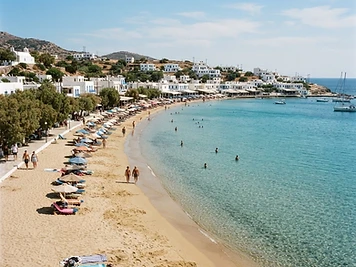
Platis Gialos
The easiest long beach on Sifnos: sand, shallow water, tavernas at the back and a bus from Apollonia.
“Not the island's most beautiful beach, but the most useful one. Come by bus, eat at the water, swim all afternoon.”

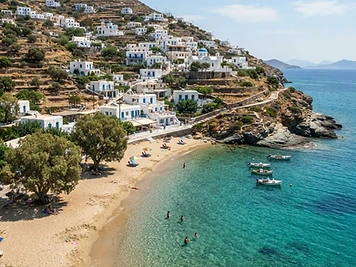
Livada Beach
A shallow sheltered sandy cove with tamarisk shade below Tinos Town, reached on foot or by a short drive.
“A small sandy cove twenty minutes’ walk from the port — convenient, and accordingly full in August.”
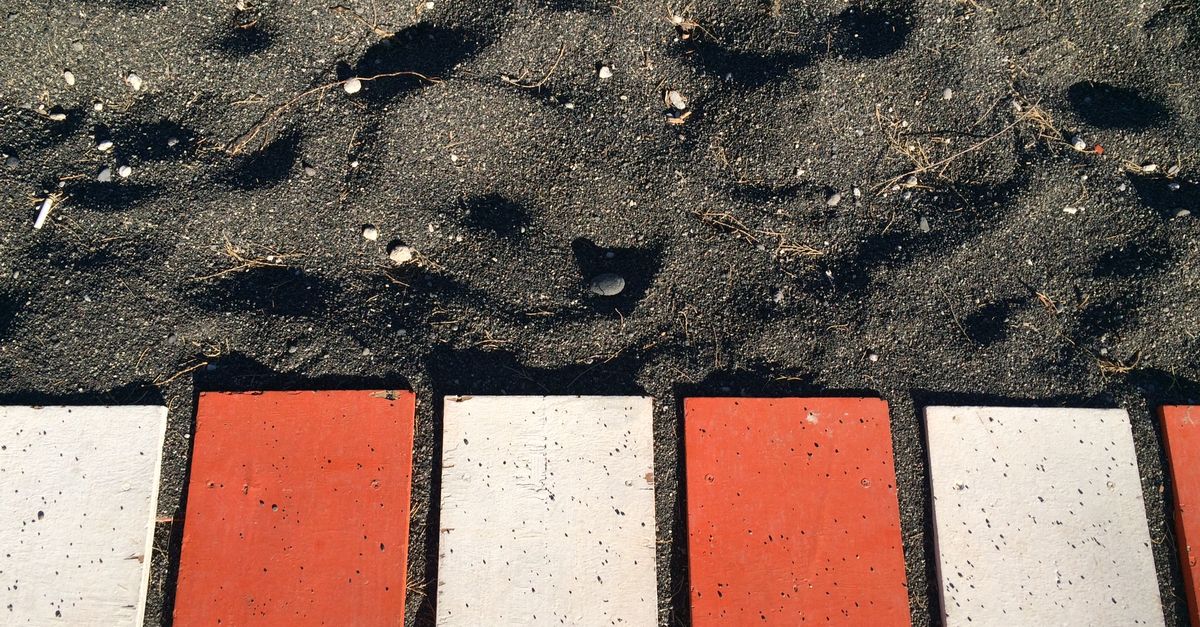
Perissa Beach
Long stretch of black volcanic sand backed by Mesa Vouno, with beach bars and sunbeds. Santorini's best proper beach, though beaches aren't why anyone comes here.
“Optional — the best beach on Santorini if you want sand, but beaches are not why you come to this island.”

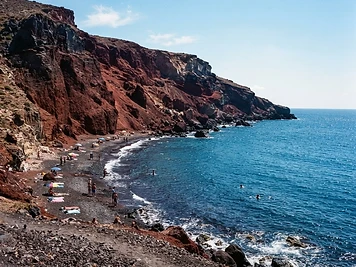
Red Beach
The rust-red cliff and dark pebble cove below ancient Akrotiri, reached on foot around the headland.
“The cliffs earn ten minutes and no more. The beach is pebbles, the crowds are constant, and the rockfall notices are not decorative.”
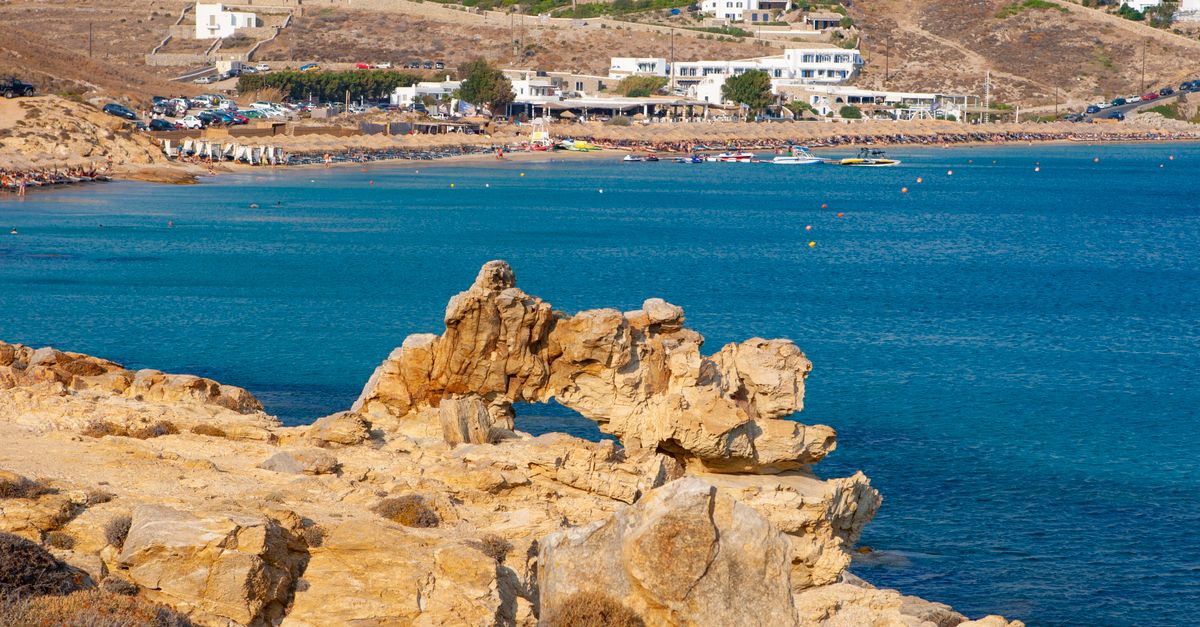
Super Paradise Beach
Beach clubs, music and drinks define this stretch of sand more than the swimming does. Come for the scene that defines a Mykonos beach day, not for quiet.
“Optional — the beach is fine; the scene is the point. Come for the beach clubs, not a quiet swim.”

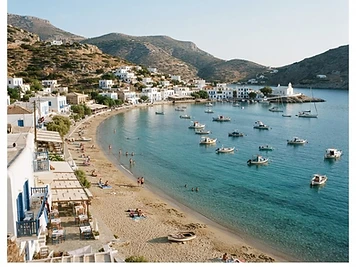
Vathi
A deep, protected inlet in the south-west of Sifnos, with genuinely still water and houses built around the bay.
“The island's calmest swim, and its quietest evening. Worth the drive when the meltemi is up and everywhere else is windy.”
What to eat & drink here
Food & drink

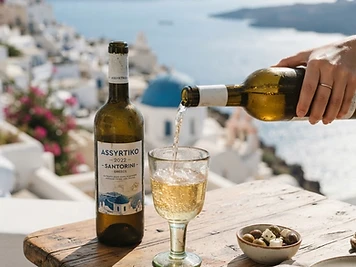
Assyrtiko
Greece's king of white grapes, defined by high acidity and electric minerality. On Santorini's volcanic soils it turns saline and unmistakable.
“This is the king of Greek white grapes, delivering high acidity and electric minerality.”

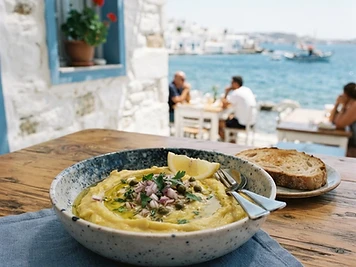
Fava
Split pea puree topped with onions, capers, and olive oil, earthy and velvety. A legume dish treated with enough care to feel like fine dining.
“A velvety split pea puree that elevates legumes to fine dining status.”

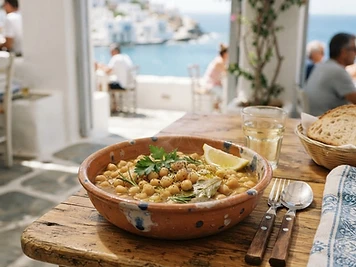
Revithada
Chickpeas baked for hours in clay pots in wood-fired ovens, Sifnos' signature dish. Simple ingredients, slow time, and nothing else needed to make it work.
“A slow-baked chickpea stew that is the cornerstone of Sifnos' culinary identity.”

Santorini Wine (Assyrtiko)
Assyrtiko grown in basket-trained vines on volcanic soil, among the world's great whites. Mineral, saline and bone-dry, and the reason wine belongs on a Greece itinerary.
“Essential if you drink wine — the volcanic Assyrtiko grown on Santorini is among the world's great white wines, and the reason wine belongs in a Greece trip.”

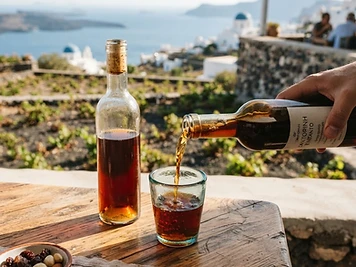
Vinsanto
Sun-dried Assyrtiko turned liquid gold on Santorini. High acidity keeps it from tipping into cloying, even at full sweetness.
“The ultimate expression of sun-dried Assyrtiko grapes.”
The old world
History & archaeology

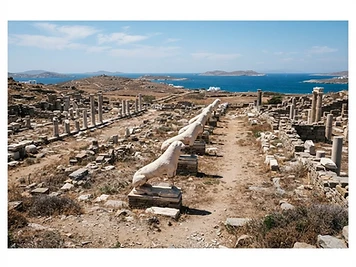
Delos
A whole ancient city on a small island off Mykonos: sanctuary, theatre district, houses with mosaics, and no modern town on top of any of it.
“The best half-day you can spend from Mykonos, and hardly anyone plans for it. Go on the first boat and leave before the last one.”

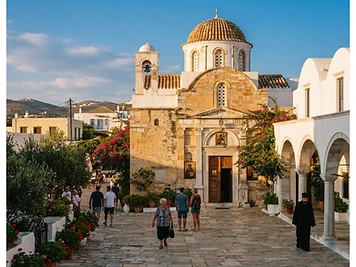
Panagia Ekatontapyliani
One of the oldest surviving churches in Greece, in the middle of Parikia, built and rebuilt from the fourth century onwards.
“The reason to spend an evening in Parikia rather than driving straight to Naoussa. An hour, and go in the late afternoon.”

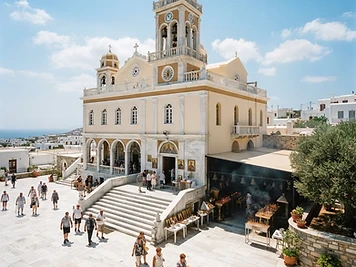
Panagia Evangelistria
The pilgrimage church of Tinos, holding the icon of the Annunciation found on the island in 1823, with a treasury of votive offerings.
“The most important pilgrimage church in Greece after the icon it holds — busy, and genuinely moving whatever you believe.”
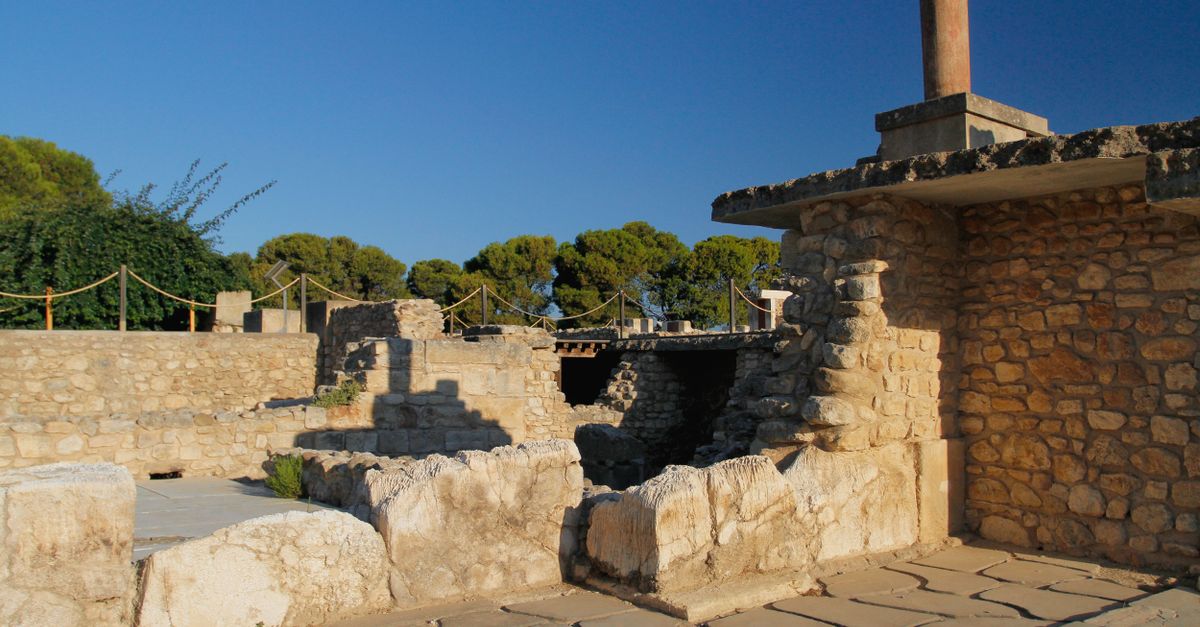
Akrotiri Archaeological Site
A Bronze Age Minoan settlement preserved under volcanic ash — the 'Greek Pompeii' of the Cyclades.
“Recommended — the one site on Santorini that adds real depth beyond the caldera view.”

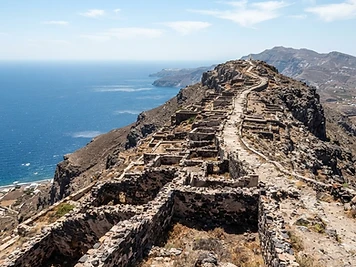
Ancient Thera
A Greek and Roman city strung along a narrow ridge 400 metres above the sea, between Perissa and Kamari.
“The only place on Santorini where the island's history outweighs its view, which is saying something given the view.”

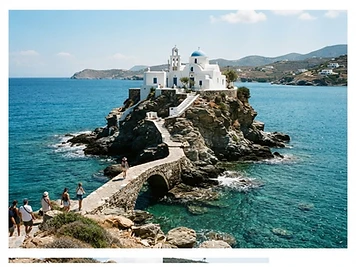
Chrysopigi Monastery
The monastery on its own rock at the mouth of a bay, joined to the shore by a small bridge, and the image everyone associates with Sifnos.
“Go early, when the water below is still flat and the coaches have not arrived. It is the best twenty minutes on the island.”

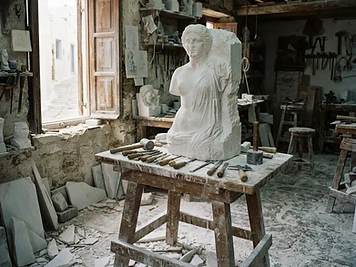
Museum of Marble Crafts
A museum in Pyrgos on Tinos showing how the island quarries, carves and finishes marble, from the tools to the finished sculpture.
“The best explanation anywhere of why Tinos looks the way it does, told through the tools and the work.”

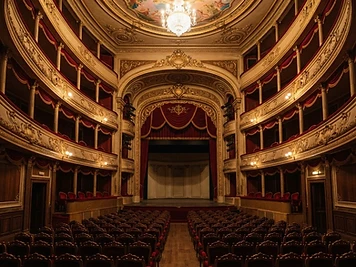
The Apollon Theatre
A small ornate theatre of 1864 on the main square of Ermoupoli, modelled on La Scala and barely changed since.
“A pocket-sized nineteenth-century theatre with gilded boxes and a painted ceiling, still in use and still worth an evening.”

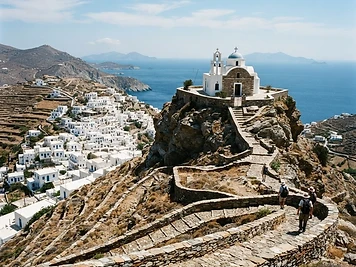
The Church of Panagia
The church of Panagia on its rock above Chora on Folegandros, reached by a steep paved zigzag path in about twenty minutes.
“A whitewashed church on a rock above Chora, reached by a zigzag path, with the best view in the Cyclades to show for it.”

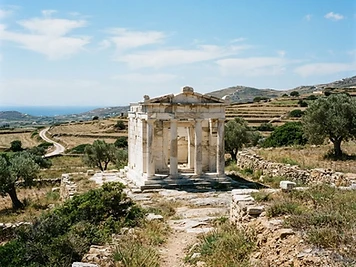
The Temple of Demeter at Sangri
A small fourth-century BC marble temple rebuilt from its own fallen stones in the middle of farmland inland from Naxos Chora.
“Worth it for the setting as much as the ruins: a temple in a working field, with nobody there.”

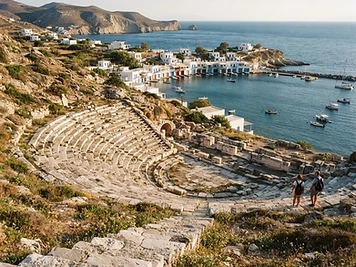
The Ancient Theatre of Milos
A small Roman theatre cut into the hillside above the water, looking down on the painted boat houses of Klima.
“Twenty minutes of ruins, then the best hour on Milos: the fishing village below it at sunset.”

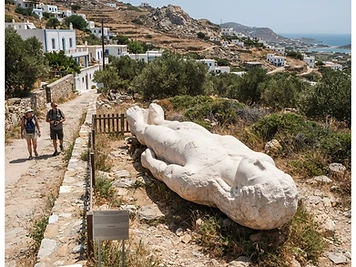
The Kouros of Apollonas
An unfinished ten-metre marble statue of a young man, abandoned in the quarry where it was cut about 2,700 years ago.
“A strange, human thing to stand next to. Worth it only if you are already driving the north coast.”
Beyond the built
Outdoors & nature

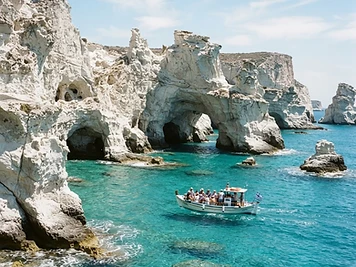
Kleftiko
White cliffs, arches and sea caves at the south-west tip of Milos, reachable only by boat.
“Milos' one unmissable boat trip. Book a small boat, not a big one, and go in the morning before the wind gets up.”

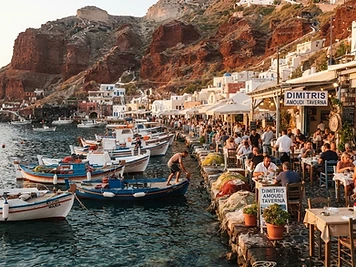
Amoudi Bay
The small harbour below Oia, reached by three hundred steps down the cliff, with fish tavernas at the water and deep clear water to swim in.
“The best swimming on the caldera and the only place below Oia the day-trippers do not reach. Take the steps, not a donkey.”

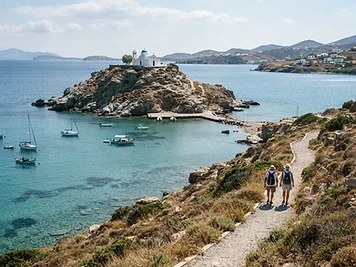
Paros Park
A protected headland with walking paths, a small monastery and three quiet swimming bays, on the coast south of Naoussa.
“The antidote to Naoussa harbour at four in the afternoon: paths, low scrub, and bays where you can actually find space.”

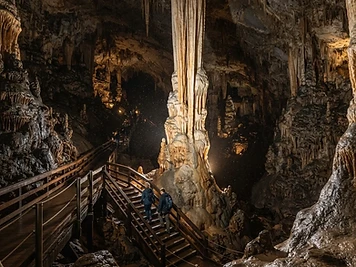
The Cave of Antiparos
A deep limestone cave on the hill above the south coast, with a stone staircase, a chapel at the entrance and an enormous central stalactite.
“A single enormous chamber you walk down into, with a stalactite that has been collecting carved names since the 1700s.”

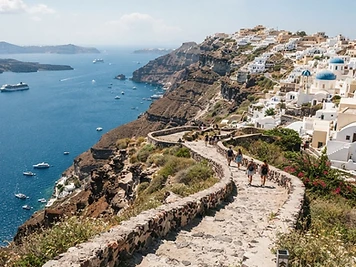
The Fira to Oia Caldera Path
Walking the ten kilometers from Fira to Oia along the caldera rim is the only way to escape the cruise ship chaos. Start at sunrise to navigate the jagged volcanic path before the sun and the tour groups become unbearable.
“This hike justifies the entire trip to Santorini if you commit to the early start time.”

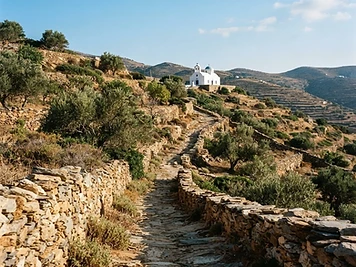
The Old Paths of Sifnos
Sifnos maintains an extensive network of stone-paved paths that connect its white-washed villages. Walking between Apollonia, Artemonas, and the coast provides a structured way to experience the island architecture while stopping at tavernas for genuine local food.
“The trail system elevates Sifnos above other islands because the walking serves a functional purpose.”

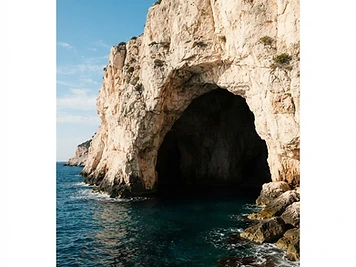
Chrysospilia
A cave in the cliff face north of Karavostasis, used in antiquity and inscribed with the names of young men, approachable only by boat.
“A sea cave on the cliff north of the port with the names of ancient boys scratched inside — rarely reachable, and that is the point.”

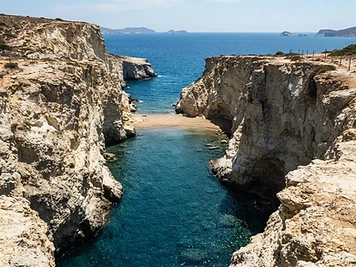
Papafragas
A narrow slot cut through pale volcanic rock to a hidden cove, on the north coast road between Pollonia and Plaka.
“A ten-minute stop that photographs far better than it swims. Look, take the picture, move on.”

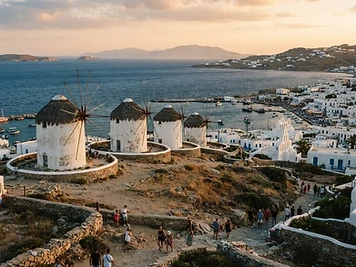
The Kato Mili Windmills
Five thatched windmills on the ridge above Mykonos Town, built to grind grain for the port below.
“A five-minute walk for the best free view in Mykonos. Go in the last hour of light and skip Little Venice.”
Places within

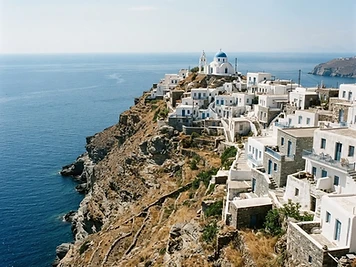
Sikinos
A near-empty Cycladic island with one hilltop Chora and a port that is little more than a beach.
“Two nights is enough here, and two nights is the entire point.”

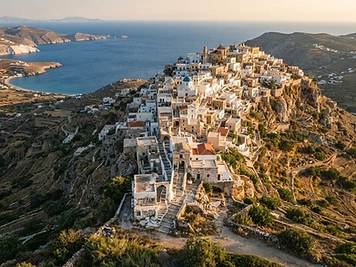
Kea
The Cyclades island Athenians keep for weekends, an hour from Lavrio and almost unknown abroad.
“Do it in two nights from Athens: mountains, a stone Chora inland, and a coast road with nobody on it.”

Koufonisia
Two tiny islands in the Small Cyclades with the clearest water in the group and almost nothing built on them.
“Book early, bring no plan, and walk to a different beach every day.”

Ios
The Cyclades island that made its name on nightlife, and turned out to have one of the group's best long beaches.
“Go for Mylopotas and stay for the evenings — but be honest with yourself about which of the two you actually came for.”

Andros
The greenest and least-visited of the large Cyclades, with a waymarked trail network and a contemporary art museum.
“The Cyclades for hikers: mountains underfoot, water in the valleys, and paths with nobody on them.”

Amorgos
A long, mountainous Cycladic island whose monastery is built into a cliff three hundred metres above the sea.
“The Cyclades for walkers and divers, with a crossing long enough to keep the crowds off it.”

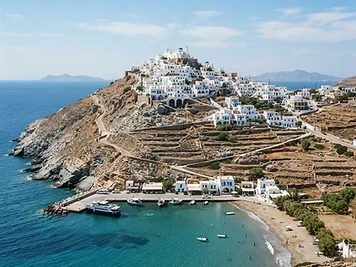
Serifos
A quiet Cycladic island west of Sifnos, its chora on a hill above the port, with iron-mining ruins and long empty beaches.
“A bare, iron-mining Cycladic island with a white chora on the hill and beaches almost nobody uses.”

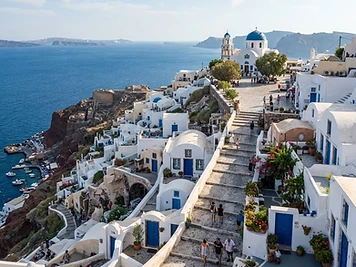
Serifos Chora
The hill village of Serifos, its houses rising to a square and a church with the port of Livadi and the bay below.
“A white chora on a hill above the port, with a square at the top and a view that explains the whole island.”

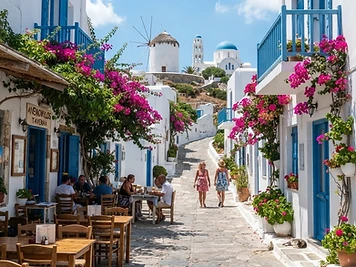
Antiparos Chora
The single village of Antiparos, a main street of shops and tavernas running to a square, with a hill and a windmill behind.
“One street, one square and a windmill — the whole village is a short walk, and that is the point.”

Antiparos
A small, low Cycladic island facing Paros, with a single village, good beaches and a cave that goes deep into the hill.
“The smaller island across the strait from Paros: one village, one very large cave, and a summer crowd that mostly goes home in the evening.”

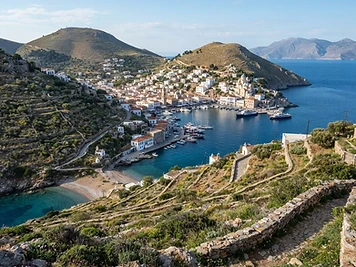
Syros
The administrative capital of the Cyclades — a nineteenth-century port town of marble squares and pastel houses, with Ano Syros above it and sandy beaches a bus ride away.
“The Cyclades' working capital: a neoclassical port town with year-round life, a Catholic hill village above it, and beaches you can reach by bus.”

Tinos
The Cyclades' pilgrimage island — the great church of Panagia Evangelistria in the port town, and above it a marble-working hill country of terraced villages and granite boulders.
“Two islands at once: a pilgrimage town that fills with Greeks in August, and a marble-carving hill country that almost nobody visits. The villages are the reason to come.”
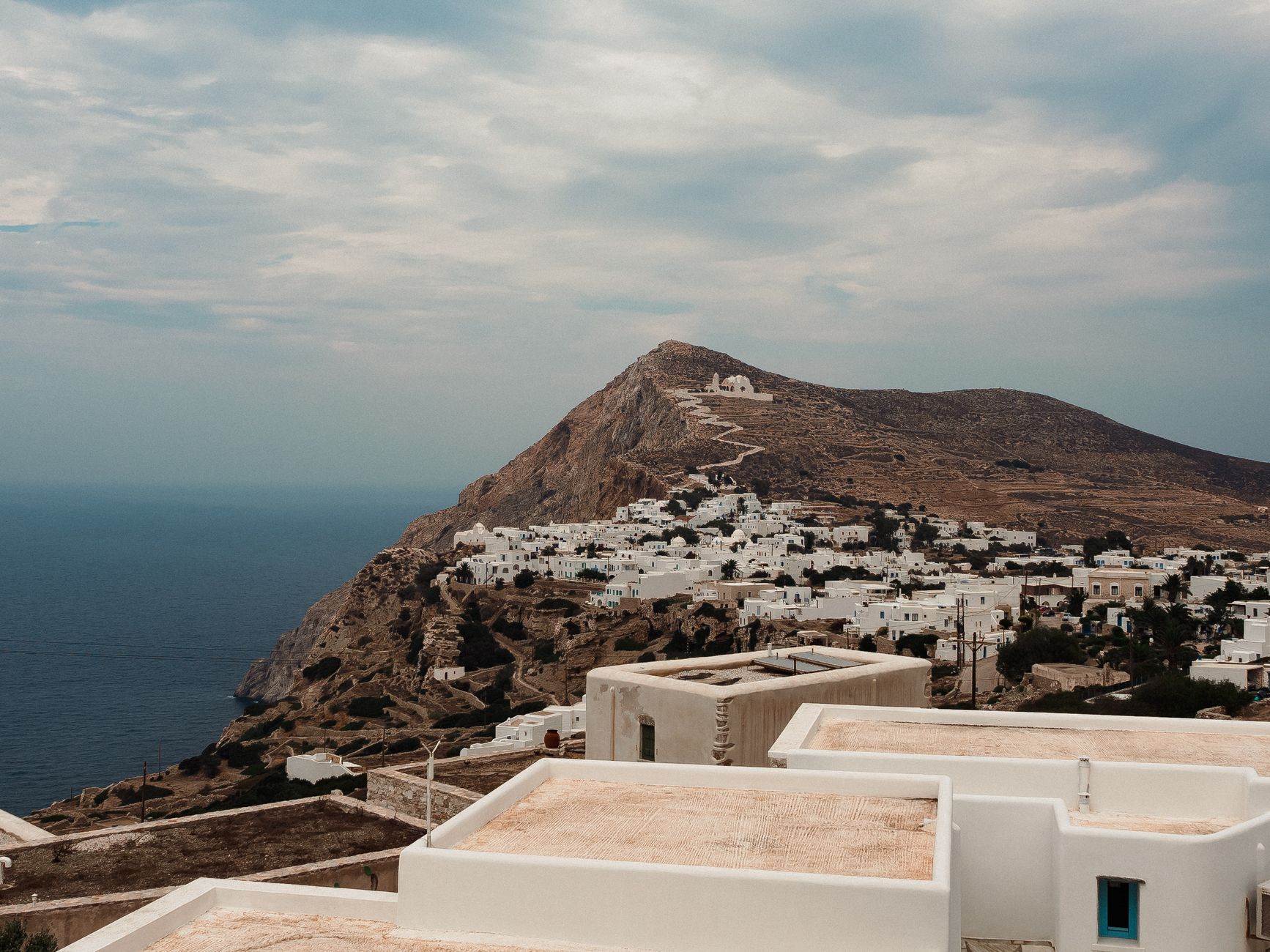
Folegandros
A small, dry, spectacular Cycladic island — its chora on the lip of a two-hundred-metre cliff, a medieval kastro, and a handful of beaches.
“The most dramatic small island in the Cyclades: a cliff-edge chora, three beaches worth the trip, and almost nothing else — which is the point.”
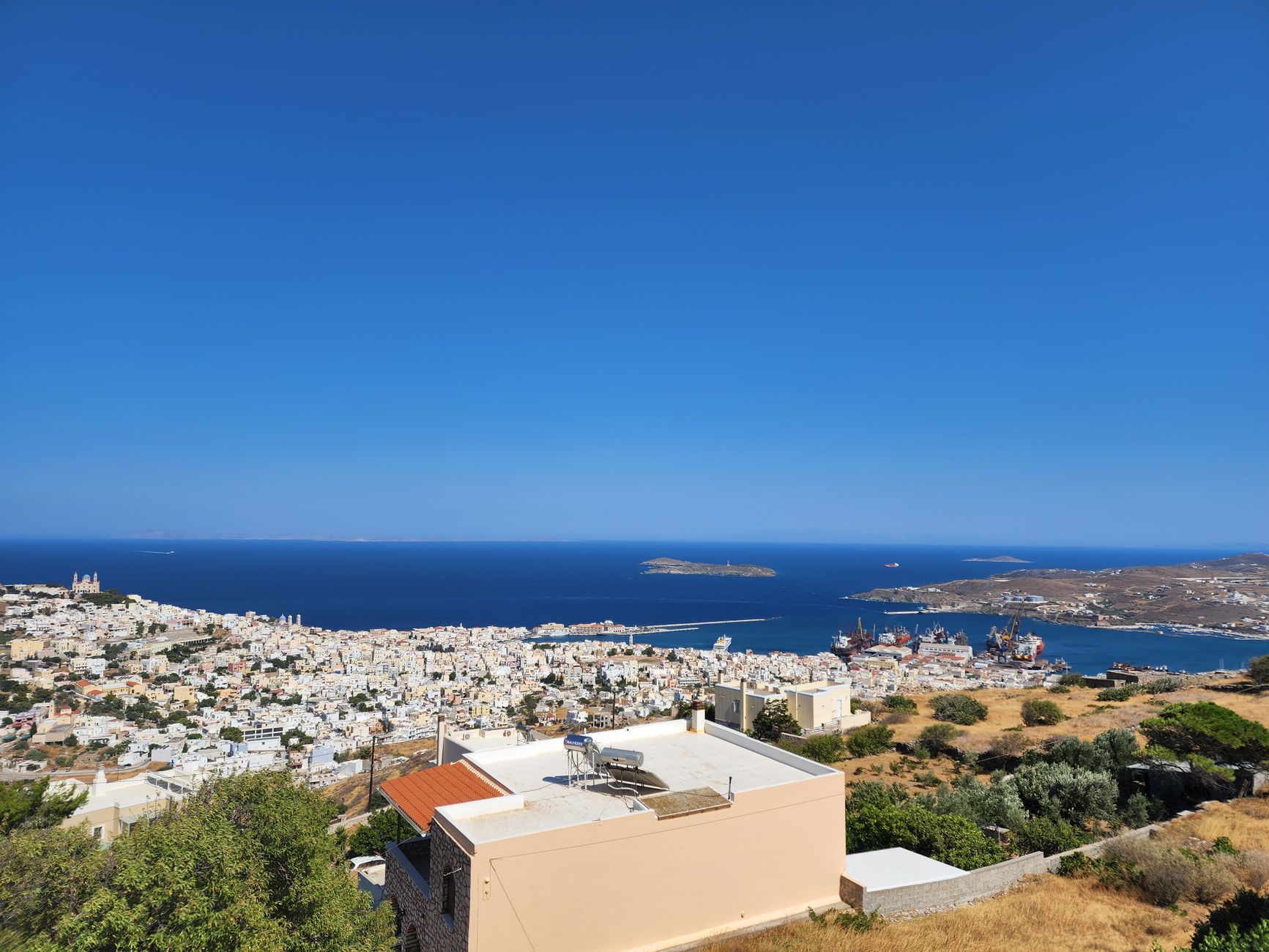
Ermoupoli
The capital of Syros and of the Cyclades — a neoclassical port town of marble paving and pastel facades, built on twin hills in the 1820s.
“The only Cycladic town that feels like a city, and a pleasant one: marble squares, arcades, a theatre, and a harbour that works all year.”

Ano Syros
The hilltop village above Ermoupoli, founded by Venetians in the thirteenth century and Catholic ever since, with stepped lanes and a cathedral at the summit.
“A Catholic, Venetian-founded village on a hill above the port — steep, lived-in, and the opposite of a Cycladic postcard, in a good way.”

Vaporia
The old shipowners' quarter of Ermoupoli — pastel neoclassical mansions on the slope between Ano Syros and the sea.
“Two streets of captains' mansions hanging over the water, and the best place in the Cyclades to swim at dawn inside a town.”
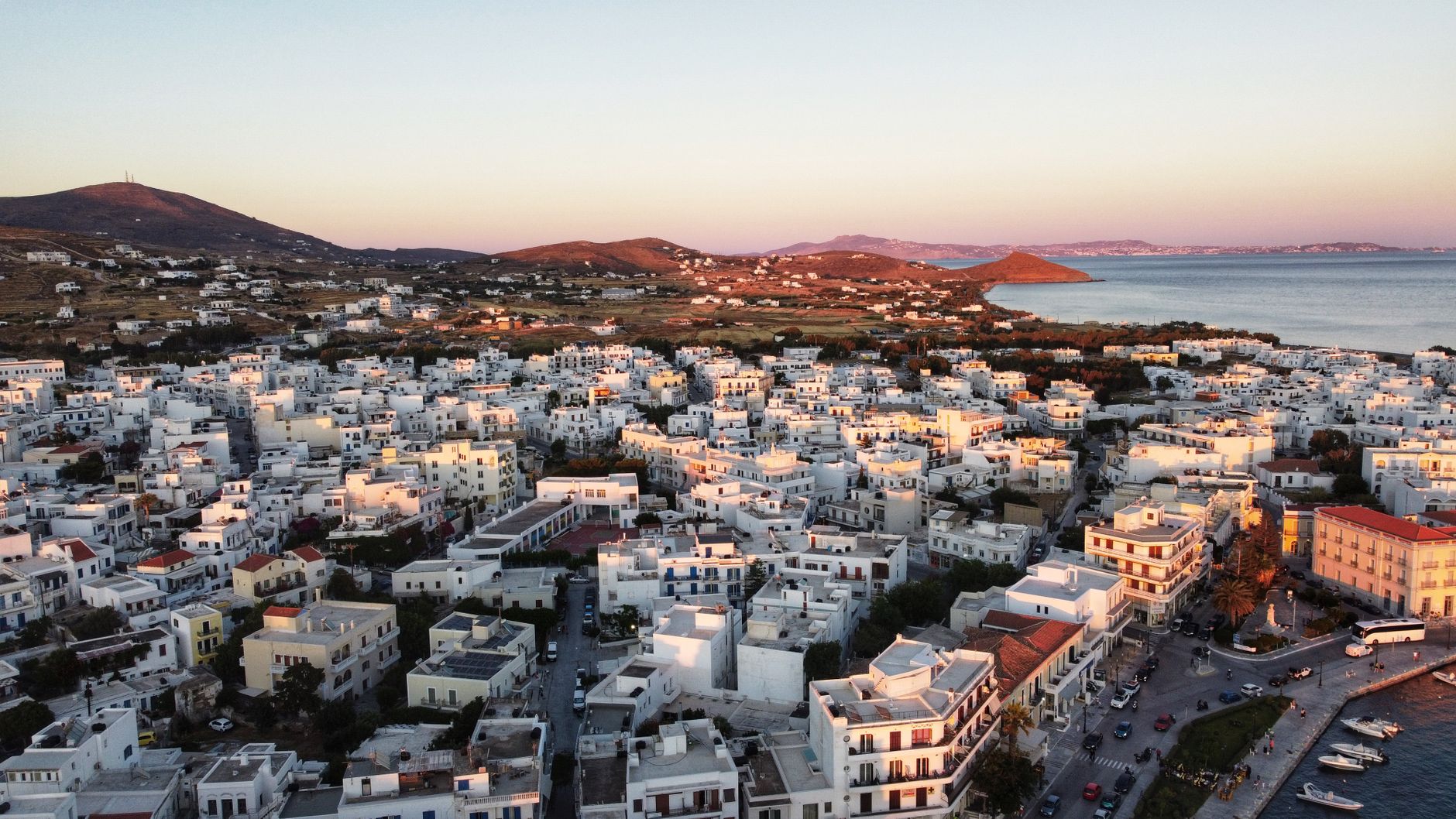
Tinos Town
The port and capital of Tinos, built around the pilgrimage church of Panagia Evangelistria, with marble paving and a busy waterfront.
“A working harbour town arranged around the country's most important pilgrimage church, and the only place on Tinos with real evening life.”

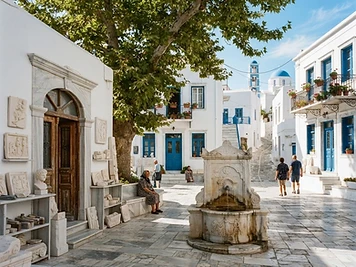
Pyrgos
A marble-working village on a slope above the south coast of Tinos, home of the sculptor Yannoulis Chalepas and still full of working studios.
“The marble village: paved in it, built in it, still carving it — the reason Tinos matters culturally.”
Kardiani
A quiet village built down a terraced hillside on Tinos, with arched passages, a spring in the square and a view straight down to the Aegean.
“A marble and white village stepping down a green slope on the west side of Tinos, with the sea directly below.”

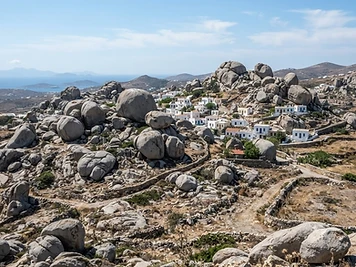
Volax
A tiny village on a plateau of enormous smooth granite boulders, and the island’s basket-weaving centre.
“A village dropped into a field of giant granite spheres — the strangest landscape in the Cyclades.”

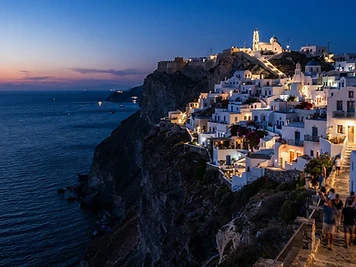
Chora
The chora of Folegandros, built along the lip of a two-hundred-metre cliff, with a medieval kastro at one end and the Panagia church above.
“One of the most beautiful villages in Greece, on the edge of a cliff, and the reason to come to Folegandros.”
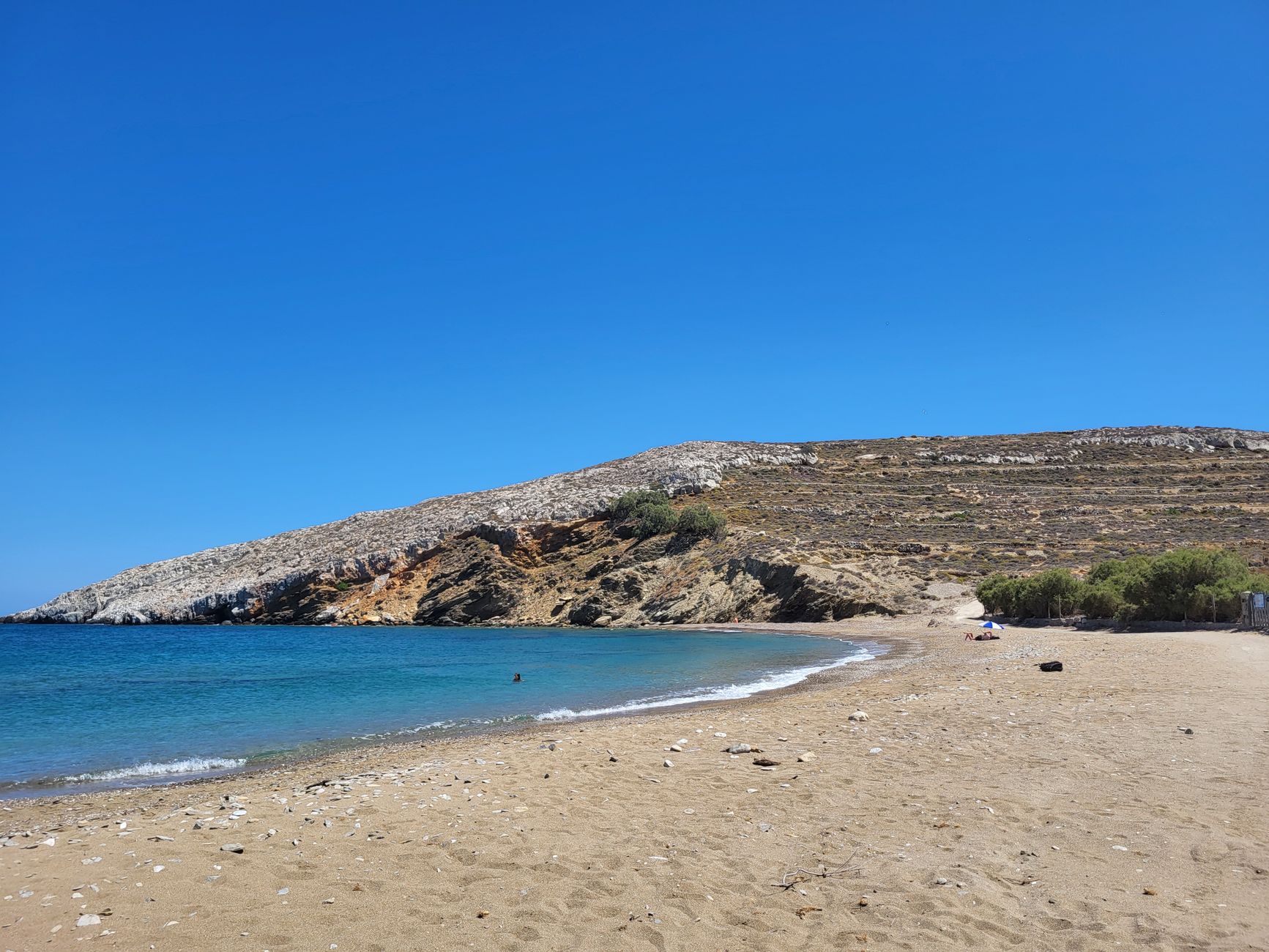
Karavostasis
The port of Folegandros, a line of tavernas along a small harbour with a beach at one end and a cave-riddled cliff to the north.
“The port: one street, a few tavernas and a small beach — you arrive, eat, and go up to Chora.”

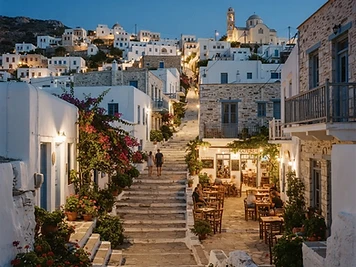
Apollonia
Sifnos has no coastal capital. Apollonia, its whitewashed hill town of lanes and squares, sits fifteen minutes inland from the ferry port.
“A working island town rather than a resort, and that is exactly why Sifnos still feels like itself. Base here, not on a beach road.”

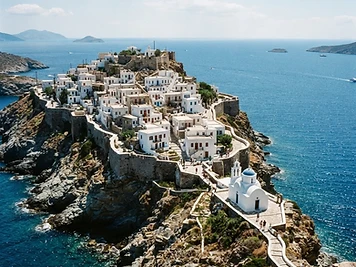
Kastro
A medieval village built over the edge of the sea on the site of an ancient acropolis, with houses forming the defensive wall.
“The oldest and strangest thing on Sifnos. Twenty minutes is enough for the church; an hour is what the lanes deserve.”

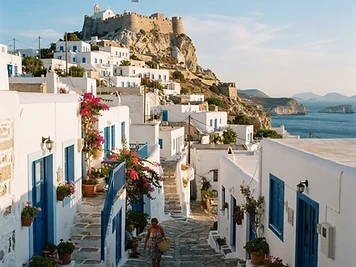
Plaka
The hilltop capital of Milos, above the port at Adamas, with the island's best sunset and its best lanes.
“Stay up in Plaka rather than down at the port. It is where Milos looks and behaves like the island everyone hopes it is.”

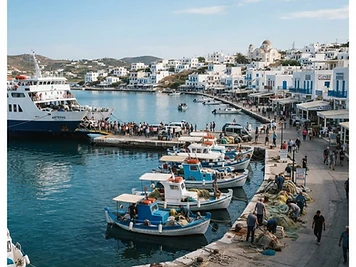
Adamas
The port town of Milos: where the ferries land, with the island's widest choice of restaurants and the best bus connections.
“The least beautiful place on Milos and the most useful. Stay here for one night either side of a ferry, not for a week.”

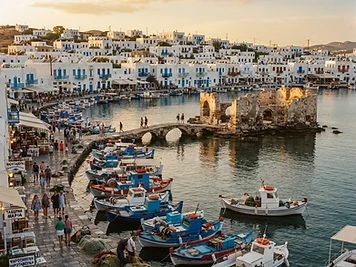
Naoussa
A fishing harbour in the north of Paros that became the best-looking town in the Cyclades without quite losing its port.
“Stay here rather than in Parikia. Naoussa has the harbour, the food and the evening, and Parikia has the ferry.”

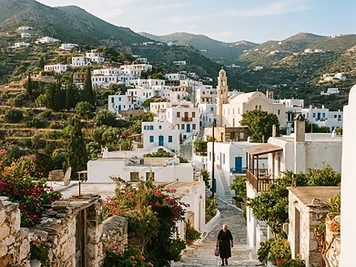
Lefkes
The old marble-paved capital of Paros, up in the hills in the middle of the island, with a Byzantine path running down to the coast.
“Where Paros stops being a beach island and becomes a mountain one. Come up for an afternoon, or stay if you want the island without the harbour.”

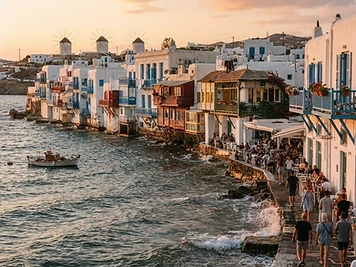
Little Venice
The strip of old town where houses hang directly over the water, with the sun setting straight into the sea beyond them.
“Balconies over the water and the loudest sunset crowd on the island. Worth one drink, not a whole evening.”

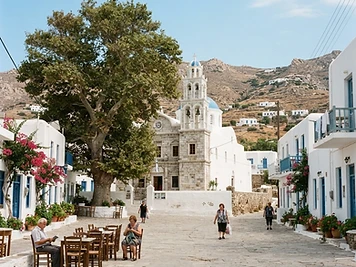
Ano Mera
The main inland village of Mykonos, with the island's largest monastery and a square that runs to its own rhythm.
“The real Mykonos: a working village inland where the island keeps living regardless of the season.”

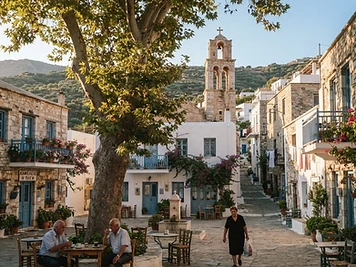
Chalki
A quiet inland village of stone houses, Byzantine churches and a plane-tree square on the road up to Apeiranthos.
“Stop here on the way up to Apeiranthos rather than instead of it. Lunch under the plane tree is the reason.”

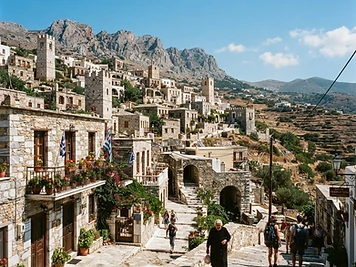
Apeiranthos
A marble-paved mountain village on the slopes of Mount Fanari, with its own dialect, its own museums and a long tradition of independence.
“The best inland stop on Naxos. Two hours, and eat while you are here.”

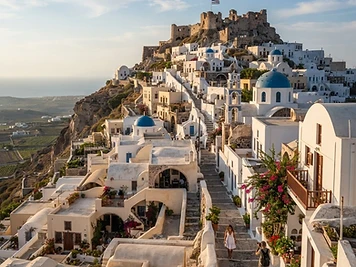
Pyrgos Kallistis
The highest village on Santorini, built in rings around a hill with a ruined Venetian castle at the top, away from the caldera.
“The one village on Santorini that behaves least like a resort, and the sane alternative to paying caldera prices in Oia.”

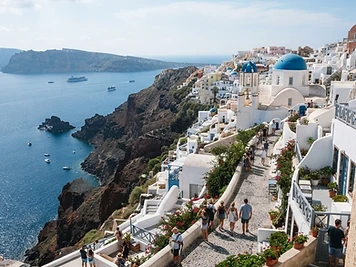
Imerovigli
The caldera village on the highest point of the rim, between Fira and Oia, with the best view of the rock at Skaros.
“All the drama of Oia with a fraction of the foot traffic. Stay here, walk to Fira in half an hour, and go to Oia by bus once.”
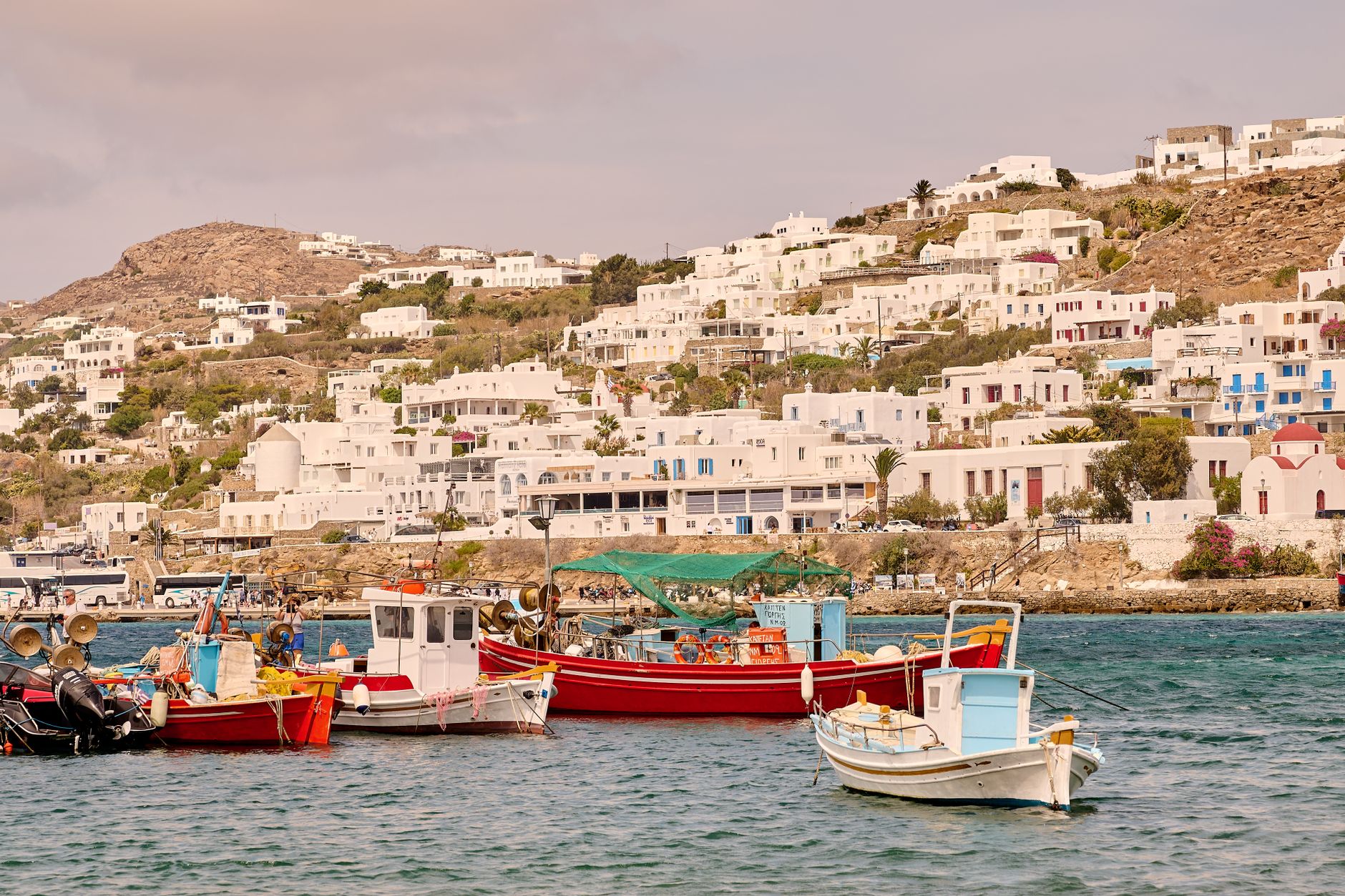
Mykonos Town
The Cyclades' nightlife capital: a maze of whitewashed lanes, Little Venice balconies over the water, and five windmills on the hill above.
“Worth it if you want beach clubs, bar crawls, and designer shopping — skip it if you want quiet or budget travel.”
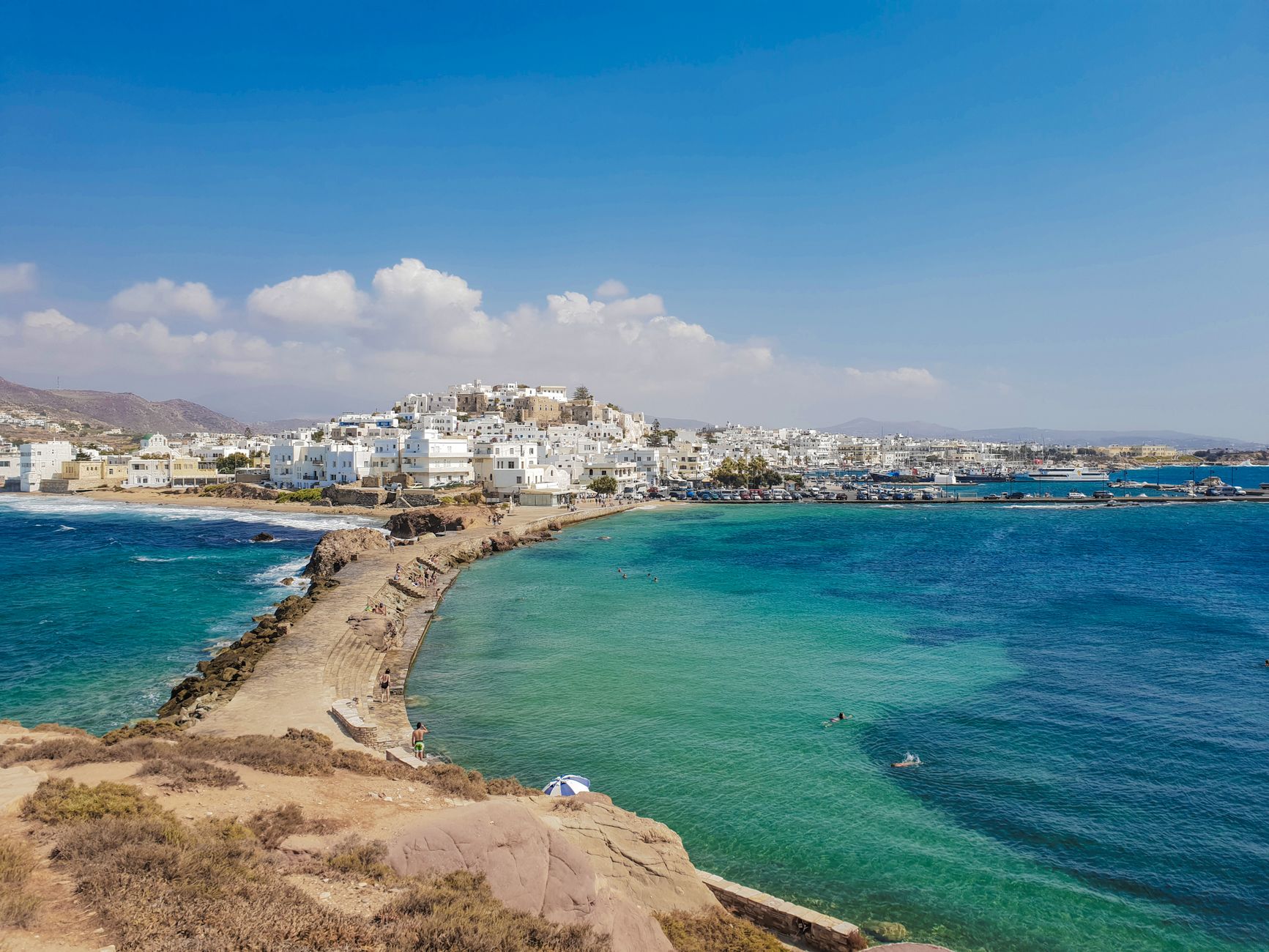
Naxos Chora
Naxos's working port town, stacked with a Venetian kastro over the old quarter and the Portara gate framing the harbor entrance.
“Worth a stay for anyone wanting good Cyclades beaches without Mykonos-level prices, crowds, or nightlife noise.”

Parikia
Paros's main port, built around a Frankish castle whose walls recycle marble from a vanished ancient temple, fronted by a working harbor.
“A solid, unglamorous base for island-hopping and a calmer, cheaper alternative to both Mykonos and Santorini.”
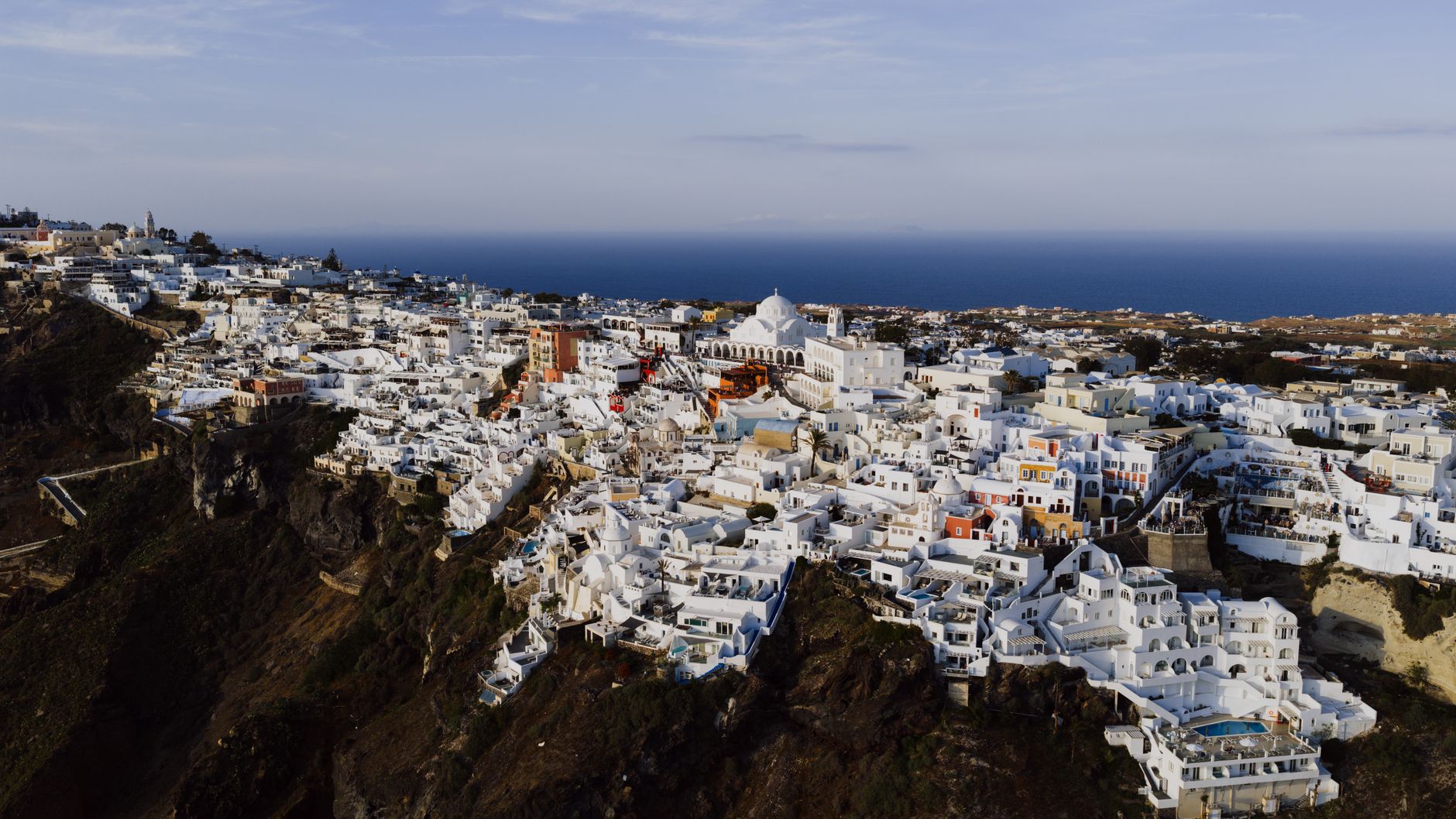
Fira
Santorini's clifftop capital, strung along the caldera rim with the cable car down to the old port and the island's bus hub below the view.
“Worth a day for the caldera view and the hub logistics, but stay in Oia or Imerovigli instead if you want the postcard without the crowds.”

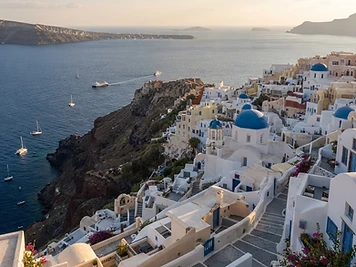
Santorini
The caldera island — one of the world's most photographed landscapes, and the most crowded place in Greece in summer.
“The caldera really is extraordinary. The crowds and pricing are real too. Two nights is enough for many Greece itineraries.”

Mykonos
The nightlife and luxury island — beach clubs, boutique hotels and the nearby sacred island of Delos.
“Excellent if nightlife, beach clubs and polished hospitality are priorities; poor value if you're chasing quiet village life.”

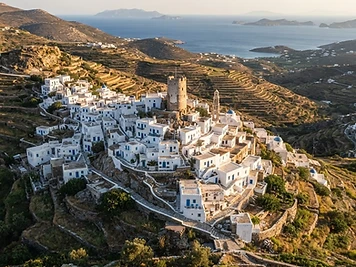
Naxos
The largest of the Cyclades — long sandy beaches, a real mountain interior with villages, and some of the best food in the islands.
“One of the strongest all-around Cycladic islands if you want beaches, mountain villages and excellent food without Santorini's spectacle or Mykonos's nightlife focus.”
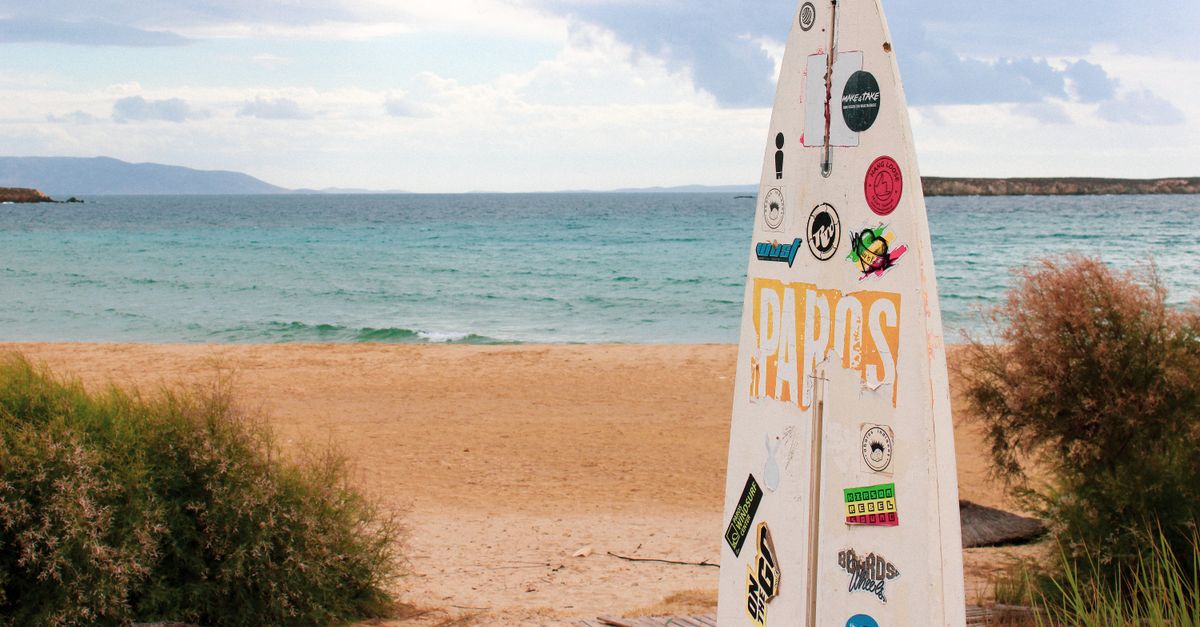
Paros
A central Cycladic hub — old marble villages, good beaches, and the easiest ferry connections in the group.
“The most convenient base for Cyclades island hopping, with enough of its own character to stand alone.”

Milos
A volcanic western Cycladic island of dramatic coastal geology and the famous fishing village of Klima.
“The most visually dramatic of the lesser-visited Cyclades — coastal geology that rivals Santorini without the crowds.”
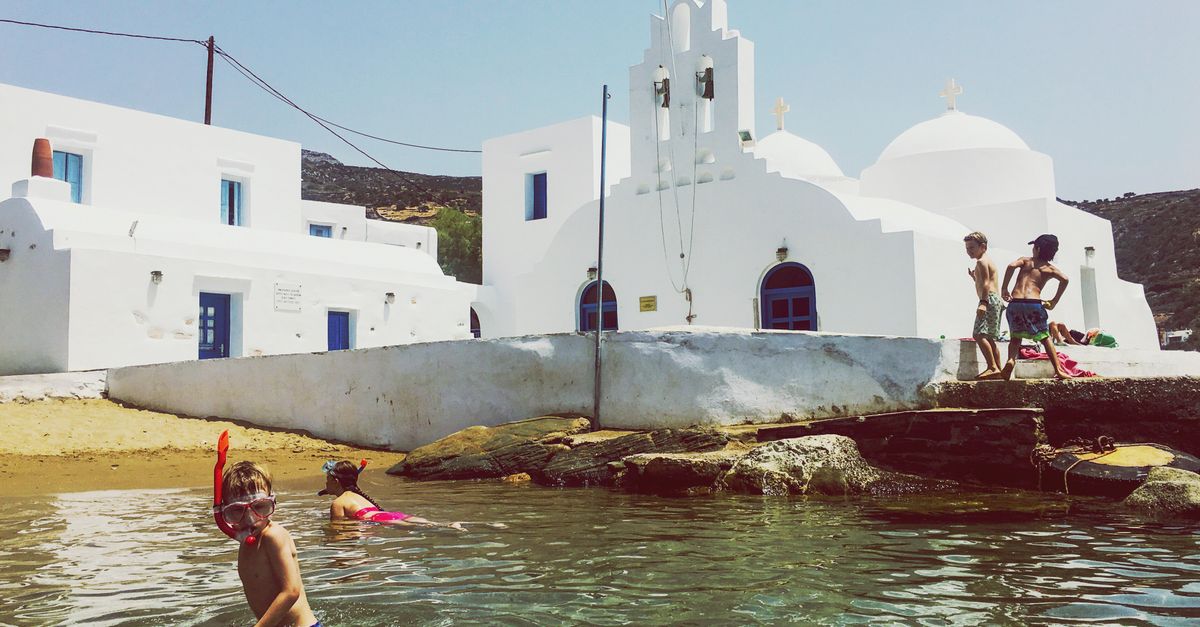
Sifnos
A quietly refined Cycladic island known across Greece for its food and its pottery villages.
“The Cycladic island for travelers who care about food — a quietly excellent place that never tries too hard.”
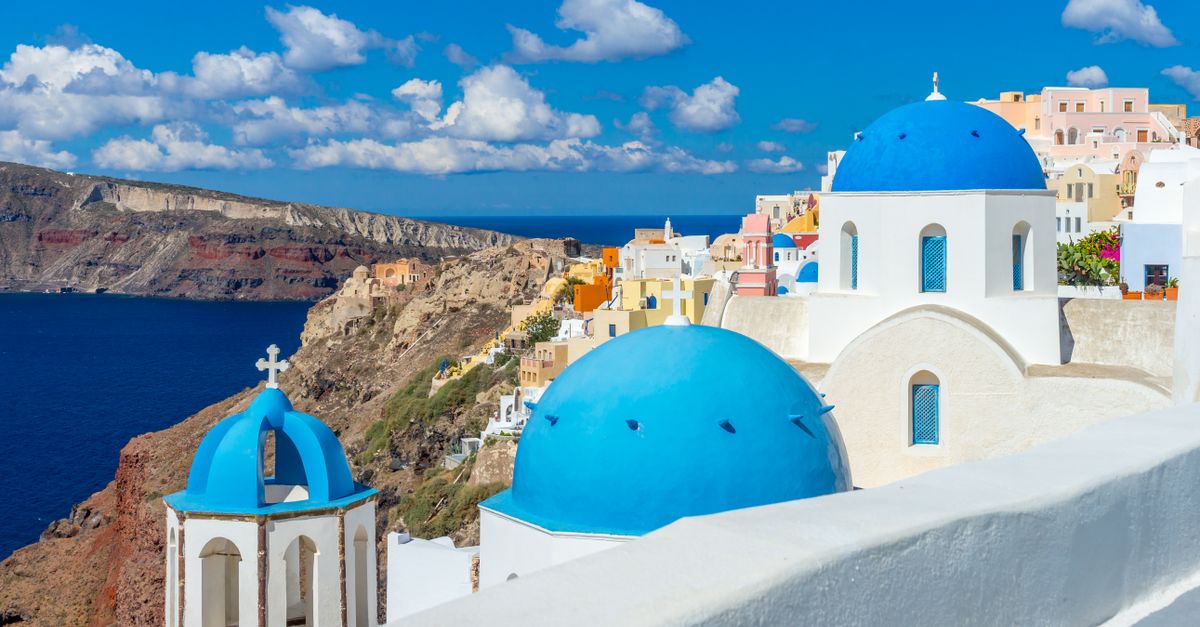
Oia
The famous caldera village at Santorini's northern tip — the sunset postcard, and the most crowded place on the island.
“The most photographed village in Greece — stay here for the view, not for peace and quiet.”
Keep reading
All Greek islandsMore related places in Greece
Sources
Booking links
Commercial links: we may earn a commission if you book through them, at no extra cost to you.
Plan this trip
Greece Field Guide helps you decide. When you're ready to arrange it, take your saved places to an itinerary.