Fava
Photo: Greece Field Guide
The Verdict
A velvety split pea puree that elevates legumes to fine dining status.
Why go
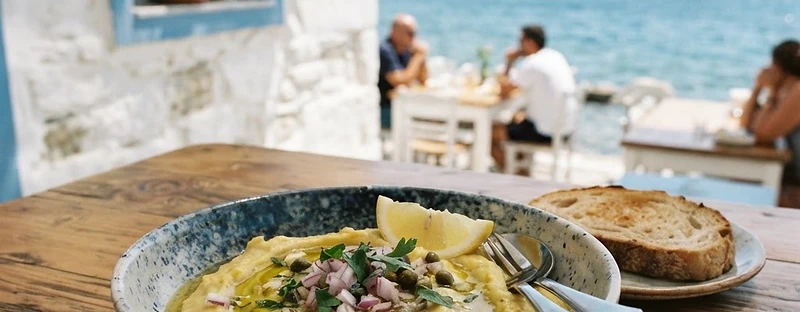
Despite its name, Cycladic fava has nothing to do with broad beans. It is made from yellow split peas (Lathyrus clymenum), simmered until tender, whipped into an emulsion with olive oil, and served either lukewarm or at room temperature. The texture sits between a dense soup and a silken hummus, defined by an earthy, slightly sweet legume flavor balanced by a generous pool of pungent Greek olive oil. When done properly, it avoids the pasty heaviness of standard bean purees. Every taverna in the Cyclades serves it, almost always crowned with finely diced red onion, local capers, and a wedge of lemon. The sharp, acidic toppings are essential; they cut through the richness of the starch and fat. It functions primarily as a shared meze, eaten off the fork or scooped with crusty bread alongside grilled octopus, salted sardines, or wild greens. Santorini fava holds Protected Designation of Origin status thanks to the island's arid volcanic soil, but you will find excellent, unpretentious versions across Sifnos, Naxos, and Paros. The trade-off is entirely textural. Fava is uncompromisingly smooth and dense. If you order it in mediocre establishments, it can arrive cold, under-seasoned, and rubbery from sitting too long in a refrigerator. Seek out places that whip it fresh and serve it barely warm.
Understand the place
Split pea puree topped with onions, capers, and olive oil, earthy and velvety. A legume dish treated with enough care to feel like fine dining.
Related
More dishes in Greece
Sources
Plan this trip
Greece Field Guide helps you decide. When you're ready to arrange it, take your saved places to an itinerary.