Vertical guide
Archaeology & Ancient Sites
Greece is the densest ancient landscape in Europe, and archaeology here is not a museum duty — it's the reason the country works as a trip. But not every ruin deserves a detour, and the famous ones aren't always the best. This guide separates the few sites worth planning a route around from the ones worth a stop, and groups them by the world they open up.
- Best months
- April–June, Sept–Oct
- Go early
- Beat heat and cruise crowds
- Pair with
- The on-site museum
- Car needed
- For most, yes
The long view
Greek history, condensed
- c. 7000 BC
First farmers
Sesklo and Dimini in Thessaly are among the earliest farming villages in Europe.
- c. 2700–1450 BC
The Minoans
A palace civilization on Crete centered on Knossos, with a script (Linear A) still undeciphered.
- c. 1600–1100 BC
The Mycenaeans
Mainland warlords; the world of Agamemnon, and the first written Greek (Linear B).
- c. 776–323 BC
Archaic & classical
The polis, the Olympics, the Acropolis, Marathon and Thermopylae — the Greece most people picture.
- 336–323 BC
Alexander
Macedon unifies Greece, then conquers east to India in a single decade.
- c. 330–1453 AD
Byzantium
A Greek-speaking Christian empire that lasts a thousand years, ending with the fall of Constantinople.
- 1821–1832
Modern Greece
The War of Independence; the modern state is founded on the ruins of the Ottoman provinces.
Plan a trip around these
The essential few
The sites substantial enough to shape a whole day — or a whole trip — around. Each is worth a significant detour, and together they're the backbone of any history-led Greece itinerary.
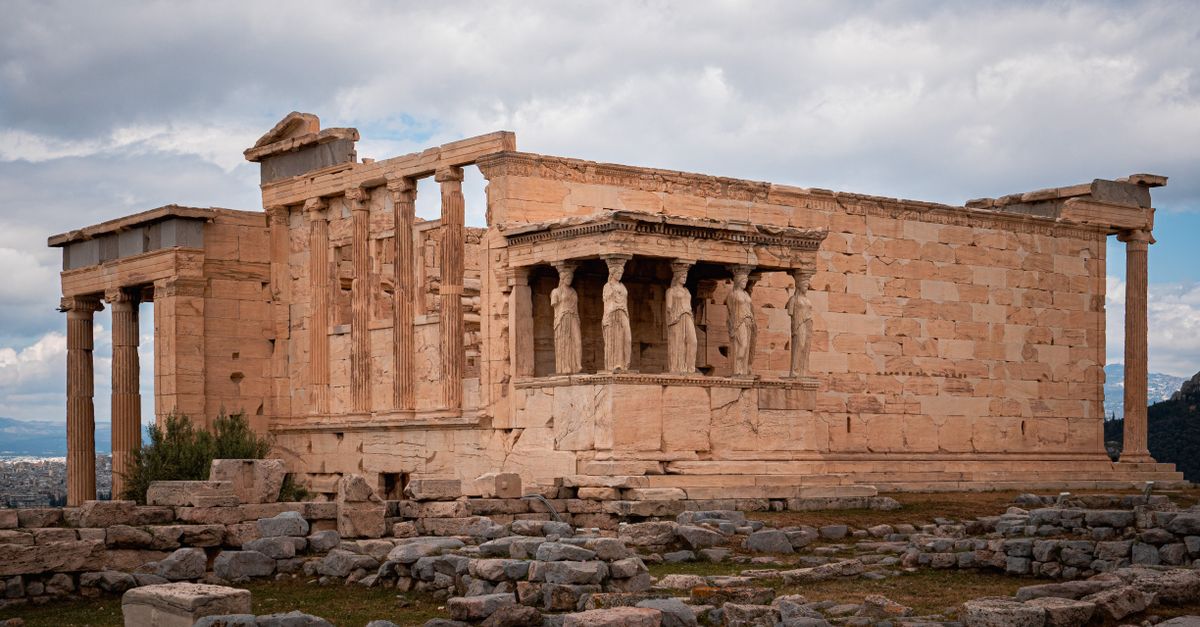
Acropolis of Athens
The Parthenon and the ancient citadel above Athens — the single most important ancient site in Greece.
“Essential — the one ancient site in Greece that belongs on almost every trip through Athens.”

Delphi
The ancient sanctuary and oracle on the slopes of Mount Parnassus — the spiritual center of the classical Greek world.
“Essential — worth the detour even for travelers who think they've already seen enough ancient ruins.”
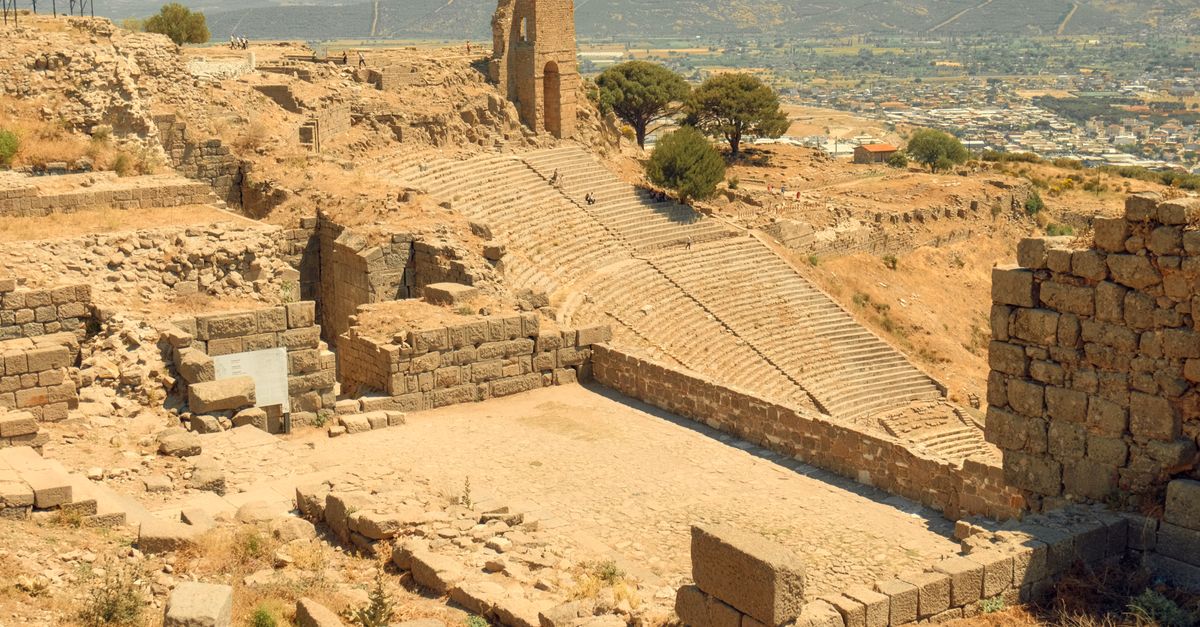
Mycenae
The fortified citadel of the Mycenaean civilization — the Lion Gate and the beehive Tomb of Agamemnon.
“Essential for anyone driving the Peloponnese — the earliest great civilization of mainland Greece.”

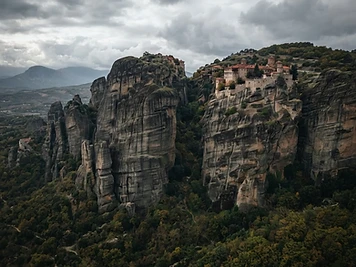
Meteora
Monasteries perched on towering sandstone pillars — one of the most extraordinary religious landscapes in Europe.
“Essential — one of the few places in Greece that genuinely exceeds its photographs.”
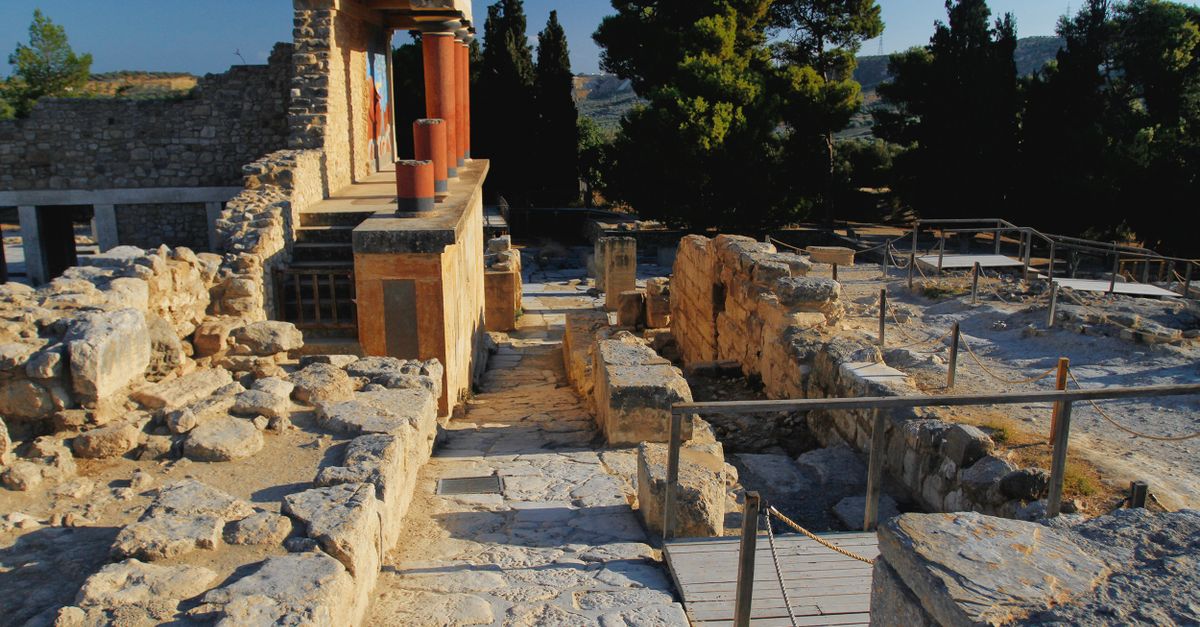
Knossos
Bronze Age palace of Europe's first advanced civilization, legendary seat of King Minos. The reconstructions are controversial, but the scale still impresses.
“Recommended — the great Minoan palace and the oldest European civilization's capital, with the caveat that reconstructions are controversial.”

Epidaurus
4th-century-BC theatre with near-perfect acoustics beside the sanctuary of Asklepios, still hosting performances. The clearest proof of how good ancient engineering could get.
“Essential — the best-preserved ancient theatre in Greece, and the clearest proof of how good ancient engineering could be.”
At the theatre of Epidaurus a coin dropped in the orchestra can be heard from the top row, 55 rows up. The limestone seats dampen low-frequency crowd noise and carry the high.
The ancient Olympics ran from 776 BC to AD 393 — nearly 1,170 years. The modern Games are, so far, 130.
Linear B — Europe's first readable Greek script — was deciphered in 1952 by Michael Ventris, a 30-year-old architect, not a professor.
Delphi was held to be the omphalos, the navel of the world. A carved stone marking it sat inside Apollo's sanctuary.
Europe's first civilization
The Minoan world
The Bronze Age palace culture of Crete and the Cyclades — older than classical Greece by a thousand years, and stranger. Akrotiri was buried by the same eruption that shaped Santorini's caldera.
Knossos
Bronze Age palace of Europe's first advanced civilization, legendary seat of King Minos. The reconstructions are controversial, but the scale still impresses.
“Recommended — the great Minoan palace and the oldest European civilization's capital, with the caveat that reconstructions are controversial.”
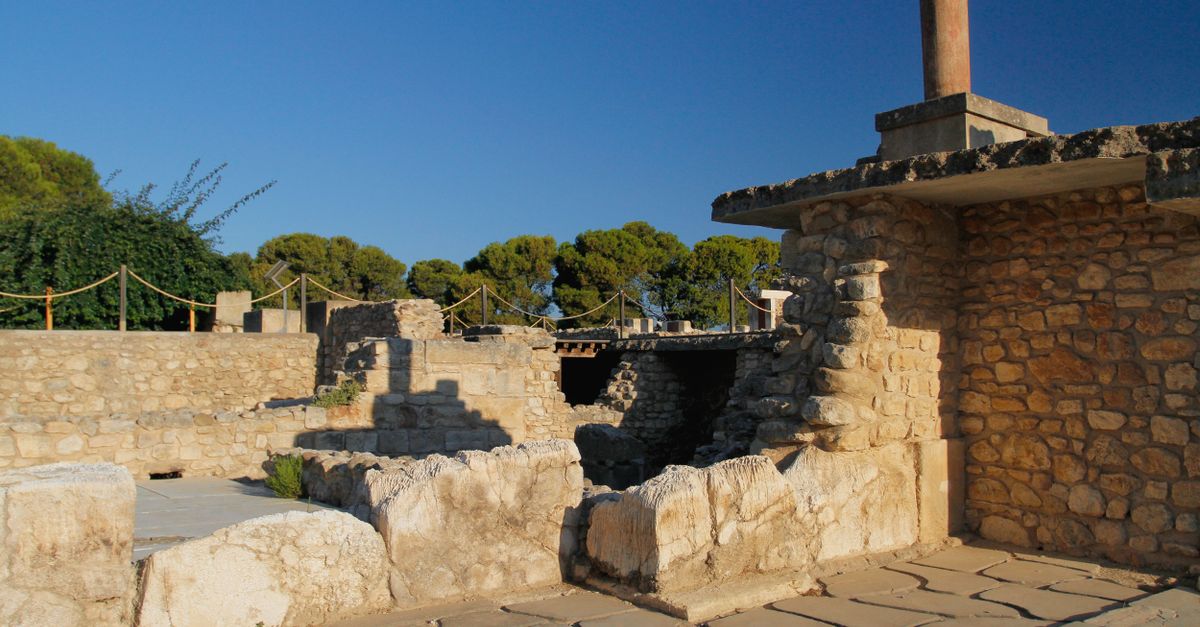
Akrotiri Archaeological Site
A Bronze Age Minoan settlement preserved under volcanic ash — the 'Greek Pompeii' of the Cyclades.
“Recommended — the one site on Santorini that adds real depth beyond the caldera view.”
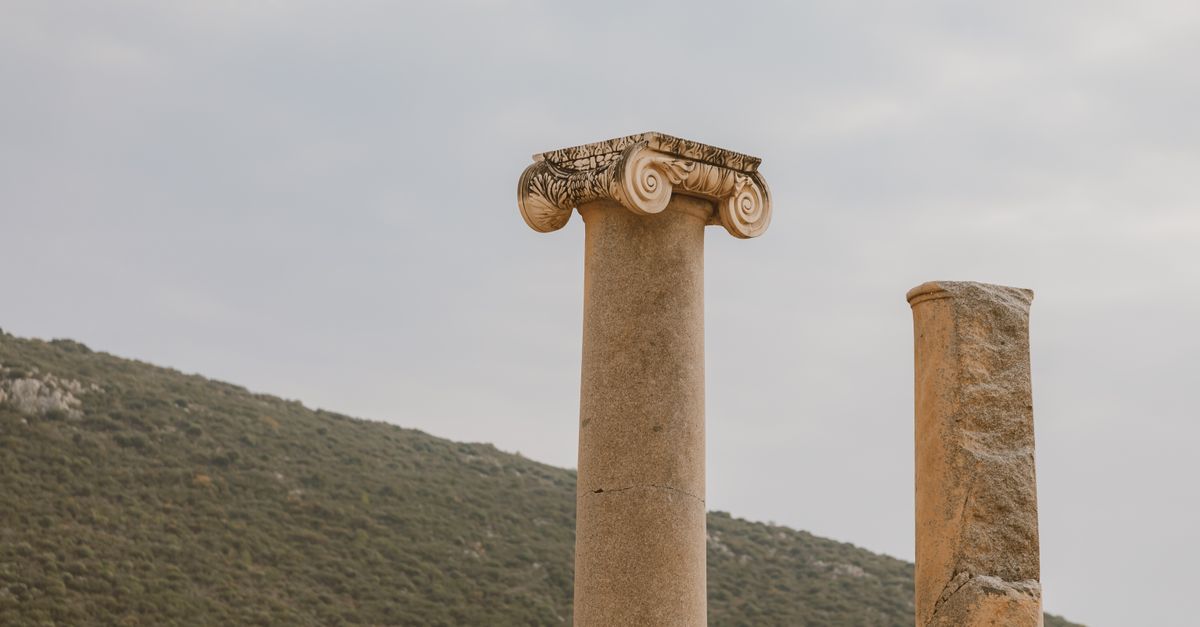
Phaistos
Minoan palace on a hill above the Messara plain, far quieter than Knossos and left unrestored. The view alone justifies the drive out.
“Optional — the second great Minoan palace, far quieter than Knossos and stunningly sited above the Messara plain.”
“I have looked upon the face of Agamemnon.”
The gold mask Schliemann pulled from a shaft grave at Mycenae predates the Agamemnon of the Trojan War by some 400 years. Schliemann was a brilliant, dishonest showman who bought Greek citizenship and faked his diary — but he proved the point the academics had denied: the Homeric world had a real, Bronze Age basis.
Theatres, oracles and games
Classical sanctuaries
The classical world beyond Athens: a theatre with perfect acoustics, an oracle on a mountainside, and the field where the Olympics began.
Epidaurus
4th-century-BC theatre with near-perfect acoustics beside the sanctuary of Asklepios, still hosting performances. The clearest proof of how good ancient engineering could get.
“Essential — the best-preserved ancient theatre in Greece, and the clearest proof of how good ancient engineering could be.”
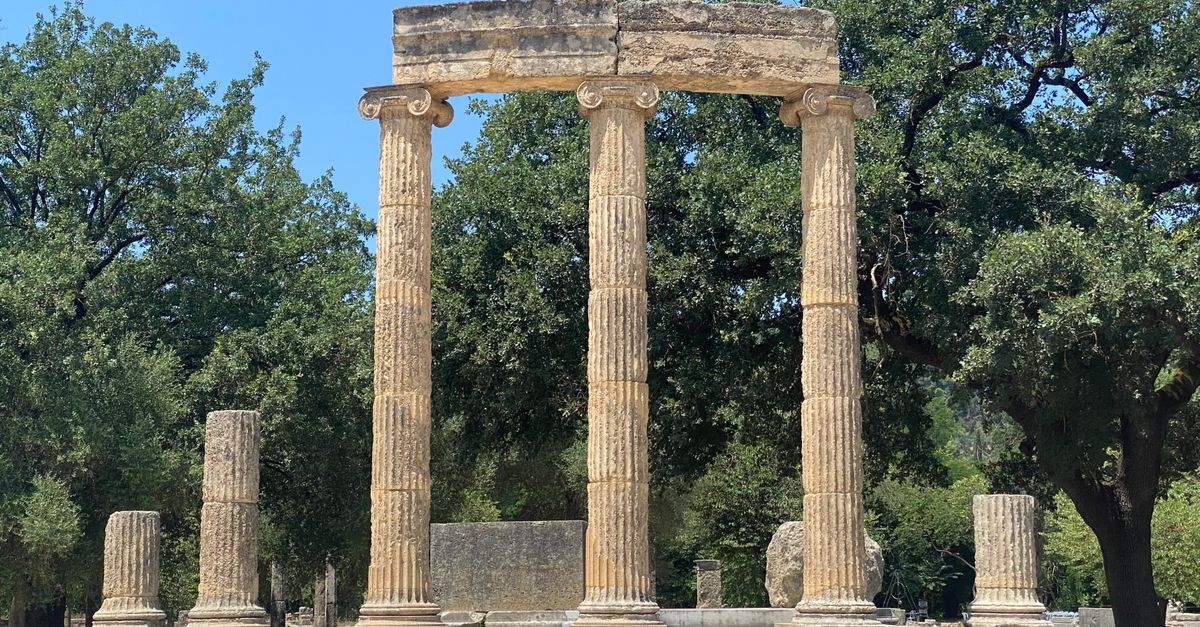
Ancient Olympia
Original Olympic stadium and sanctuary of Zeus where the games began in 776 BC, set in the green western Peloponnese. The museum holds the Hermes of Praxiteles.
“Recommended — the birthplace of the Olympic Games, in the green western Peloponnese.”
Delphi
The ancient sanctuary and oracle on the slopes of Mount Parnassus — the spiritual center of the classical Greek world.
“Essential — worth the detour even for travelers who think they've already seen enough ancient ruins.”
After the classical world
Macedonian kings & Byzantine cities
A later Greece: the gold-filled tombs of Alexander's dynasty in the north, and a Byzantine city clinging to a Peloponnesian mountainside. The strongest case that Greek history didn't end in 323 BC.

Vergina (Aigai)
Royal Macedonian tombs, including Philip II's, displayed in situ under a great museum-mound with their gold grave goods intact. The strongest archaeological case for ancient Macedonia.
“Recommended — the tombs of the Macedonian kings, including Philip II, under a great museum-mound. The strongest case for archaeological Macedonia.”

Mystras
Byzantine city spilling down a mountainside below a fortress, with frescoed churches throughout. The strongest case for medieval Greece beyond the classical ruins.
“Recommended — a Byzantine city cascading down a mountain slope, the strongest case for medieval Greece.”
How to read a site
A short field method
Greek sites are signed, but lightly. A good visit means arriving with the story already in your head — the site is a frame, not an exhibit. For the big sites (Acropolis, Delphi, Olympia) the on-site museum is half the experience; budget an hour for it after the ruins, not before.
The best time is the first hour the gates open: soft light, empty stones, and in summer the tour buses arrive at 9:30. The worst is midday in July, when the marble reflects heat and the cruise crowds turn the entrance into a bottleneck.
Index
Every site and monument in the guide
Ruins, monasteries, museums and fortresses across the whole country, including the ones covered on their island page rather than here.
- Achilleion Palace
- Ancient Kamiros
- Ancient Messene
- Ancient Thera
- Assos Castle
- Bassae
- Chrysopigi Monastery
- Delos
- Dion
- Dodona
- Gortyn
- Museum of Marble Crafts
- Nea Moni
- Nicopolis
- Palace of the Grand Master
- Panagia Ekatontapyliani
- Panagia Evangelistria
- Pella
- Philippi
- Poliochni
- Profitis Ilias Monastery
- Skyros Kastro
- Sounion
- Spinalonga
- The Acropolis of Lindos
- The Ancient Theatre of Milos
- The Apollon Theatre
- The Asklepion of Kos
- The Church of Panagia
- The Heraion of Samos
- The Kouros of Apollonas
- The Monastery of Panormitis
- The Old Fortress
- The Temple of Aphaia
- The Temple of Demeter at Sangri