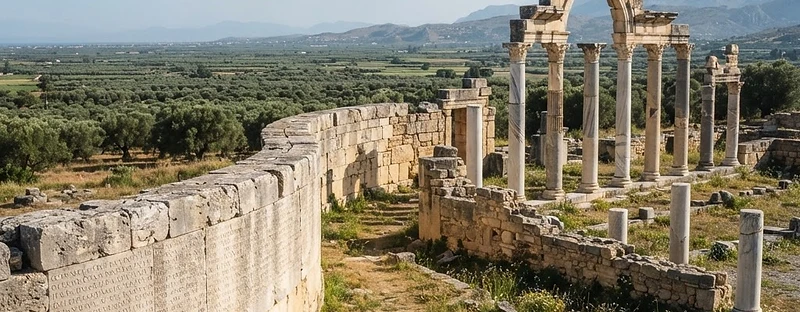
Gortyn
Photo: Greece Field Guide
The Verdict
Come for the law code and the basilica — the rest of the Roman city is still underground.
Why go
Gortyn was the most powerful city in Crete in the classical period and the Roman capital of the island afterwards. Its most important object is a fourth-century BC inscription of twelve columns of law, cut into the curved wall of what later became an odeion: the longest surviving Greek legal code, covering inheritance, marriage, adoption and property, displayed under a shelter where it was found. The Roman city around it is largely unexcavated, which gives the site its odd, half-empty quality. Above the laws stands the church of Agios Titos, a sixth-century basilica with a plan and columns that show the wealth of the city after Rome. The Messara plain around it is olive groves and villages, with Phaistos and the south coast beaches close enough to combine.
Understand the place
The Roman capital of Crete, with a sixth-century basilica and the stone code of laws that predates Solon.
Easy to combine with
Logically reachable by transport. Confirm current ferry/flight schedules before booking.
Nearby
Related
Sources
Booking links
Commercial links: we may earn a commission if you book through them, at no extra cost to you.
Plan this trip
Greece Field Guide helps you decide. When you're ready to arrange it, take your saved places to an itinerary.