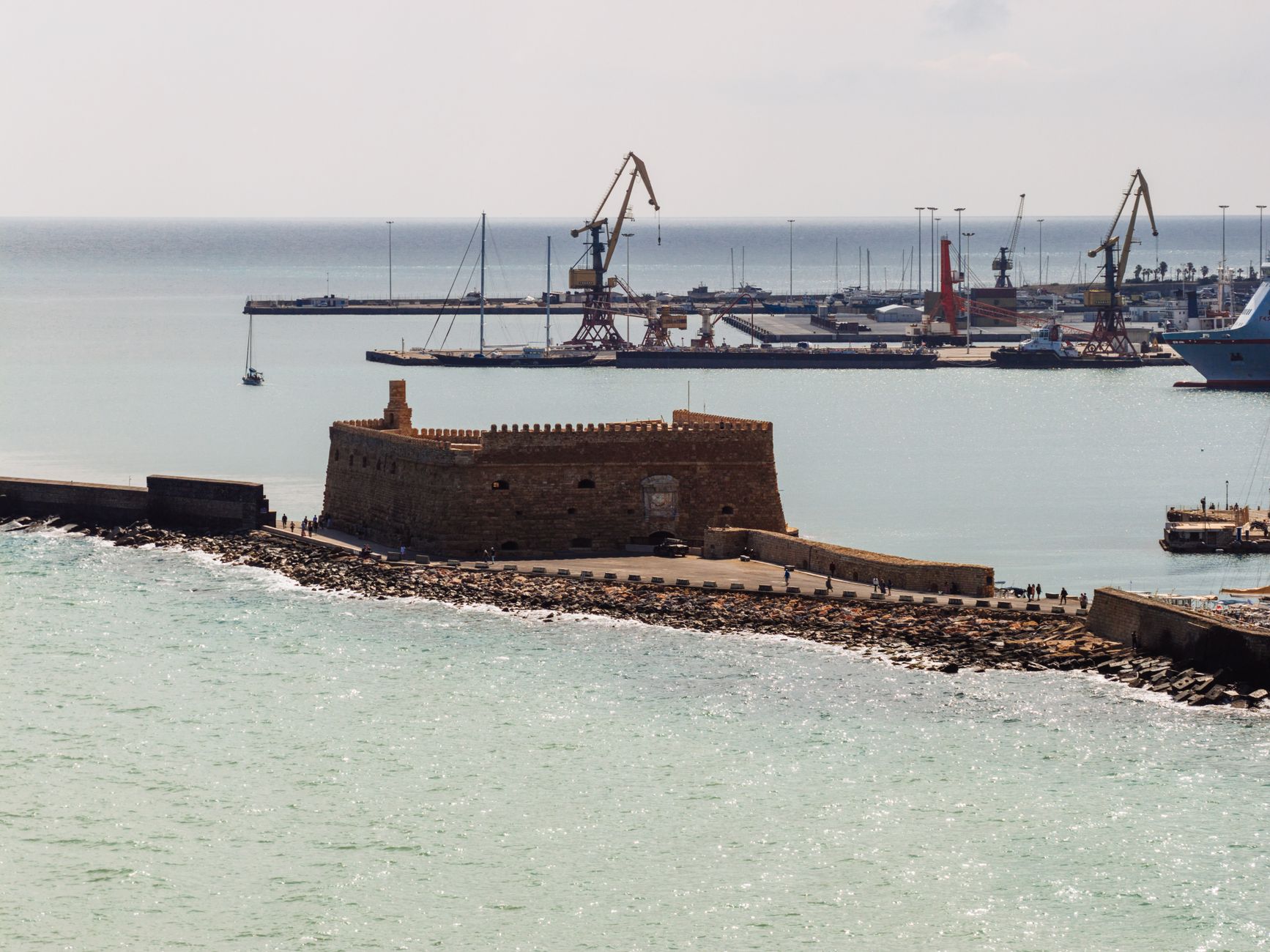
Heraklion
Photo: K / Pexels
The Verdict
Worth a stay for the Archaeological Museum and food, not for beauty — it's a working city, not a postcard.
Why go
Heraklion does not attempt to charm you on arrival. It is a dense, noisy concrete port town, heavily rebuilt after wartime bombing and choked with scooter traffic. You come here for two distinct things: the supreme concentration of Minoan material culture and an unpretentious, aggressive food culture shaped for locals rather than tour buses. The Archaeological Museum justifies the stay on its own. It houses nearly everything critical salvaged from Knossos, Phaistos, and Zakros, from the Snake Goddess figurines to the Phaistos Disc. Walking its galleries gives sense to Knossos itself, which sits twenty minutes south by car or local bus. Down at the harbor, the Venetian fortress of Koules breaks the open sea, but the real life lies inland along 1866 Street and the pedestrian lanes around Lion Square. The trade-off is visual grit for exceptional cooking. Evenings run late in the mezedopolia tucked behind the Venetian loggia. Small plates arrive alongside carafes of sharp, cold tsikoudia: snails fried in rosemary and vinegar, sour-curd xinomyzithra smeared on hard barley rusks, and grilled wild greens that taste distinctly of the dry Cretan hills.
Understand the place
Crete's capital and busiest city, the gateway to Knossos, with a Venetian harbor fortress and a food scene that outperforms its looks.
Easy to combine with
Logically reachable by transport. Confirm current ferry/flight schedules before booking.
Nearby
Related
More towns in Greece
Sources
Booking links
Commercial links: we may earn a commission if you book through them, at no extra cost to you.
Plan this trip
Greece Field Guide helps you decide. When you're ready to arrange it, take your saved places to an itinerary.