Vertical guide
Food
Greek food is regional, seasonal, and far better than its reputation abroad suggests. The moussaka-and-souvlaki shorthand sells it short. This guide is for travelers who want to eat seriously: where the food is the reason to go, the dishes worth knowing, the markets that show a city feeding itself, and the wine that genuinely belongs on a world list.
- Best food cities
- Thessaloniki, Chania, Athens
- Eat late
- Dinner after 9pm is normal
- Order
- Several plates to share
- Wine
- Assyrtiko is world-class
How Greek food got this way
Older than Greece
Greek cooking is older than Greece. The Minoans were pressing olive oil 4,000 years ago; one of the earliest known wine presses in Europe is at Armenochori on Crete. Two thousand years of Roman, Byzantine, and Ottoman rule layered in spit-roasted meats, filo pastry, syrup-soaked sweets, and the yogurt-and-cucumber traditions shared across the eastern Mediterranean.
The version of Greek food most foreigners know — moussaka with béchamel, pastitsio, the thick yogurt — is largely the work of Nikolaos Tselementes. In the 1920s he reworked Greek recipes in a French-inflected idiom, adding béchamel and hollandaise where olive oil and lemon had been. It made Greek food 'European' for a new middle class. It also made it heavier than it needs to be.
Where to eat seriously
The best places for food
The places where food is the central reason to visit — a city that rivals anywhere in Greece for eating, an island with a real food culture rather than a tourist menu, and a town where the market still feeds the place.

Thessaloniki
Greece's second city — a waterfront food culture, Byzantine churches, and a younger, more northern energy than Athens.
“Greece's best food city and a genuine northern alternative to Athens — worth a trip in its own right.”
Chania
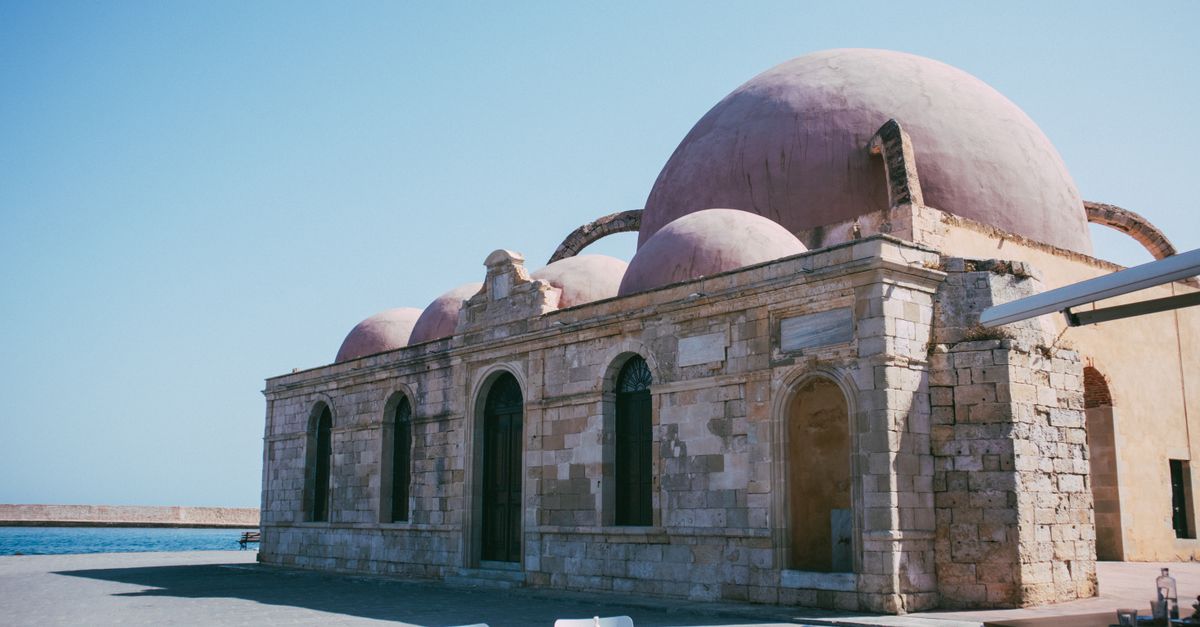
Crete's most beautiful city — a Venetian harbour, a preserved old town, and the best base for western Crete.
“The strongest base in Crete — a Venetian old town good enough to be a destination on its own.”

Athens
Greece's capital — the Acropolis, world-class museums, and a contemporary city that deserves more than a stopover.
“Don't treat Athens as the airport before the islands — two or three days here genuinely improves most Greece trips.”

Naxos
The largest of the Cyclades — long sandy beaches, a real mountain interior with villages, and some of the best food in the islands.
“One of the strongest all-around Cycladic islands if you want beaches, mountain villages and excellent food without Santorini's spectacle or Mykonos's nightlife focus.”
Sifnos
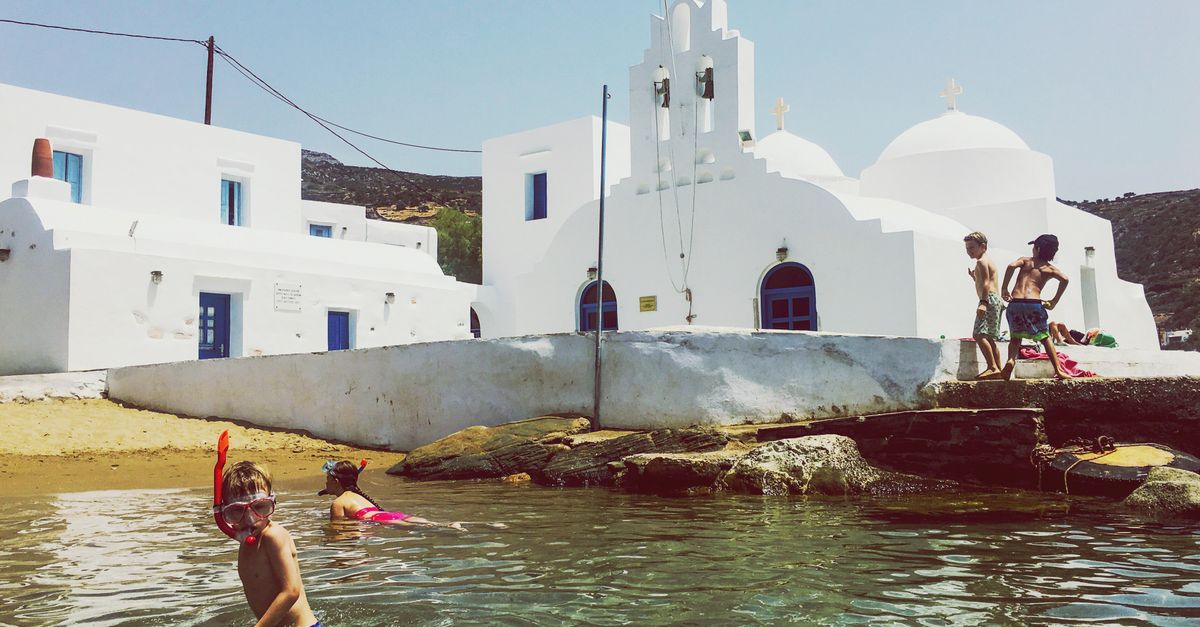
A quietly refined Cycladic island known across Greece for its food and its pottery villages.
“The Cycladic island for travelers who care about food — a quietly excellent place that never tries too hard.”
Where to sit down
Tavernas worth the detour
The specific rooms that justify a meal: a neighbourhood taverna in Athens, a marble square in Nafplio, and a farmhouse in the Cretan foothills that cooks over wood. Book nothing, arrive early, and expect a short menu.

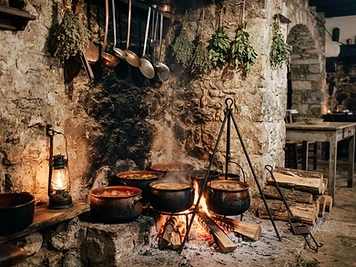
Dounias
Perched in the foothills of the White Mountains, this farmhouse tavern relies on ingredients grown on the property. Everything is cooked slowly over wood fires in a style that represents the vanishing reality of true Cretan home cooking.
“A serious culinary operation that demands a commitment to the journey, rewarding those who prefer substance over convenience.”

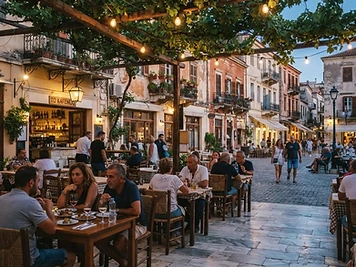
To Fanaria
Positioned on a marble square in Nafplio, this institution serves standard Peloponnesian fare and local wine. It provides a steady dining experience that serves as a necessary anchor after a long day of touring the nearby archaeological sites.
“A dependable choice that manages to survive the tourist tide by maintaining a focus on simple and predictable regional plates.”

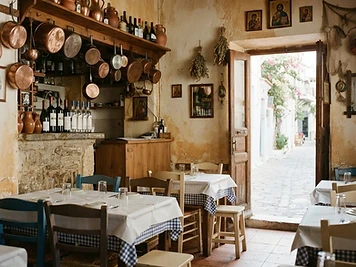
To Mavro Provato
Located in the Pangrati district, this modern taverna serves reliable Greek staples to a packed local crowd. It offers a straightforward approach to regional classics, avoiding the overpriced gimmicks found in the nearby tourist traps of the city centre.
“This remains the most honest choice for a dinner in Athens when you want actual food without any performative nonsense.”
“The trick to a Greek taverna is to order badly — at least by foreign standards. Five plates for two people, nothing matching, everything shared.”
Greek food is built for sharing, not for the single-dish dinner. Meze — the shared small plates — is the actual meal, and a table with one plate per person is the foreign tell. Order more than you think you need, eat slowly, and accept that half of it is going home with you. The Greek meal is a social length, not a feeding one.
Know the dishes
Dishes worth understanding
The dishes every visitor meets — and few have had done well. Sorted by how essential they are to a Greece trip; each is a test of the kitchen that makes it, and a good version changes your mind about Greek food.

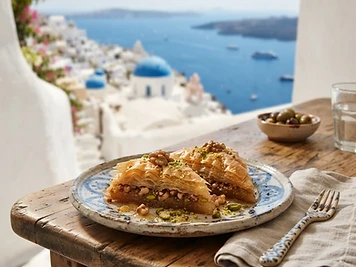
Baklava
Phyllo and spiced nuts soaked just enough to stay crisp. Quality depends entirely on the butter and nuts used; cheap versions turn soggy and flat.
“When made with quality butter and fresh nuts, it is an architectural masterpiece of sugar.”

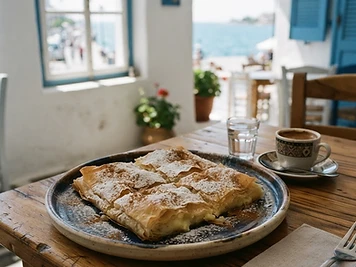
Bougatsa
Warm flaky phyllo stuffed with custard or feta and dusted with cinnamon. Thessaloniki's breakfast of choice, best eaten with no thought for calories.
“It is the only acceptable way to start a morning in Thessaloniki.”

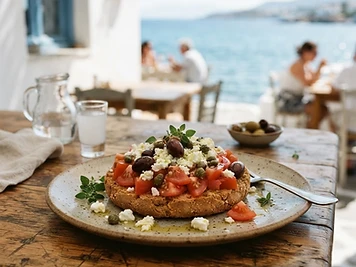
Dakos
Barley rusk softened with water and oil, topped with grated tomato, mizithra and oregano. The dish that explains why Cretan food is taken seriously.
“Essential Cretan eating — a rusks-and-tomato salad that explains why Cretan food matters.”

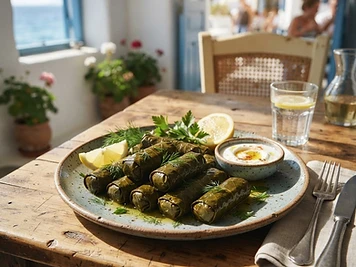
Dolmadakia
Vine leaves stuffed with herbs, rice, and lemon, rolled small for easy eating. A light, fragrant meze that works as a starter or a snack.
“Small vine leaf rolls that are the perfect bite-sized meze.”

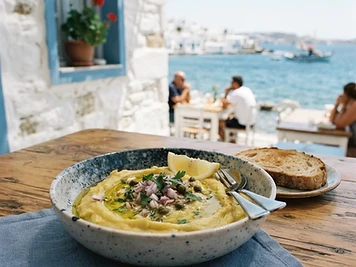
Fava
Split pea puree topped with onions, capers, and olive oil, earthy and velvety. A legume dish treated with enough care to feel like fine dining.
“A velvety split pea puree that elevates legumes to fine dining status.”

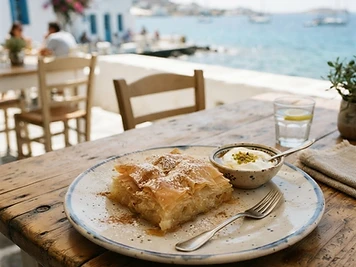
Galaktoboureko
Crispy syrup-soaked pastry wrapped around smooth custard, lifted by lemon zest. The textural high point of Greek syrup desserts, best eaten slightly warm.
“The king of Greek syrupy desserts, combining crispy pastry and smooth custard.”

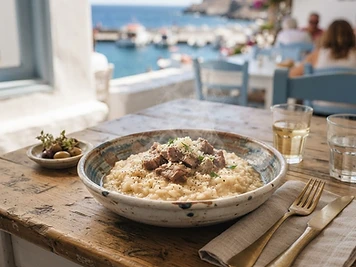
Gamopilafo
Rice cooked in goat and lamb broth, thickened with stakovoutiro clarified butter. Crete's festive centerpiece, rich with lemon and animal fat, reserved for village celebrations.
“This is the king of Cretan festive cooking, rich with goat and lemon intensity.”

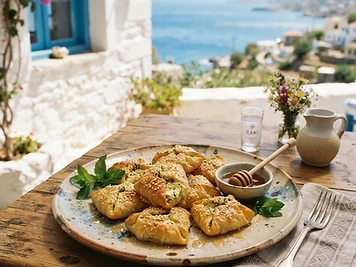
Kalitsounia
Small cheese-filled pastries that beat every other Greek pie on balance alone. Sharp mizithra, fresh mint and honeyed pastry, best eaten warm.
“These tiny, cheese-filled pastries are the standard by which all other Greek pies are measured.”

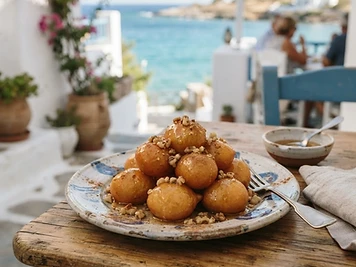
Loukoumades
Fried dough balls soaked in honey, topped with walnuts and cinnamon. Eat them hot straight from the fryer; they turn leaden within minutes of cooling.
“The original fried dough treat that puts modern donuts to shame.”

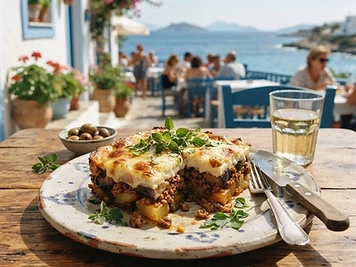
Moussaka
Layered aubergine, potato and spiced meat under béchamel, Greece's most famous dish and its hardest to get right. A good version is worth seeking out; a bad one is everywhere.
“The most famous Greek dish — and a test of any taverna. A good one is a reason to sit down.”

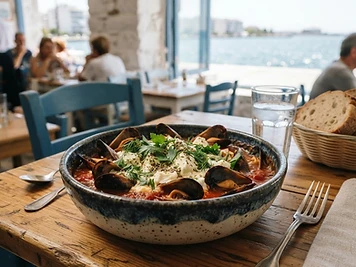
Mydia Saganaki
Mussels cooked in sharp, spicy feta sauce, a Thessaloniki port-city specialty. Order crusty bread, the sauce demands something to mop it up with.
“Fresh mussels in a sharp, spicy feta sauce are a testament to Thessaloniki’s port-city influence.”

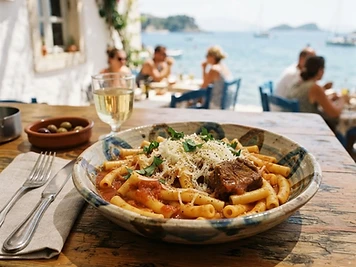
Pastitsada
Rooster or beef stewed in tomato sauce with spetsieriko spice mix, poured over thick pasta. Corfu's Venetian-Ionian hybrid, built for slow Sunday lunches.
“Venetian elegance meets Ionian spice in a bowl of pure comfort.”

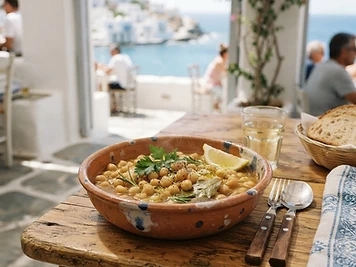
Revithada
Chickpeas baked for hours in clay pots in wood-fired ovens, Sifnos' signature dish. Simple ingredients, slow time, and nothing else needed to make it work.
“A slow-baked chickpea stew that is the cornerstone of Sifnos' culinary identity.”

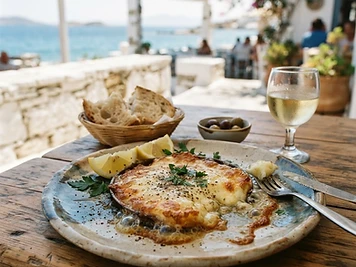
Saganaki
Graviera or kefalograviera fried until golden and bubbling, finished with lemon. The baseline Greek appetizer, simple enough to judge a kitchen's basic competence.
“Simple fried cheese that remains the ultimate Greek appetizer.”

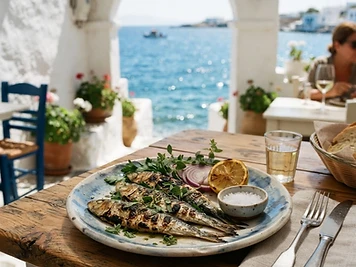
Sardeles Psites
Fresh sardines grilled over coals, dressed with lemon and oregano. The purest, simplest taste of Greek summer, best paired with a cold beer.
“Fresh sardines grilled over coals are the purest taste of the Greek summer.”

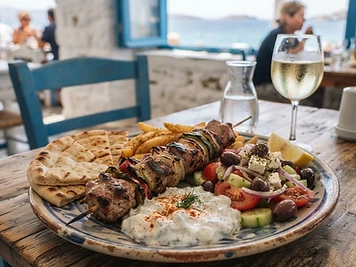
Souvlaki
Grilled meat on a skewer wrapped in pita with tomato, onion, tzatziki and chips. Athens' standing-up, cheap, everyday meal, and what you'll miss first after leaving.
“Essential Athens eating — the city's great cheap meal, and the thing you'll miss when you leave.”

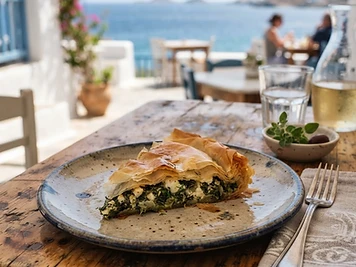
Spanakopita
Spinach pie that lives or dies on the quality of its greens and feta. When both are good, a simple dish becomes a serious meal.
“Spinach pie is a classic that never fails if the greens are fresh.”

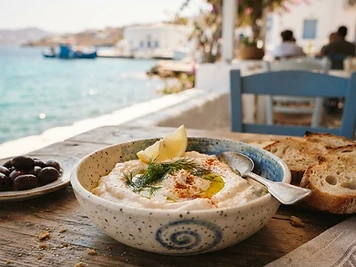
Taramasalata
Fish roe puree, creamy and briny when made properly and pale beige, not pink. Avoid the artificially colored supermarket version; it tells you nothing real.
“Only the pale, beige version made with real roe is worth your attention.”

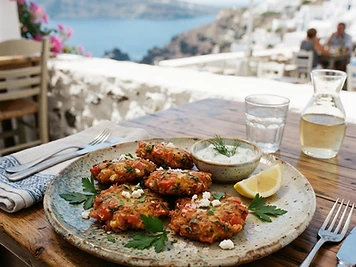
Tomatokeftedes
Santorini's cherry tomatoes blended with herbs and fried into fritters, intense from the island's volcanic soil. A local specialty worth seeking out specifically there.
“The ultimate expression of Santorini's volcanic soil in a fritter.”

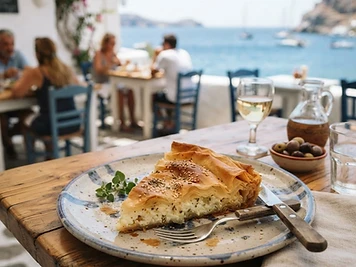
Tyropita
Crisp phyllo filled with feta and egg, sold at every bakery and kiosk. The baseline test for whether a Greek bakery is any good at all.
“The essential street-side snack for every traveler.”

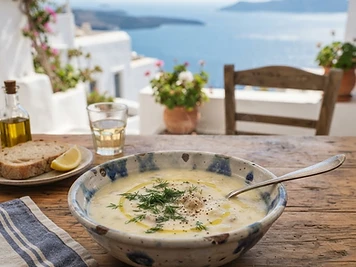
Avgolemono
Egg-and-lemon chicken soup, silky and dairy-free despite the creamy texture. The emulsion is the whole trick, and the comfort food of choice when ill or cold.
“A silky, lemony egg-and-chicken soup that is the definition of comfort.”

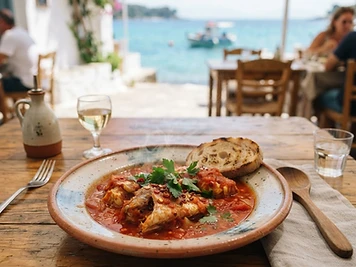
Bourdeto
Scorpion fish cooked in a punchy red sauce loaded with cayenne pepper. Corfu's fiery proof that Greek cooking isn't only lemon and oregano.
“A spicy, fiery fish stew that proves Greek food isn't just lemon and oregano.”

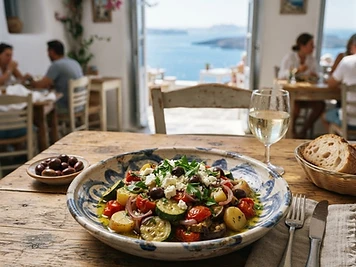
Briam
Zucchini, eggplant, potatoes, and tomatoes roasted together in heavy olive oil until soft. The simplest, most effective way to eat Greek summer vegetables.
“The best way to eat vegetables—roasted until they melt into each other.”

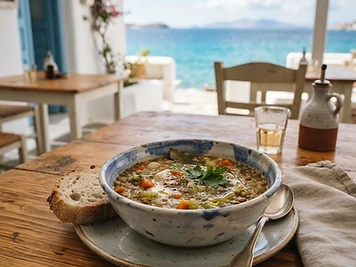
Fakes Soup
Lentil soup, earthy and cheap, finished with a splash of vinegar that lifts the whole bowl. The everyday staple of the Greek diet, done right.
“Lentil soup is the backbone of the Greek diet for a reason.”

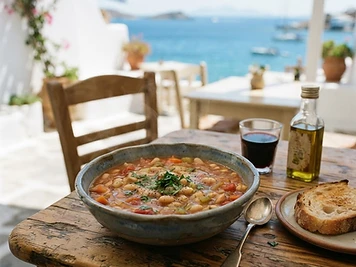
Fasolada
White beans, carrots, celery, and heavy olive oil make Greece's national soup. Humble, filling, and the honest baseline against which every taverna's cooking should be measured.
“The national soup of Greece; simple, hearty, and fundamentally honest.”

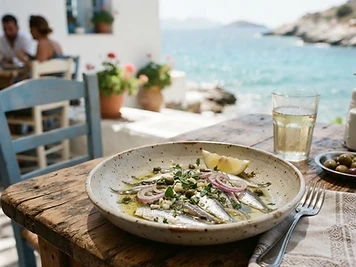
Gavros Marinatos
Anchovies cured in vinegar and garlic, sharp and bracing. The dish that cuts through a heavy meze spread rather than adding to it.
“Marinated anchovies that brighten up any meze table.”

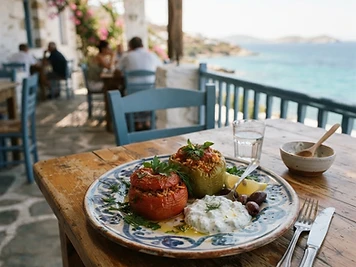
Gemista
Tomatoes and peppers stuffed with herbed rice and baked until the skins blister. The vegetarian dish that separates a real home-cooking taverna from a tourist one.
“Recommended — the dish that proves Greek vegetable cooking is serious.”

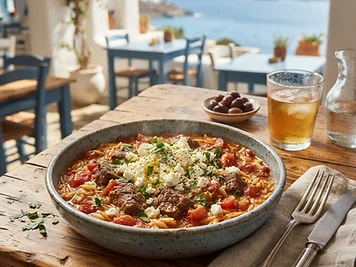
Giouvetsi
Lamb or beef stewed with orzo in tomato sauce, often baked in clay. Rich, filling comfort food built for cold nights and slow eating.
“The ultimate home-cooked comfort dish for meat lovers.”

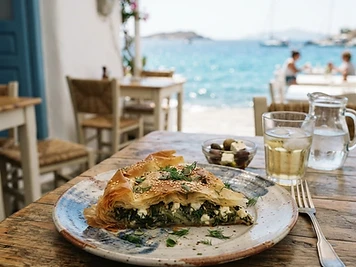
Hortopita
Wild greens wrapped in crisp phyllo, foraged from the countryside rather than farmed. Fresh and slightly bitter, it beats spinach pie versions found elsewhere.
“A wild greens pie that showcases the true bounty of the Greek countryside.”

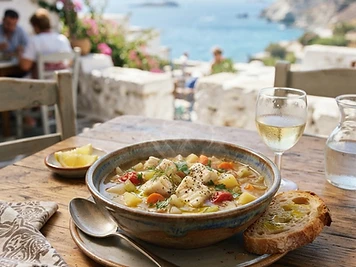
Kakavia
Fisherman's stew made from the day's leftover bony fish, simmered with potatoes and olive oil. The rawest, purest version of Aegean fish soup available.
“A fisherman's stew that captures the raw essence of the Aegean.”

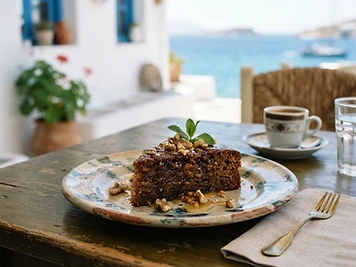
Karydopita
Dense walnut cake soaked in syrup until it stays moist for days. Spiced, heavy, sweet by design; order a small slice and share it.
“A moist, walnut-filled syrup cake that defines Greek cake culture.”

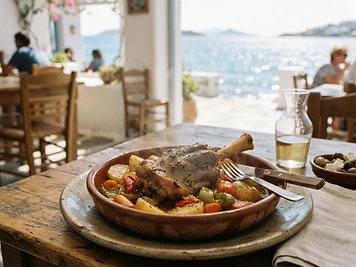
Kleftiko
Lamb slow-roasted with garlic, lemon, and oregano, sealed in parchment until it falls apart. Thief-style cooking that delivers tenderness without any real effort.
“Meat cooked 'thief-style' that delivers incredible tenderness.”

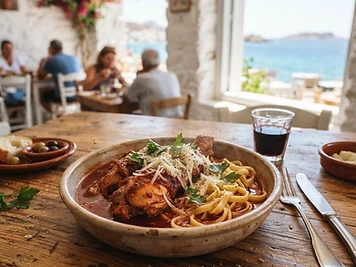
Kokoras Krassatos
Rooster braised slowly in red wine until the meat falls off the bone. Rustic peasant cooking, deepened by tannins and patience rather than technique.
“Rooster braised in red wine is rustic, deep, and soul-warming.”

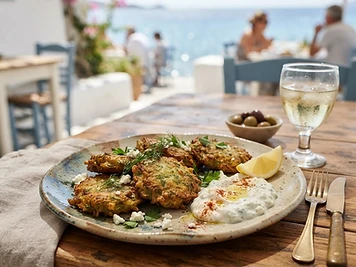
Kolokithokeftedes
Zucchini fritters mixed with feta and dill, crisp outside and herbal within. Best eaten the moment they leave the fryer, before the crust softens.
“Zucchini fritters that are crisp on the outside and wonderfully herbal inside.”

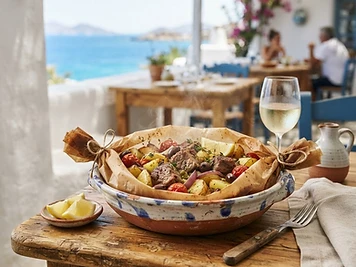
Ladokolla
Meat and cheese baked sealed in parchment paper, trapping the juices for tender results. A rustic technique that rewards patience over flash.
“Meat and cheese cooked in parchment is the ultimate rustic technique.”

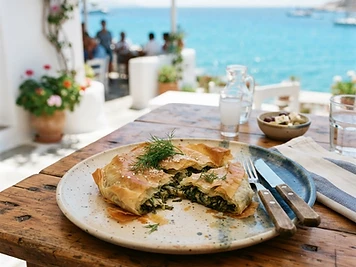
Marathopita
Thin pan-fried pie filled with wild fennel and greens, earthy and aromatic. Crete's quieter answer to spanakopita, and arguably better.
“Fennel pies are the unsung green heroes of Cretan cuisine.”

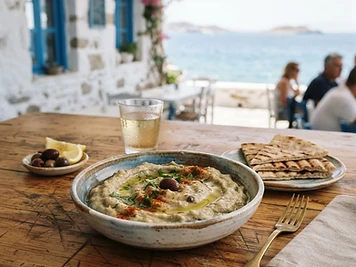
Melitzanosalata
Fire-roasted eggplant dip beaten with garlic, lemon and olive oil. Smoky and sharp at its best; skip any version thickened with mayonnaise.
“When done with fire-roasted eggplant, it is the best dip on the table.”

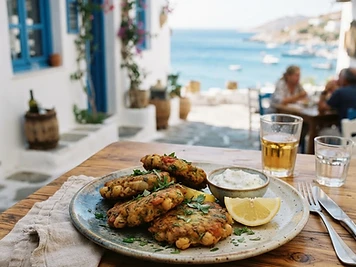
Pitaroudia
Crispy chickpea fritters packed with onion, tomato and mint. Dodecanese snack food made for eating on the move through medieval streets.
“Crispy, chickpea-based patties that define Dodecanese snack culture.”

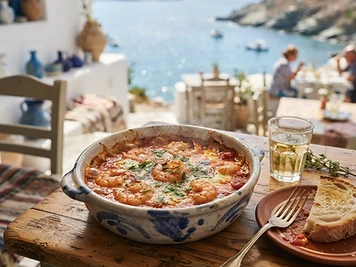
Saganaki Garides
Prawns stewed in tomato and bubbling feta, rich enough to count as a main. Order it when you want decadence over delicacy.
“Shrimp in a bubbling tomato and feta bath is a decadent seafood treat.”

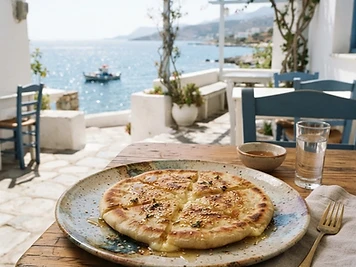
Sfakiani Pita
Thin dough filled with mizithra cheese, drizzled with thyme honey. Sits between breakfast and dessert, a Sfakia specialty that rewards a strong appetite.
“A savory-sweet pancake that sits at the intersection of breakfast and dessert.”

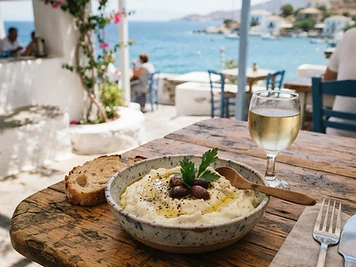
Skordalia
Garlic puree pounded raw and bold, usually served alongside fried cod. Expect your breath to suffer for it; order it anyway.
“A garlic-heavy puree that is essentially a social-life-ending weapon.”

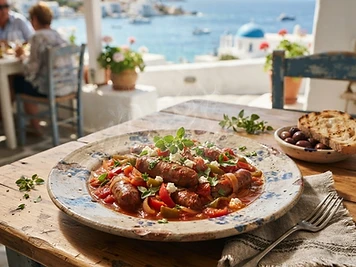
Spetzofai
Thick country sausage and green peppers simmered in tomato sauce. Mountain winter fuel, spicy and rustic, needs a glass of red wine to cut through it.
“A spicy, rustic sausage and pepper stew that demands red wine.”

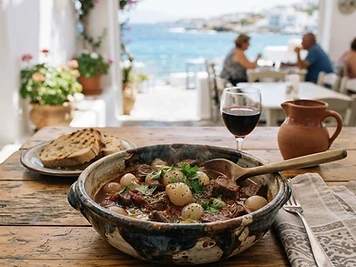
Stifado
Meat stewed slowly with pearl onions, cinnamon, and cloves until deeply aromatic. The onions are non-negotiable; without them it's just another stew.
“A rich, fragrant meat stew defined by its obsession with pearl onions.”

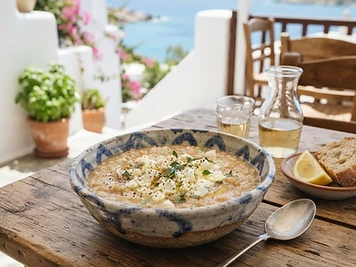
Trahanas
Fermented cracked wheat or semolina, cooked as soup or porridge with a sour edge. Ancient peasant comfort food, best eaten on a cold day.
“Ancient, fermented cracked wheat or semolina that is the ultimate peasant comfort food.”

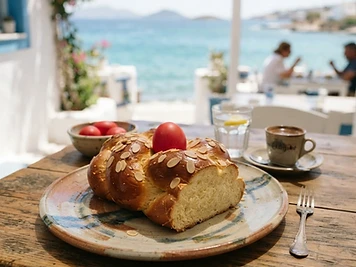
Tsoureki
Braided sweet bread scented with mahlab and mastic, brioche-like and hard to stop eating. The smell of Greek Easter in loaf form.
“Sweet, aromatic braided bread that is the definitive scent of Greek holidays.”

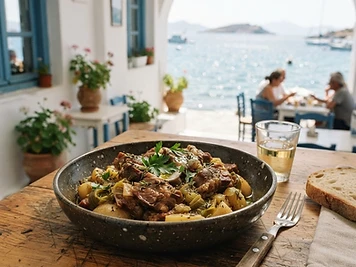
Kavourmas
Slow-cooked seasoned meat preserved in its own fat, a Northern Greek tradition. Intense, umami-heavy, and built for keeping through winter rather than fresh eating.
“A preserved meat delicacy that captures the ancient history of the North.”

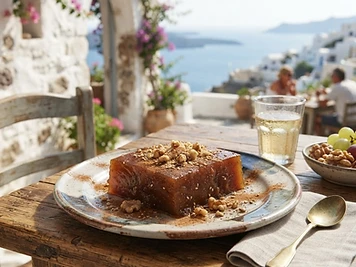
Moustalevria
Grape-must pudding, thick and slightly gelatinous, carrying the cooked-down sweetness of harvest season. A seasonal relic tied directly to the wine-making calendar.
“A dense grape-must pudding that is a relic of traditional harvesting.”

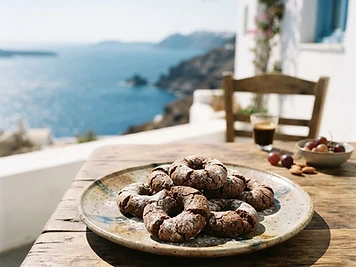
Moustokouloura
Grape must cookies, dark, earthy, and spiced, tied to the autumn harvest season. Deep sweetness without the cloying sugar hit of other Greek baked goods.
“Grape must cookies that are earthy, dark, and perfectly spiced.”

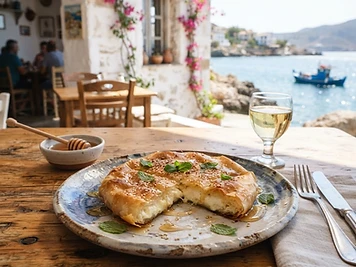
Myzithropita
Cretan cheese pie stripped to essentials: fresh mizithra and plain dough, no sugar theatrics. Judge a Cretan bakery by this before anything fancier on the menu.
“A cheese-focused pie that is simpler than the standard kalitsounia.”

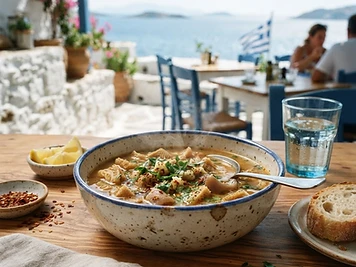
Patsas
Tripe soup, rich and fatty, served in the early morning as a hangover cure. Not for the squeamish, but traditionalists swear by its restorative power.
“Tripe soup for the brave, the hungover, and the traditionalist.”

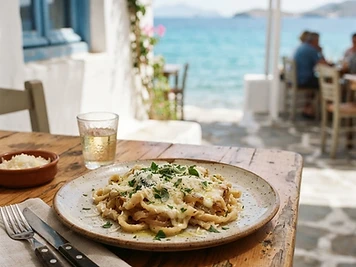
Pitaridia
Handmade pasta boiled in meat stock, served with grated mizithra and toasted butter. Peasant pasta done right, simple ingredients doing all the work.
“Handmade pasta that is boiled in meat stock—a simple pleasure.”

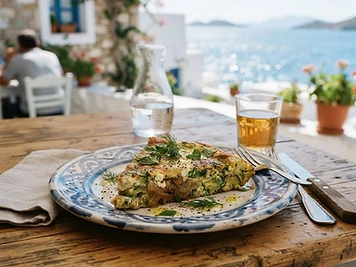
Sfougato
Egg and vegetable bake, essentially a crustless quiche packed with zucchini or local greens. Light enough for a quiet dinner, not a showpiece dish.
“A local egg and vegetable bake that is essentially a crustless quiche.”
Real feta is a PDO product: made in specific regions from at least 70% sheep's milk, the rest goat's, and aged in brine. Anything else is 'white cheese' and cannot legally be called feta in the EU.
The Greek frappé was invented in 1957 at the Thessaloniki Fair when a Nestlé rep, Dimitris Vakondios, couldn't find hot water and shook the instant coffee cold. It became the national afternoon drink.
Greeks eat more cheese per person than anyone on earth — around 20 kg a year, most of it feta.
The Olive Tree of Vouves on Crete still produces olives. It's estimated at 2,000–3,000 years old — which means it may have been growing when the Parthenon was built.
Where a city feeds itself
Markets
The working food markets that show a city at its rawest and most real. Go in the morning, eat where the stallholders eat, and see how the place actually lives.
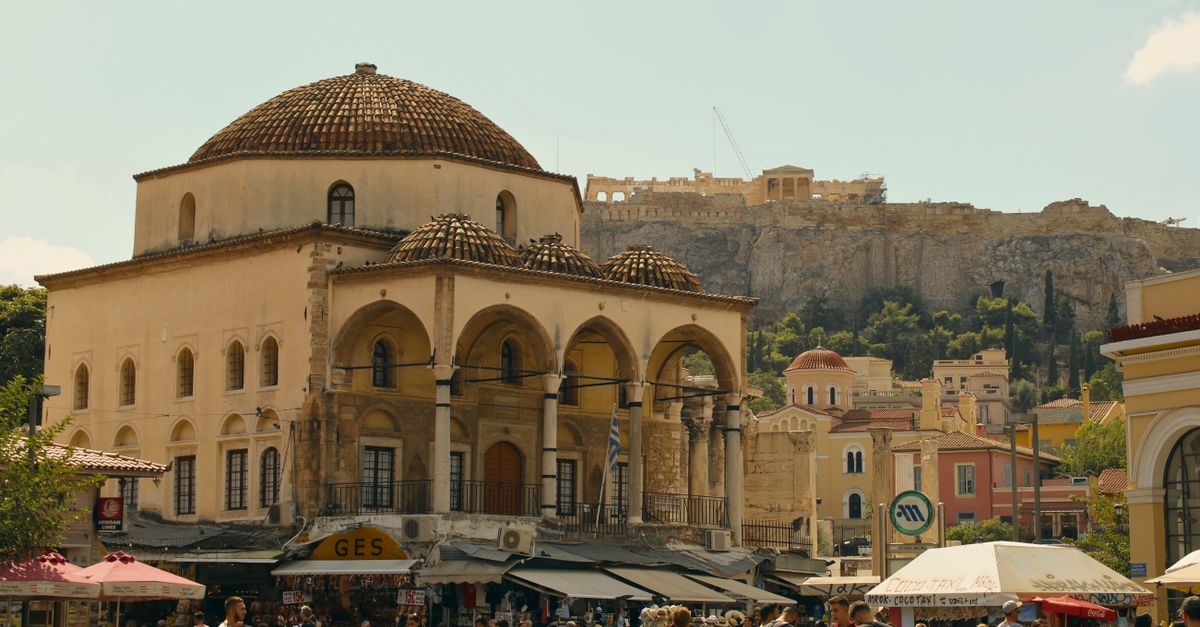
Athens Central Market (Varvakios)
Working hall of butchers and fishmongers at the center of Athens, loud and unglamorous by design. Cheap eateries ring the edges where the market workers themselves eat.
“Recommended — the raw, working meat-and-fish market at the heart of Athens. Not picturesque; real.”

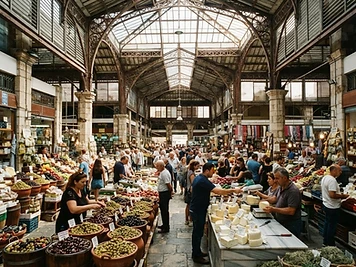
Chania Municipal Market
This cross-shaped structure in Chania provides a direct view into the diet of Crete. It functions as a working market for olives, raki, and regional cheeses, far removed from the surrounding streets filled with cheap trinkets and souvenirs.
“The only necessary stop for understanding the pantry of Crete before you head to the coast for dinner.”

Modiano Market
Restored covered market with food stalls, meze counters and tavernas. The natural starting point for eating your way through Thessaloniki.
“Recommended — the restored heart of Thessaloniki's food life, and the gateway to the city's eating.”
The wines
Greek wines worth knowing
Greece is not Italy or Spain — and that is exactly the point. Its indigenous grapes, volcanic soils, and revived traditions make it one of Europe's most under-appreciated wine countries. These are the wines and grape varieties that argue the case.

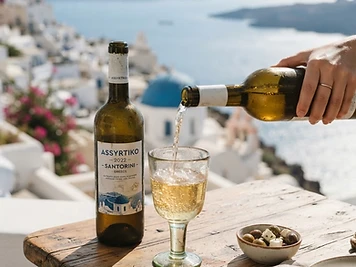
Assyrtiko
Greece's king of white grapes, defined by high acidity and electric minerality. On Santorini's volcanic soils it turns saline and unmistakable.
“This is the king of Greek white grapes, delivering high acidity and electric minerality.”

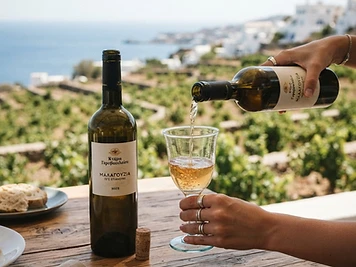
Malagousia
Once nearly extinct, now the face of Greece's white wine revival. Stone fruit and tropical notes make it a natural match for herb-heavy mezze.
“Once nearly extinct, this grape is now the star of the modern Greek revival.”

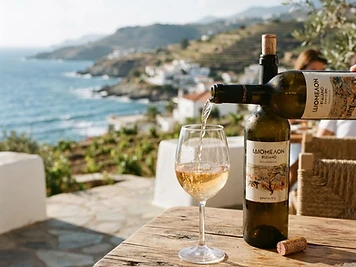
Vidiano
Crete's weighty, textured answer to Viognier. The most exciting indigenous white discovery of the last decade, with real complexity behind the richness.
“Crete’s answer to Viognier, with a weight and texture that feels luxurious.”

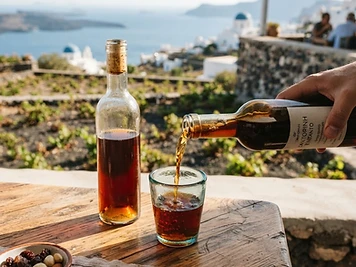
Vinsanto
Sun-dried Assyrtiko turned liquid gold on Santorini. High acidity keeps it from tipping into cloying, even at full sweetness.
“The ultimate expression of sun-dried Assyrtiko grapes.”

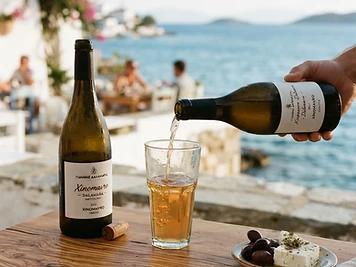
Xinomavro
Tannic, age-worthy red often compared to Nebbiolo. It demands patience and a rich meat pairing, and remains Greece's most serious grape.
“A structural powerhouse often compared to Nebbiolo for its tannins and aging potential.”

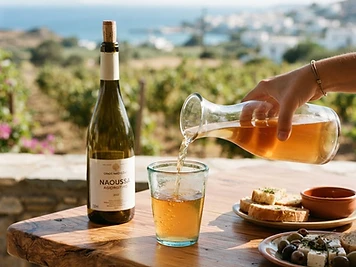
Agiorgitiko
Velvety, plush red from Nemea with deep plum and spice, no rough edges. The most accessible entry point into Greek reds.
“Velvety, plush, and inherently accessible, this is the crowd-pleaser of Nemea.”

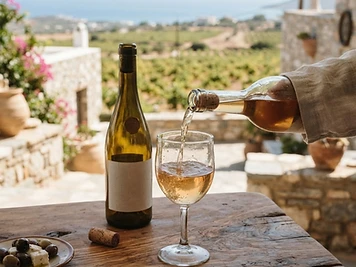
Liatiko
Early-ripening Cretan red with an earthy, slightly oxidative streak. It produces complex, old-world wines that reward patience over immediate pleasure.
“A sun-loving, early-ripening red from Crete that demands respect.”

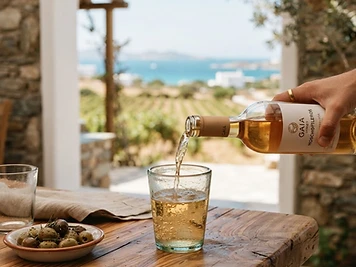
Moschofilero
Floral, aromatic white grown at altitude in Mantinia. Crisp and citrusy, it's built for hot afternoons rather than heavy winter food.
“A floral, aromatic white that feels like spring in a glass.”

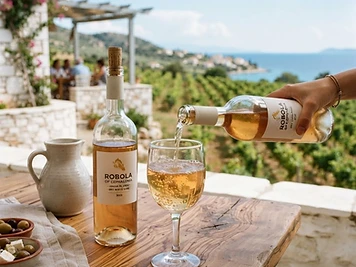
Robola
Limestone-driven white from Cephalonia with a lemon-zest finish. Order it with fried seafood and watch it cut straight through the oil.
“A limestone-loving grape from Cephalonia that defines the Ionian style.”

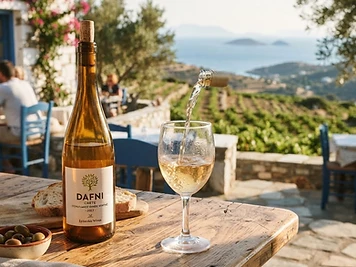
Dafni
Rare ancient Cretan grape named for its bay leaf aroma. Herbal and spicy, it resists easy categorization and suits the genuinely curious drinker.
“A rare, ancient Cretan grape named for the bay leaf aroma it imparts.”

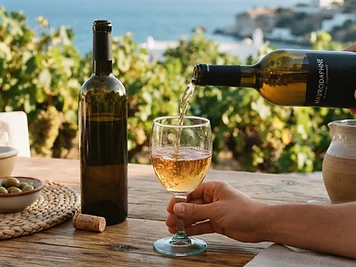
Mavrodaphne
Usually bottled sweet, but seek out the dry table versions. They deliver dark fruit and firm tannin built for cold-weather meals, not dessert.
“Often relegated to dessert wine, but the dry versions are revelatory.”
Where the grapes grow
Wine regions
The appellations that shape the bottle: volcanic islands, high mountain valleys, and sun-baked Peloponnesian slopes. Each is a reason to plan a tasting around.

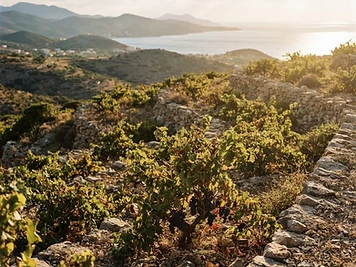
Crete
Massive island functioning as its own wine ecosystem, built on Vidiano, Liatiko, and Kotsifali. One visit barely scratches what's actually here.
“A massive, diverse island that acts as its own distinct wine ecosystem.”

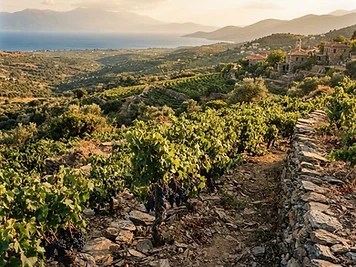
Naoussa
Xinomavro's spiritual home in the north and the most demanding wine region in Greece. Structured, tannic, age-worthy reds shaped by rugged mountain terrain.
“The spiritual home of Xinomavro and the most demanding wine region in Greece.”

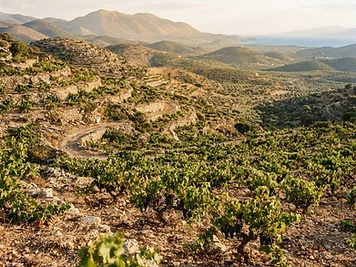
Nemea
Premier appellation for Agiorgitiko, with vineyards rolling past ancient ruins. Come for structured reds as much as the setting.
“The premier appellation for Agiorgitiko, and the red-wine region most worth a detour.”

Santorini Wine (Assyrtiko)
Assyrtiko grown in basket-trained vines on volcanic soil, among the world's great whites. Mineral, saline and bone-dry, and the reason wine belongs on a Greece itinerary.
“Essential if you drink wine — the volcanic Assyrtiko grown on Santorini is among the world's great white wines, and the reason wine belongs in a Greece trip.”

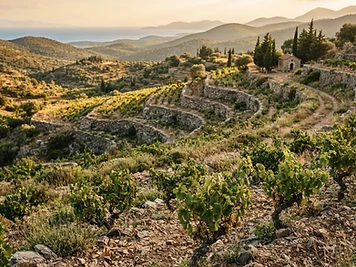
Mantinia
High-altitude plateau in the Peloponnese that grows the country's finest Moschofilero. The cool air here gives a finesse that lower, hotter vineyards simply cannot match.
“A high-altitude plateau that produces the finest Moschofilero in the country.”

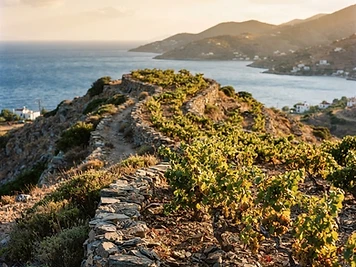
Samos
Island region built on Muscat Blanc à Petits Grains. Produces some of the world's best-balanced, aromatic dessert wines, not an afterthought pairing.
“World-renowned for its Muscat Blanc à Petits Grains production.”

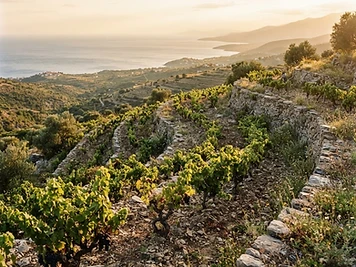
Rapsani
Red-blend enclave on the slopes of Mount Olympus. Xinomavro, Krassato, and Stavroto combine into something softer and more approachable than pure Xinomavro.
“A small red-blend enclave on the slopes of Mount Olympus, unlike any other Greek appellation.”
Where the wine is made
Wineries to visit
Three estates that will pour for you, each an argument for a detour: a mountain winery in Metsovo, a Nemea estate in the Peloponnese, and the co-operative terrace above the Santorini caldera.

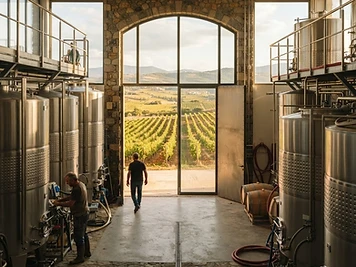
Domaine Skouras
Located in the Nemea valley, this estate focuses on the Agiorgitiko grape variety. It serves as the primary destination for those conducting a rigorous examination of Peloponnesian wine production within reach of the ancient ruins.
“A necessary stop for anyone who takes the Nemea region seriously, providing a clear look at how regional terroir shapes the glass.”

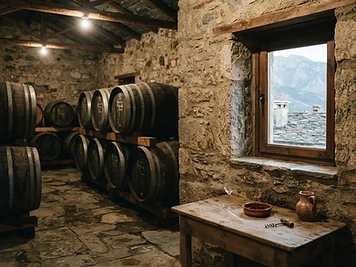
Katogi Averoff
This winery in the high-altitude town of Metsovo successfully established Xinomavro in the Pindos mountains. Its stone facilities offer a cold, structured tasting experience that provides a logical reason to pause your transit between the plains and the mountains.
“A serious producer that proves viticulture is possible in challenging mountain climates through disciplined and focused winemaking techniques.”

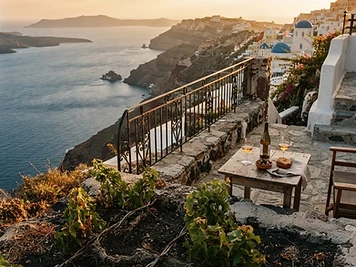
Santo Wines
This cooperative sits perched above the caldera at Pyrgos, prioritizing the view of the water alongside a basic flight of local Assyrtiko. It is the most accessible entry point to Santorini wine culture, provided you are prepared for significant crowds.
“Functionally useful for the view and the variety, yet fundamentally compromised by its own popularity and the resulting lack of intimacy.”
Glass in hand
Spirits
Ouzo and tsipouro are the everyday Greek spirits — and in the north, tsipouro and meze is a way of eating as much as a drink. Tsikoudia is Crete's fiery answer; Metaxa is its own thing entirely.

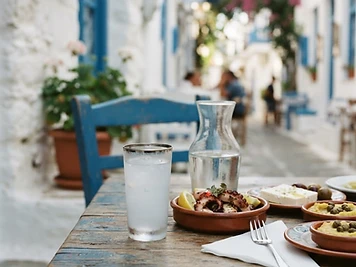
Ouzo
Anise spirit at the center of mezze culture. Cut it with ice and water and it clouds into a milky, slow-sipping companion for small plates.
“Anise-scented and ritualistic; it is the heartbeat of the Greek mezze culture.”

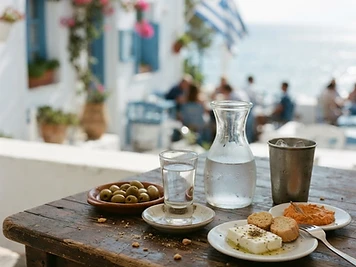
Tsikoudia
Clear, potent Cretan pomace brandy, often homemade and poured as welcome, toast, or digestive. Honesty, not polish, is the point.
“The clear, potent Cretan pomace brandy that serves as a welcome, a toast, and a digestive.”

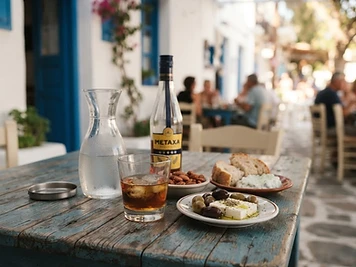
Metaxa
Amber spirit blending brandy, Muscat wine, and botanicals into something hard to classify. Works neat by a fire or mixed into a cocktail.
“An amber spirit that defies classification—part brandy, part Muscat wine, part botanicals.”

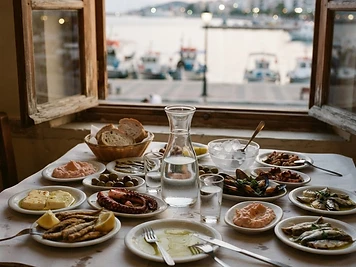
The Tsipouradika of Volos
In Volos, the drinking culture revolves around the tsipouradiko, where every round of spirit arrives accompanied by specific seafood small plates. The experience is defined by the steady accumulation of glassware on your table until you finish.
“This is a singular cultural artifact that remains one of the few honest ways to eat in a coastal Greek city.”

Tsipouro & Meze
Small plates paired with a clear grape spirit, eaten slowly over hours. The north Greek way of dining, built for a table of people with nowhere else to be.
“Recommended — the north Greek way of eating: small plates and a clear spirit, slowly, for hours.”
Daytime
Drinks
The non-alcoholic glasses that define a Greek day — a frappé in the afternoon heat, a slow Greek coffee, mountain tea in winter, almond soumada on the islands.

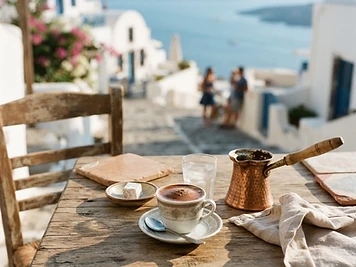
Greek Coffee
Strong, sediment-heavy coffee meant for slow sipping in a kafeneio. Do not stir up the grounds; let them settle and anchor the conversation.
“Strong, sediment-heavy, and meant to be savored slowly while sitting in a traditional kafeneio.”

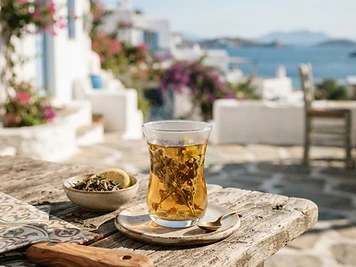
Mountain Tea
Herbal infusion from dried Sideritis flowers, subtle and slightly citrusy. Caffeine-free, so it's the right choice for winding down after ruin-hopping.
“An herbal infusion made from dried Sideritis flowers, prized for its wellness properties.”

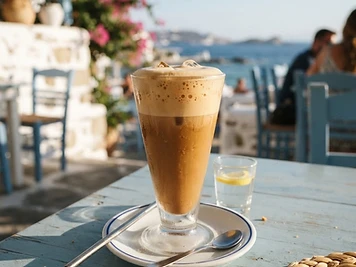
Frappé
Foam-topped instant coffee that fueled the Greek working day for decades. The bean quality matters less than the ritual of lingering at the café.
“The iconic, foam-topped instant coffee that powered the Greek working day for decades.”

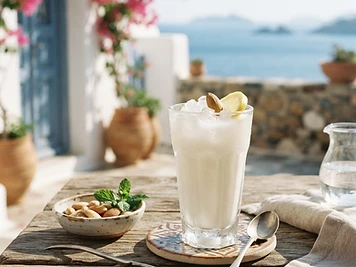
Soumada
Almond syrup drink surviving as old-world hospitality, mainly on Naxos and Sifnos. Floral, nutty sweetness you won't find served elsewhere.
“A refreshing, almond-based syrup drink that is a relic of old-world hospitality.”