Tsikoudia
Photo: Greece Field Guide
The Verdict
The clear, potent Cretan pomace brandy that serves as a welcome, a toast, and a digestive.
Why go
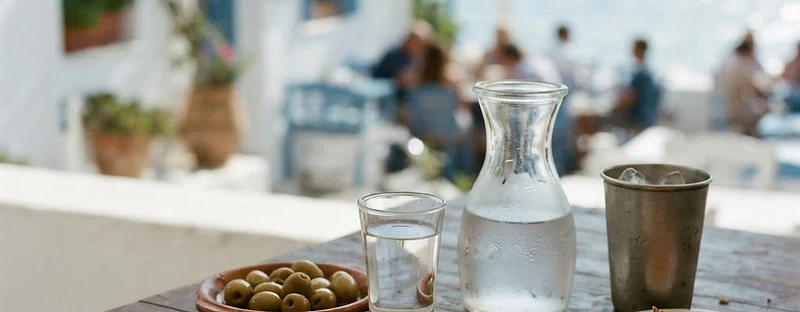
Tsikoudia—frequently called raki across the island—is distilled from the skins, seeds, and stems left over after the autumn wine press. Unlike its mainland cousin tsipouro, it almost never contains anise. What enters the glass is bone-dry, entirely clear, and intensely hot, registering anywhere between forty and sixty-five percent alcohol by volume. The flavor carries the sharp, vegetal ghost of the grape skins rather than fruit sweetness. At room temperature it hits with an unvarnished ethanol punch; served straight from a village freezer, the texture thickens slightly and slides down with less friction. You do not order tsikoudia so much as receive it. A small carafe and heavy shot glasses appear automatically when you sit down at a mountain kafeneio, alongside a bowl of local olives or paximadia, and again at the end of a taverna meal with seasonal fruit or honeyed pastries. Refusing it outright is poor form. The ritual requires taking it neat in measured sips while talking, or downing it in one swift motion to close out a toast. It functions as an appetite sharpener, an antiseptic digestif, and social currency. The trade-off is raw potency. In rural areas, much of it comes from unlicensed copper stills operating in stone barns, stored in recycled water jugs without age, filtration, or standard measurements. A rough batch can be punishingly harsh. If you want subtle
Understand the place
Clear, potent Cretan pomace brandy, often homemade and poured as welcome, toast, or digestive. Honesty, not polish, is the point.
Related
Plan this trip
Greece Field Guide helps you decide. When you're ready to arrange it, take your saved places to an itinerary.