Greek Islands
The islands, organized.
Not an alphabetical list. Greek islands belong to distinct groups with different personalities, access and logistics. Filter by what matters to you.

Agistri
A small pine-covered Saronic island an hour from Piraeus, known for a lagoon you can wade across.
“A day trip, or a single quiet night — the island is small and the boats are frequent.”

Leros
A quiet Dodecanese island of three hillside towns and Italy's strangest piece of colonial architecture.
“A slow island for travelers who have done the famous Dodecanese and now want a harbour to sit in.”
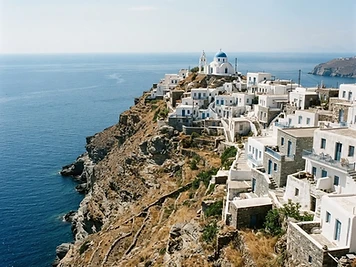
Sikinos
A near-empty Cycladic island with one hilltop Chora and a port that is little more than a beach.
“Two nights is enough here, and two nights is the entire point.”

Kastellorizo
One harbour, one town, and the closest Greek island to Asia Minor.
“Two nights of an extraordinary setting, and then you have seen it — which is the honest reason to go.”

Kythira
The island between two seas, with a Venetian castle town above a double bay and beaches most travelers never reach.
“A quiet, old-fashioned island for drivers who like their coastlines empty and their evenings early.”

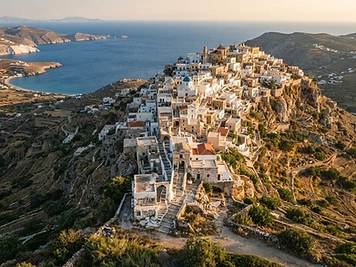
Kea
The Cyclades island Athenians keep for weekends, an hour from Lavrio and almost unknown abroad.
“Do it in two nights from Athens: mountains, a stone Chora inland, and a coast road with nobody on it.”

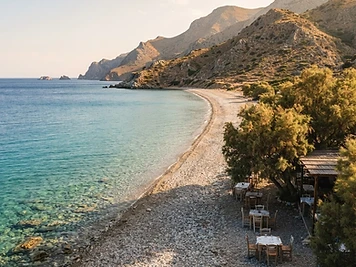
Tilos
A small, mountainous Dodecanese island with no nightlife, one long beach and a cave full of dwarf elephant bones.
“For walkers and quiet: Livadia's beach, an abandoned village on the hill, and birds overhead.”

Patmos
A small Dodecanese island that has been a place of pilgrimage for nine centuries, and still behaves accordingly.
“Three nights for the monastery and the quiet, then leave before you start wishing it had a beach bar.”

Ithaca
A small, quiet Ionian island of deep harbours and steep green slopes, known for a poem rather than a resort.
“Come for the harbours, not the myth: Ithaca's best hours are spent around Vathy, Kioni and the water in between.”

Koufonisia
Two tiny islands in the Small Cyclades with the clearest water in the group and almost nothing built on them.
“Book early, bring no plan, and walk to a different beach every day.”

Ios
The Cyclades island that made its name on nightlife, and turned out to have one of the group's best long beaches.
“Go for Mylopotas and stay for the evenings — but be honest with yourself about which of the two you actually came for.”

Andros
The greenest and least-visited of the large Cyclades, with a waymarked trail network and a contemporary art museum.
“The Cyclades for hikers: mountains underfoot, water in the valleys, and paths with nobody on them.”

Evia
Greece's second-largest island, joined to the mainland by a bridge and almost entirely bypassed by foreign travelers.
“Treat Evia as a mainland road trip with sea at both ends: no ferry to book, no crowds, and a great deal of island.”

Amorgos
A long, mountainous Cycladic island whose monastery is built into a cliff three hundred metres above the sea.
“The Cyclades for walkers and divers, with a crossing long enough to keep the crowds off it.”

Thassos
A pine-covered northern island of marble and turquoise water, forty minutes by ferry from the mainland.
“The island Greeks choose for a driving holiday, and the one most foreign travelers have never considered.”

Ikaria
A long, mountainous North Aegean island between Samos and Mykonos, known for its hot springs, its wine and a pace of life that ignores the clock.
“The island where people live longest, and where very little happens: steep green mountains, hot springs and festivals that run until dawn.”
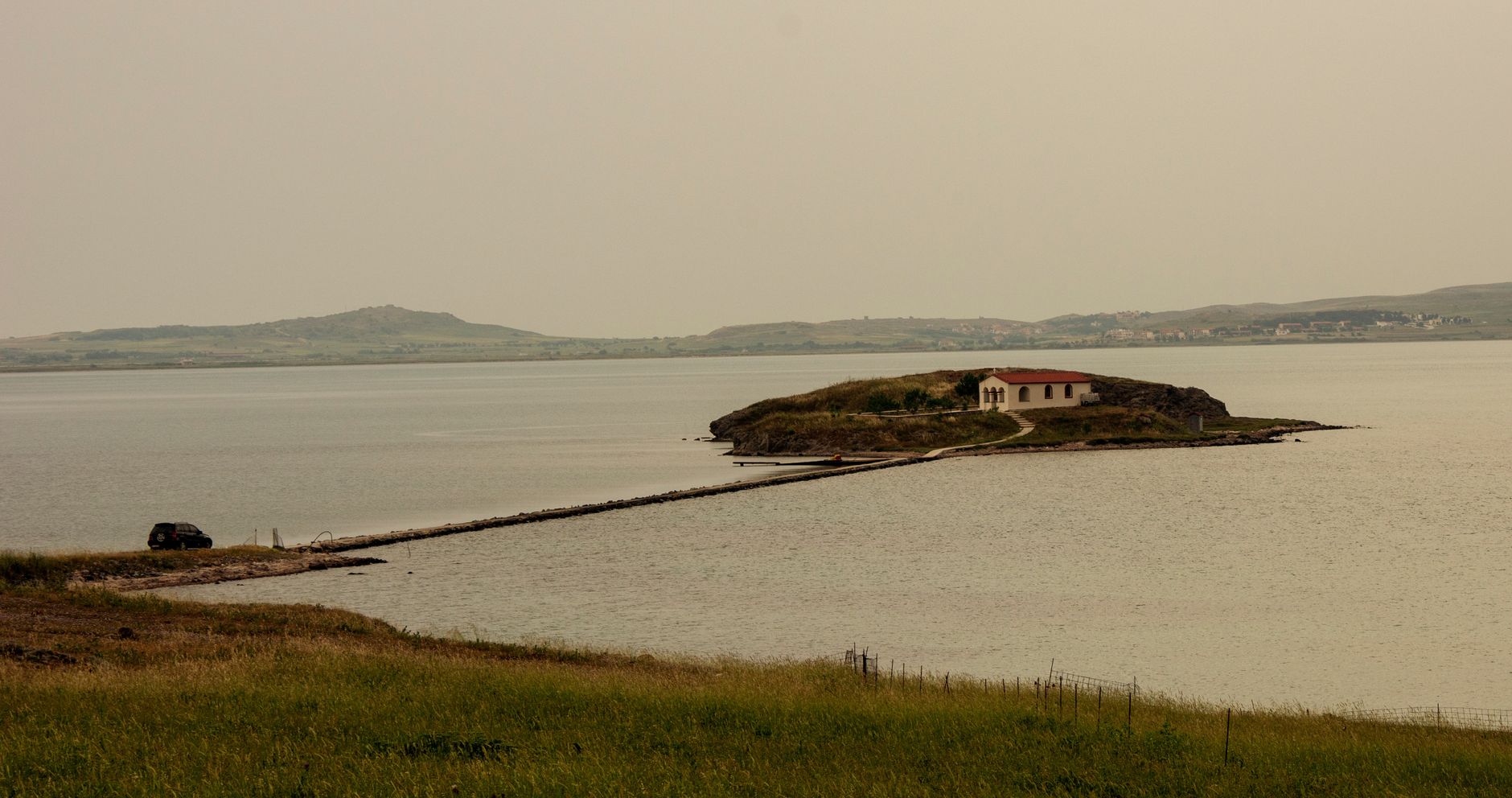
Limnos
A large, quiet North Aegean island of volcanic hills, sandy beaches and wheat fields, with Myrina harbour in the west and the Bronze Age site of Poliochni in the east.
“A big, empty, wind-scoured island in the north Aegean: volcanic hills, one beautiful harbour town, and one of the oldest settlements in Europe.”

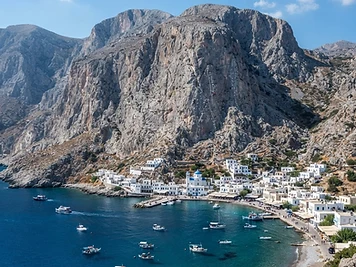
Kalymnos
A Dodecanese island of steep grey cliffs above deep blue water, known for its sponge-diving past and now for its rock climbing.
“A bare limestone island of sponge divers and rock climbers: steep cliffs, deep water, and a season that runs outside summer.”
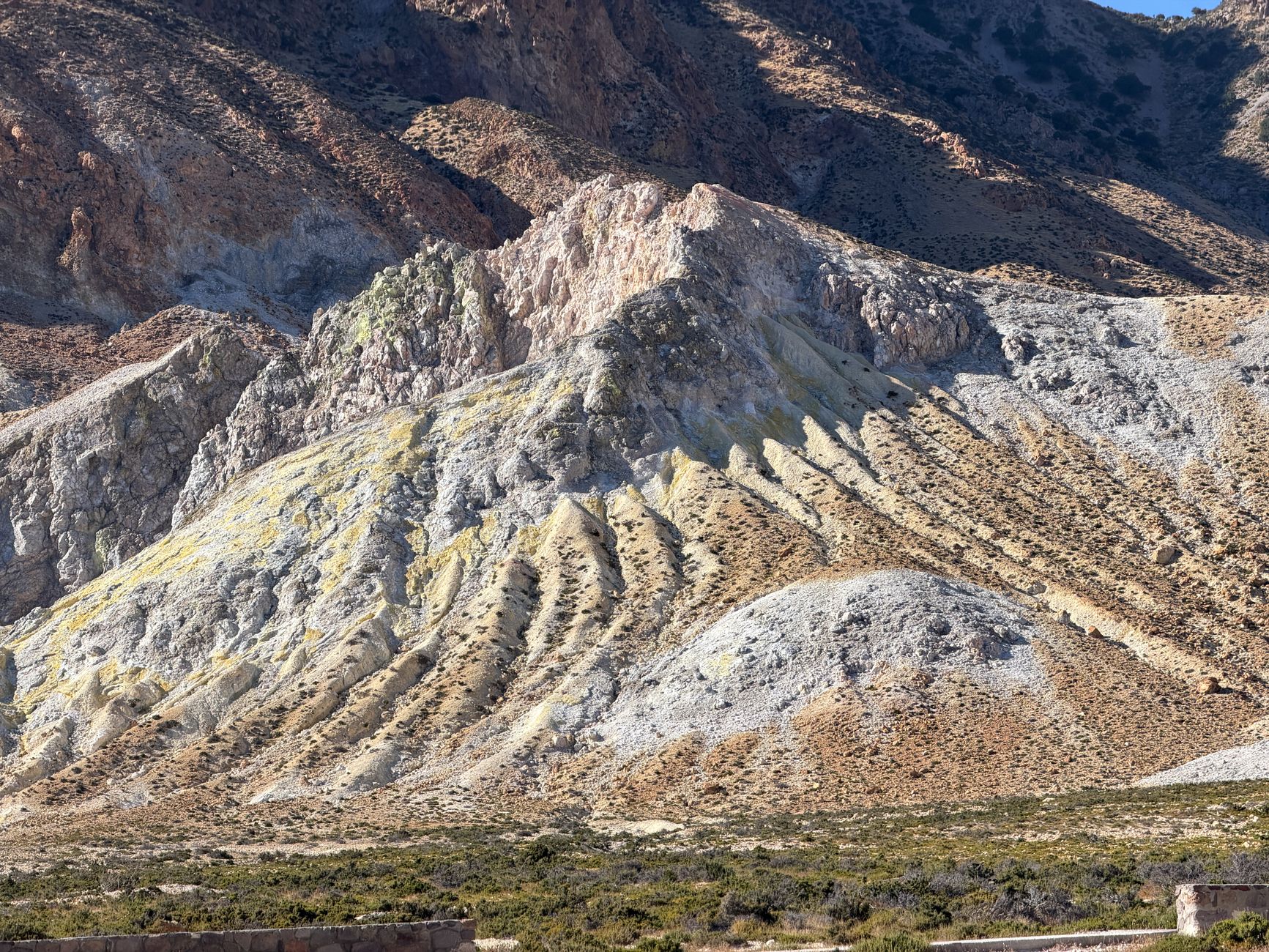
Nisyros
A small round volcanic island south of Kos, its centre a caldera with active fumaroles and a floor of grey ash and yellow sulphur.
“A whole island that is one volcano, with a crater you can walk into and a harbour town that has barely changed.”

Astypalea
The westernmost of the Dodecanese, two rocky lobes joined by a narrow neck, with a white hill town and quiet beaches.
“A butterfly-shaped island with a Cycladic-looking chora, a Venetian castle and almost no visitors.”

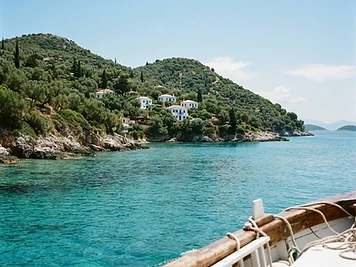
Paxos
The smallest of the main Ionian islands, off the coast of Epirus, with three harbour villages, olive groves and water clear enough to see the anchor.
“A small, green, well-off island of olive groves and clear water, where the day boats come for an afternoon and then leave.”

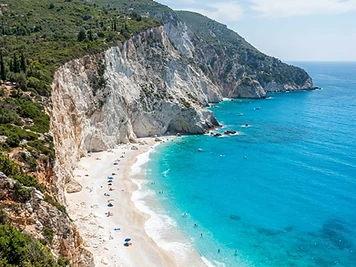
Lefkada
The fourth largest Ionian island and the only one reached by road, with the famous west-coast beaches at Porto Katsiki and Egremni.
“The Ionian island you can drive to: white cliffs and turquoise water on one coast, a lagoon town and green mountains on the other.”

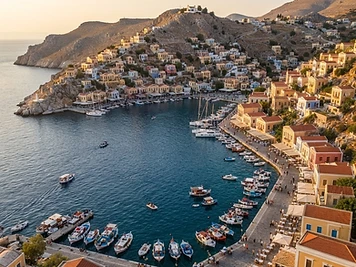
Symi
A small Dodecanese island and its harbour town of Gialos, its painted houses rising to the old town of Chorio and a castle above.
“A horseshoe harbour of houses the colour of honey under bare hills — the best-looking port in the Dodecanese, and crowded between ten and four.”

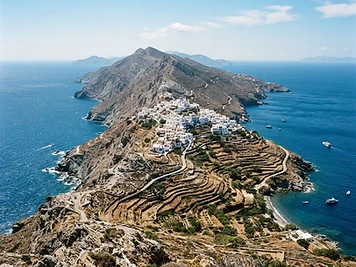
Karpathos
A long, thin, mountainous island between Rhodes and Crete, with beaches on the east coast and villages in the north that keep their own traditions.
“A long, mountainous Dodecanese island where the north keeps its own dialect and dress — the wildest and least developed of the group.”

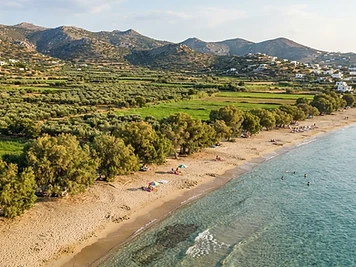
Kos
The second largest of the Dodecanese, known for the Asklepion, a broad sandy coast and a harbour town that bicycles rather than drives.
“A green, flat, fertile Dodecanese island with a first-rank ancient site and a bicycle-friendly town — busier and easier than its neighbours.”

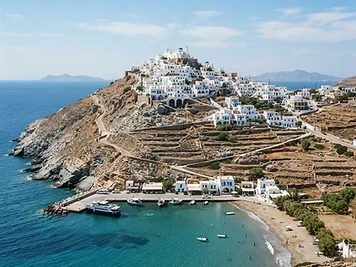
Serifos
A quiet Cycladic island west of Sifnos, its chora on a hill above the port, with iron-mining ruins and long empty beaches.
“A bare, iron-mining Cycladic island with a white chora on the hill and beaches almost nobody uses.”

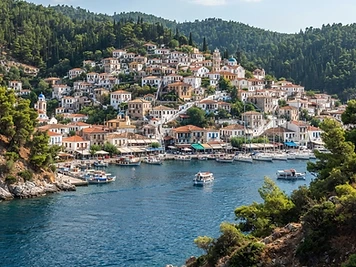
Poros
A small Saronic island of pine forest and two towns, separated from the Peloponnese by a channel you can watch the ferries thread.
“A pine-covered island town a few hundred metres across a strait from the mainland — small, green and much quieter than its neighbours.”

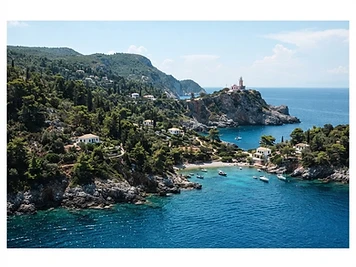
Spetses
The southernmost of the Argo-Saronic islands, pine-covered and car-free, whose captains made it wealthy in the age of sail.
“The Saronic island with money in its past: pine forest, quiet coves, and a car-free town built by nineteenth-century shipowners.”

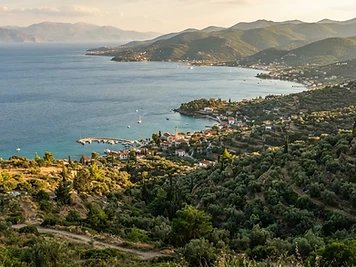
Lesvos
The third largest Greek island — an unhurried North Aegean world of olive groves, ouzeries, castles, a petrified forest and long empty beaches.
“A whole world of an island: ouzo country, a petrified forest, a Byzantine monastery and villages that see almost no tourists.”
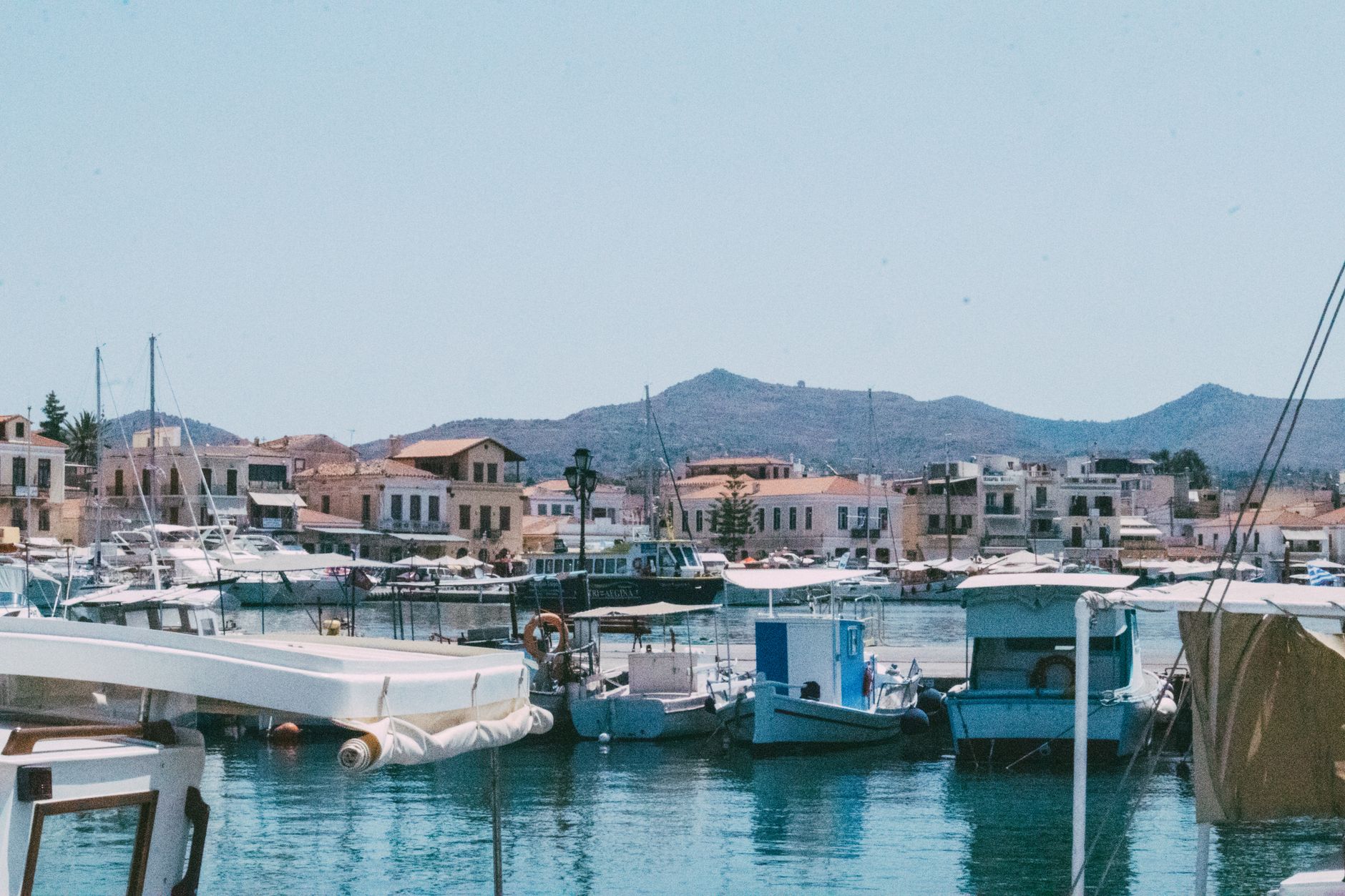
Aegina
The most accessible of the Argo-Saronic islands — pistachios, a fifth-century temple above the water, and a working harbour forty minutes from Athens.
“An hour from Piraeus and a world away from it: pistachio groves, a temple alone on a hill above the sea, and a harbour town Greeks use as a weekend.”

Antiparos
A small, low Cycladic island facing Paros, with a single village, good beaches and a cave that goes deep into the hill.
“The smaller island across the strait from Paros: one village, one very large cave, and a summer crowd that mostly goes home in the evening.”

Samos
A large, green, mountainous North Aegean island with a wine tradition, the ruins of a great temple to Hera, and a long coast of quiet beaches.
“The greenest and most mountainous of the big east Aegean islands: vineyards, a great temple in the flat land, and beaches at the end of gorges.”

Chios
A large, under-visited North Aegean island known for the mastic trees that grow only here, its medieval fortified villages, and a handsome harbour town.
“The mastic island: quiet, wealthy and almost unvisited, with fortified villages, citrus groves and a first-rank Byzantine monastery.”

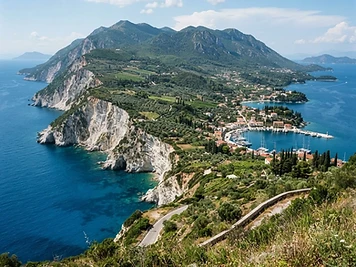
Zakynthos
The southern Ionian island known for the shipwreck cove and the turtles that nest on its beaches, with a green interior few visitors bother with.
“An island of two halves: the white cliffs and turtle beaches of the south and west, and an east-coast resort strip that most people see first.”

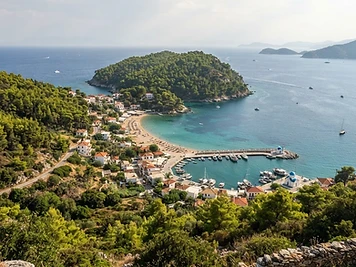
Skiathos
The busiest of the Sporades — a small, pine-covered island with sandy beaches strung along one coast and a harbour town that parties.
“The Sporades with an airport and a nightlife: pine woods over most of it, a single bus route of sandy beaches, and a town that stays up late.”
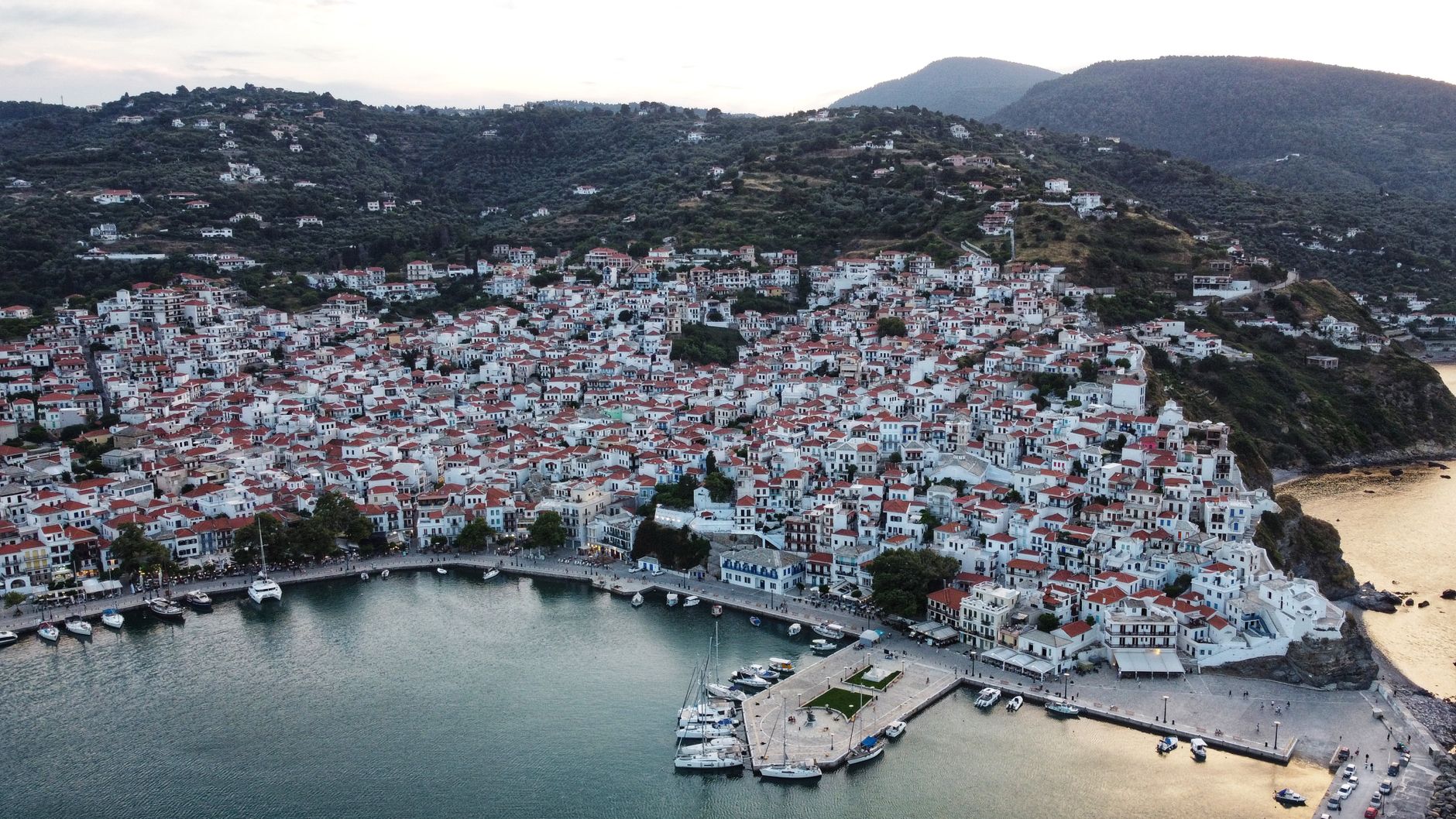
Skopelos
The garden of the Sporades — pine forest to the waterline, an amphitheatre of a harbour town, and beaches that stay quiet outside August.
“The greenest island in the Aegean, with a harbour town in tiers of white houses and beaches the pines come right down to.”

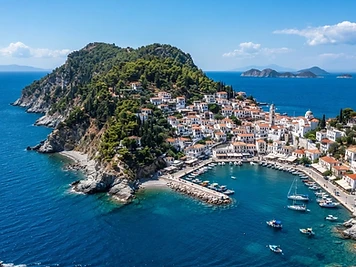
Alonissos
The most peaceful of the inhabited Sporades, wrapped in a marine park that protects monk seals and the seabed around it.
“The quiet one: a small island inside Europe's largest marine park, with a half-ruined hill village, a working port, and clear water.”

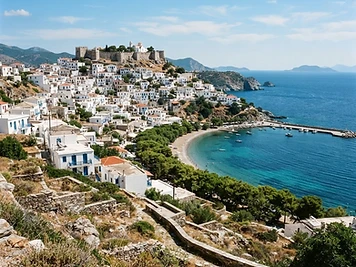
Skyros
The southernmost Sporades island — flat-roofed houses, a Byzantine kastro above the chora, and a dry landscape that looks more Cycladic than pine.
“The odd one out among the Sporades: dry, flat-roofed and unwesternised, with a carnival, a hilltop kastro and its own breed of pony.”

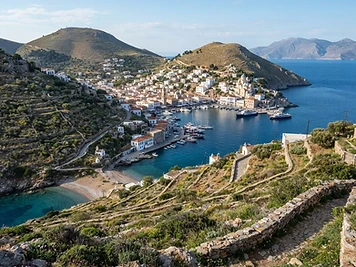
Syros
The administrative capital of the Cyclades — a nineteenth-century port town of marble squares and pastel houses, with Ano Syros above it and sandy beaches a bus ride away.
“The Cyclades' working capital: a neoclassical port town with year-round life, a Catholic hill village above it, and beaches you can reach by bus.”

Tinos
The Cyclades' pilgrimage island — the great church of Panagia Evangelistria in the port town, and above it a marble-working hill country of terraced villages and granite boulders.
“Two islands at once: a pilgrimage town that fills with Greeks in August, and a marble-carving hill country that almost nobody visits. The villages are the reason to come.”
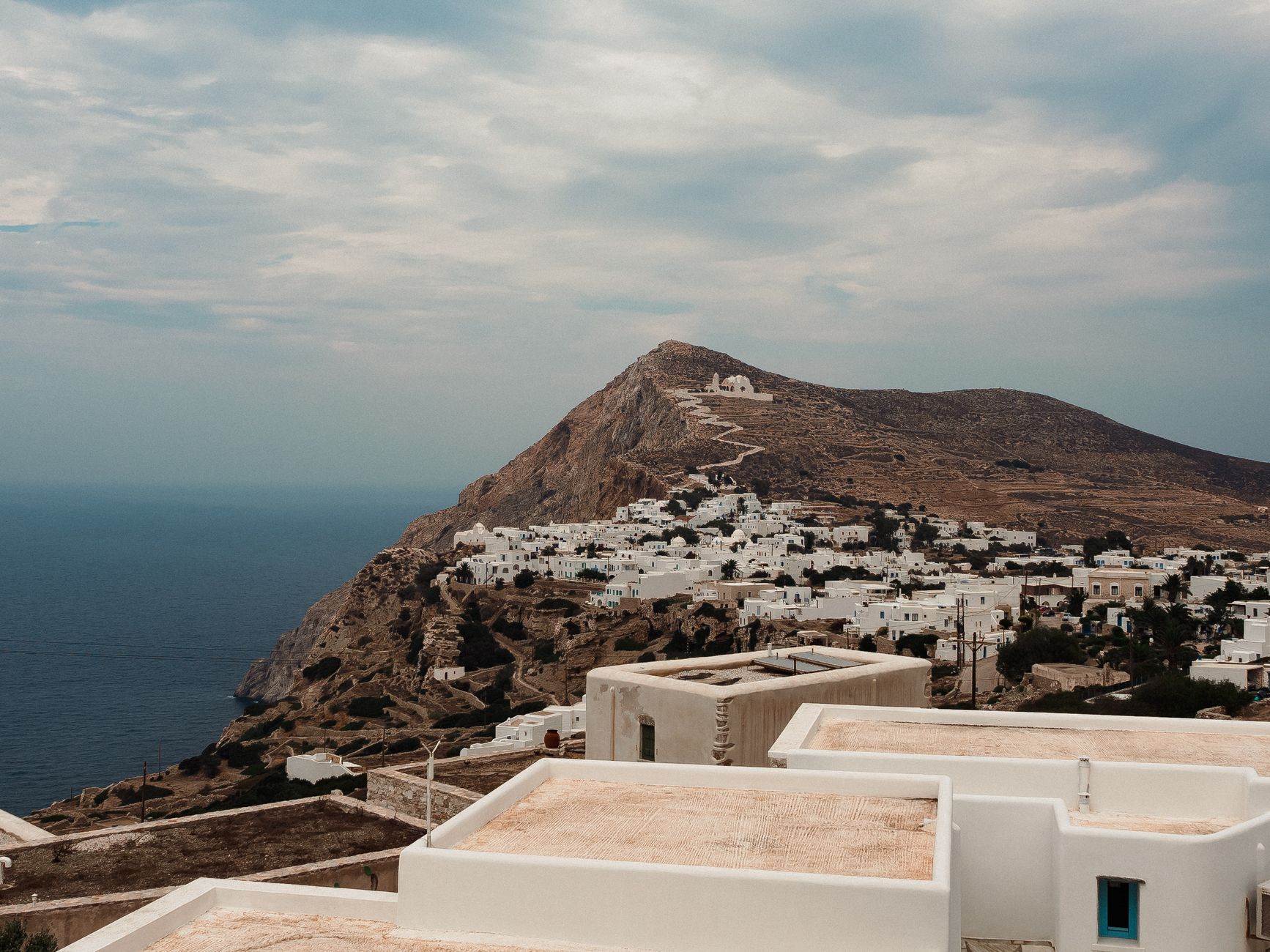
Folegandros
A small, dry, spectacular Cycladic island — its chora on the lip of a two-hundred-metre cliff, a medieval kastro, and a handful of beaches.
“The most dramatic small island in the Cyclades: a cliff-edge chora, three beaches worth the trip, and almost nothing else — which is the point.”

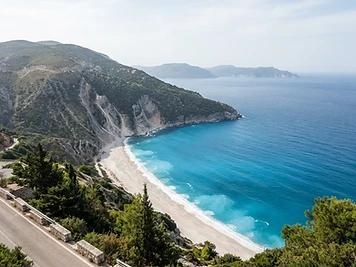
Kefalonia
The largest Ionian island — white pebble beaches under cliffs, an underground lake, a fir-covered mountain, and a Venetian harbour village in the north.
“The biggest island in the Ionian and the one with the most variety: white cliffs and turquoise bays in the north, green slopes and vineyards in the middle, a proper capital in the south.”

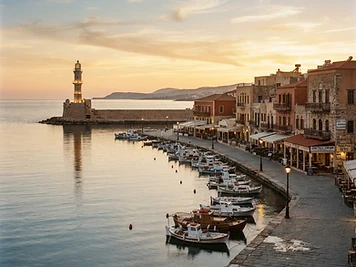
Crete
Greece's largest island — a travel universe of its own, with Venetian harbours, Minoan palaces, the Samaria Gorge and the best beaches in the country.
“Crete isn't another island stop — for many travelers it's a whole trip of its own, and the strongest single-island choice in Greece.”

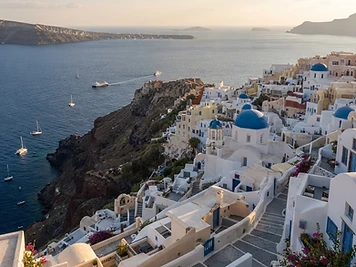
Santorini
The caldera island — one of the world's most photographed landscapes, and the most crowded place in Greece in summer.
“The caldera really is extraordinary. The crowds and pricing are real too. Two nights is enough for many Greece itineraries.”

Mykonos
The nightlife and luxury island — beach clubs, boutique hotels and the nearby sacred island of Delos.
“Excellent if nightlife, beach clubs and polished hospitality are priorities; poor value if you're chasing quiet village life.”

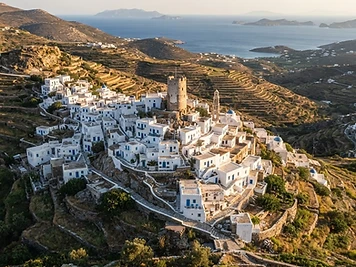
Naxos
The largest of the Cyclades — long sandy beaches, a real mountain interior with villages, and some of the best food in the islands.
“One of the strongest all-around Cycladic islands if you want beaches, mountain villages and excellent food without Santorini's spectacle or Mykonos's nightlife focus.”
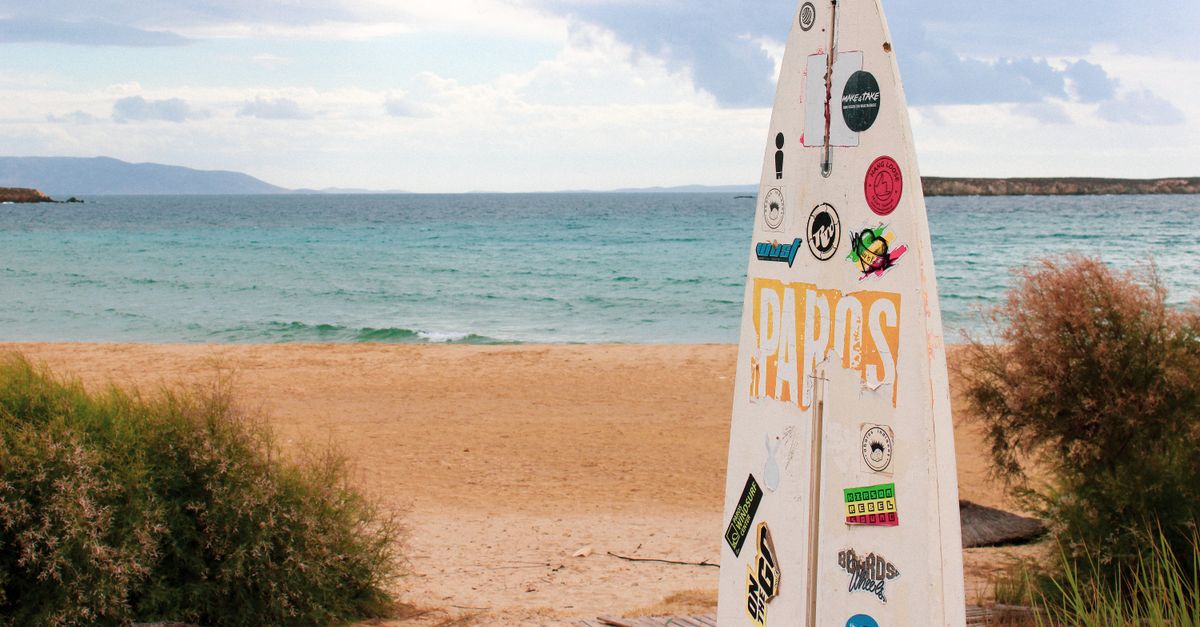
Paros
A central Cycladic hub — old marble villages, good beaches, and the easiest ferry connections in the group.
“The most convenient base for Cyclades island hopping, with enough of its own character to stand alone.”

Milos
A volcanic western Cycladic island of dramatic coastal geology and the famous fishing village of Klima.
“The most visually dramatic of the lesser-visited Cyclades — coastal geology that rivals Santorini without the crowds.”
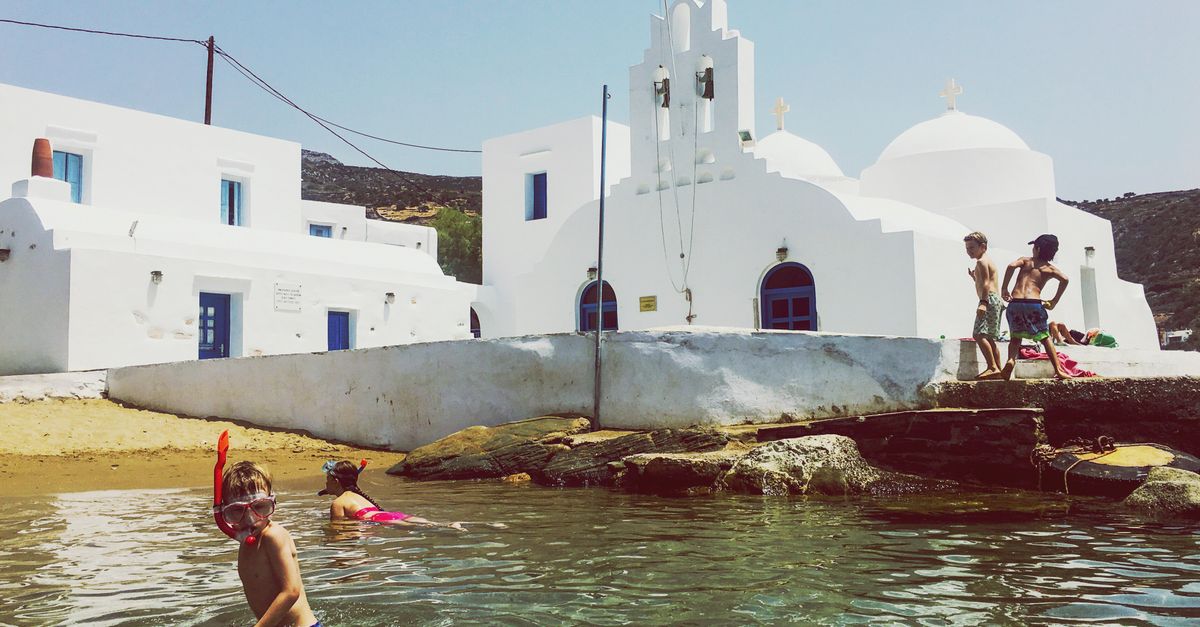
Sifnos
A quietly refined Cycladic island known across Greece for its food and its pottery villages.
“The Cycladic island for travelers who care about food — a quietly excellent place that never tries too hard.”
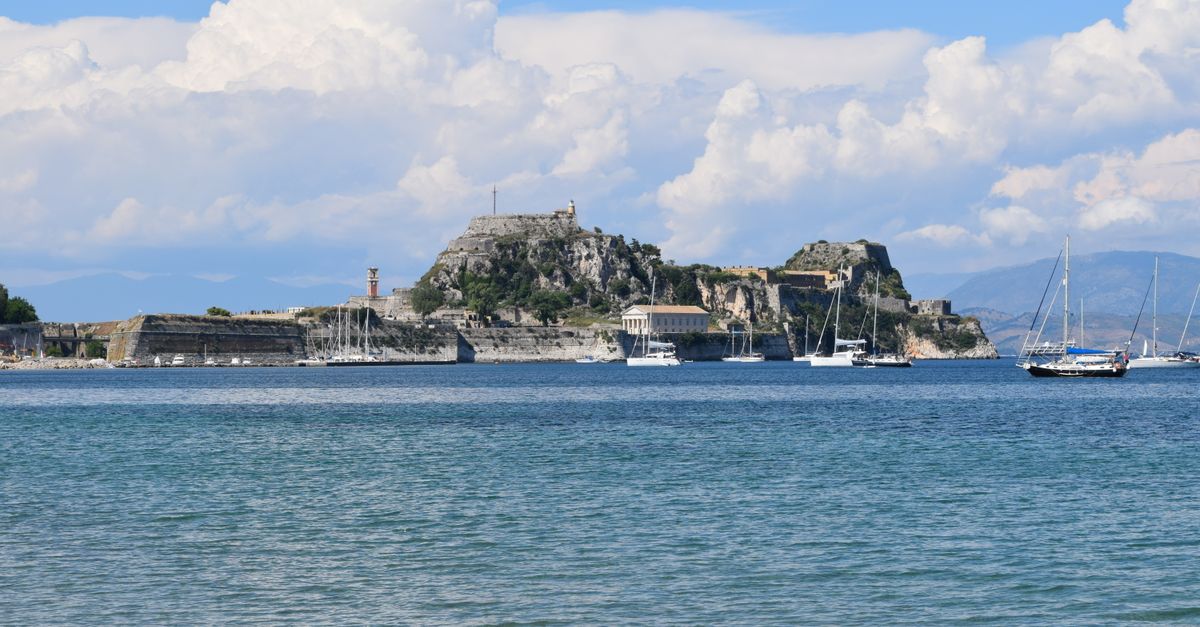
Corfu
The greenest and most Italian of the Ionian islands — a Venetian old town, olive groves, and a long, layered history.
“The Ionian island with the most character and history — choose it for green landscapes and a Venetian old town, not for bare Cycladic white.”

Rhodes
The largest of the Dodecanese — a walled medieval old town, long beaches, and a longer season than the Cyclades.
“The best Dodecanese island for a first visit — medieval history, family beaches, and a season that runs later than the Cyclades.”
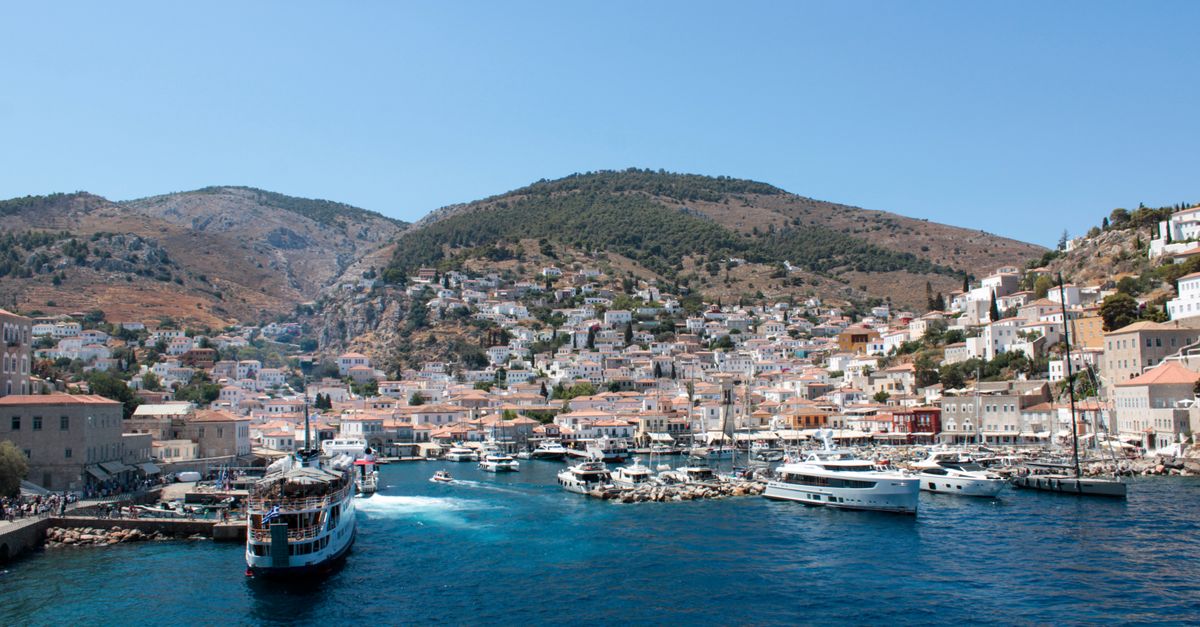
Hydra
A car-free Saronic island of stone mansions and no motor traffic — the most beautiful island within reach of Athens.
“The one Saronic island genuinely worth a short stay — car-free, stone-built, and a fast trip from Athens.”
Next step
Picked two or three islands? The trip is mostly sequencing from there: nights, ferries, and the days in between.