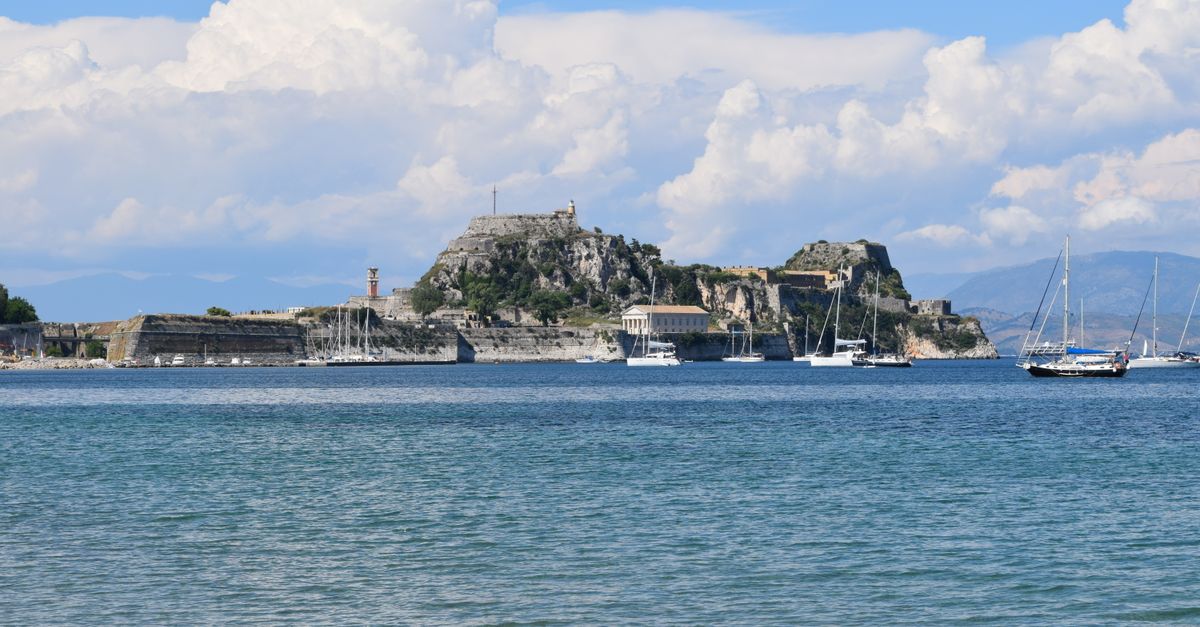
Corfu
Photo: IOANNIS SAKKOS / Pexels
The Verdict
The Ionian island with the most character and history — choose it for green landscapes and a Venetian old town, not for bare Cycladic white.
Why go
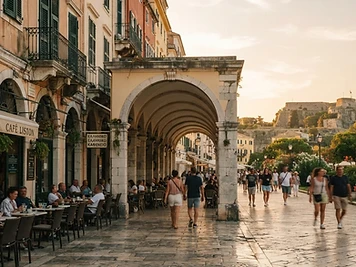
Corfu Town is an anomaly in Greece: tall, pastel-washed Venetian tenements, narrow flagstone alleys strung with laundry lines, and shaded arcades inspired by the Rue de Rivoli. The island spent four centuries under Venetian rule, followed by French and British administrations, skipping the Ottoman period entirely. This heritage shapes everything from the twin maritime fortresses flanking the capital to local cooking, where garlic-heavy sofrito and peppery pastitsada take the place of classic Aegean fare. Beyond the capital, the geography is defined by millions of silver-leafed olive trees and steep limestone coastline. Travelers base themselves either near the heritage quarters of the town or on the coast, balancing mornings in Venetian museums with afternoons on west-coast sand beaches or the pebbled coves of the northeast. It works best as an unhurried, multi-day exploration rather than a quick transit stop. The trade-off is scale and commercial development. Parts of the central and southern coastlines bear the heavy scars of early package tourism, and peak summer crowds fill the narrowest quarters. The island rewards those who rent a car, navigate the tangled interior roads, and accept an aesthetic that feels far closer to Italy than to the white-washed Cyclades.
Understand the place
The greenest and most Italian of the Ionian islands — a Venetian old town, olive groves, and a long, layered history.
Where to swim
Beaches
What to eat & drink here
Food & drink

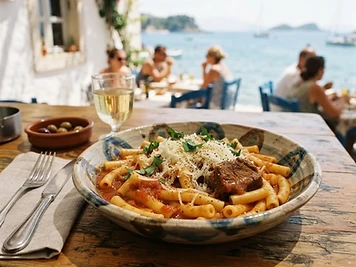
Pastitsada
Rooster or beef stewed in tomato sauce with spetsieriko spice mix, poured over thick pasta. Corfu's Venetian-Ionian hybrid, built for slow Sunday lunches.
“Venetian elegance meets Ionian spice in a bowl of pure comfort.”

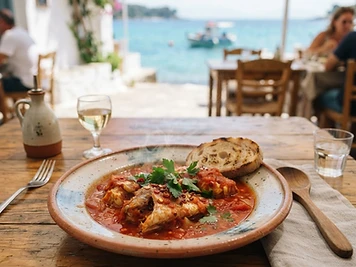
Bourdeto
Scorpion fish cooked in a punchy red sauce loaded with cayenne pepper. Corfu's fiery proof that Greek cooking isn't only lemon and oregano.
“A spicy, fiery fish stew that proves Greek food isn't just lemon and oregano.”
The old world
History & archaeology

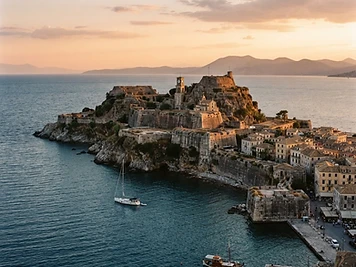
The Old Fortress
The Venetian citadel on its own promontory east of Corfu Town, separated from the old town by a moat and a sea channel.
“Climb it for the view back over the old town, not for the ruins. The walk up is the point.”

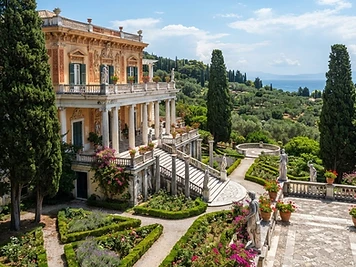
Achilleion Palace
An empress's summer villa above Gastouri, built for Elisabeth of Austria and later used by the Kaiser, with formal gardens and a wide view of the island.
“Kitsch imperial villa, genuinely good gardens. Worth an hour if you are already passing; not a reason to cross the island.”
Beyond the built
Outdoors & nature

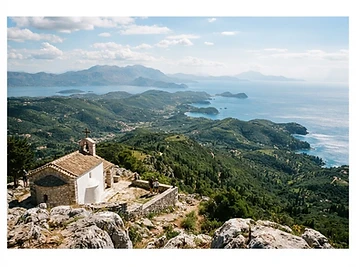
The base decision
Where to stay in Corfu
Corfu is not one place. Where you sleep decides how much of it you walk, drive or queue for.
Our default
Corfu Town
The only Greek island capital that feels like a small European city, and the right base if you want to walk.
- High
Kassiopi & the North-East
North-east corner, facing the mainland and Albania across the strait
The best swimming and the best tavernas on Corfu, at the end of the longest drive from the airport.
- Mid
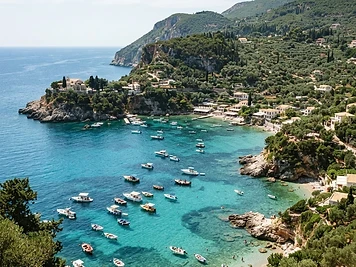
Paleokastritsa
West coast, 25 km from Corfu Town
Six bays, a monastery on the headland, and the island's most photographed water — with the crowds that implies.
- Value
Benitses & the South-East
East coast, 12-16 km south of Corfu Town
The value base on Corfu, close enough to town for dinner and far enough for a cheaper room.
Towns & villages

Easy to combine with
Logically reachable by transport. Confirm current ferry/flight schedules before booking.
Nearby
Sources
Booking links
Commercial links: we may earn a commission if you book through them, at no extra cost to you.
Plan this trip
Greece Field Guide helps you decide. When you're ready to arrange it, take your saved places to an itinerary.