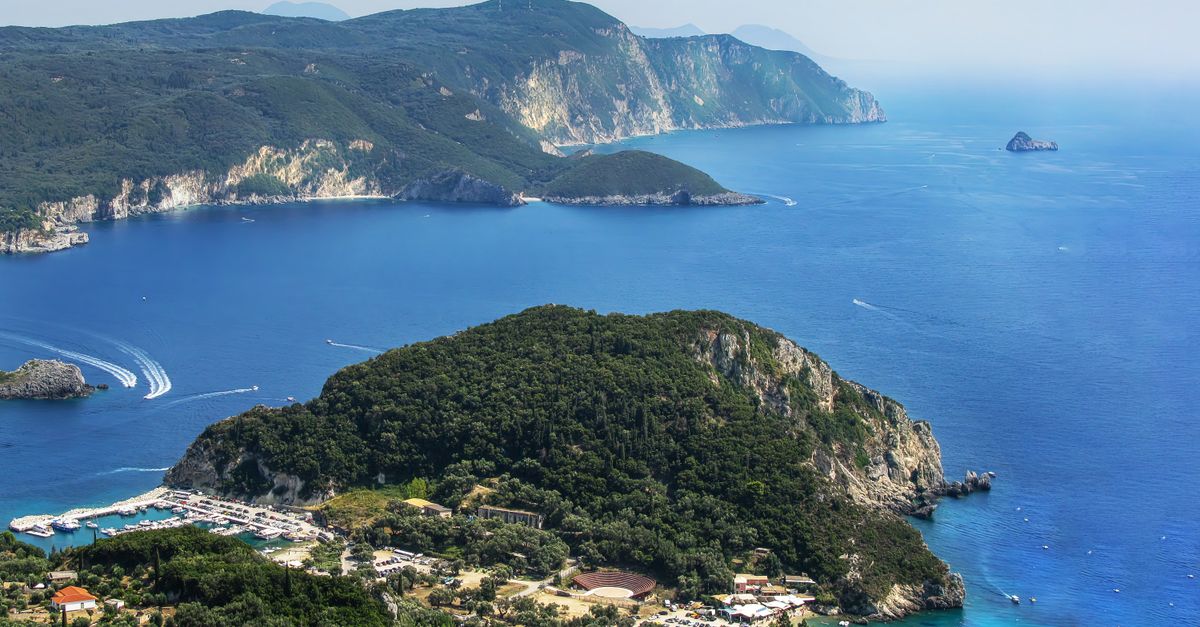
Ionian Islands
Photo: Erik Karits / Pexels
The Verdict
The lush, green Greece — choose the Ionian when you want calm swimming water and wooded coastlines over bare Cycladic rock.
Why go
The Ionian group trades the sun-bleached rock and wind of the Aegean for deep pine cover, olive groves, and water that resembles glass. Heavy winter rainfall feeds the green landscape, while centuries of Venetian, French, and British rule shaped the architecture. Corfu Town feels more like northern Italy than the standard whitewashed image of Greece, with multi-story shuttered tenements, arcaded squares, and fortified harbors. Days here revolve around sheltered bays and slow road transit. On Kefalonia and Lefkada, limestone cliffs drop straight into electric blue coves, though reaching the shoreline often means descending long staircases or negotiating narrow switchbacks. The sailing conditions are consistently calm, lacking the ferocious meltemi winds that hit the central Cyclades every July and August, which makes boat charters and family swimming uncomplicated. The trade-off is geographic friction and heavy humidity. The islands do not connect well to each other by ferry; hopping between Corfu, Kefalonia, and Zakynthos is awkward, often requiring loops back to the mainland. You choose one or two islands and rent a car, accepting that you will spend significant time behind the wheel on steep mountain roads rather than stringing together quick ferry hops.
Understand the place
Green, wooded islands on Greece's western coast — Italian and Venetian influence, calm swimming water, a different feel from the Cyclades.
Where to swim
Beaches
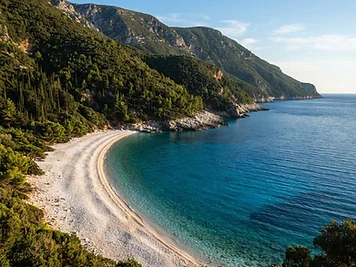
Antisamos Beach
A broad white-pebble beach in a deep bay northeast of Sami, with pines and cypresses crowding the slope directly behind it.
“White pebbles, deep blue water and pine coming down to the shore — the best-organised good beach on the island.”
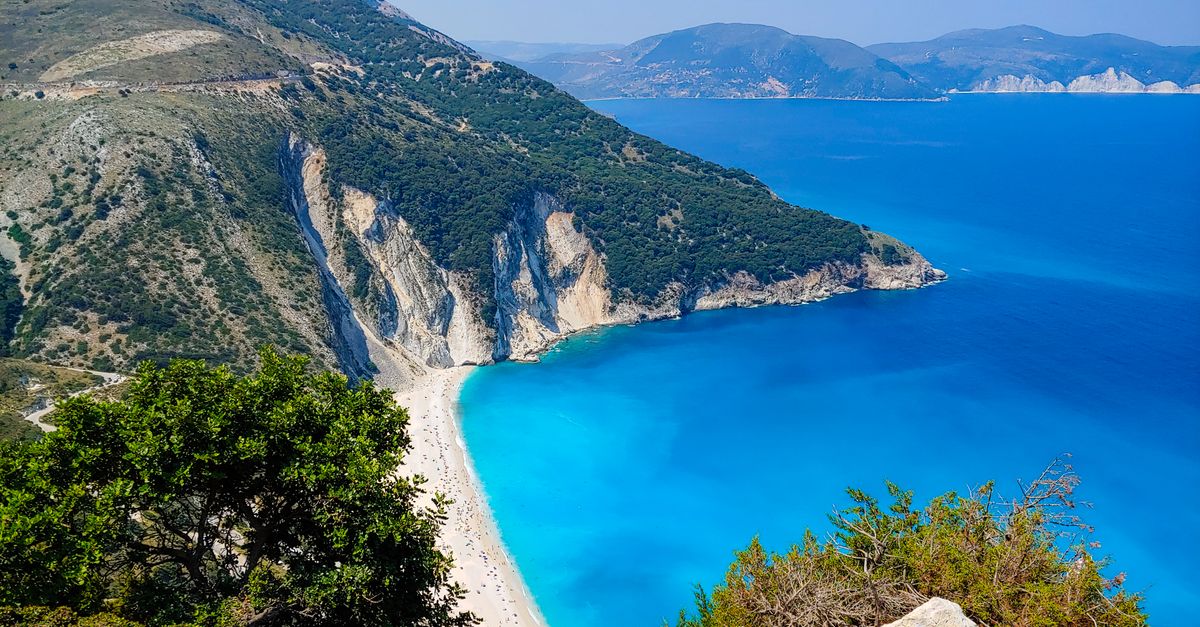
Myrtos Beach
White pebble crescent below towering cliffs, best seen first from the clifftop road above. Kefalonia's most photographed beach, for good reason.
“Recommended — the most photographed beach in the Ionian, a white crescent below towering cliffs.”

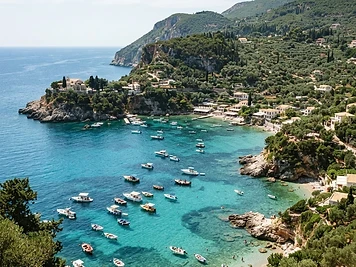
Paleokastritsa
A stack of turquoise bays below wooded cliffs on Corfu's west coast, with a monastery on the headland and boat trips to sea caves.
“The most photogenic water on Corfu and the most crowded car park on Corfu. Arrive before ten, or come by boat and skip the road entirely.”
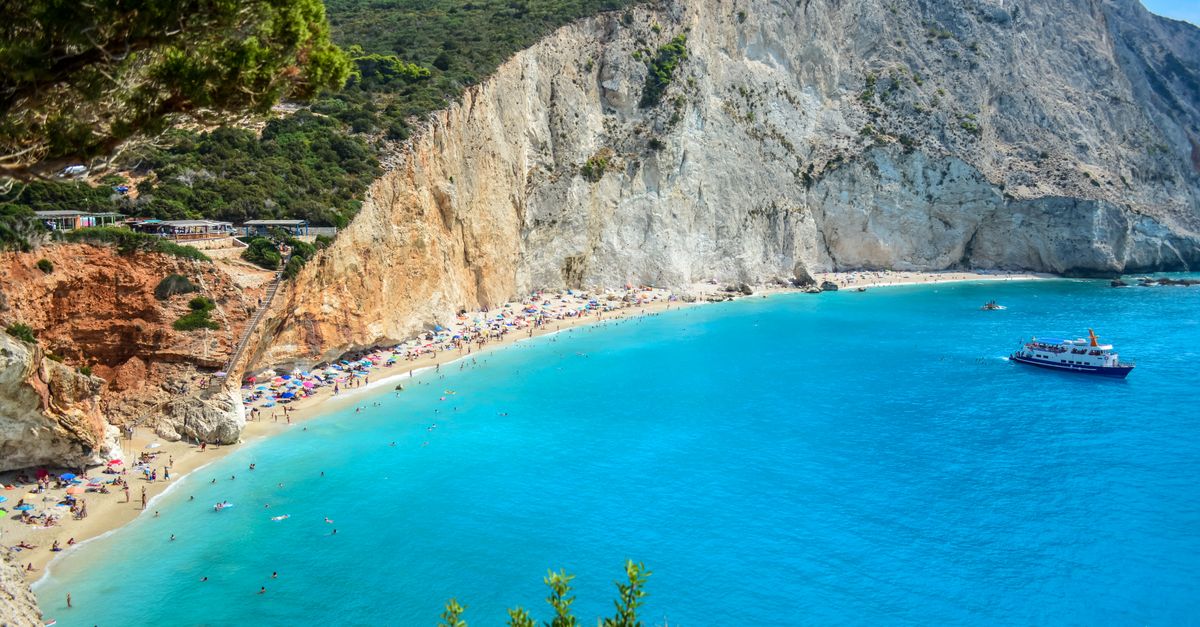
Porto Katsiki
White sand strip beneath sheer cliffs, reached down stairs cut into the rock. One of the most dramatic beaches in the Ionian, and Lefkada's signature shot.
“Recommended — one of the most dramatic Ionian beaches: a strip of white sand at the foot of a cliff.”
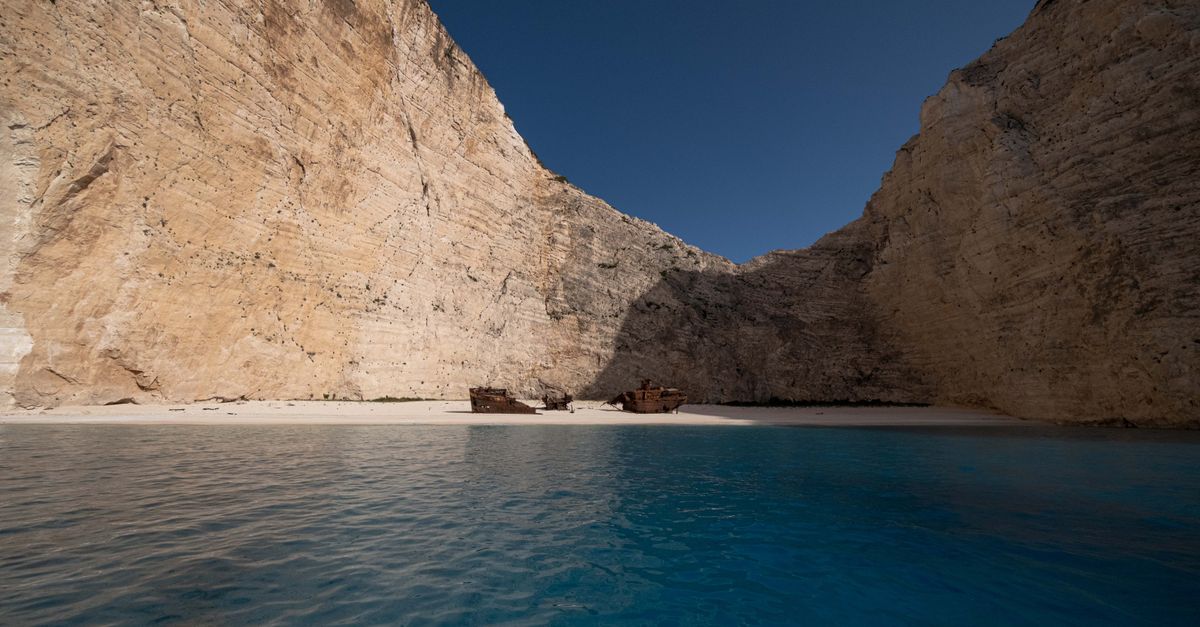
Navagio (Shipwreck Beach)
Rusty shipwreck on white sand in an enclosed cove, famous from the clifftop view above. The beach itself is a crowded, boat-herded affair, so the photo is the point.
“Optional — the famous shipwreck cove is stunning from above, but the beach itself is a crowded, boat-herding experience.”
What to eat & drink here
Food & drink

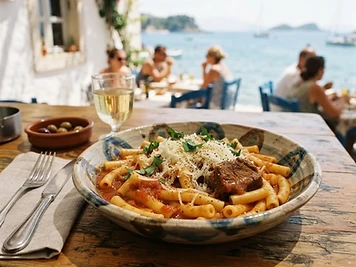
Pastitsada
Rooster or beef stewed in tomato sauce with spetsieriko spice mix, poured over thick pasta. Corfu's Venetian-Ionian hybrid, built for slow Sunday lunches.
“Venetian elegance meets Ionian spice in a bowl of pure comfort.”

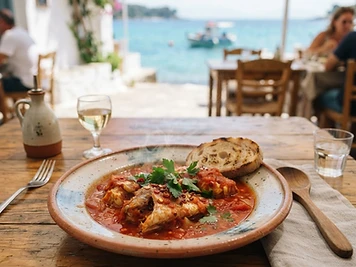
Bourdeto
Scorpion fish cooked in a punchy red sauce loaded with cayenne pepper. Corfu's fiery proof that Greek cooking isn't only lemon and oregano.
“A spicy, fiery fish stew that proves Greek food isn't just lemon and oregano.”

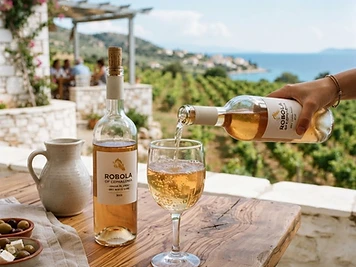
Robola
Limestone-driven white from Cephalonia with a lemon-zest finish. Order it with fried seafood and watch it cut straight through the oil.
“A limestone-loving grape from Cephalonia that defines the Ionian style.”
The old world
History & archaeology

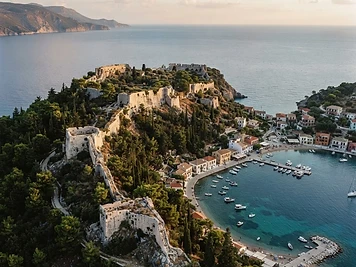
Assos Castle
The sixteenth-century Venetian fortress whose walls cover the headland above Assos, reached on foot from the village through the pines.
“A Venetian fortress covering a whole headland above Assos, with pines growing through the walls and the best view on the island.”

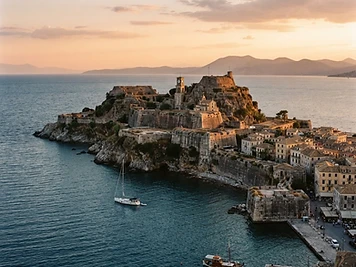
The Old Fortress
The Venetian citadel on its own promontory east of Corfu Town, separated from the old town by a moat and a sea channel.
“Climb it for the view back over the old town, not for the ruins. The walk up is the point.”

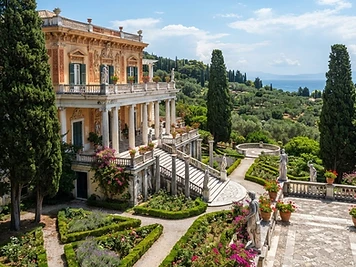
Achilleion Palace
An empress's summer villa above Gastouri, built for Elisabeth of Austria and later used by the Kaiser, with formal gardens and a wide view of the island.
“Kitsch imperial villa, genuinely good gardens. Worth an hour if you are already passing; not a reason to cross the island.”
Beyond the built
Outdoors & nature

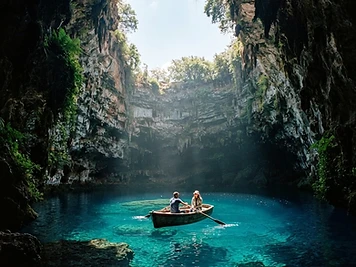
Melissani Cave
A collapsed cave near Sami with a turquoise underground lake, visited by rowing boat, lit by daylight through the opening above.
“An underground lake with daylight falling on it through a hole in the roof — short, crowded, and unlike anywhere else in Greece.”

Laganas Bay
Laganas Bay on the south coast of Zakynthos, the main loggerhead nesting site in the Mediterranean, with a long shallow sandy beach.
“A wide sandy bay where loggerhead turtles nest every summer — the most important nesting beach in the Mediterranean, with a party strip at one end.”

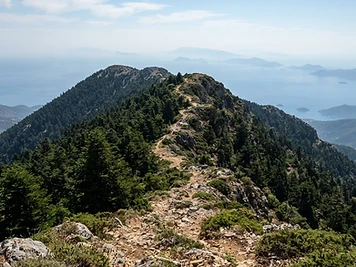
Mount Ainos National Park
A national park on the summit ridge of Mount Ainos, covered in Greek fir and black pine, with a rough road up to the viewpoint.
“A mountain of dark fir above the Ionian — the one place on Kefalonia where you leave the coast behind.”

The Blue Caves
The sea caves and arches at Cape Skinari on the north coast of Zakynthos, where light reflected off pale rock colours the water blue.
“Arches and caves in the cliffs at the north end of Zakynthos where the water turns an electric blue.”

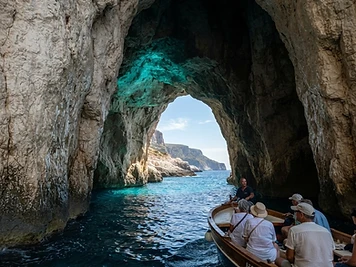
The Sea Caves of Paxos
The sea caves of western Paxos, including the great cave at Ypapanti, reached by small boat from Gaios or Lakka.
“A row of sea caves on the west coast that you visit by boat, with the light coming up blue through the water inside the largest.”

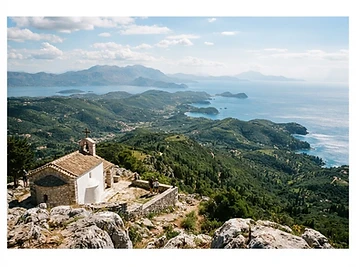
Mount Pantokrator
Corfu's highest point, at the north end of the island, with a summit chapel and a road all the way up.
“The clearest demonstration of how close Corfu sits to Albania. Worth the drive on a clear day, pointless in haze.”
Places within

Kythira
The island between two seas, with a Venetian castle town above a double bay and beaches most travelers never reach.
“A quiet, old-fashioned island for drivers who like their coastlines empty and their evenings early.”

Ithaca
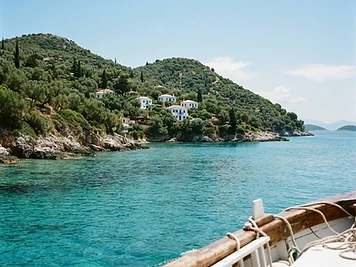
A small, quiet Ionian island of deep harbours and steep green slopes, known for a poem rather than a resort.
“Come for the harbours, not the myth: Ithaca's best hours are spent around Vathy, Kioni and the water in between.”

Paxos
The smallest of the main Ionian islands, off the coast of Epirus, with three harbour villages, olive groves and water clear enough to see the anchor.
“A small, green, well-off island of olive groves and clear water, where the day boats come for an afternoon and then leave.”

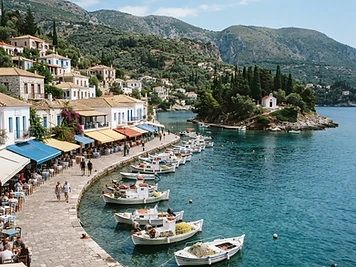
Gaios
The largest of the three harbours on Paxos, with a quay of tavernas and the islet of Agios Nikolaos just offshore.
“The main harbour of Paxos: a waterfront of tavernas and a wooded islet with a chapel sitting in the middle of the water.”

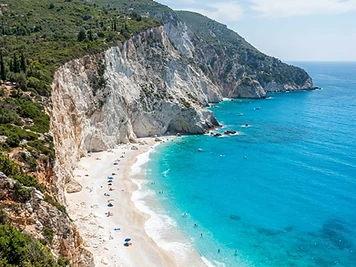
Lefkada
The fourth largest Ionian island and the only one reached by road, with the famous west-coast beaches at Porto Katsiki and Egremni.
“The Ionian island you can drive to: white cliffs and turquoise water on one coast, a lagoon town and green mountains on the other.”

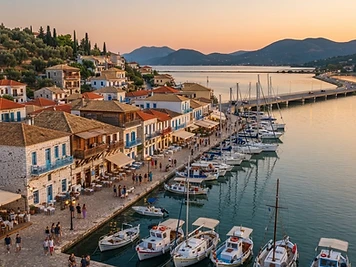
Lefkada Town
The capital of Lefkada, built on a lagoon with a marina, a pedestrian main street and a causeway to the mainland.
“A lagoon-side town of wooden houses and a long waterfront, and the only Ionian capital you can drive to.”

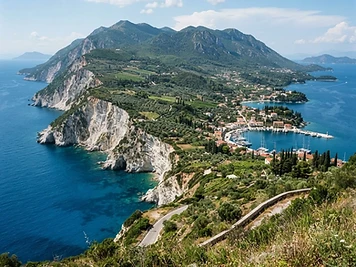
Zakynthos
The southern Ionian island known for the shipwreck cove and the turtles that nest on its beaches, with a green interior few visitors bother with.
“An island of two halves: the white cliffs and turtle beaches of the south and west, and an east-coast resort strip that most people see first.”

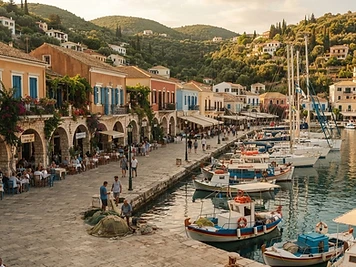
Zakynthos Town
The capital of Zakynthos, rebuilt in a Venetian style after the earthquake of 1953, with a broad arcaded square and a long working waterfront.
“A rebuilt town with an Italian streak — a wide paved square, arcades, a working harbour and the best eating on the island.”

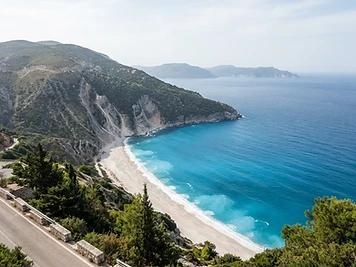
Kefalonia
The largest Ionian island — white pebble beaches under cliffs, an underground lake, a fir-covered mountain, and a Venetian harbour village in the north.
“The biggest island in the Ionian and the one with the most variety: white cliffs and turquoise bays in the north, green slopes and vineyards in the middle, a proper capital in the south.”
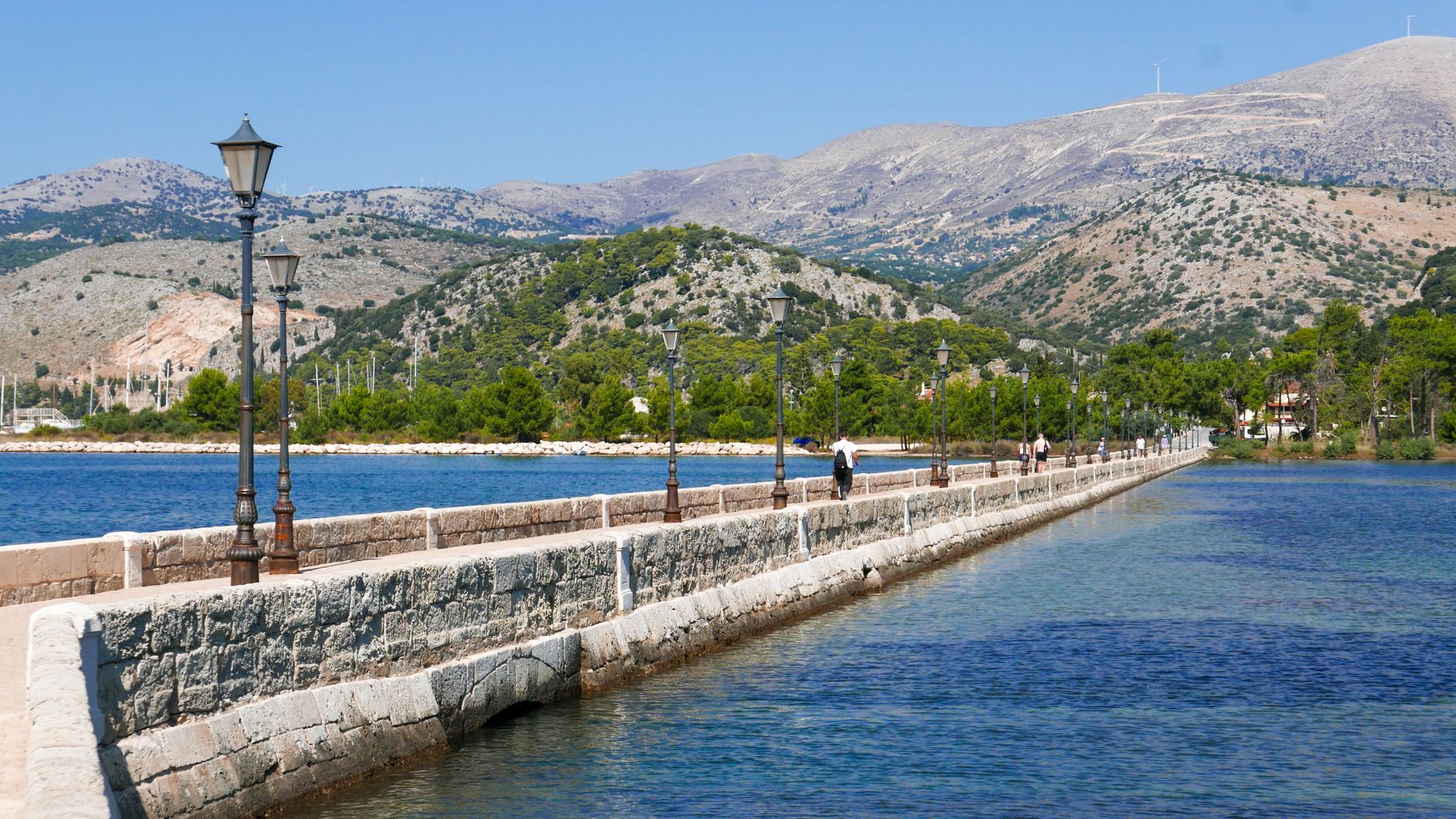
Argostoli
The capital of Kefalonia, rebuilt in plain modern style after the 1953 earthquake, with a long waterfront, a covered market and a turtle-filled lagoon.
“A working Ionian capital with a stone bridge across its lagoon and turtles in the harbour — plain, alive, and the right base on Kefalonia.”
Fiskardo
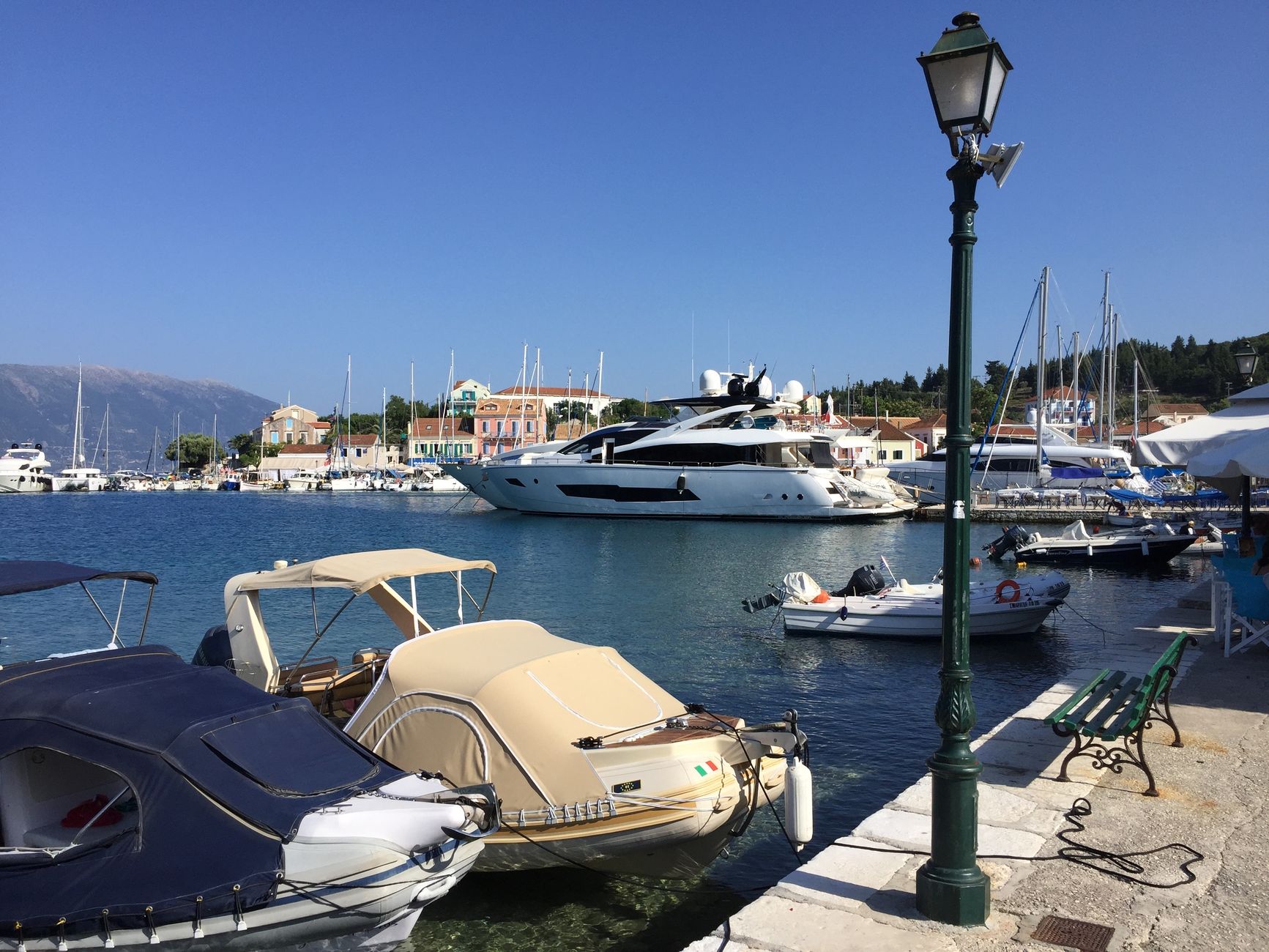
A preserved Venetian harbour village in the north of Kefalonia, with stone and pastel houses, yachts at the quay and swimming off the rocks.
“A small Venetian harbour village that survived the 1953 earthquake, and the handsomest place to stay in the Ionian.”
Assos
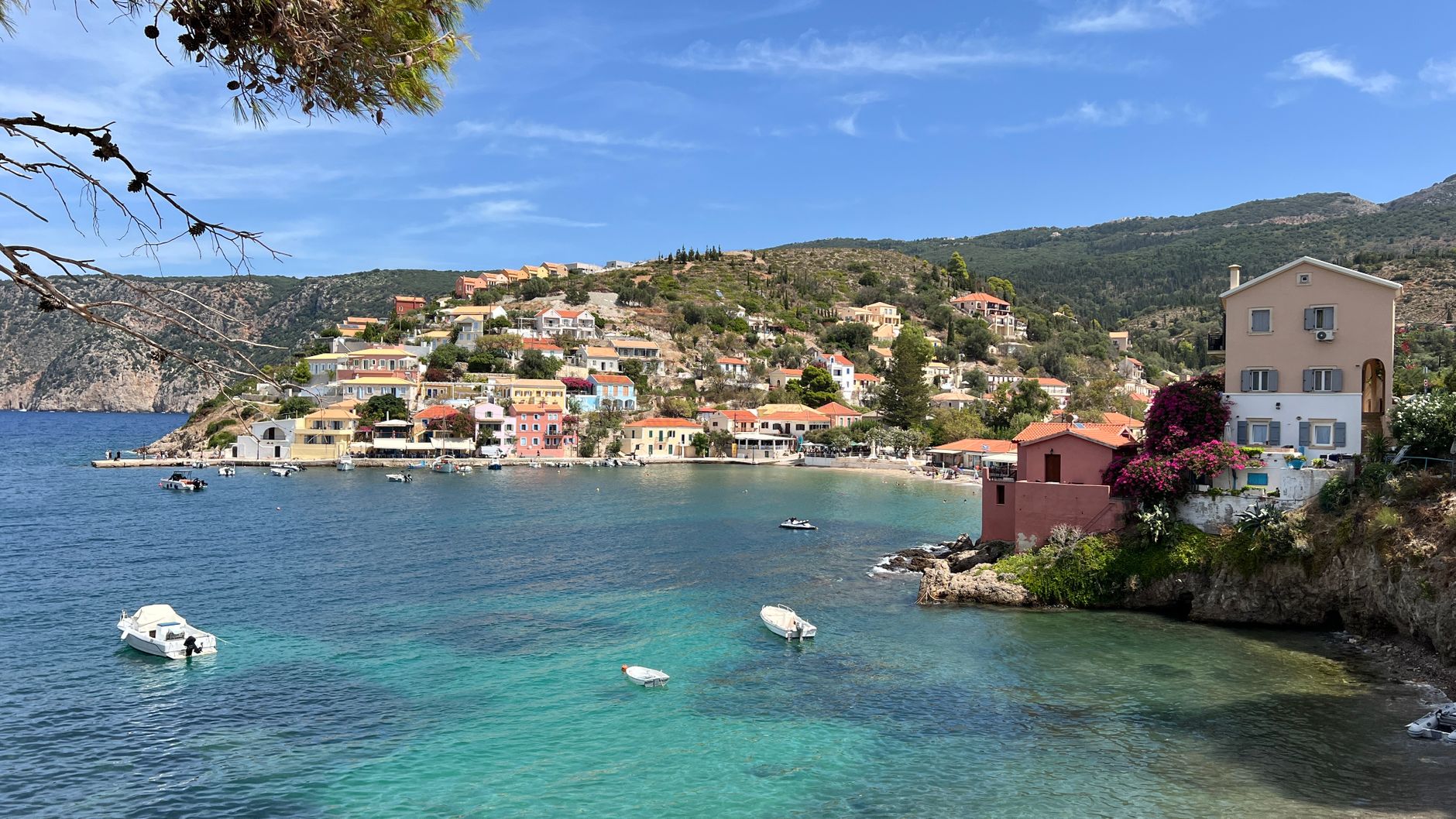
A small village on a peninsula in the north-west of Kefalonia, with a curving bay, a pebble beach and a ruined Venetian fortress on the hill above.
“A tiny village on a narrow neck of land with a Venetian castle above it, and the best swim on the island.”

Corfu Town
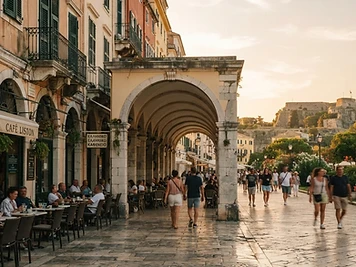
Corfu's UNESCO old town, squeezed between two Venetian fortresses, with the arcaded Liston and the Campiello lanes at its centre.
“The one place in Corfu where the Venetian, French and British layers are all visible in a single afternoon walk. Stay inside the old town, not on the coast road.”
Corfu
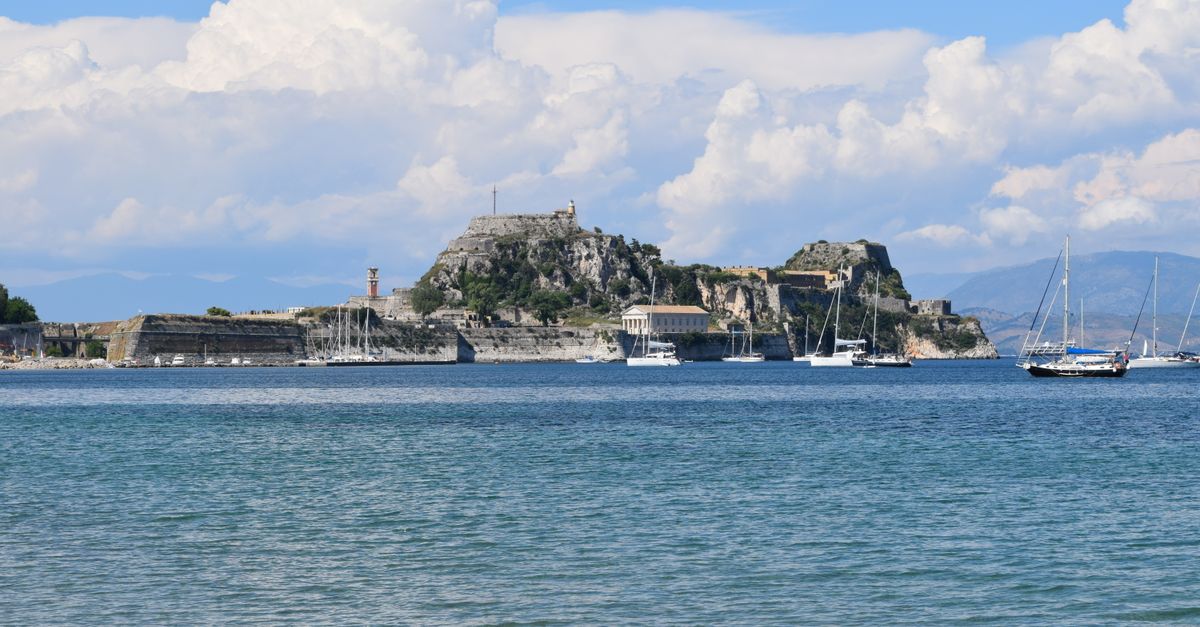
The greenest and most Italian of the Ionian islands — a Venetian old town, olive groves, and a long, layered history.
“The Ionian island with the most character and history — choose it for green landscapes and a Venetian old town, not for bare Cycladic white.”
Keep reading
All Greek islandsMore related places in Greece
Sources
Booking links
Commercial links: we may earn a commission if you book through them, at no extra cost to you.
Plan this trip
Greece Field Guide helps you decide. When you're ready to arrange it, take your saved places to an itinerary.