Vertical guide
Mountains & Outdoors
Greece is one of the most mountainous countries in Europe, and almost nobody visits the mountains. The islands take the crowds and the interior keeps the gorges, the stone bridges, the shepherds' paths and the empty villages. This guide covers the walks worth giving a day or two of a two-week trip to, and the heat, distance and closed routes that catch people out.
- Highest point
- Mount Olympus, 2,917 m
- Best months
- May, June & September
- Car needed
- Yes, for almost all of it
- Crowds
- Only Samaria has any
Why the interior is empty
The Greece nobody books
Greece sells itself as a coastline, and the coastline is genuinely extraordinary. But the country empties inland for a reason that has nothing to do with scenery: the villages were abandoned. Emigration from the 1950s onward took whole mountain communities to Athens, to Germany, to Australia, and left stone houses, terraces and mule paths with nobody to walk them.
That history is the traveler's advantage. The paths the villagers used to reach a church, a mill or the next village still exist, many now cleared and signposted by local walking groups. In August, when Santorini is unbearable and every ferry is full, a gorge two hours inland may have a dozen people in it — most of them Greek.
Below the ridgeline
The great gorges
Greece cuts its mountains with gorges, and the four that matter are all day walks rather than viewpoints. Three of them are on the mainland, where you will have the place largely to yourself; the fourth is Samaria, the most walked route in the country.

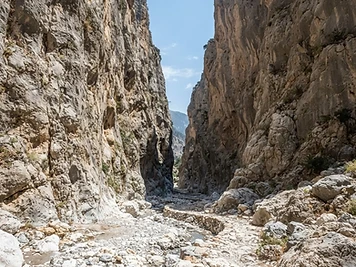
Samaria Gorge
A sixteen kilometer slog that thousands attempt every day during the season. It is a repetitive, knee-grinding descent through a narrow passage that necessitates a ferry exit and demands intense patience regarding the massive crowds.
“An overexposed, long-distance trudge that forces you to navigate heavy foot traffic in harsh, unforgiving sun.”

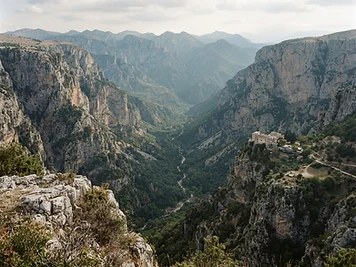
Vikos Gorge
A massive limestone rift requiring a brutal seven hour trek. It is essentially a sun-baked rock oven that demands significant preparation, adequate water supplies, and serious physical fitness from anyone attempting the full traverse between Monodendri and Vikos.
“An unforgiving endurance test that offers raw geological scale for those who prioritize rugged terrain over comfort and shade.”

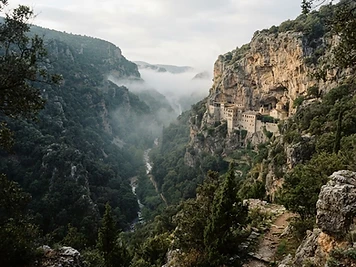
The Lousios Gorge
The Lousios Gorge cuts through the Peloponnese, holding two medieval monasteries carved directly into the limestone cliffs. This route offers a rugged alternative to the coast that justifies staying in the high-altitude villages instead of the tourist towns.
“This is the most essential inland excursion for anyone visiting the southern mainland.”

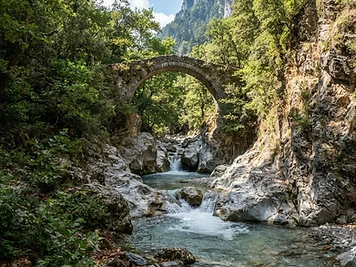
Enipeas Gorge
A refreshing route that bypasses the arid heat of the mainland. By walking through these damp pools and forest corridors near Litochoro, you bypass the typical tourist traps in favor of a superior half-day outdoor excursion.
“The best short walk in mainland Greece when the temperature climbs and you need consistent cooling shade.”
Mount Olympus reaches 2,917 m at Mytikas, the highest point in Greece and in Greek myth the home of the twelve gods.
The Vikos gorge is regularly described as the deepest in the world in proportion to its width, with walls rising more than 1,000 m from the riverbed.
Roughly four fifths of Greece is mountain or hill. The islands get the visitors and the infrastructure; the interior gets the shepherds.
The E4 European long-distance path runs through Greece, with a long section across Crete — the country is walkable end to end, if you have a month.
Up
Mountains worth the climb
None of these are technical, and all of them ask for more than a stroll: a dawn start, several hours of stone and scree, and proper shoes. The reward is the view back over the Aegean or down into the Peloponnese.

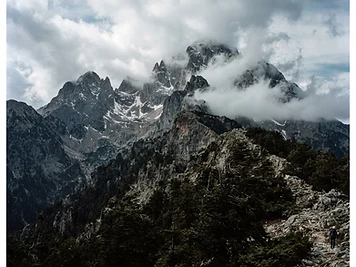
Mount Olympus
Greece's tallest peak is a legitimate alpine undertaking that requires scrambling skills and a pre-booked refuge bed. Mytikas is not a casual stroll, and the weather at these high altitudes shifts with dangerous, sudden intensity.
“A serious mountain climb for those who respect elevation gain and the physical reality of vertical ascent.”

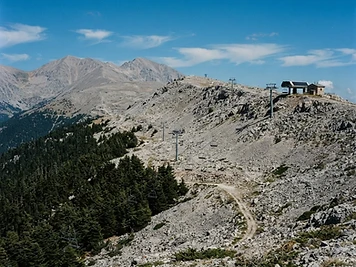
Mount Parnassos
This mountain range holds far more interest than a quick stop at the nearby archaeological ruins. Spend your nights in the high-altitude air of Arachova to properly explore the fir forests and the historic Corycian cave system.
“An essential alpine stop that justifies extending your stay beyond the standard Delphi day trip.”

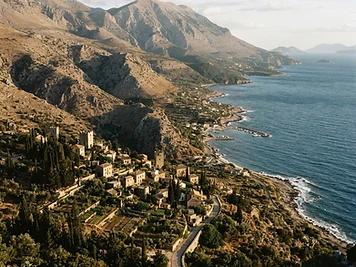
The Taygetos Mountains
The Taygetos range divides Sparta from the Mani, creating a wall of peaks and deep canyons. This region offers a harsh, dramatic landscape that remains empty even in August, providing a better experience than the overcrowded island beaches.
“Choose these mountains for a rigorous road trip if you want to avoid mass tourism.”

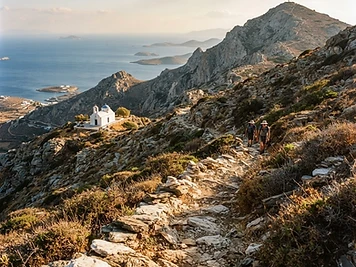
Mount Zas
The highest point in the Cyclades rewards a two hour climb with an expansive Aegean horizon. It is a necessary departure from the typical beach routine on Naxos for anyone who finds lying in the sand mind-numbing.
“The premier short ascent on Naxos that provides essential perspective over the surrounding island chain.”
“The busiest place in Greece in August is a beach. The emptiest is a mountain an hour inland.”
Greek walking infrastructure is mostly not built for visitors. It is inherited: mule paths built by villages that needed to reach a mill, a monastery or a market, abandoned when the roads came and the villages emptied, then slowly cleared again by local walking clubs and volunteers. Walk them and you are using infrastructure older than the tourist industry, restored by people who live there year-round.
On foot between villages
Old paths and island walks
The quieter end of Greek walking: stone-paved paths linking villages, most of them under three hours, all of them ending somewhere worth eating. This is the best walking in Greece for anyone who does not want a full day in the heat.

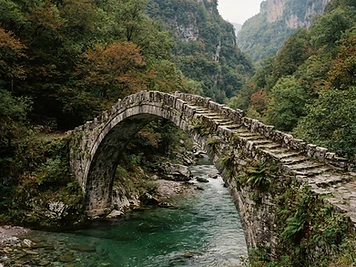
The Stone Bridges of Zagori
These arched relics of the Vlach era provide a quiet way to traverse the beech woods of Epirus. By connecting the villages of Kipi and Koukouli, you observe precise traditional engineering without the intense logistical strain of the nearby gorges.
“An accessible cultural walk that trades heavy elevation gain for historical detail and pleasant, quiet forest paths.”

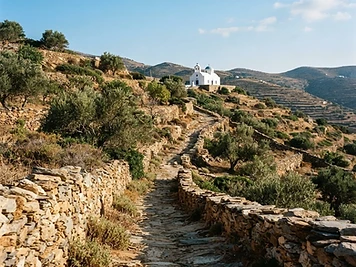
The Old Paths of Sifnos
Sifnos maintains an extensive network of stone-paved paths that connect its white-washed villages. Walking between Apollonia, Artemonas, and the coast provides a structured way to experience the island architecture while stopping at tavernas for genuine local food.
“The trail system elevates Sifnos above other islands because the walking serves a functional purpose.”

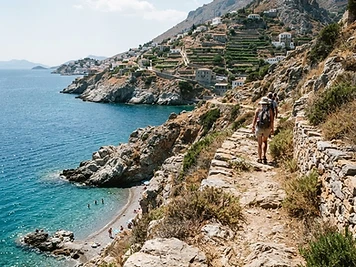
The Hydra Coastal Path
The coastal path heading east from the main port leads past bare rock and small swimming coves. Without cars to disrupt the silence, the walk toward Vlichos is the main incentive to stay overnight instead of leaving at sunset.
“Skip the crowded port area and walk the coast to find actual space to swim.”

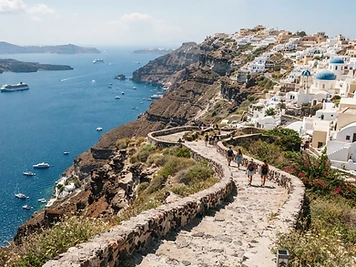
The Fira to Oia Caldera Path
Walking the ten kilometers from Fira to Oia along the caldera rim is the only way to escape the cruise ship chaos. Start at sunrise to navigate the jagged volcanic path before the sun and the tour groups become unbearable.
“This hike justifies the entire trip to Santorini if you commit to the early start time.”
Practical
What catches people out
Greek walking is not alpine walking, but it punishes the same mistakes. There is no shade on most of these routes and no water between the trailheads, so start at dawn, carry more water than feels reasonable, and treat the middle four hours of a July or August day as closed. Distances are far less useful than time: a stone path that climbs 400 m over 3 km takes two hours, not forty minutes.
Two more things worth knowing before you commit a day. Gorges close. Samaria and the Epirus routes shut after heavy rain and out of season, and a closed gorge means a wasted drive, so check locally the day before rather than trusting a website. And several of the classic routes are one-way by design, ending at a ferry or a different village than the one you started in — read the practical note on each entry before setting out, because the logistics are usually the harder half of the day.
Index
Every walk, mountain and wild place in the guide
The complete list, including the coves, caves and viewpoints covered on their island or region page.