Papafragas
The Verdict
A ten-minute stop that photographs far better than it swims. Look, take the picture, move on.
Why go
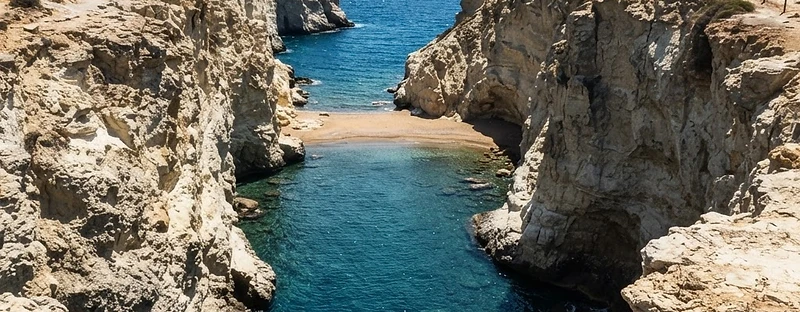
Papafragas is an exercise in managing expectations. Viewed from the clifftop car park along the main road between Pollonia and Plaka, the geology is striking: the Aegean has excavated a deep, straight channel through chalky volcanic stone, terminating in a sliver of sand framed by sheer rock walls. The water in the slot runs from turquoise to an opaque slate grey depending on the swell, flanked by natural bridges and cavern roofs that have collapsed over centuries. Down on the ground, the reality is less romantic. The path descending into the ravine is rough, badly eroded, and frequently unsafe after winter rains. The patch of sand at the base is cramped, fills with sea debris whenever the wind blows from the north, and offers little room to settle. Entry into the water requires stepping over slick, submerged rock into a narrow funnel where currents can pull uncomfortably hard. Treat it as an architectural roadside observation rather than a beach destination. Park, walk the perimeter fence to inspect the sheer rock cuts and the open sea arches, take your photographs, and leave. It fits neatly into a driving tour of the northern coast, but attempting to make an afternoon of it usually results in scraped shins and disappointment.
Understand the place
A narrow slot cut through pale volcanic rock to a hidden cove, on the north coast road between Pollonia and Plaka.
Related
More natural features in Greece
Booking links
Commercial links: we may earn a commission if you book through them, at no extra cost to you.
Plan this trip
Greece Field Guide helps you decide. When you're ready to arrange it, take your saved places to an itinerary.