
Milos
Photo: Daciana Cristina Visan / Pexels
The Verdict
The most visually dramatic of the lesser-visited Cyclades — coastal geology that rivals Santorini without the crowds.
Why go
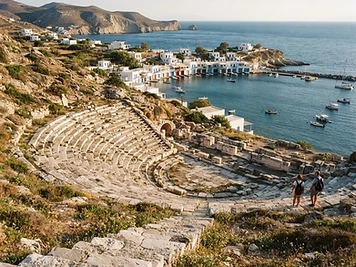
Milos delivers the Cyclades' most arresting coastal geography. The landscape is intensely volcanic, bleached bone-white at Sarakiniko where wind-smoothed pumice shelves slip into deep sea, and terracotta-red at Firiplaka. At Klima and Mandrakia, two-storey syrmata—boathouses carved directly into the soft tufa with bright wooden doors at water level—still house small wooden skiffs right below modest living quarters. A visit here splits cleanly between sea and road. The finest coastlines, including the sea caves and sea stacks of Kleftiko on the southwest corner, cannot be reached by foot or regular car; you will spend at least one full day on a small boat tracing the cliffs. On land, you drive dusty switchbacks between isolated coves, stopping for fried pitarakia cheese pies and roasted goat in the inland villages of Plaka and Trypiti rather than looking for harbourside flash. The trade-off is structural. Milos lacks a single dominant, walkable town where everything happens, and public transport is thin. The island does not cater to evening strolls through endless boutique lanes, and there is virtually no nightlife to speak of. You come to move across barren stone and deep water.
Understand the place
A volcanic western Cycladic island of dramatic coastal geology and the famous fishing village of Klima.
Where to swim
Beaches

Sarakiniko
Blinding-white volcanic rock sculpted into smooth lunar curves above the sea, with a shipwreck and cliff-jumping spots nearby. Unlike any other beach in Greece.
“Essential if you're on Milos — a lunar landscape of white volcanic rock bent into smooth curves above the sea, unlike any beach in Greece.”
Firiplaka
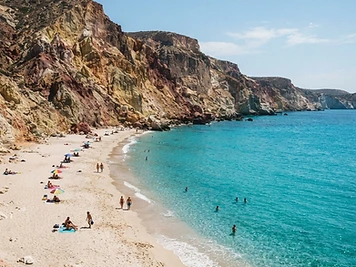
A pale-sand beach under towering volcanic cliffs of ash-white, ochre and rust, in the south of Milos.
“The most beautiful beach on Milos, and there is no shade of any kind. Bring water, bring an umbrella, leave before four.”
The old world
History & archaeology

Beyond the built
Outdoors & nature

Kleftiko
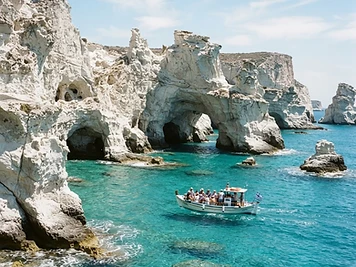
White cliffs, arches and sea caves at the south-west tip of Milos, reachable only by boat.
“Milos' one unmissable boat trip. Book a small boat, not a big one, and go in the morning before the wind gets up.”

Papafragas
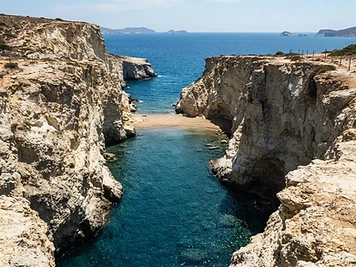
A narrow slot cut through pale volcanic rock to a hidden cove, on the north coast road between Pollonia and Plaka.
“A ten-minute stop that photographs far better than it swims. Look, take the picture, move on.”
The base decision
Where to stay in Milos
Milos is not one place. Where you sleep decides how much of it you walk, drive or queue for.
Our default
Pollonia
A sandy cove, fish tavernas at the water, and the quietest good base on Milos.
- Mid
Adamas
The ferry port, on the north coast, 4 km from Plaka
Convenient and unglamorous — book it if you are arriving late or leaving early.
- Mid
Plaka & Trypiti
Hilltop village above the gulf, 4 km up from the port
Stay up high for the sunset over the gulf, and accept that you will drive to everything.
Towns & villages

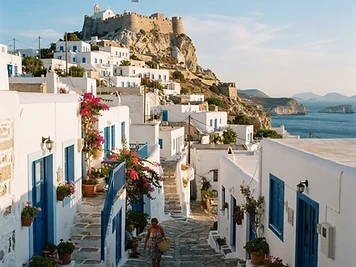
Plaka
The hilltop capital of Milos, above the port at Adamas, with the island's best sunset and its best lanes.
“Stay up in Plaka rather than down at the port. It is where Milos looks and behaves like the island everyone hopes it is.”

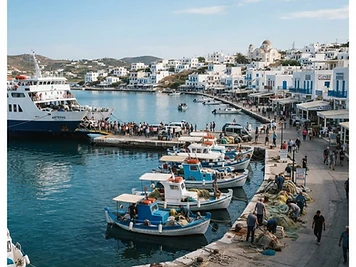
Adamas
The port town of Milos: where the ferries land, with the island's widest choice of restaurants and the best bus connections.
“The least beautiful place on Milos and the most useful. Stay here for one night either side of a ferry, not for a week.”
Easy to combine with
Logically reachable by transport. Confirm current ferry/flight schedules before booking.
Nearby
Sources
Booking links
Commercial links: we may earn a commission if you book through them, at no extra cost to you.
Plan this trip
Greece Field Guide helps you decide. When you're ready to arrange it, take your saved places to an itinerary.