The Ancient Theatre of Milos
The Verdict
Twenty minutes of ruins, then the best hour on Milos: the fishing village below it at sunset.
Why go
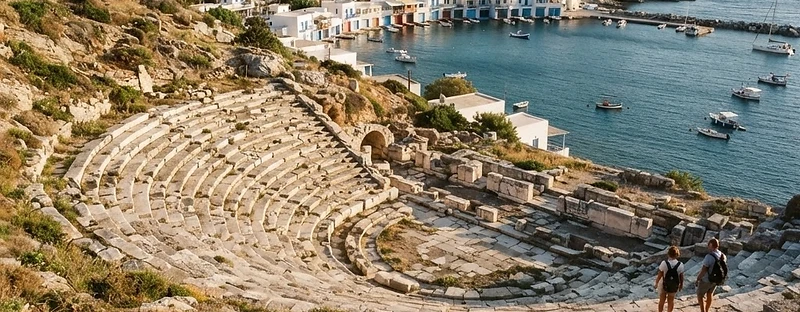
The theater itself is small and largely reconstructed from white Parian marble, set into the natural slope of the hill below the village of Tripiti. Seven tiers of seating survive, curving down toward the floor of an ancient orchestra with the open Aegean behind it. It takes roughly twenty minutes to walk the tiered rows, test the acoustics, and read the posted site markers. You will likely have the perimeter entirely to yourself, apart from wind coming off the bay. The draw is how the site links to the landscape around it. From the upper rim, you look straight down past scrub and stone terraces to the water's edge at Klima, where the traditional two-story boathouses line the shore. A visit functions best as a deliberate, unhurried preamble to late afternoon. You explore the stonework, take in the wide perspective over the bay of Milos, and then pick up the rough downhill footpath that leads directly to the fishing settlement below. Time your arrival for late day when the limestone holds the warmth and the sun begins to drop across the gulf. The compromise is scale. Anyone arriving with the expectations set by Epidaurus or Delphi will leave underwhelmed; this is a localized, low-key Roman ruin whose value lies in its isolation and its direct line down to the sea.
Understand the place
A small Roman theatre cut into the hillside above the water, looking down on the painted boat houses of Klima.
Related
More ancient theatres in Greece
Booking links
Commercial links: we may earn a commission if you book through them, at no extra cost to you.
Plan this trip
Greece Field Guide helps you decide. When you're ready to arrange it, take your saved places to an itinerary.