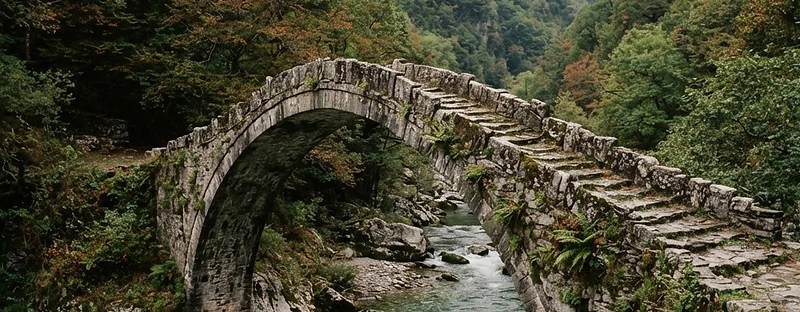
The Stone Bridges of Zagori
The Verdict
An accessible cultural walk that trades heavy elevation gain for historical detail and pleasant, quiet forest paths.
Why go
Built between the eighteenth and nineteenth centuries to move pack animals and trade goods across steep ravines, these arched spans remain intact across the Vikos riverbed and its tributaries. Walking out from Kipi or Koukouli, you trade the sheer drops and logistical commitments of the deeper Vikos Gorge for packed dirt trails, stone steps, and dense beech forest. The masonry is dry-stacked river shale and limestone, built with single, double, or triple arches that adjust naturally to the riverbed floor. A typical walk links bridges like Plakidas and Kokkoris using old village mule tracks (skales). The paths run low along the valleys rather than over ridges, keeping exposure to the sun low and grades manageable. You spend your hours stepping over weathered keystones, reading worn stone plaques that credit the local merchants who funded each construction, and tracing the riverbed gravel. The trade-off is altitude and drama. You will not find sheer limestone cliff panoramas or alpine scrambles here. Instead, it is an afternoon of steady walking on historical routes that still clearly show how remote mountain communities functioned before paved roads cut through the Pindus range.
Understand the place
These arched relics of the Vlach era provide a quiet way to traverse the beech woods of Epirus. By connecting the villages of Kipi and Koukouli, you observe precise traditional engineering without the intense logistical strain of the nearby gorges.
Sources
Booking links
Commercial links: we may earn a commission if you book through them, at no extra cost to you.
Plan this trip
Greece Field Guide helps you decide. When you're ready to arrange it, take your saved places to an itinerary.