
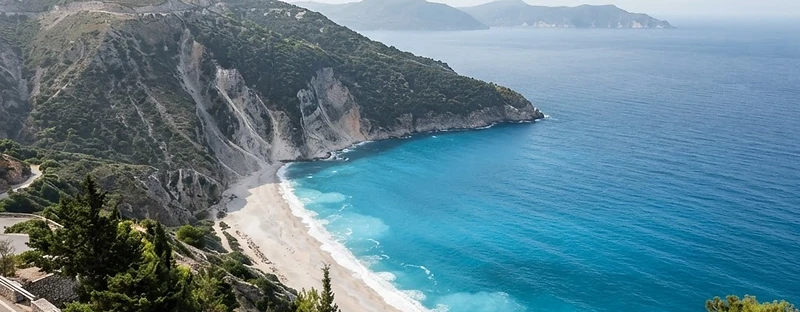
Kefalonia
Photo: Greece Field Guide
The Verdict
The biggest island in the Ionian and the one with the most variety: white cliffs and turquoise bays in the north, green slopes and vineyards in the middle, a proper capital in the south.
Why go
Kefalonia is big enough, at roughly 780 square kilometres, to give you a beach under sheer white cliffs at Myrtos, an underground lake at Melissani, a fir forest and a mountain road on Ainos, and a harbour village at Fiskardo that the 1953 earthquake spared — all on one island. The sea is as calm and clear as anywhere in Greece, the Robola is the best wine in the Ionian, and Fiskardo and Assos are as handsome as anything in the country. It is not a beach-and-nothing island: you need a car and a week, and it repays both.
Understand the place
The largest Ionian island — white pebble beaches under cliffs, an underground lake, a fir-covered mountain, and a Venetian harbour village in the north.
Where to swim
Beaches

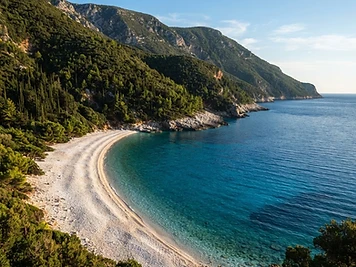
Antisamos Beach
A broad white-pebble beach in a deep bay northeast of Sami, with pines and cypresses crowding the slope directly behind it.
“White pebbles, deep blue water and pine coming down to the shore — the best-organised good beach on the island.”
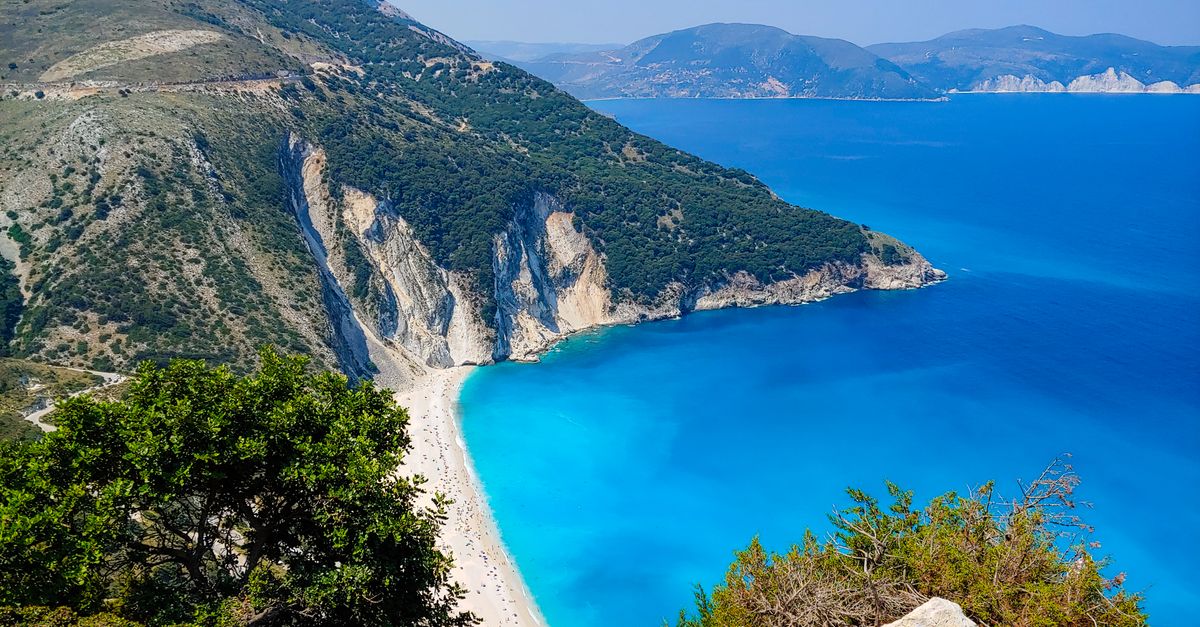
Myrtos Beach
White pebble crescent below towering cliffs, best seen first from the clifftop road above. Kefalonia's most photographed beach, for good reason.
“Recommended — the most photographed beach in the Ionian, a white crescent below towering cliffs.”
The old world
History & archaeology

Beyond the built
Outdoors & nature

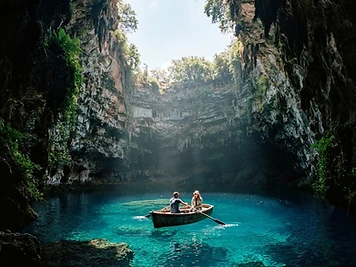
Melissani Cave
A collapsed cave near Sami with a turquoise underground lake, visited by rowing boat, lit by daylight through the opening above.
“An underground lake with daylight falling on it through a hole in the roof — short, crowded, and unlike anywhere else in Greece.”

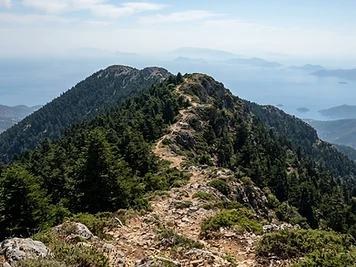
Mount Ainos National Park
A national park on the summit ridge of Mount Ainos, covered in Greek fir and black pine, with a rough road up to the viewpoint.
“A mountain of dark fir above the Ionian — the one place on Kefalonia where you leave the coast behind.”
Towns & villages
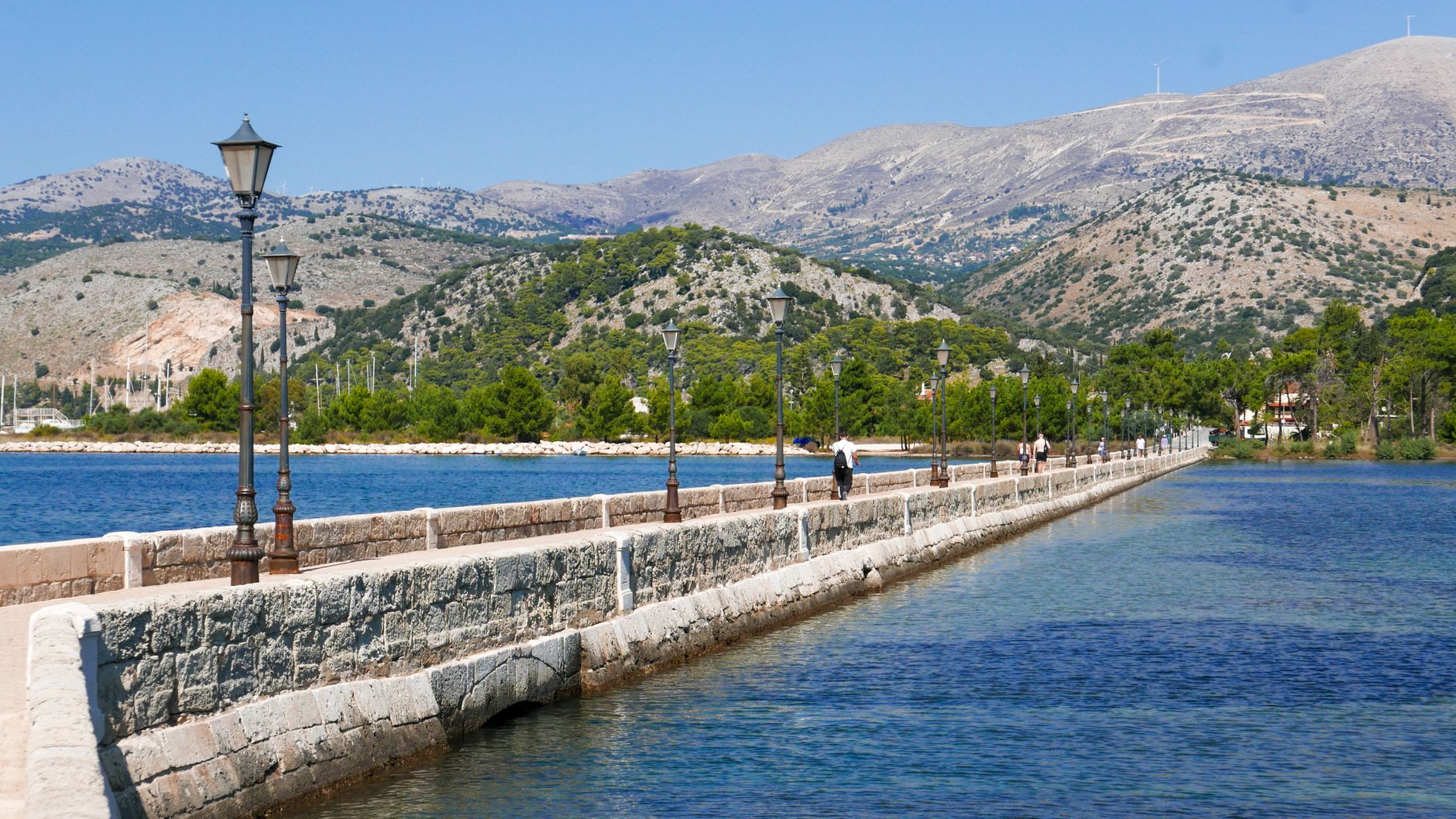
Argostoli
The capital of Kefalonia, rebuilt in plain modern style after the 1953 earthquake, with a long waterfront, a covered market and a turtle-filled lagoon.
“A working Ionian capital with a stone bridge across its lagoon and turtles in the harbour — plain, alive, and the right base on Kefalonia.”
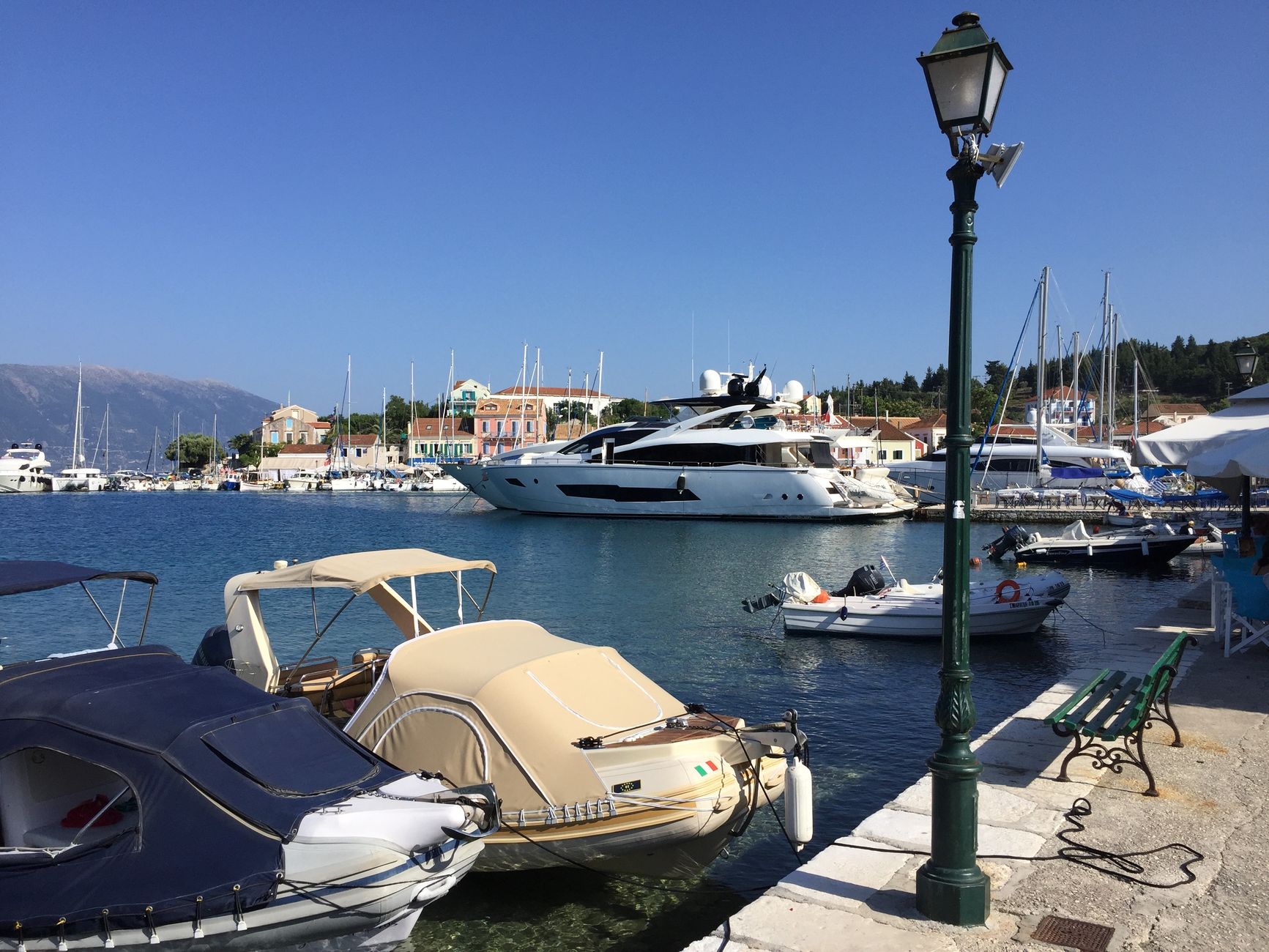
Fiskardo
A preserved Venetian harbour village in the north of Kefalonia, with stone and pastel houses, yachts at the quay and swimming off the rocks.
“A small Venetian harbour village that survived the 1953 earthquake, and the handsomest place to stay in the Ionian.”
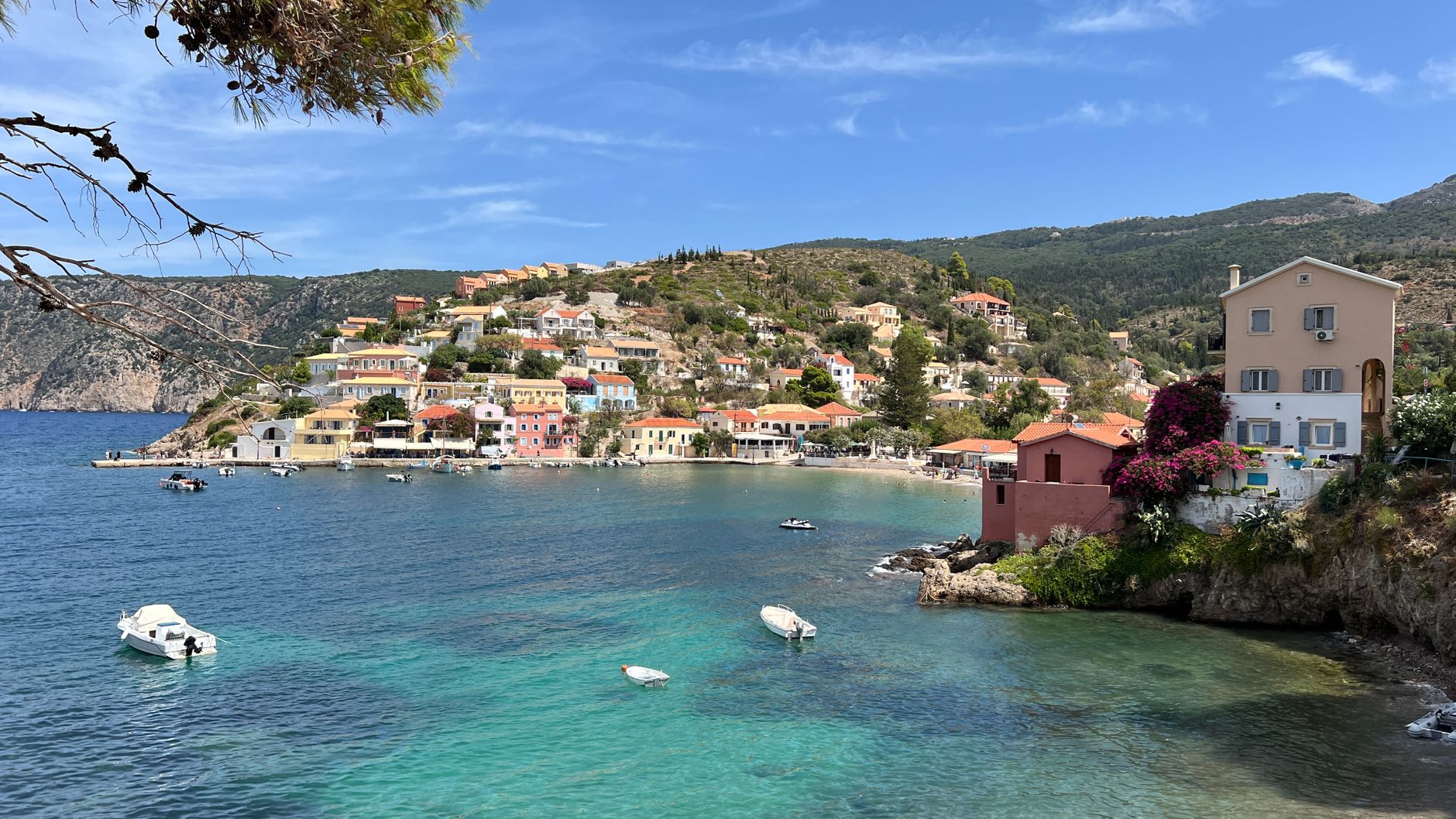
Assos
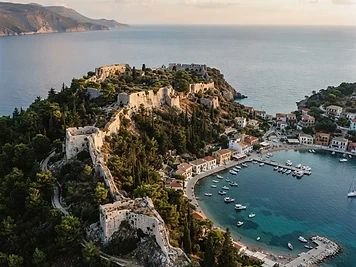
A small village on a peninsula in the north-west of Kefalonia, with a curving bay, a pebble beach and a ruined Venetian fortress on the hill above.
“A tiny village on a narrow neck of land with a Venetian castle above it, and the best swim on the island.”
Easy to combine with
Logically reachable by transport. Confirm current ferry/flight schedules before booking.
Nearby
Related
Sources
Booking links
Commercial links: we may earn a commission if you book through them, at no extra cost to you.
Plan this trip
Greece Field Guide helps you decide. When you're ready to arrange it, take your saved places to an itinerary.