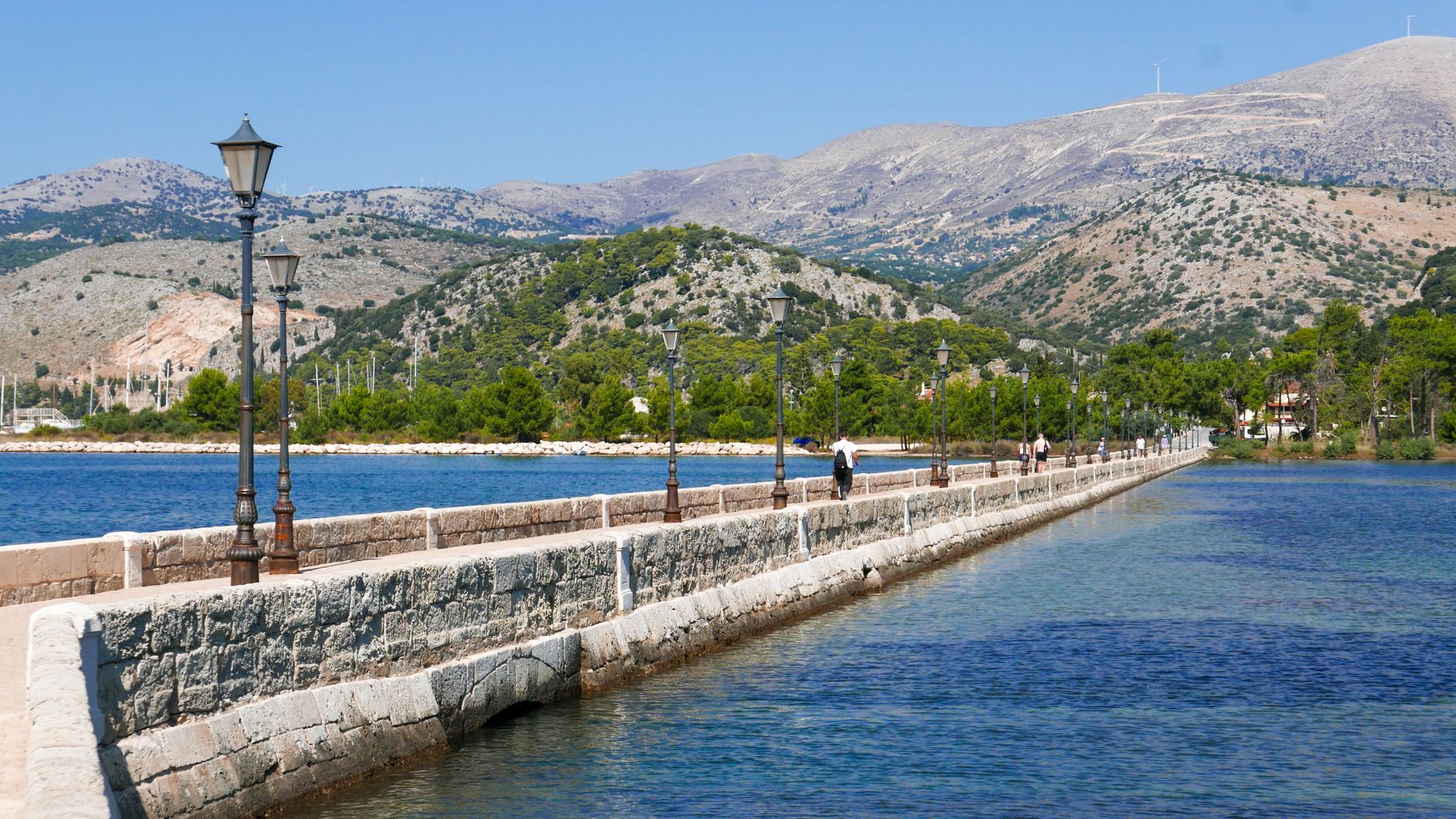
Argostoli
Photo: Mike Norris / Pexels
The Verdict
A working Ionian capital with a stone bridge across its lagoon and turtles in the harbour — plain, alive, and the right base on Kefalonia.
Why go
Argostoli lost its Venetian architecture in the 1953 earthquake and rose again as a concrete grid. It lacks the postcard appeal of northern Kefalonia, but it functions year-round as a genuine administrative capital rather than a tourist enclave. Daily life centers on the long palm-lined waterfront and the pedestrian spine of Lithostroto, where bakeries sell mandoles and locals run their errands regardless of the season. mornings begin by the fishing fleet along the quay, where loggerhead sea turtles gather around the boats for scraps. Across the bay stretches the De Bosset bridge, a nineteenth-century stone causeway spanning the shallow Koutavos Lagoon, broad enough for a level evening walk into the pine groves on the opposite bank. The municipal market supplies local produce, and the tavernas around Plateia Vallianou serve reliable meat pies and unpretentious fish without inflated resort pricing. The trade-off is visual. The architecture is strictly functional mid-century masonry, and the town beach is nondescript. However, as an operational hub with the island's central bus depot, a hospital, and boat connections, it remains the most practical base on Kefalonia for travelers who value everyday Greek life over curated waterfront facades.
Understand the place
The capital of Kefalonia, rebuilt in plain modern style after the 1953 earthquake, with a long waterfront, a covered market and a turtle-filled lagoon.
Nearby
Related
More towns in Greece
Sources
Booking links
Commercial links: we may earn a commission if you book through them, at no extra cost to you.
Plan this trip
Greece Field Guide helps you decide. When you're ready to arrange it, take your saved places to an itinerary.