
North Aegean
Photo: Thomas Ronveaux / Pexels
The Verdict
The deep cut for repeat visitors — remote, authentic and largely untouched by mass tourism.
Why go
These islands sit closer to the Anatolian coast than to Athens, separated by wide stretches of open sea that keep ferry crossings long and tourist volumes low. Lesvos, Chios, Samos, and Ikaria operate on domestic rhythms rather than seasonal hospitality. Days revolve around agricultural hubs, working ports, and stone settlements where daily routines proceed whether visitors show up or not. A visit here involves substantial road travel across mountainous terrain to reach specific sites: the medieval fortified mastic settlements of southern Chios with their incised geometric facades, the open-air thermal bathhouses along the gulfs of Lesvos, the ancient aqueduct tunnels cut through limestone on Samos, or the late-starting mountain tavernas of Ikaria. Local tables center on region-specific products, such as pine honey, potent unblended local wine, and meze paired with sharp, aniseed-heavy ouzo distilled directly on Lesvos. The trade-off is logistical friction. Ferry connections between the islands are infrequent, airports see limited international flights, and distances across the larger islands require a dedicated car. You trade manicured shorelines and streamlined transfers for immense quiet and a clear sense of place.
Understand the place
A loose chain off Turkey's coast — Lesvos, Chios, Samos, Ikaria — far from the cruise circuit and distinctly Greek.
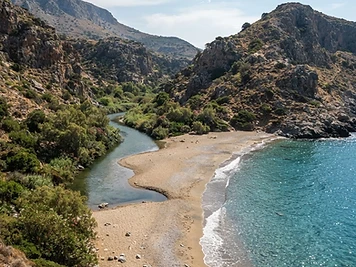
Where to swim
Beaches
What to eat & drink here
Food & drink

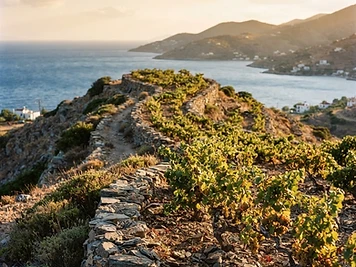
Samos
Island region built on Muscat Blanc à Petits Grains. Produces some of the world's best-balanced, aromatic dessert wines, not an afterthought pairing.
“World-renowned for its Muscat Blanc à Petits Grains production.”

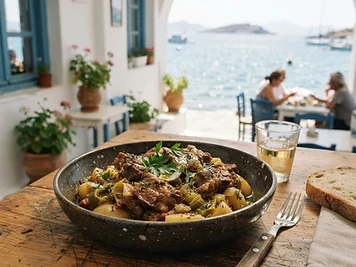
Kavourmas
Slow-cooked seasoned meat preserved in its own fat, a Northern Greek tradition. Intense, umami-heavy, and built for keeping through winter rather than fresh eating.
“A preserved meat delicacy that captures the ancient history of the North.”
The old world
History & archaeology

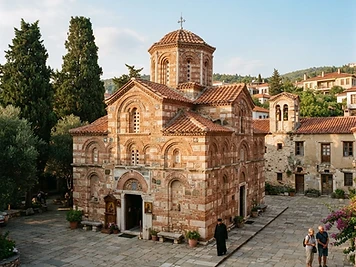
Nea Moni
An eleventh-century monastery in the hills of central Chios, its church covered in gold-ground mosaics of the highest quality.
“The finest Byzantine mosaics in the Aegean, in a monastery in the hills of Chios that almost nobody visits.”

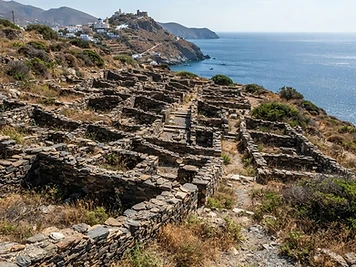
Poliochni
The Bronze Age settlement of Poliochni on the east coast of Lemnos, occupied from the fourth millennium BC and excavated in the twentieth century.
“One of the oldest settlements in Europe, laid out in low walls on a bare hill — older than Troy, and usually empty.”

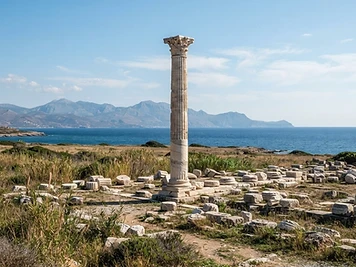
The Heraion of Samos
The sanctuary of Hera near the south coast of Samos, reduced to a single standing column among foundations, reeds and marsh.
“One tall column left standing in a marsh — the remains of the great temple to Hera, and one of the most atmospheric ruins in Greece.”
Beyond the built
Outdoors & nature

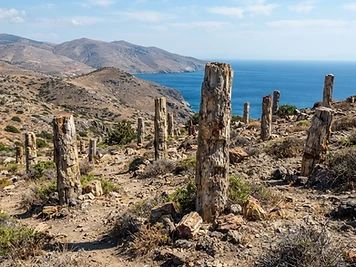
Places within

Thassos
A pine-covered northern island of marble and turquoise water, forty minutes by ferry from the mainland.
“The island Greeks choose for a driving holiday, and the one most foreign travelers have never considered.”

Ikaria
A long, mountainous North Aegean island between Samos and Mykonos, known for its hot springs, its wine and a pace of life that ignores the clock.
“The island where people live longest, and where very little happens: steep green mountains, hot springs and festivals that run until dawn.”

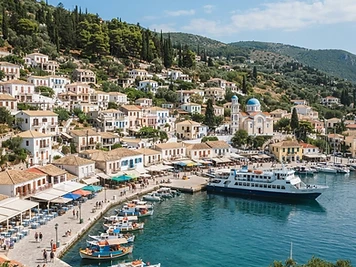
Agios Kirykos
The main port of Ikaria, built round a shallow bay with a waterfront of tavernas and the island's hospital above it.
“The harbour of Ikaria: a shallow bay, a quay of tavernas, the ferry, and the springs a short drive up the coast.”
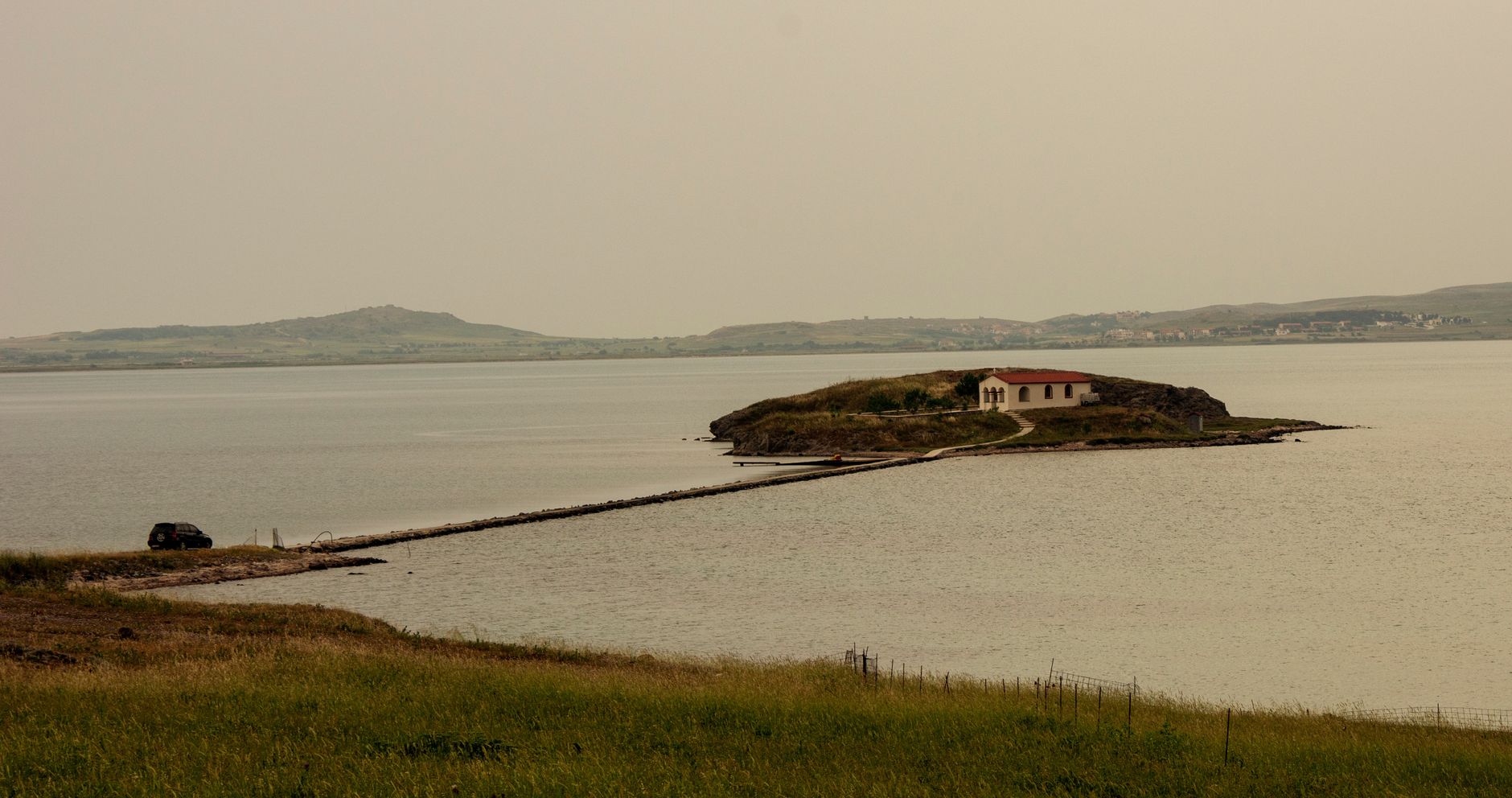
Limnos
A large, quiet North Aegean island of volcanic hills, sandy beaches and wheat fields, with Myrina harbour in the west and the Bronze Age site of Poliochni in the east.
“A big, empty, wind-scoured island in the north Aegean: volcanic hills, one beautiful harbour town, and one of the oldest settlements in Europe.”

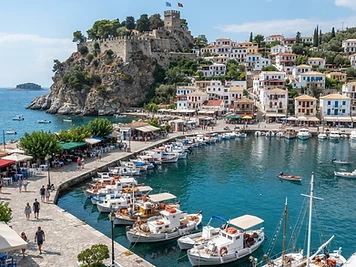
Myrina
The capital of Limnos, built between two bays under a castle on a rocky headland, with a market street and a long sandy beach.
“One of the best-looking harbour towns in the Aegean, under a Venetian castle, with a beach on either side of it.”

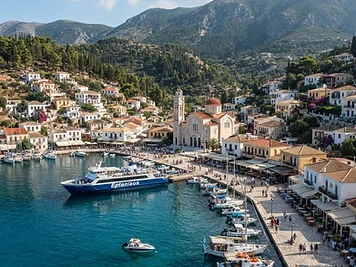
Samos Town
Vathy, the capital of Samos, built around one of the deepest natural harbours in the Aegean, with a waterfront and a hillside of old houses.
“A town wrapped round a deep harbour with hills of ochre houses above it — practical rather than pretty, and the island's transport hub.”

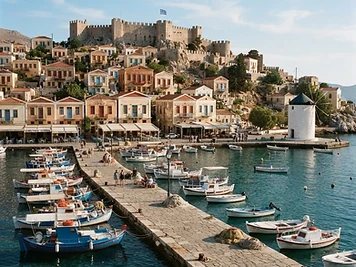
Chios Town
The capital of Chios, arranged round a harbour and a walled citadel, with a covered market and a waterfront of ouzeries.
“A working harbour with a Genoese citadel above it and a market worth crossing the Aegean for.”

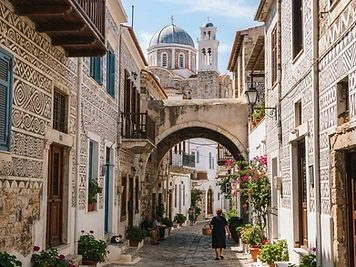
Pyrgi
The largest of the mastic villages of southern Chios, its houses joined in a defensive ring and its facades covered in black and white patterns.
“A fortified village of tall houses covered in scratched geometric patterns — the strangest architecture in the Aegean.”

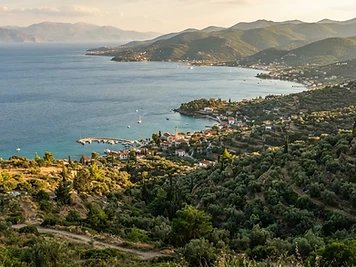
Lesvos
The third largest Greek island — an unhurried North Aegean world of olive groves, ouzeries, castles, a petrified forest and long empty beaches.
“A whole world of an island: ouzo country, a petrified forest, a Byzantine monastery and villages that see almost no tourists.”

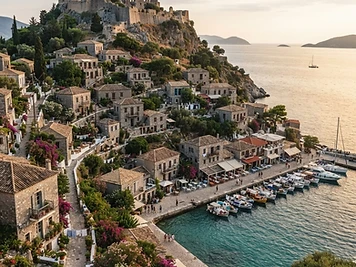
Molyvos
A hillside village of grey stone and red roofs on the north coast of Lesvos, with a Byzantine castle on the summit and a fishing harbour at its foot.
“A stone village climbing to a Byzantine castle with a small harbour below — the postcard corner of Lesvos, and better after six.”

Samos
A large, green, mountainous North Aegean island with a wine tradition, the ruins of a great temple to Hera, and a long coast of quiet beaches.
“The greenest and most mountainous of the big east Aegean islands: vineyards, a great temple in the flat land, and beaches at the end of gorges.”
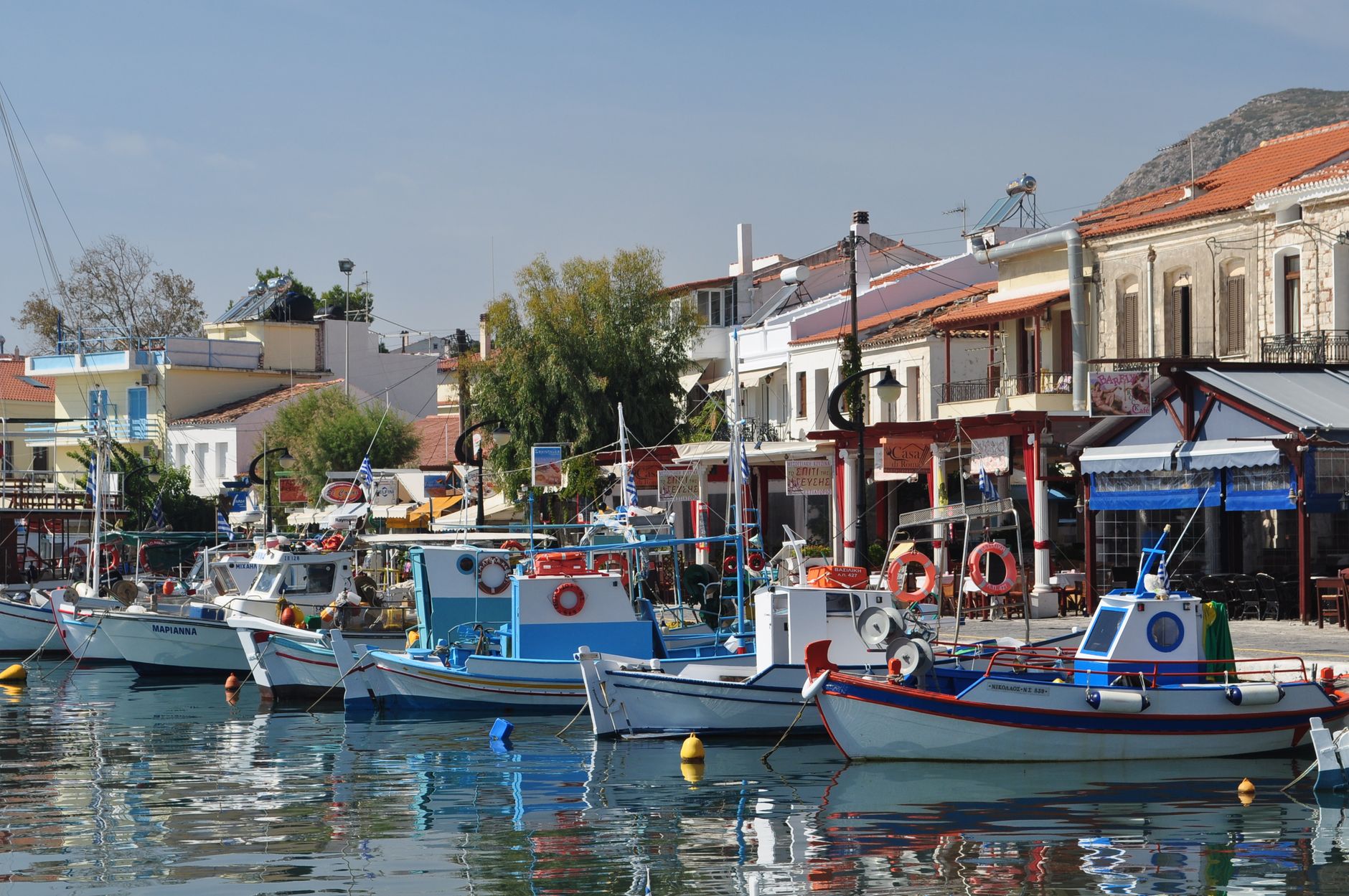
Pythagoreio
The eastern harbour of Samos, built on the ancient city, with a castle above the quay and a waterfront of tavernas.
“A harbour built round a fishing port with a medieval castle above it, and the best eating on Samos.”

Chios
A large, under-visited North Aegean island known for the mastic trees that grow only here, its medieval fortified villages, and a handsome harbour town.
“The mastic island: quiet, wealthy and almost unvisited, with fortified villages, citrus groves and a first-rank Byzantine monastery.”
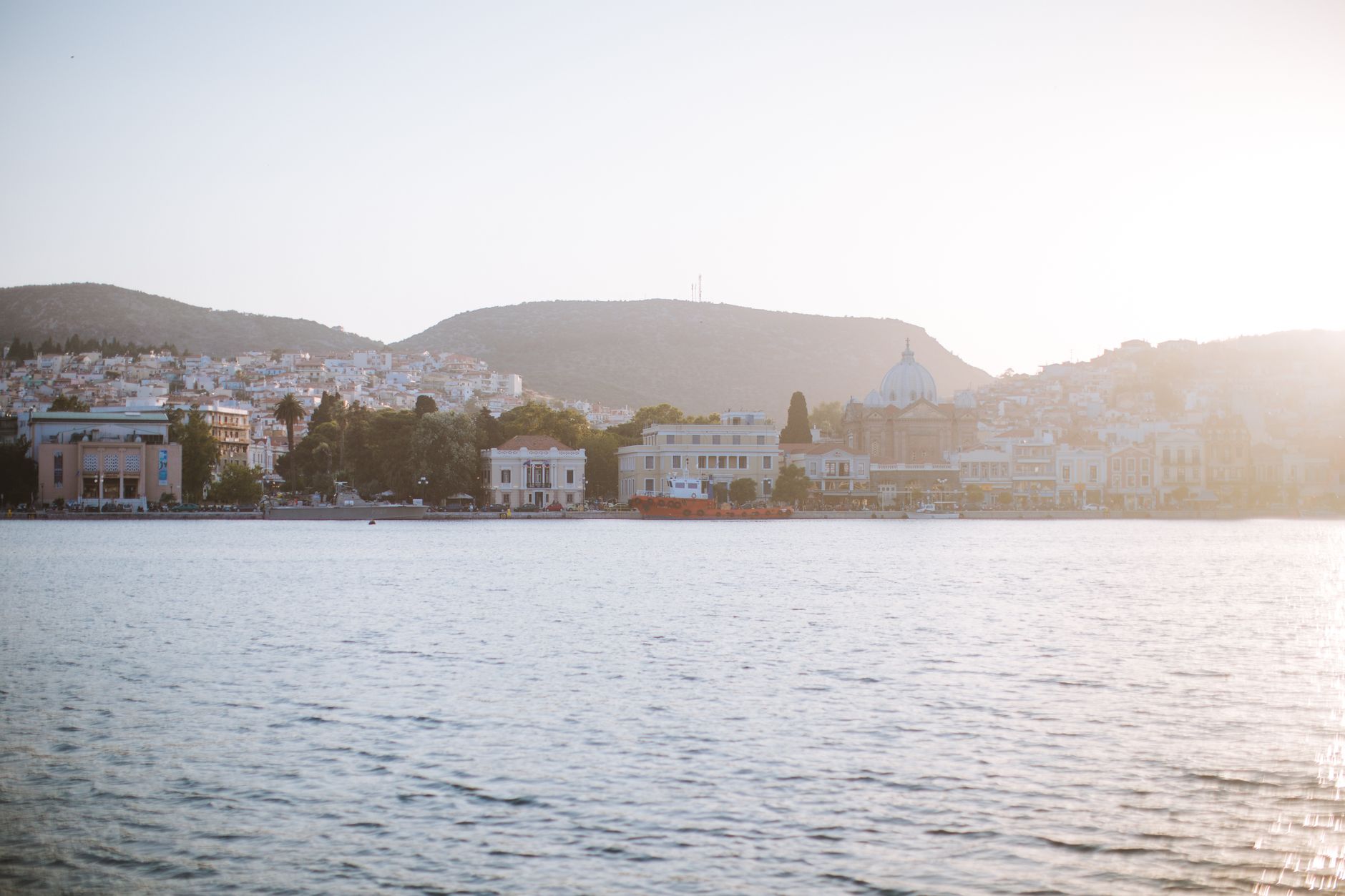
Mytilene
Lesvos's port capital: a Genoese castle over the strait, ouzo distilleries, and a modern history shaped by refugee arrivals and departures.
“Worth it for travelers interested in real island life and history, not for anyone chasing postcard Cycladic whitewash.”
Keep reading
All Greek islandsMore related places in Greece
Sources
Booking links
Commercial links: we may earn a commission if you book through them, at no extra cost to you.
Plan this trip
Greece Field Guide helps you decide. When you're ready to arrange it, take your saved places to an itinerary.