
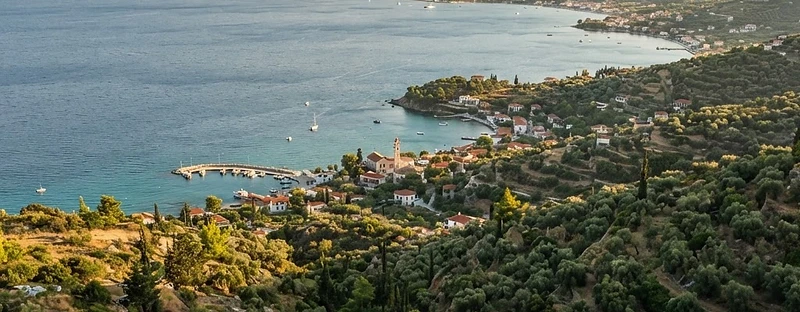
Lesvos
Photo: Greece Field Guide
The Verdict
A whole world of an island: ouzo country, a petrified forest, a Byzantine monastery and villages that see almost no tourists.
Why go
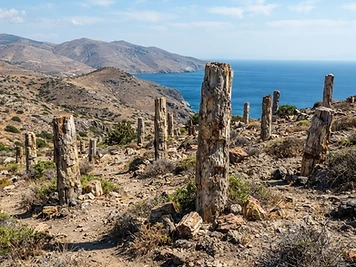
Lesvos is large enough to hold several islands' worth of things: the petrified forest in the west, where fossilised trunks still stand in the volcanic ground; the monastery of Limonos; the castle and stone village of Molyvos in the north; and Mytilene in the east, with its market and its ouzeries. It is also the island of ouzo, perfected here and poured with small plates in Plomari and Mytilene as a matter of local identity. Nothing about it is polished for visitors, which is most of its appeal.
Understand the place
The third largest Greek island — an unhurried North Aegean world of olive groves, ouzeries, castles, a petrified forest and long empty beaches.
Beyond the built
Outdoors & nature
Towns & villages

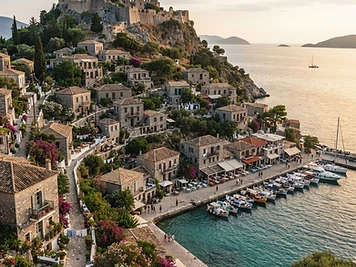
Molyvos
A hillside village of grey stone and red roofs on the north coast of Lesvos, with a Byzantine castle on the summit and a fishing harbour at its foot.
“A stone village climbing to a Byzantine castle with a small harbour below — the postcard corner of Lesvos, and better after six.”
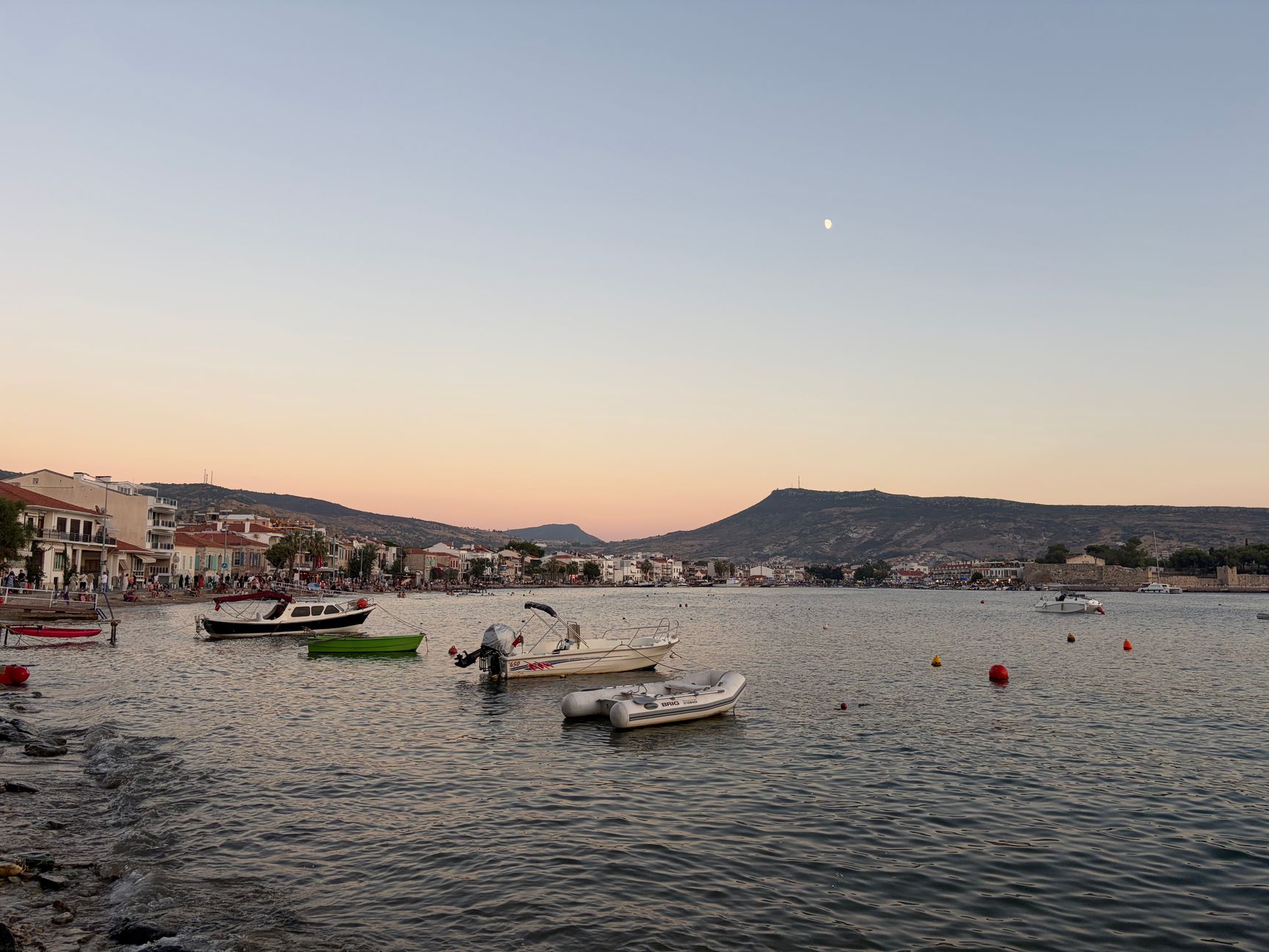
Mytilene
The capital of Lesvos, built round two harbours with a Genoese castle, an old market and a waterfront of ouzeries.
“A large, scruffy, lively port city with an old market and a castle, and the best food on Lesvos.”
Easy to combine with
Logically reachable by transport. Confirm current ferry/flight schedules before booking.
Nearby
Related
Sources
Booking links
Commercial links: we may earn a commission if you book through them, at no extra cost to you.
Plan this trip
Greece Field Guide helps you decide. When you're ready to arrange it, take your saved places to an itinerary.