
Samos
Photo: Thomas Ronveaux / Pexels
The Verdict
The greenest and most mountainous of the big east Aegean islands: vineyards, a great temple in the flat land, and beaches at the end of gorges.
Why go
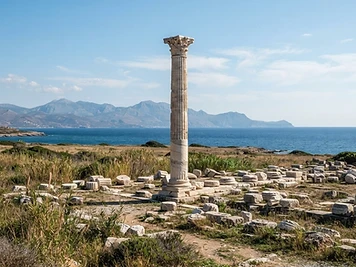
Samos is large, rugged, and noticeably greener than the central Aegean. Two mountain masses dominate the interior—Ambelos in the center and Kerkis in the west—forcing the roads into long, curving climbs through pine forests and terraced vineyards. The island is the home of white Muscat, grown high on dry-stone terraces; the resulting sweet wines are thick and honeyed, while the dry versions carry an intense floral nose and clean acidity. Days divide naturally between the heights and the coast: you hike the mountain footpaths between stone villages like Manolates, then descend through steep ravines to pebble bays on the north or sandy strips along the south. Antiquity is concentrated around Pythagoreio, where the Heraion ruins sit in the marshy coastal plain, marked by a single standing column of what was once one of the largest Greek temples ever built. Nearby, the Tunnel of Eupalinos cuts straight through the limestone mountain, an extraordinary piece of sixth-century BC engineering you can walk into. The trade-off is scale. Samos is not a neat, compact destination; driving takes real time, public buses are infrequent, and moving between the north and south coasts requires patience behind slow trucks.
Understand the place
A large, green, mountainous North Aegean island with a wine tradition, the ruins of a great temple to Hera, and a long coast of quiet beaches.
The old world
History & archaeology
Towns & villages

Samos Town
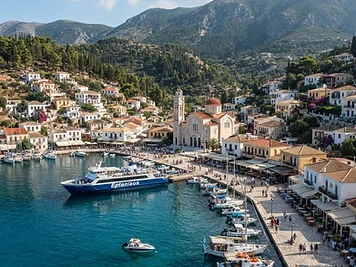
Vathy, the capital of Samos, built around one of the deepest natural harbours in the Aegean, with a waterfront and a hillside of old houses.
“A town wrapped round a deep harbour with hills of ochre houses above it — practical rather than pretty, and the island's transport hub.”
Pythagoreio
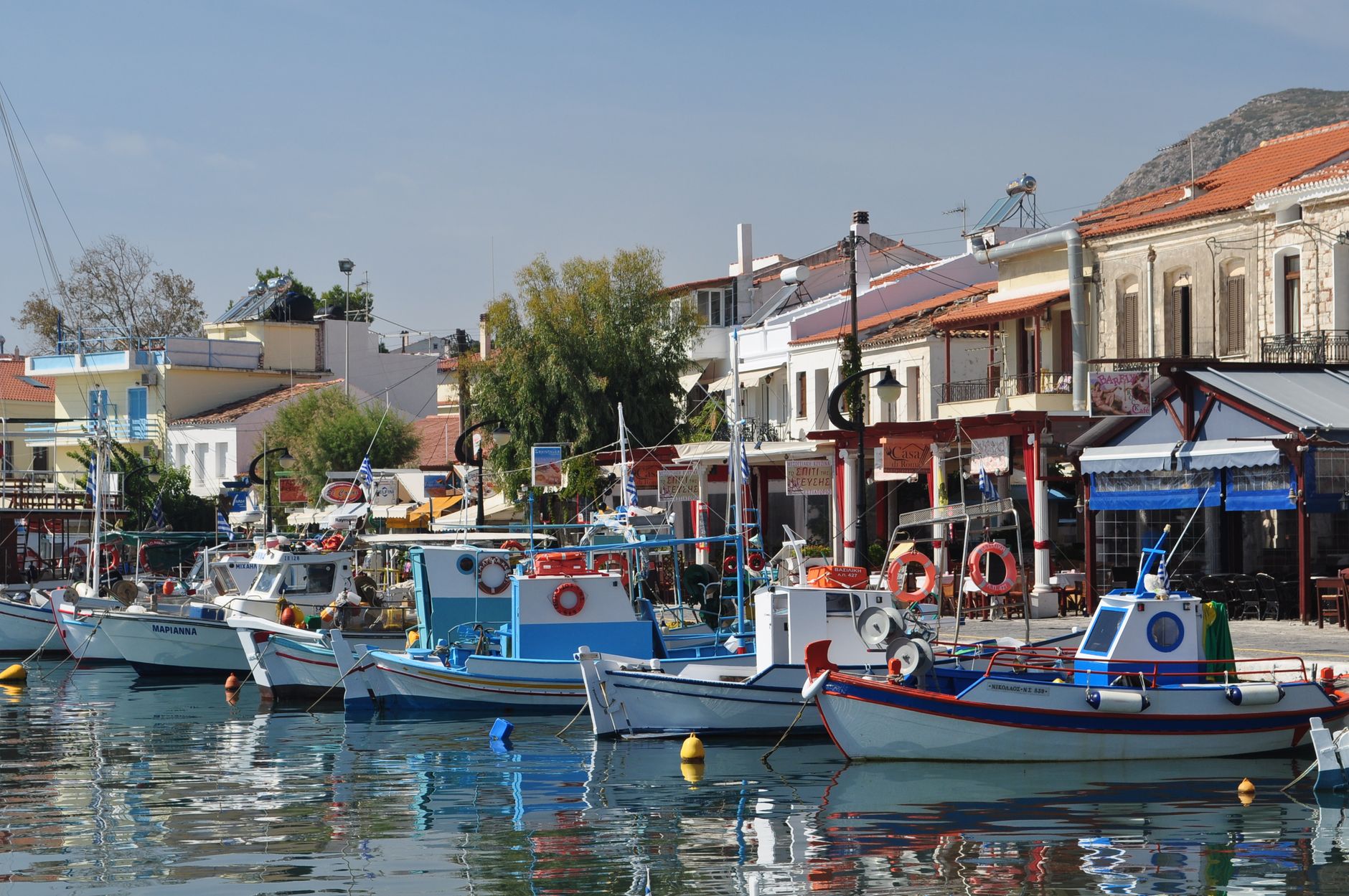
The eastern harbour of Samos, built on the ancient city, with a castle above the quay and a waterfront of tavernas.
“A harbour built round a fishing port with a medieval castle above it, and the best eating on Samos.”
Easy to combine with
Logically reachable by transport. Confirm current ferry/flight schedules before booking.
Nearby
Related
Sources
Booking links
Commercial links: we may earn a commission if you book through them, at no extra cost to you.
Plan this trip
Greece Field Guide helps you decide. When you're ready to arrange it, take your saved places to an itinerary.