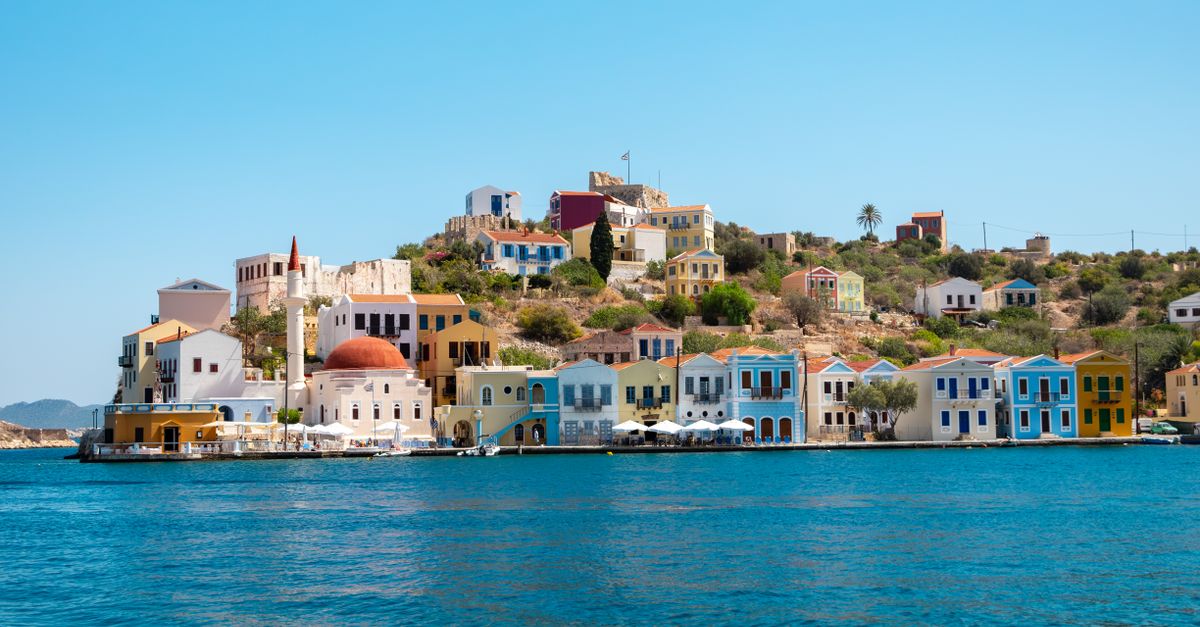
Dodecanese
Photo: Ahmet Çığşar / Pexels
The Verdict
The best choice for a late or early season island trip — and for travelers who want medieval history alongside beaches.
Why go
Sitting flush against the Turkish coast, the Dodecanese trade typical Cycladic whitewash for heavy stone fortifications, Italian rationalist buildings, and Ottoman domes. In Rhodes, you spend your mornings walking the moat and cobbles of the fortified medieval town before driving south past citrus groves to windblown sand beaches. Farther north, Patmos centers on the fortified Monastery of Saint John and the cave where the Book of Revelation was written, trading resort commercialism for monastic quiet and strict building codes. Distances between the islands are significant, making quick island-hopping an exercise in frustration. Instead, you base in one or two ports. Symi pulls day-trippers into its amphitheater of neo-classical mansions, while volcanic Nisyros offers quiet caldera hikes without the cruise crowds of the central Aegean. The southern latitude keeps water temperatures swimmable and tavernas open well through October, weeks after northern archipelagos have shuttered. The trade-off is travel time. Ferries from Piraeus take anywhere from eight to twelve hours to reach the major hubs, and connecting to smaller outcrops like Tilos or Lipsi requires strict attention to sparse ferry routes. You come here to plant yourself for ten days, rent a car, and accept that the architecture and history reflect centuries of occupation by Crusaders and Ottomans rather than simple
Understand the place
A scattered group near Turkey, blending medieval architecture, long beaches and a longer season than the Cyclades.
Where to swim
Beaches

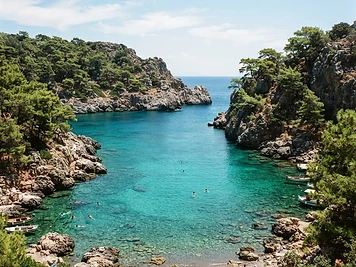
Anthony Quinn Bay
A small enclosed cove of vivid green water north of Faliraki, ringed by pine and rock.
“Small, green and genuinely beautiful, which is why the car park is full by eleven. Come early or not at all.”

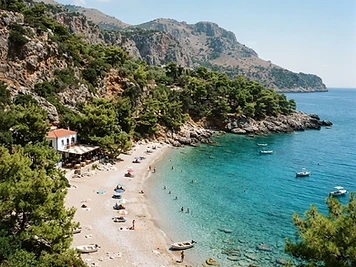
Apella Beach
A sand-and-pebble beach in a bay on the northeast coast of Karpathos, with pines, clear water and a single taverna.
“A long beach under pine trees on the east coast, reached by a road of hairpins — the best swim on Karpathos.”
What to eat & drink here
Food & drink

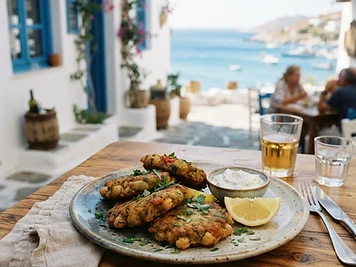
Pitaroudia
Crispy chickpea fritters packed with onion, tomato and mint. Dodecanese snack food made for eating on the move through medieval streets.
“Crispy, chickpea-based patties that define Dodecanese snack culture.”

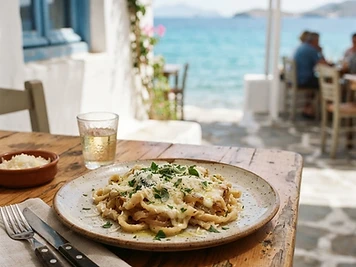
Pitaridia
Handmade pasta boiled in meat stock, served with grated mizithra and toasted butter. Peasant pasta done right, simple ingredients doing all the work.
“Handmade pasta that is boiled in meat stock—a simple pleasure.”

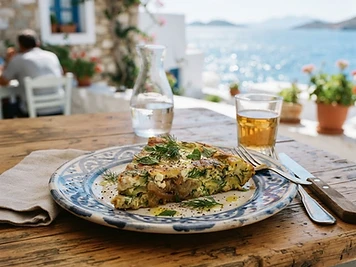
Sfougato
Egg and vegetable bake, essentially a crustless quiche packed with zucchini or local greens. Light enough for a quiet dinner, not a showpiece dish.
“A local egg and vegetable bake that is essentially a crustless quiche.”
The old world
History & archaeology

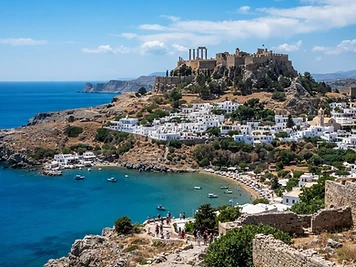
The Acropolis of Lindos
A temple of Athena on a sheer rock above the village and bay of Lindos, with Hellenistic stoa and a Knights' castle on the same summit.
“The best ancient site in the Dodecanese, and worth the climb. Walk up before nine or after five, or ride a donkey and feel bad about it.”

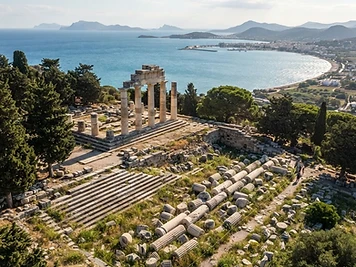
The Asklepion of Kos
The ancient sanctuary of Asklepios on a hillside above the south coast of Kos, laid out on three great terraces with the temple at the top.
“A healing sanctuary built up three terraces above the coast, with the best-preserved temple in the Dodecanese — go at opening.”

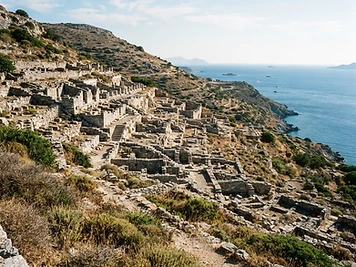
Ancient Kamiros
One of the three ancient cities of Rhodes, on a hillside above the west coast, excavated into readable terraces of houses, temples and a reservoir.
“The quietest of Rhodes' ancient cities, and the one where you can actually read the town plan. Come here instead of queueing at Lindos.”

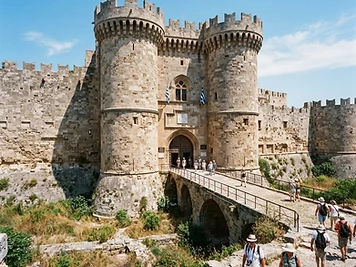
Palace of the Grand Master
The Knights' fortress at the top of Rhodes old town, rebuilt by the Italians in the 1930s as a palace for Mussolini.
“Go for the medieval shell and the mosaic floors; ignore the fantasy reconstruction wrapped around them.”

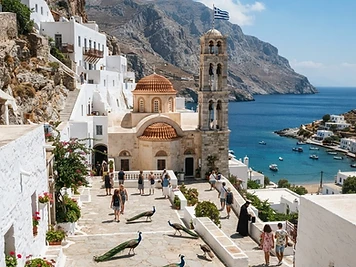
The Monastery of Panormitis
The monastery of the Archangel Michael at Panormitis, on the south coast of Symi, reached by road or by boat.
“A working monastery at the head of a bay, with a peacock in the courtyard and a very large church.”
Beyond the built
Outdoors & nature

Places within

Leros
A quiet Dodecanese island of three hillside towns and Italy's strangest piece of colonial architecture.
“A slow island for travelers who have done the famous Dodecanese and now want a harbour to sit in.”

Kastellorizo
One harbour, one town, and the closest Greek island to Asia Minor.
“Two nights of an extraordinary setting, and then you have seen it — which is the honest reason to go.”

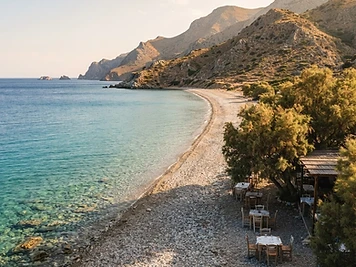
Tilos
A small, mountainous Dodecanese island with no nightlife, one long beach and a cave full of dwarf elephant bones.
“For walkers and quiet: Livadia's beach, an abandoned village on the hill, and birds overhead.”

Patmos
A small Dodecanese island that has been a place of pilgrimage for nine centuries, and still behaves accordingly.
“Three nights for the monastery and the quiet, then leave before you start wishing it had a beach bar.”

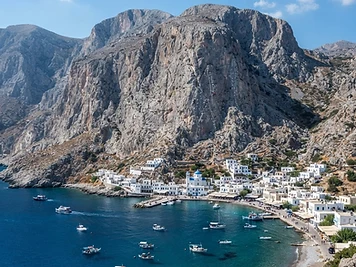
Kalymnos
A Dodecanese island of steep grey cliffs above deep blue water, known for its sponge-diving past and now for its rock climbing.
“A bare limestone island of sponge divers and rock climbers: steep cliffs, deep water, and a season that runs outside summer.”

Pothia
The capital of Kalymnos, arranged round a horseshoe harbour with sponge shops on the quay and houses climbing the hills behind.
“A lively harbour town of sponges, fishing boats and steep streets, and the working heart of Kalymnos.”

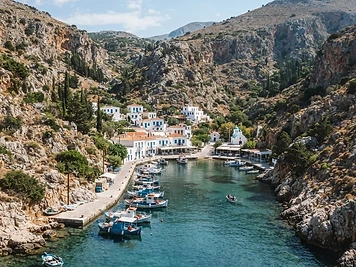
Vathi
A small village at the head of a deep inlet in northern Kalymnos, ringed by hills with a narrow entrance from the sea.
“A village at the head of an inlet so enclosed it reads as a fjord, with a few tavernas and water you can swim in.”
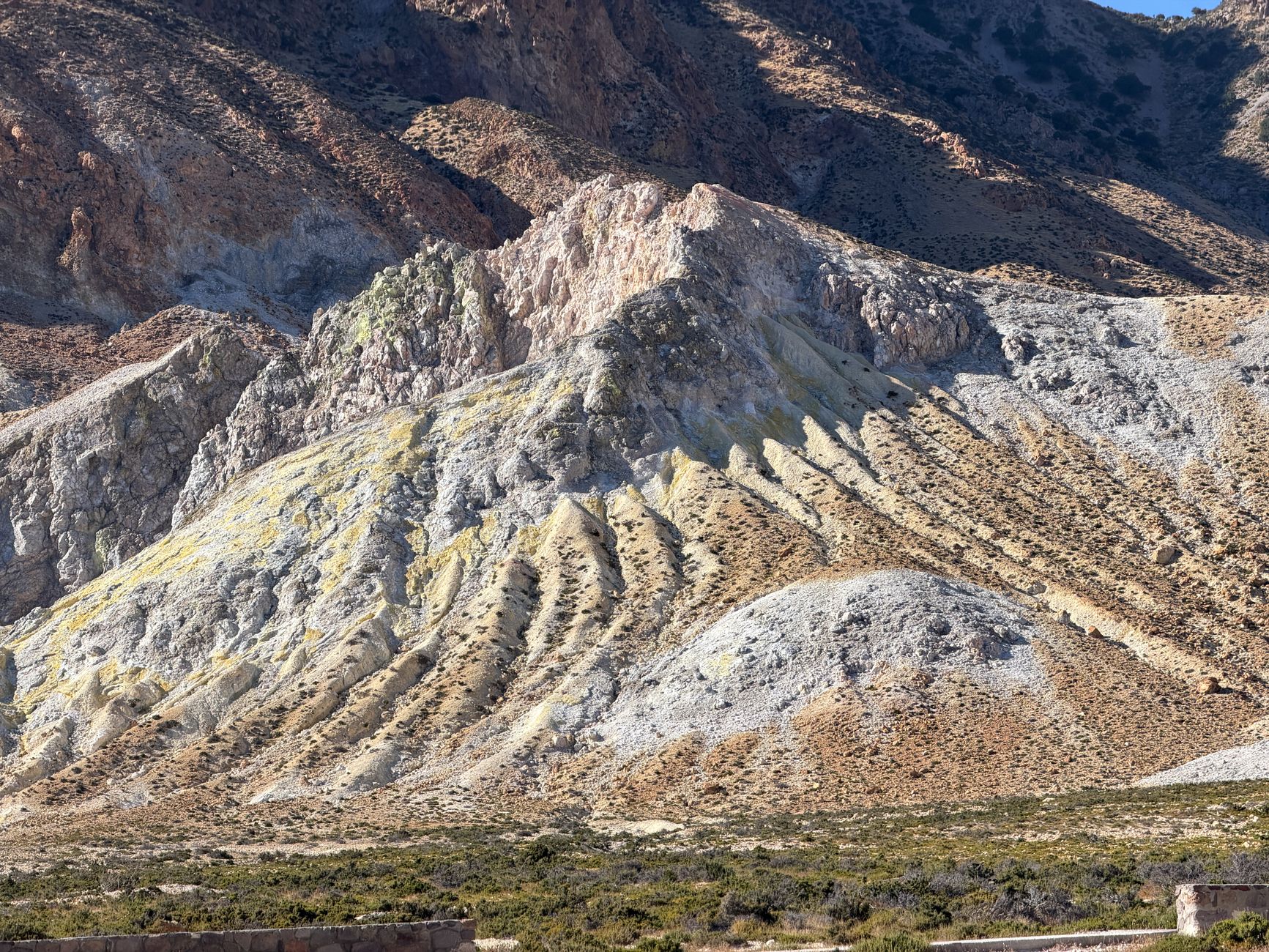
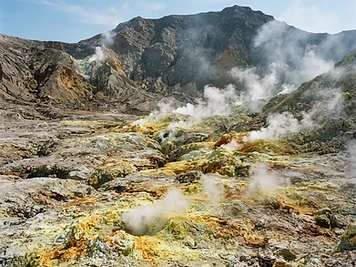
Nisyros
A small round volcanic island south of Kos, its centre a caldera with active fumaroles and a floor of grey ash and yellow sulphur.
“A whole island that is one volcano, with a crater you can walk into and a harbour town that has barely changed.”

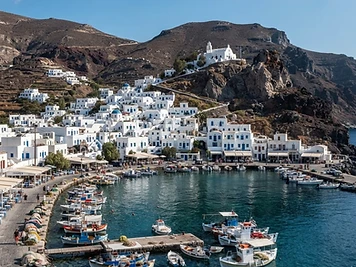
Mandraki
The main village and port of Nisyros, built round a bay at the northwest corner of the island under the monastery of Panagia Spiliani.
“The harbour of Nisyros: white houses in a ring round the bay, with a monastery built into the rock above it.”

Astypalea
The westernmost of the Dodecanese, two rocky lobes joined by a narrow neck, with a white hill town and quiet beaches.
“A butterfly-shaped island with a Cycladic-looking chora, a Venetian castle and almost no visitors.”

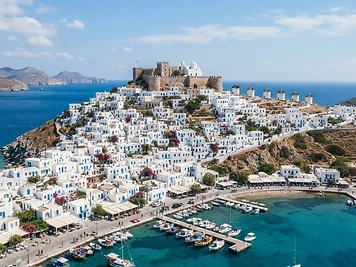
Astypalea Chora
The chora of Astypalea, a hill of white houses and windmills crowned by a Venetian castle, with the old port of Pera Gialos below.
“A white hill town of windmills and lanes under a Venetian castle — the prettiest thing in the Dodecanese that nobody has heard of.”

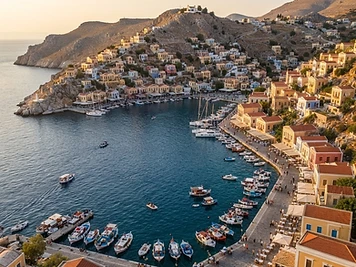
Symi
A small Dodecanese island and its harbour town of Gialos, its painted houses rising to the old town of Chorio and a castle above.
“A horseshoe harbour of houses the colour of honey under bare hills — the best-looking port in the Dodecanese, and crowded between ten and four.”

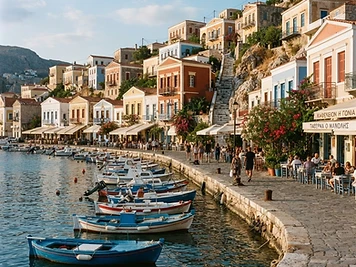
Symi Town (Gialos)
Gialos, the harbour town of Symi, with its waterfront of tavernas and the long flight of steps up to the old town of Chorio.
“A harbour of honey-coloured houses on both sides of a bay, with no cars on the waterfront and water taxis leaving for the beaches.”

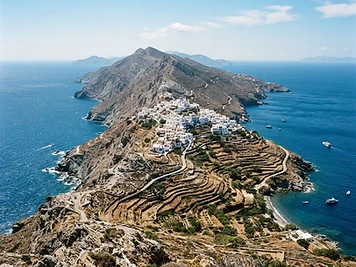
Karpathos
A long, thin, mountainous island between Rhodes and Crete, with beaches on the east coast and villages in the north that keep their own traditions.
“A long, mountainous Dodecanese island where the north keeps its own dialect and dress — the wildest and least developed of the group.”

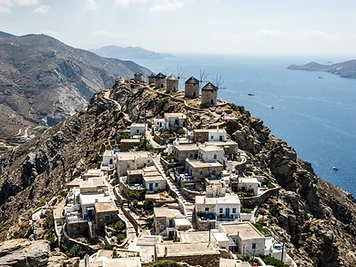
Olympos
The mountain village of Olympos in northern Karpathos, its houses strung along a ridge above the sea, long isolated by the road.
“A village on a ridge at the north end of Karpathos where the local dress is still worn and the dialect is barely Greek to other Greeks.”

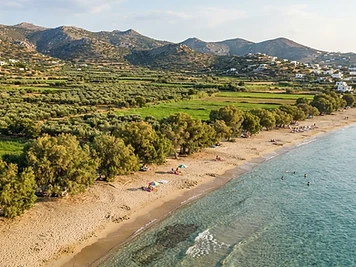
Kos
The second largest of the Dodecanese, known for the Asklepion, a broad sandy coast and a harbour town that bicycles rather than drives.
“A green, flat, fertile Dodecanese island with a first-rank ancient site and a bicycle-friendly town — busier and easier than its neighbours.”

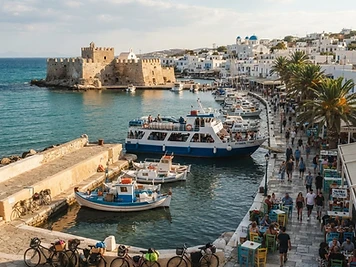
Kos Town
The capital of Kos, built round a harbour with a medieval castle, a Roman villa with its mosaics, and streets made for bicycles.
“A harbour town with a castle, a Roman house under glass and more bicycles than cars.”

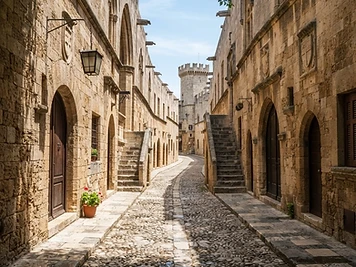
Rhodes Town
The best-preserved medieval city in the Mediterranean: a walled Knights' town, an Ottoman quarter and a modern harbour city beside them.
“The only honest reason to start a Rhodes trip here rather than on the beach. Give the old town two nights and walk it after dark, when the cruise crowds are back on board.”
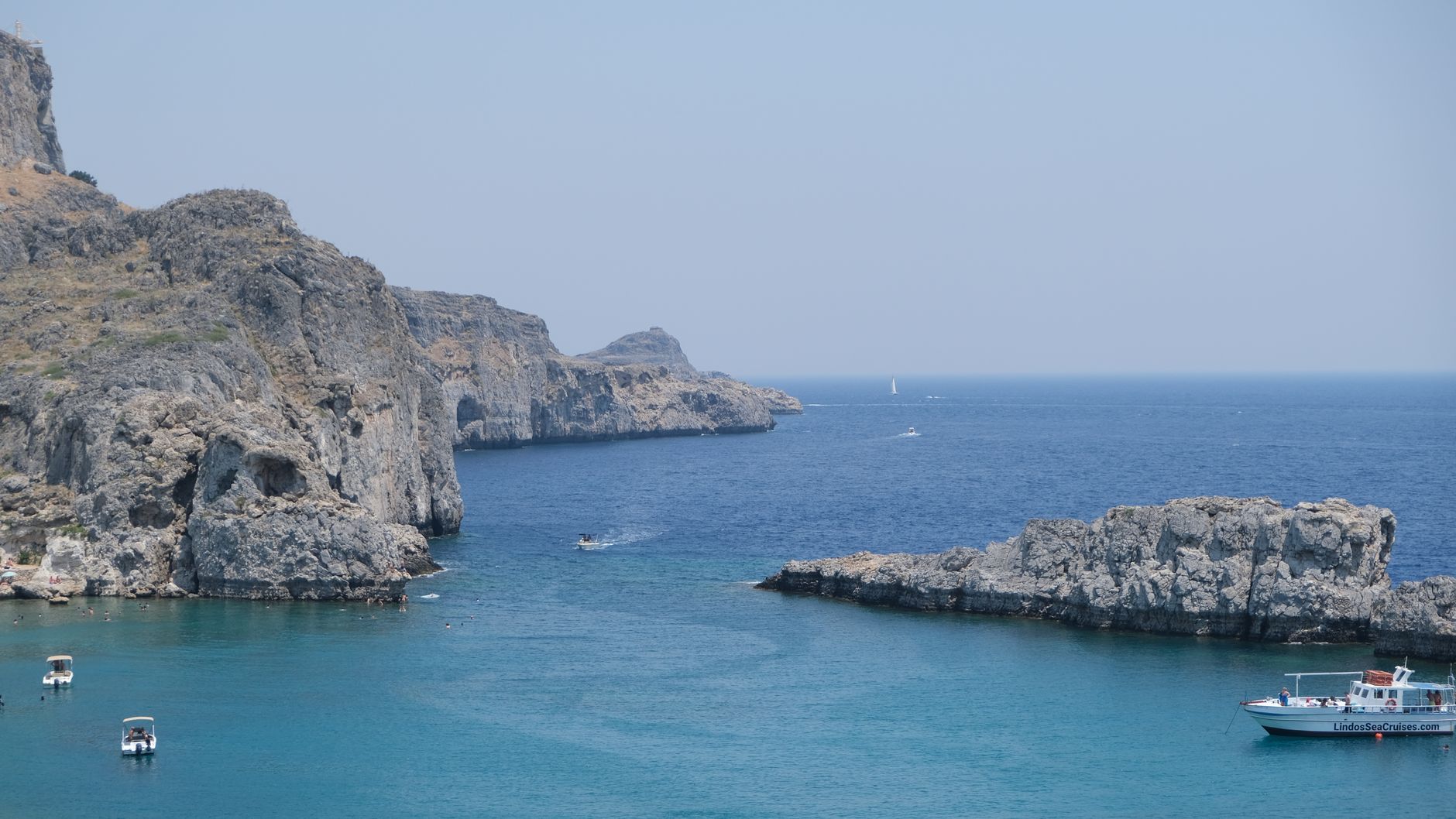
Lindos
A whitewashed village stacked beneath the acropolis of Lindos on Rhodes, overlooking a sheltered bay and a long sandy beach.
“Worth the detour for the acropolis and bay view, but the village itself is a summer tourist trap by midday.”

Rhodes
The largest of the Dodecanese — a walled medieval old town, long beaches, and a longer season than the Cyclades.
“The best Dodecanese island for a first visit — medieval history, family beaches, and a season that runs later than the Cyclades.”
Keep reading
All Greek islandsMore related places in Greece
Sources
Booking links
Commercial links: we may earn a commission if you book through them, at no extra cost to you.
Plan this trip
Greece Field Guide helps you decide. When you're ready to arrange it, take your saved places to an itinerary.