Navagio (Shipwreck Beach)
Photo: Francesco Ungaro / Pexels
The Verdict
Optional — the famous shipwreck cove is stunning from above, but the beach itself is a crowded, boat-herding experience.
Why go
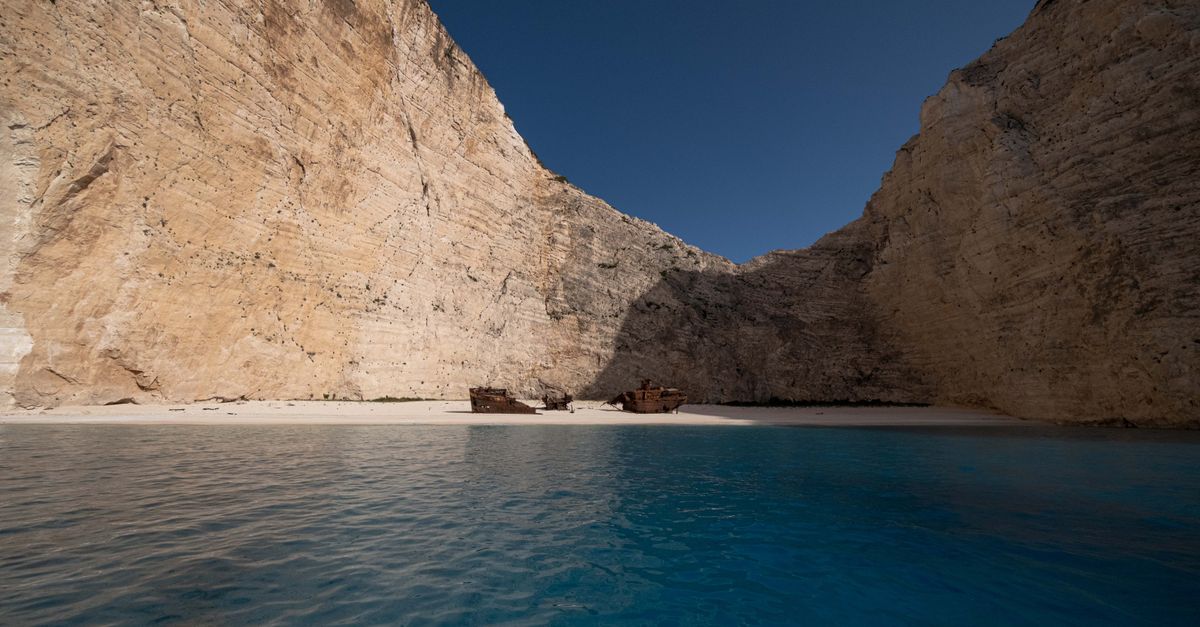
Navagio is defined entirely by geometry and color: sheer limestone walls rising several hundred meters, an intense cyan sea, and the oxidizing steel hull of the MV Panagiotis marooned on white pebbles. The clifftop platform near Anafonitria offers the classic perspective. You stand in line on a metal walkway jutting out over the abyss, take the photograph, and leave. What the postcard angles hide is the scrubland queue behind you and the drop that makes anyone with vertigo turn back. Going down to the sand requires an excursion boat from Porto Vromi or Agios Nikolaos. It is an industrial tourist operation. Dozens of vessels idle in the cove, discharging passengers in waves onto the pebbles. You wade ashore, inspect the decaying engine room, and swim within designated ropes under the gaze of tour skippers checking their watches. Landslides regularly alter access to the beach, meaning visits are often reduced to viewing from offshore. Treat Navagio as an exercise in visual documentation rather than a coastal retreat. Go early in the day for calmer seas and fewer wakes, look at the contrast between raw rust and white stone, and plan the remainder of your afternoon somewhere you can actually sit quietly.
Understand the place
Rusty shipwreck on white sand in an enclosed cove, famous from the clifftop view above. The beach itself is a crowded, boat-herded affair, so the photo is the point.
Nearby
Related
More beaches in Greece
Sources
Booking links
Commercial links: we may earn a commission if you book through them, at no extra cost to you.
Plan this trip
Greece Field Guide helps you decide. When you're ready to arrange it, take your saved places to an itinerary.