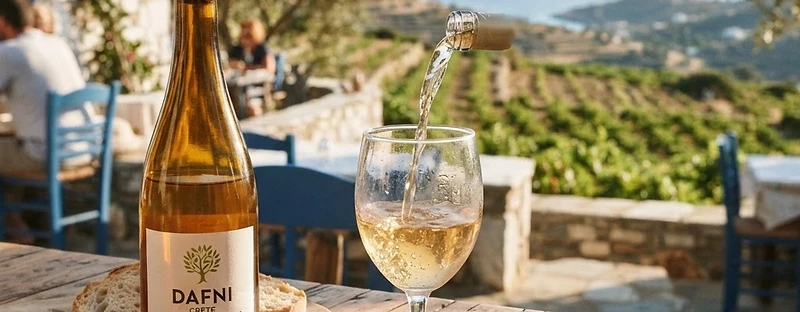
Dafni
Photo: Greece Field Guide
The Verdict
A rare, ancient Cretan grape named for the bay leaf aroma it imparts.
Why go
Dafni takes its name directly from the Greek word for laurel, and the connection is immediate. Pour a glass and the nose yields crushed bay leaf, rosemary, dried oregano, and pine rather than standard orchard fruit. It is an ancient Cretan white variety rescued from near-extinction in the late twentieth century, grown primarily around the hills south of Heraklion. The palate is dry, moderate in acidity, and distinctly savory, finishing with a faint bitter-almond note that keeps it grounded. Drink it alongside traditional Cretan cooking rather than as an aperitif. It pairs logically with wild greens (horta), slow-cooked goat with oregano, or dishes heavy on olive oil and herbs where fruit-forward whites fall flat. Finding it requires deliberate effort; only a handful of winemakers bottle it as a single varietal, meaning you are unlikely to encounter it outside dedicated wine bars or island cellars. The trade-off is its stubborn profile. Dafni does not behave like crisp Assyrtiko or aromatic Malagousia. It lacks ripe sweetness and overt juiciness, presenting instead an intense, medicinal herbalism that can divide a table. For drinkers who value botanical complexity over easy refreshment, it remains one of the Aegean's most singular native bottles.
Understand the place
Rare ancient Cretan grape named for its bay leaf aroma. Herbal and spicy, it resists easy categorization and suits the genuinely curious drinker.
Related
More Greek wines in Greece
Sources
Plan this trip
Greece Field Guide helps you decide. When you're ready to arrange it, take your saved places to an itinerary.