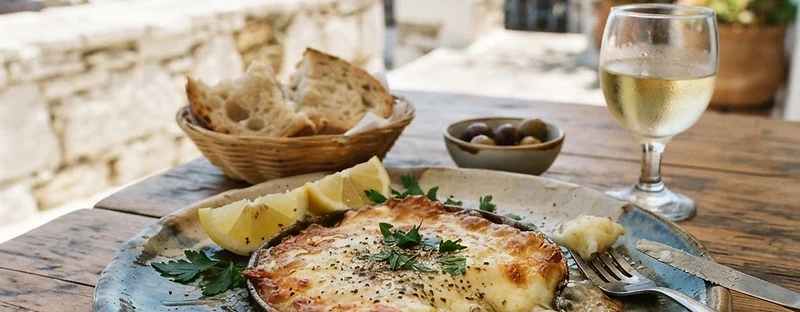
Saganaki
Photo: Greece Field Guide
The Verdict
Simple fried cheese that remains the ultimate Greek appetizer.
Why go
Saganaki takes its name from the small, two-handled frying pan it is cooked in, but the dish itself is entirely about the cheese. A thick slab of sheep-or-goat milk cheese—usually firm, salty varieties like graviera, kefalograviera, or kefalotyri—is dredged in flour and seared over high heat in olive oil. When done right, it forms a brittle, blistered exterior that cracks open to yield molten, salty dairy beneath. A firm squeeze of fresh lemon cut across the fat is mandatory, transforming dense grease into something sharp and balanced. It is ubiquitous across tavernas from mainland mountain villages to island ports, served piping hot as part of the opening round of mezedes alongside cold beer or dry white wine. Eating it requires speed; within five minutes off the flame, the cheese congeals back into a rubbery block. It is also an immediate test of kitchen discipline. Tavernas that cut corners use bland industrial cow's milk cheeses or fail to heat the pan sufficiently, producing a pale, oil-soaked sponge rather than a crisp crust with an elastic core. The trade-off is sheer weight. Saganaki is pure salt and rendered fat, making it an aggressive starter that can crowd out a meal if ordered without restraint. Share one plate across three or four people rather than treating it as a solo portion, and bypass anywhere that attempts to set it on fire with spirits at the table—that
Understand the place
Graviera or kefalograviera fried until golden and bubbling, finished with lemon. The baseline Greek appetizer, simple enough to judge a kitchen's basic competence.
Keep reading
The food & drink guideMore dishes in Greece
Plan this trip
Greece Field Guide helps you decide. When you're ready to arrange it, take your saved places to an itinerary.