Moustalevria
Photo: Greece Field Guide
The Verdict
A dense grape-must pudding that is a relic of traditional harvesting.
Why go
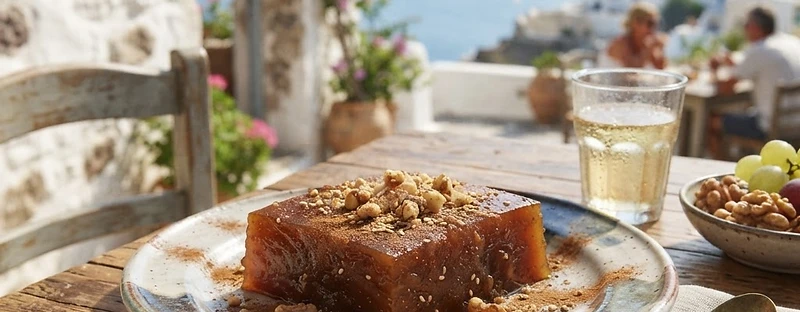
Moustalevria belongs strictly to the late summer and early autumn wine harvest, made by boiling fresh, unfermented grape must with flour or semolina until it sets into a firm, glistening pudding. It is topped with toasted sesame seeds and ground cinnamon, sometimes studded with crushed walnuts. The profile is not the bright acidity of table grapes but the dark, earthy, caramelized sweetness of concentrated juice, undercut by a faint mineral note from the wood ash traditionally used to clarify the must. You encounter it primarily in wine-producing villages across the Peloponnese, Crete, and the Aegean islands during September and October. Bakeries display it in shallow metal pans, sold cold in thick squares, while traditional tavernas serve it as an unpretentious post-meal offering. Eating it is a direct tie to the agricultural rhythm of the harvest; outside of this brief window, any version made from bottled syrup lacks the clean depth of fresh pressings. The trade-off lies entirely in texture and expectations. It is heavy, starch-thickened, and faintly gelatinous without relying on dairy or eggs. If you expect a creamy, airy custard or sharp fruit flavors, the dense, earthy consistency will feel archaic and muted.
Understand the place
Grape-must pudding, thick and slightly gelatinous, carrying the cooked-down sweetness of harvest season. A seasonal relic tied directly to the wine-making calendar.
Keep reading
The food & drink guideMore dishes in Greece
Plan this trip
Greece Field Guide helps you decide. When you're ready to arrange it, take your saved places to an itinerary.