Briam
Photo: Greece Field Guide
The Verdict
The best way to eat vegetables—roasted until they melt into each other.
Why go
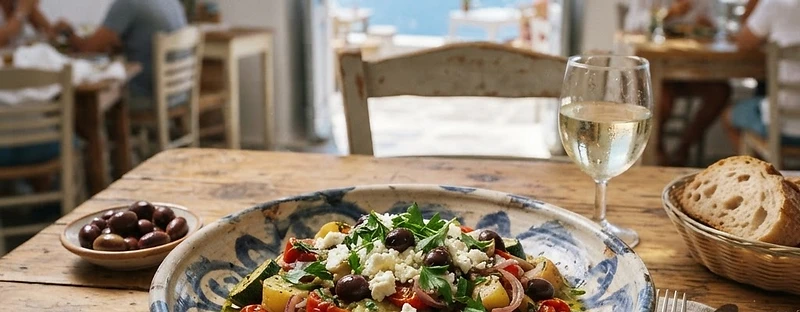
Briam is the staple of the Greek summer kitchen, built entirely around the seasonal glut of zucchini, eggplant, potatoes, and tomatoes. Everything is cut into thick rounds or wedges, layered into a broad metal pan, and baked slowly in an unsparing amount of olive oil with garlic and parsley. The result is neither a crisp roast nor a watery stew. The vegetables collapse into each other, caramelizing at the edges while the potato starch thickens the oil and tomato juices into an unctuous sauce at the bottom of the tin. It is traditionally served warm or at room temperature, making it a reliable lunch on hot afternoons when heavier meats are unappealing. You eat it with crusty country bread to mop up the oil and a thick slice of sharp barrel-aged feta to cut through the sweetness of the roasted vegetables. You will find it in ordinary neighborhood tavernas and mageiria—the counter-service lunch spots with steam tables—where it often sits quietly alongside pastitsio and stuffed tomatoes. The trade-off is texture. If you prefer crisp-tender stir-fries or firm vegetables, briam will disappoint you. The vegetables are cooked past softness into total surrender. It is heavy with oil by design, and tavernas that cut corners by undercooking the potatoes or skimping on olive oil turn out a watery, mediocre bake.
Understand the place
Zucchini, eggplant, potatoes, and tomatoes roasted together in heavy olive oil until soft. The simplest, most effective way to eat Greek summer vegetables.
Keep reading
The food & drink guideMore dishes in Greece
Plan this trip
Greece Field Guide helps you decide. When you're ready to arrange it, take your saved places to an itinerary.