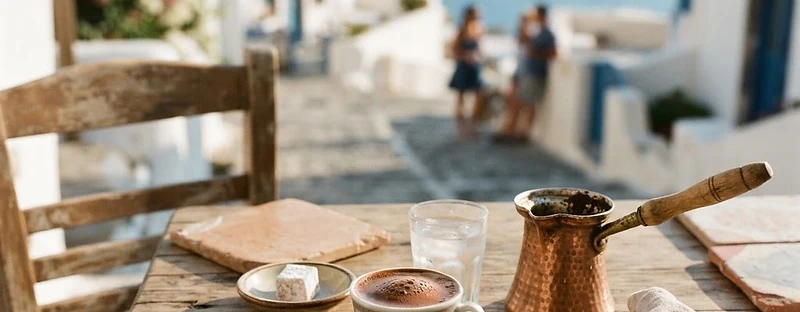
Greek Coffee
Photo: Greece Field Guide
The Verdict
Strong, sediment-heavy, and meant to be savored slowly while sitting in a traditional kafeneio.
Why go
Greek coffee is an unhurried, physical experience rather than a quick caffeine delivery system. Brewed finely ground in a small copper pot called a briki, it arrives boiling hot with a thick, velvety foam on top, known as the kaimaki. It is roasty, dense, and deeply aromatic, ordered strictly by your preferred sweetness—sketos (plain), metrios (medium), or glykys (sweet)—because sugar must dissolve during the brew, never after. It is served alongside a glass of cold water, usually on a small metal tray at an outdoor table in a village square. The ritual demands patience. You cannot rush it, and you must never drink the final centimeter of liquid. The pulverized grounds settle slowly to the bottom of the cup, forming a thick silt that will coat your teeth if you stir it or gulp recklessly. Instead, you sip slowly, taking in tiny measures while the slurry clarifies and cools. It is best ordered mid-morning or late afternoon at a kafeneio, where it anchors hours of observation, backgammon games, and political debate.
Understand the place
Strong, sediment-heavy coffee meant for slow sipping in a kafeneio. Do not stir up the grounds; let them settle and anchor the conversation.
Related
Keep reading
The food & drink guideMore Greek drinks in Greece
Plan this trip
Greece Field Guide helps you decide. When you're ready to arrange it, take your saved places to an itinerary.