Gemista
Photo: Greece Field Guide
The Verdict
Recommended — the dish that proves Greek vegetable cooking is serious.
Why go
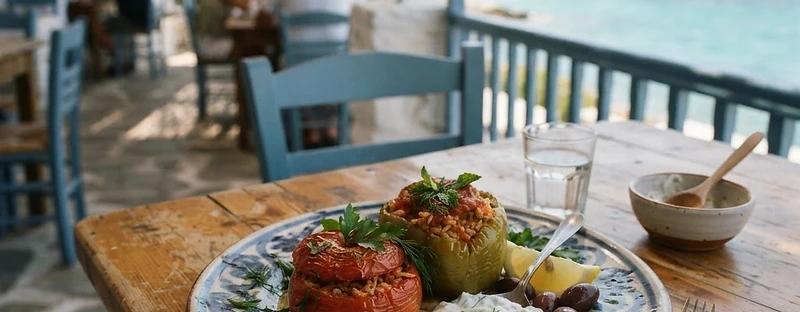
Gemista is the centerpiece of the Greek summer table and the benchmark by which any home-style kitchen ought to be judged. Ripe beefsteak tomatoes and round green peppers are hollowed out, their pulp cooked down with onions, garlic, abundant olive oil, and short-grain rice before being stuffed back into the skins. Thrown into a deep sheet pan alongside potato wedges and baked until the skins char and blister, the vegetables collapse into their own sweet, concentrated juices. Fresh spearmint, parsley, and sometimes dill cut through the heavy layer of oil that pools at the bottom of the pan. The real trade-off is temperature and timing. Tourists demand their food piping hot, but gemista ordered straight from the oven is a mistake; the rice is mushy and the aromatics are muffled. It is meant to be eaten at room temperature or lukewarm, ideally several hours after baking, when the rice has settled, absorbed the herb-infused oil, and set into a coherent, rich texture. It demands crusty bread to swipe through the pan oil and a thick slice of sharp barrel-aged feta to balance the sweetness of the roasted nightshades. Finding a kitchen that respects the dish requires looking past tourist strips. Inferior places take shortcuts with parboiled rice, dry fillings, or mincemeat additions that betray the dish's oil-based, vegetarian tradition. Order it at midday in a working taverna where
Understand the place
Tomatoes and peppers stuffed with herbed rice and baked until the skins blister. The vegetarian dish that separates a real home-cooking taverna from a tourist one.
Related
Keep reading
The food & drink guideMore dishes in Greece
Plan this trip
Greece Field Guide helps you decide. When you're ready to arrange it, take your saved places to an itinerary.