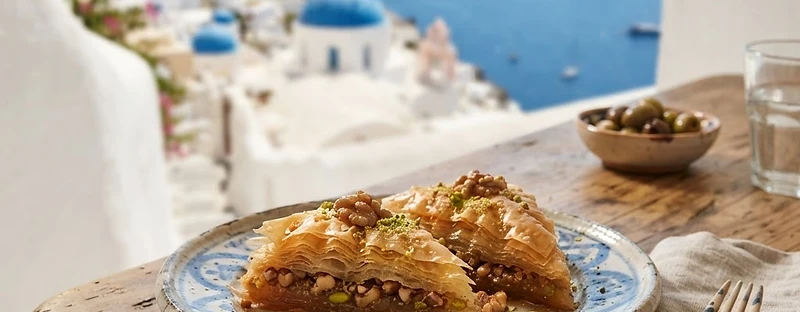
Baklava
Photo: Greece Field Guide
The Verdict
When made with quality butter and fresh nuts, it is an architectural masterpiece of sugar.
Why go
Baklava lives or dies by its engineering. A proper slice presents dozens of micro-thin phyllo sheets that shatter on contact, yielding to coarsely chopped walnuts or pistachios bound with clove and cinnamon. The sugar or honey syrup must saturate the base without extinguishing the crackle of the top layers. Cheap bakery renditions drown in cloying, corn-syrup slush and margarine; authentic versions rely on clarified sheep or goat milk butter that cuts cleanly through the sweetness with a distinct, savory depth. Treat it as an afternoon fixture rather than a dinner dessert. In Greece, you order a single diamond-cut piece at a traditional zacharoplasteio (pastry shop) or a kafeneio alongside a glass of ice water and an unsweetened Greek coffee. The bitter brew is non-negotiable; it functions as a solvent against the relentless sugar load. The trade-off is its sheer density. One piece is an indulgence; two is a tactical error that will derail your appetite for the rest of the day. Seek regional variations, such as the pistachio-heavy pans of Aegina or spiced walnut versions in northern mountain towns, but avoid tourist tavernas that pull pre-cut squares from commercial refrigerators.
Understand the place
Phyllo and spiced nuts soaked just enough to stay crisp. Quality depends entirely on the butter and nuts used; cheap versions turn soggy and flat.
Keep reading
The food & drink guideMore dishes in Greece
Plan this trip
Greece Field Guide helps you decide. When you're ready to arrange it, take your saved places to an itinerary.