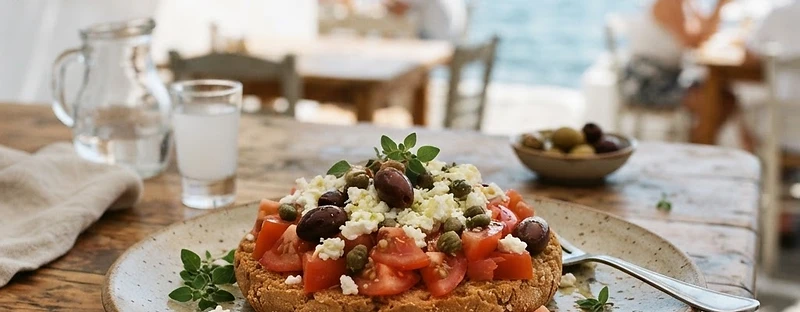
Dakos
Photo: Greece Field Guide
The Verdict
Essential Cretan eating — a rusks-and-tomato salad that explains why Cretan food matters.
Why go
Dakos is the foundation of Cretan cooking, reducing the island's larder to bread, oil, and cheese. It begins with a paximadi—a rock-hard, twice-baked barley rusk that would chip a tooth if eaten dry. The cook dampens it briefly with water, drenches it in pungent green olive oil, and mounds it with grated ripe tomatoes that leak juice into the grain. On top goes a heap of fresh, tart mizithra or crumbled feta, wild dried oregano, and occasionally a scattering of capers or black olives. The result is a contrast of textures that demands immediate eating. The center of the rusk stays rough and dense, while the exterior turns yielding and saturated with savory tomato water and peppery oil. It functions equally as a morning fieldworker's ration, a midday mezze with raki, or a light summer supper, ordered without ceremony in village kafeniat and seaside tavernas across the island. Its success depends entirely on the quality of raw ingredients; off-season tomatoes or generic commercial oil render it soggy and flat. When the produce is right, dakos makes an immediate, persuasive case for why Crete's unadorned rural diet outclasses more elaborate cooking elsewhere in the Aegean.
Understand the place
Barley rusk softened with water and oil, topped with grated tomato, mizithra and oregano. The dish that explains why Cretan food is taken seriously.
Nearby
Related
More dishes in Greece
Sources
Plan this trip
Greece Field Guide helps you decide. When you're ready to arrange it, take your saved places to an itinerary.