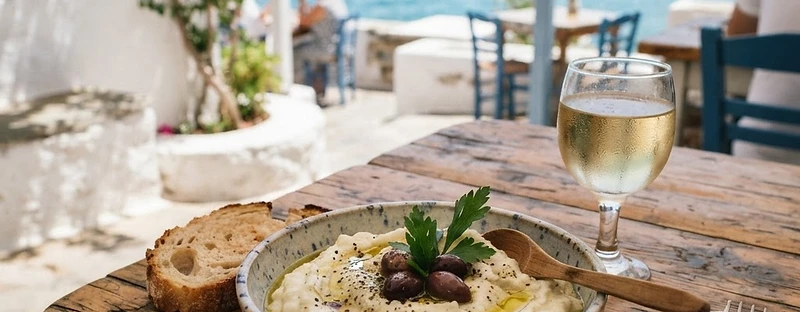
Skordalia
Photo: Greece Field Guide
The Verdict
A garlic-heavy puree that is essentially a social-life-ending weapon.
Why go
Skordalia is not a polite dipping sauce. It is raw, aggressive garlic emulsified into either stale soaked bread or boiled potatoes, bound with generous pours of olive oil and sharp red wine vinegar. Depending on the region and the kitchen, you might encounter a version weighted with ground walnuts or almonds, but the through-line is always an unapologetic burn. The texture sits somewhere between mashed potatoes and a dense mortar, heavy enough to support a fork. The dish exists primarily as an aggressive counterweight. Its traditional partner is bakaliaros—salt cod soaked, battered, and fried in boiling oil until shattering—a pairing standardized across tavernas for Greek Independence Day on March 25, though available year-round. You drag the crisp fish through the cold, pale paste, letting the acid and the garlic cut straight through the grease. Beyond cod, it belongs next to boiled beets, fried zucchini, and wild greens. The trade-off is absolute and lingering. The garlic is raw, unroasted, and used in volumes that defy modern social tact. The heat hits the back of your throat on the first swallow and stays in your pores through the following morning. It is taverna food at its most utilitarian, designed to sharpen cheap fried fish and anchor a cold carafe of dry white wine.
Understand the place
Garlic puree pounded raw and bold, usually served alongside fried cod. Expect your breath to suffer for it; order it anyway.
Keep reading
The food & drink guideMore dishes in Greece
Plan this trip
Greece Field Guide helps you decide. When you're ready to arrange it, take your saved places to an itinerary.