Moussaka
Photo: Greece Field Guide
The Verdict
The most famous Greek dish — and a test of any taverna. A good one is a reason to sit down.
Why go
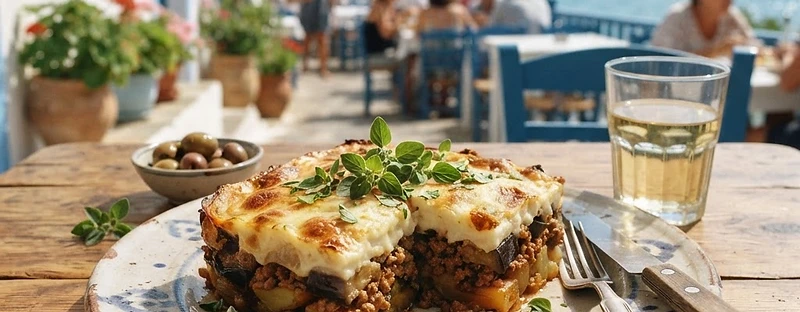
Moussaka is Greece's culinary calling card, but mass tourism has reduced it in too many kitchens to a reheated brick of heavy starch and grease. When prepared correctly, it is a balanced architectural study in texture: sliced potatoes cooked until tender at the base, silky roasted aubergine, minced lamb or beef spiced with cinnamon and allspice, and a deep crown of béchamel that browns under the oven heat while keeping a light, custardy interior. A proper taverna does not serve moussaka straight from the flame. It requires at least an hour to rest and settle after baking, which allows the layers to bind and the richness to mellow into something you can eat without scalding your tongue. Order it during late afternoon or early evening at an unhurried, neighborhood magirio or family taverna that bakes a single large tray for the day. The trade-off is ubiquity versus quality. Mediocre versions made with microwave shortcuts, undercooked aubergine, and flour-heavy sauce dominate the harbor promenades. If the surface is pale or the layers slide into watery grease the moment your fork hits them, pass on it. The reward of a well-executed slice is discovering why the recipe became an enduring national standard in the first place.
Understand the place
Layered aubergine, potato and spiced meat under béchamel, Greece's most famous dish and its hardest to get right. A good version is worth seeking out; a bad one is everywhere.
Related
Keep reading
The food & drink guideMore dishes in Greece
Plan this trip
Greece Field Guide helps you decide. When you're ready to arrange it, take your saved places to an itinerary.