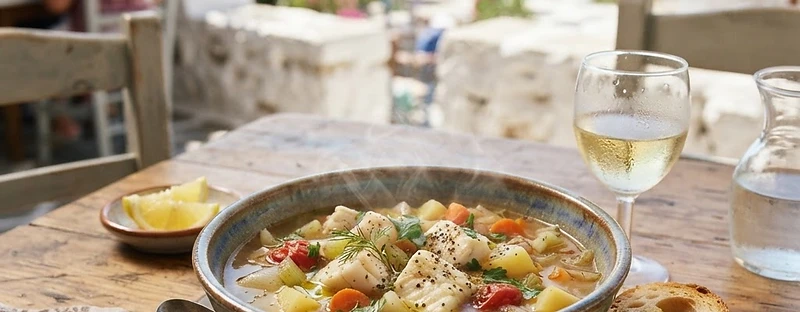
Kakavia
Photo: Greece Field Guide
The Verdict
A fisherman's stew that captures the raw essence of the Aegean.
Why go
Kakavia began as sustenance on working fishing boats, cooked in seawater over small gas burners using the unsellable sweepings of the nets: rascasse, weevers, sea bream, and rockfish too small or bony for the market slab. What reaches the table is not a polite, strained bisque, but an unvarnished broth emulsified with an aggressive pour of olive oil and finished with sharp lemon. It is pale, slightly cloudy, and intensely saline, carrying the deep mineral flavor of whole fish simmered head-and-all alongside rough-cut potatoes and onions. Eating it requires patience and a tolerance for physical labor. In island tavernas, the broth is often served first in a bowl, followed by a separate platter laden with the boiled fish, potatoes, and whole onions. You pick through gelatinous cheeks, fragile collars, and treacherous rib cages with your fingers and a fork, discarding skeletons into a side plate while soaking the starch in the liquid. The reward is unmatched marine clarity, but diners expecting neat fillets will find only a frustrating anatomy lesson.
Understand the place
Fisherman's stew made from the day's leftover bony fish, simmered with potatoes and olive oil. The rawest, purest version of Aegean fish soup available.
Keep reading
The food & drink guideMore dishes in Greece
Plan this trip
Greece Field Guide helps you decide. When you're ready to arrange it, take your saved places to an itinerary.