Taramasalata
Photo: Greece Field Guide
The Verdict
Only the pale, beige version made with real roe is worth your attention.
Why go
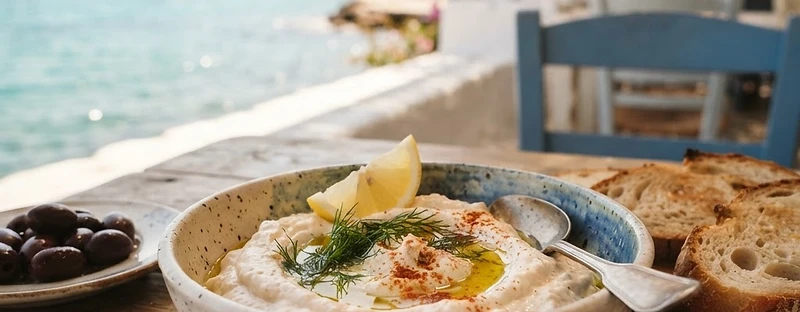
Proper taramasalata bears little resemblance to the neon-pink emulsion sold in plastic tubs across northern Europe. The genuine preparation uses preserved carp or cod roe (tarama), soaked stale white bread or boiled potatoes, fine olive oil, lemon juice, and occasionally grated onion. When emulsified by hand or mortar, the result is an off-white, pale beige spread: intensely savory, thick enough to hold its shape on a fork, and balanced between sharp citrus and deep marine brine. It belongs firmly in the meze lineup, usually eaten early in a meal with warm crusty bread, raw onions, olives, and a carafe of tsipouro or dry white wine. It is also the defining centerpiece of Clean Monday (Kathara Deftera), the start of Greek Orthodox Lent, when it anchors the meatless table alongside flatbread called lagana. A well-made batch has a velvety, aerated texture that dissolves smoothly without leaving an oily film on the palate. The trade-off is ubiquity without quality control. Tavernas catering purely to turnover often rely on commercial tubs colored with synthetic dyes to save prep time and fish roe costs. If the spread arriving at your table is bright pink, send it back or leave it untouched; it is greasy, over-salted, and flat. Ask whether the kitchen makes it in-house from white roe before ordering.
Understand the place
Fish roe puree, creamy and briny when made properly and pale beige, not pink. Avoid the artificially colored supermarket version; it tells you nothing real.
Keep reading
The food & drink guideMore dishes in Greece
Plan this trip
Greece Field Guide helps you decide. When you're ready to arrange it, take your saved places to an itinerary.