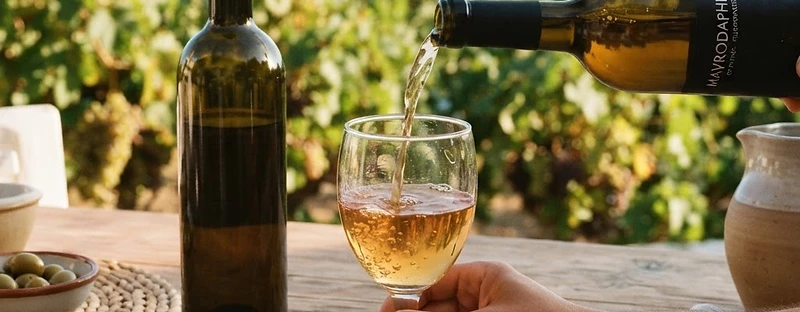
Mavrodaphne
Photo: Greece Field Guide
The Verdict
Often relegated to dessert wine, but the dry versions are revelatory.
Why go
Outside Greece, Mavrodaphne is almost exclusively understood as a fortified dessert wine, syrupy and oxidized like a cheap port. In the northern Peloponnese, particularly around Patras and the hills of Aigialeia, independent vintners vinify the grape dry. This transformation turns a dated after-dinner novelty into one of the country's most compelling red wines. The grape yields an ink-dark pour with an unmistakable profile: black currant, laurel, dried herbs, and a bitter cocoa edge backed by assertive acid and grippy tannins. Drink it in winter or late autumn. It demands rich food to cut through the structure: roasted kid goat, slow-stewed wild boar, or dishes layered with wild mushrooms and warm spices. Ordering it takes deliberate effort, as Greek law historically restricted the Mavrodaphne name on labels of dry wines, forcing producers to release them under regional designations or proprietary names. Look for bottles labeled Mavro or ask specifically for dry Mavrodaphne at serious regional wine bars. The payoff is a wine built for serious meals, stripped of the sticky sugar that obscured its pedigree for a century.
Understand the place
Usually bottled sweet, but seek out the dry table versions. They deliver dark fruit and firm tannin built for cold-weather meals, not dessert.
Related
More Greek wines in Greece
Sources
Plan this trip
Greece Field Guide helps you decide. When you're ready to arrange it, take your saved places to an itinerary.