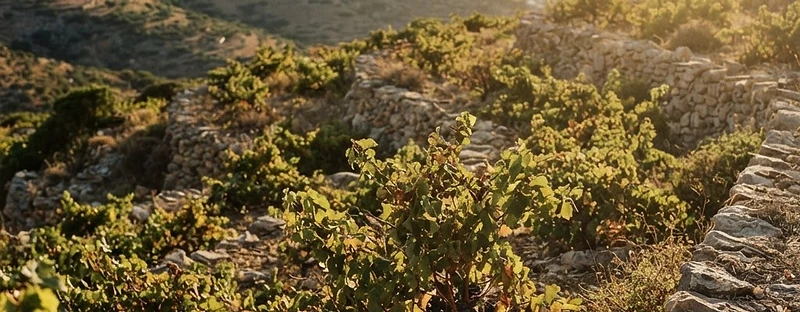
Crete
Photo: Greece Field Guide
The Verdict
A massive, diverse island that acts as its own distinct wine ecosystem.
Why go
Crete operates on a scale unlike any other Greek wine region. Rather than a tidy cluster of estates, you face an entire sub-continent of high-altitude valleys, limestone plateaus, and coastal plains spread across four distinct prefectures. Viticulture here is ancient, but the contemporary movement is focused on reclaiming native varieties that almost disappeared. Vidiano delivers textured, mineral whites with apricot notes and substantial body, while reds rely on pale, herbal Liatiko and structured Kotsifali. A realistic tasting trip requires commitment and serious driving. Most of the action sits south of Heraklion in the Peza and Archanes zones, or tucked into the foothills of the White Mountains outside Chania. You spend hours negotiating winding mountain switchbacks between appointments, shifting rapidly from sea-level heat to cool mountain air. Tastings are unhurried, often conducted by the winemakers themselves alongside local graviera cheese and rusks soaked in raw olive oil. The trade-off is geographic dispersion. You cannot base yourself in one village and casually stroll between cellars. Experiencing both the boutique revivalists of the west and the traditional estates of the center means treating the island as a continuous road trip across difficult topography.
Understand the place
Massive island functioning as its own wine ecosystem, built on Vidiano, Liatiko, and Kotsifali. One visit barely scratches what's actually here.
Related
Sources
Booking links
Commercial links: we may earn a commission if you book through them, at no extra cost to you.
Plan this trip
Greece Field Guide helps you decide. When you're ready to arrange it, take your saved places to an itinerary.