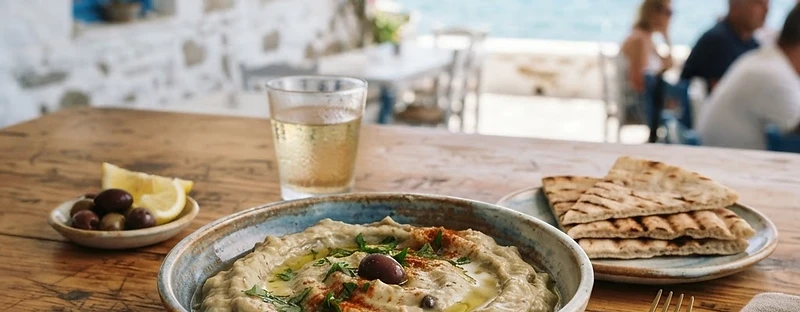
Melitzanosalata
Photo: Greece Field Guide
The Verdict
When done with fire-roasted eggplant, it is the best dip on the table.
Why go
Melitzanosalata is built around a single, demanding technique: charring whole eggplants over an open flame or wood embers until the skin collapses into black paper and the flesh steams into submission. When scooped out, the pulp retains a deep, unmistakable woodsmoke aroma that defines the dish. It is crushed roughly with a fork or mortar, never puréed into baby food, and bound solely with good olive oil, fresh lemon juice or red wine vinegar, minced garlic, and salt. Parsley or crushed walnuts occasionally make an appearance, but the soul of the preparation remains intact. It arrives cold or at cellar temperature at the start of a meal, dragged onto crusty bread alongside fried fish, grilled meats, or cold glasses of tsipouro. It provides a sharp, vegetal counterbalance to heavier mezze. The contrast between bright acidity and scorched depth is the entire point. In lesser kitchens, shortcuts ruin it: baking eggplants in an oven robs them of char, while commercial kitchens sometimes fold in mayonnaise or yogurt to bulk up volume and mask lack of flavor. Reject those pale, emulsified spreads completely. Seek out tavernas with an active wood grill or charcoal pit, where the kitchen treats the eggplant as an ingredient to be blistered rather than merely softened. It demands little of your time, but it immediately signals the baseline competence of the tavern.
Understand the place
Fire-roasted eggplant dip beaten with garlic, lemon and olive oil. Smoky and sharp at its best; skip any version thickened with mayonnaise.
Keep reading
The food & drink guideMore dishes in Greece
Plan this trip
Greece Field Guide helps you decide. When you're ready to arrange it, take your saved places to an itinerary.