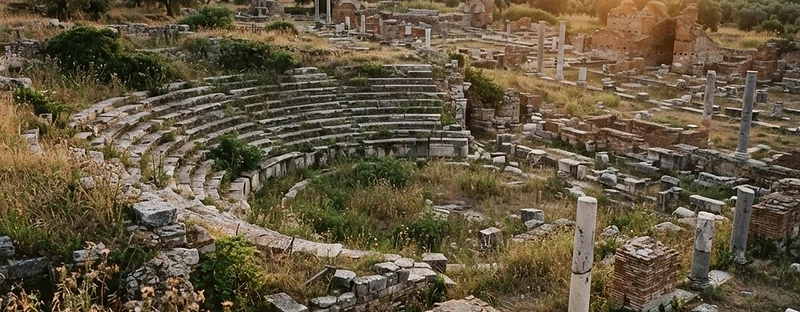
Nicopolis
Photo: Greece Field Guide
The Verdict
A vast, half-overgrown Roman city where you will often be the only visitor — and the reason Actium means anything.
Why go
After defeating Antony and Cleopatra at Actium in 31 BC, Octavian built a city on the hill above the battle: Nicopolis, the city of victory, with five kilometres of walls and a population brought in from the surrounding towns. It had an odeion, a stadium, baths, an aqueduct running thirty kilometres, and a monument to Augustus on the site of his camp. The sea battle itself was fought at the mouth of the Ambracian Gulf, and the promontory opposite is where Cleopatra's ships broke and ran. Most of the city has never been excavated. What you see is a sequence of monuments standing in olive groves and fields: the theatre, the odeion, the baths, the nymphaion. The site museum and the nearby basilicas are part of the same visit. It is a place for people who like ruins without interpretation boards and can read a landscape.
Understand the place
Augustus's victory city above the bay at Preveza, built to commemorate Actium and largely unexcavated.
Easy to combine with
Logically reachable by transport. Confirm current ferry/flight schedules before booking.
Nearby
Related
Sources
Booking links
Commercial links: we may earn a commission if you book through them, at no extra cost to you.
Plan this trip
Greece Field Guide helps you decide. When you're ready to arrange it, take your saved places to an itinerary.