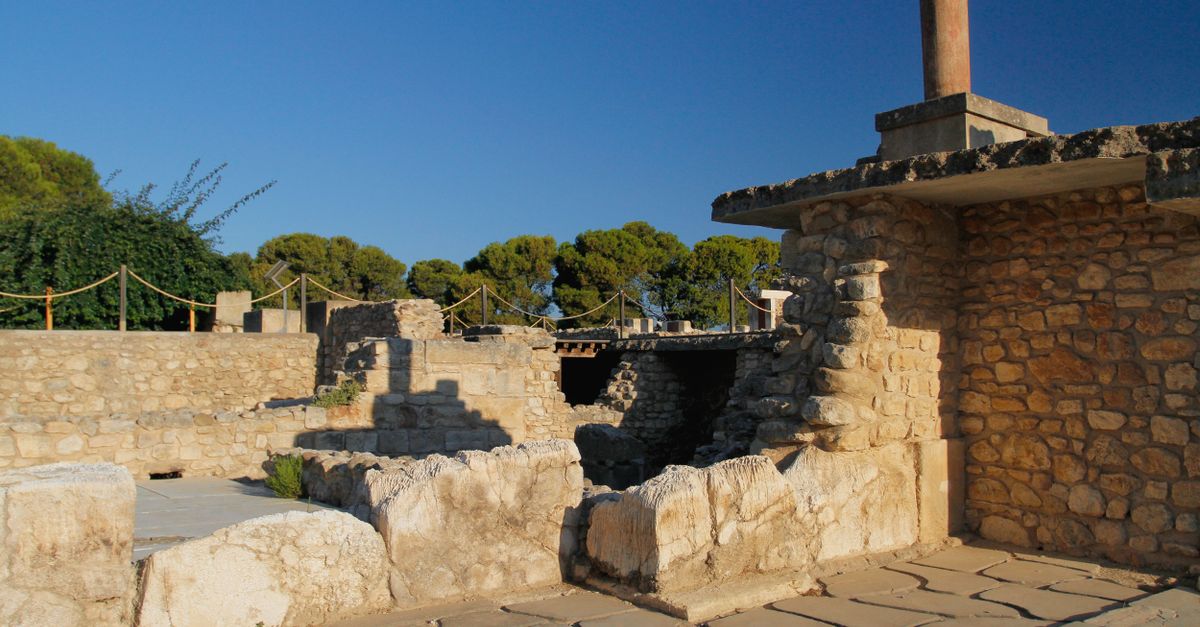
Akrotiri Archaeological Site
Photo: Сокіл Sokil / Pexels
The Verdict
Recommended — the one site on Santorini that adds real depth beyond the caldera view.
Why go
Akrotiri is the single counterweight to the commercial gloss of modern Santorini. Walking through the entrance puts you inside a massive bio-climatic shed that shelters an entire Bronze Age urban center, preserved under meters of pumice from the seventeenth-century BC eruption of Thera. Unlike Knossos, which suffers from heavy-handed concrete reconstructions, Akrotiri offers an unadorned structural reality. You move along raised wooden walkways suspended directly over multi-storey stone buildings, street networks, and open squares, looking into ground-floor storage rooms still packed with oversized ceramic pithoi. A visit here requires some spatial imagination. The most famous wall paintings—the Spring Fresco and the Boxing Boys—were removed for preservation and sit in museums in Fira and Athens, leaving you to focus on engineering: sophisticated drainage systems, stone staircases, and preserved timber frames designed to withstand earth tremors. The interior of the shelter stays dry and shielded from the Aegean sun, though midday brings thick crowds from cruise ship excursions that bottleneck the narrow catwalks. The trade-off is geographic and tonal. Reaching the site requires heading to the far southwestern tip of the island, pulling you away from the caldera rim and the beaches. The ruins do not romanticize antiquity; they document a functioning trading port abandoned in
Understand the place
A Bronze Age Minoan settlement preserved under volcanic ash — the 'Greek Pompeii' of the Cyclades.
Nearby
Related
Booking links
Commercial links: we may earn a commission if you book through them, at no extra cost to you.
Plan this trip
Greece Field Guide helps you decide. When you're ready to arrange it, take your saved places to an itinerary.