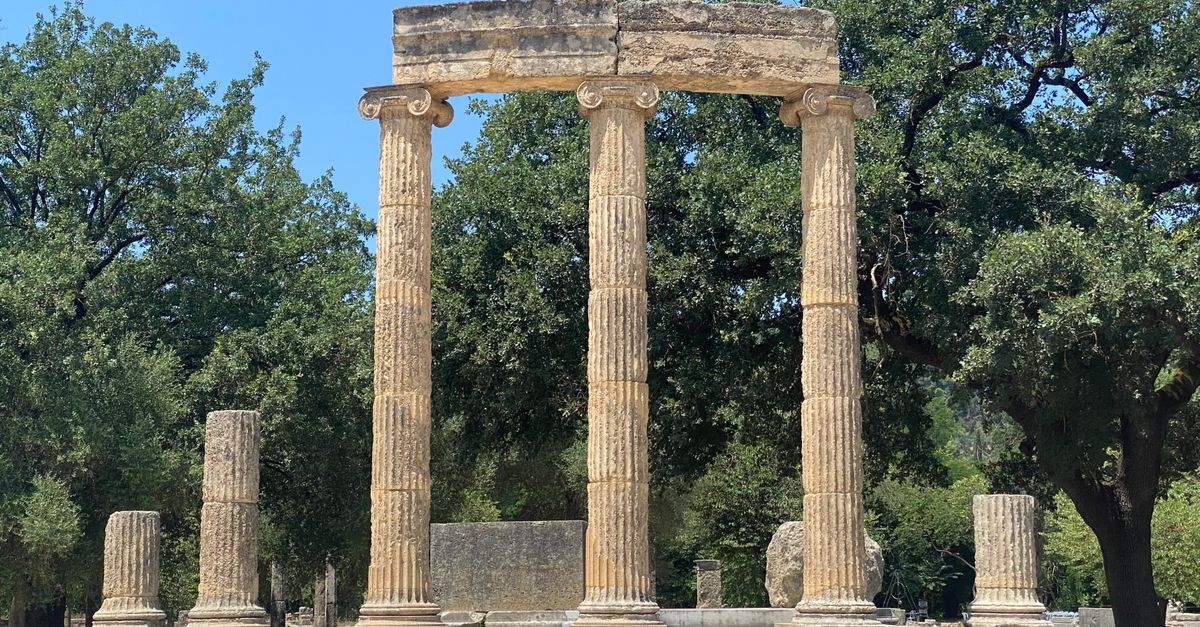
Ancient Olympia
Photo: Lydia Griva / Pexels
The Verdict
Recommended — the birthplace of the Olympic Games, in the green western Peloponnese.
Why go
The sanctuary sits low in the river valley of the Alpheios, shaded by pines and plane trees that make it noticeably greener and cooler than the bare stone citadels of Mycenae or the Acropolis. You walk among the toppled drum columns of the Temple of Zeus, where the colossal chryselephantine statue once stood, before passing through the vaulted stone tunnel onto the running track. The stadium itself is simple packed earth framed by grassy banks, without stone seating, marked only by the original limestone starting lines where sprinters dug in their toes. A visit divides neatly between the outdoor ruins and the adjacent archaeological museum. The museum houses the surviving pediment sculptures from the Temple of Zeus, depicting the Lapiths and Centaurs, alongside the marble Hermes of Praxiteles and the helmet dedicated by Miltiades after Marathon. The primary trade-off is geographic isolation: reaching the western Peloponnese requires a dedicated overland detour, and tour buses crowd the grounds heavily during the midday hours.
Understand the place
Original Olympic stadium and sanctuary of Zeus where the games began in 776 BC, set in the green western Peloponnese. The museum holds the Hermes of Praxiteles.
Pair it with
Editorially complementary destinations.
Easy to combine with
Logically reachable by transport. Confirm current ferry/flight schedules before booking.
Nearby
Related
More ancient sites on Peloponnese
Sources
Booking links
Commercial links: we may earn a commission if you book through them, at no extra cost to you.
Plan this trip
Greece Field Guide helps you decide. When you're ready to arrange it, take your saved places to an itinerary.