Apeiranthos
The Verdict
The best inland stop on Naxos. Two hours, and eat while you are here.
Why go
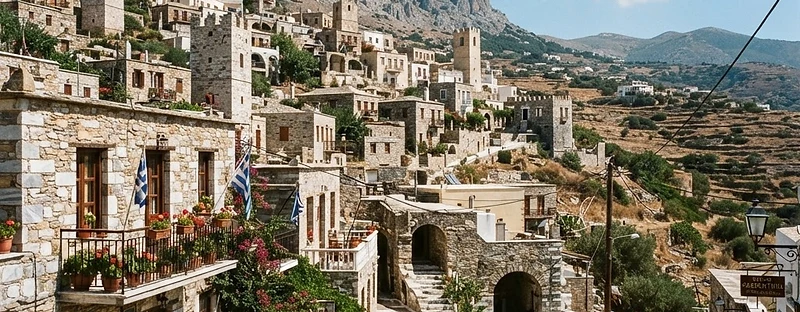
Built on the slopes of Mount Fanari, Apeiranthos rejects the sugar-cube whitewash common across the Cyclades. The houses are rough-hewn stone, arches bridge the alleyways, and the footpaths are paved in smooth, local marble worn slick by centuries of use. The village was largely settled by Cretans who arrived during the Byzantine and Venetian eras, leaving behind an insular community with a distinct local dialect, an enduring reputation for stubborn political independence, and a noticeable literary tradition. A visit here is straightforward and unhurried. You park below the settlement and climb the marble corridors into the central square, Platanos, where locals sit outside cafes under plane trees. Three modest municipal museums cover local archaeology, folklore, and geology, each requiring only twenty minutes. Lunch is the main event: mountain cooking centered on roast goat, local cheeses, and heavy stews that taste nothing like the coastal taverna fare down by the port. The trade-off is physical effort and altitude. The village is entirely pedestrian, consisting of continuous ramps and stone steps. The mountain air runs five to ten degrees cooler than the coast, and when coastal winds blow, the cloud often sits right on the ridge.
Understand the place
A marble-paved mountain village on the slopes of Mount Fanari, with its own dialect, its own museums and a long tradition of independence.
Related
Sources
Booking links
Commercial links: we may earn a commission if you book through them, at no extra cost to you.
Plan this trip
Greece Field Guide helps you decide. When you're ready to arrange it, take your saved places to an itinerary.