Red Beach
The Verdict
The cliffs earn ten minutes and no more. The beach is pebbles, the crowds are constant, and the rockfall notices are not decorative.
Why go
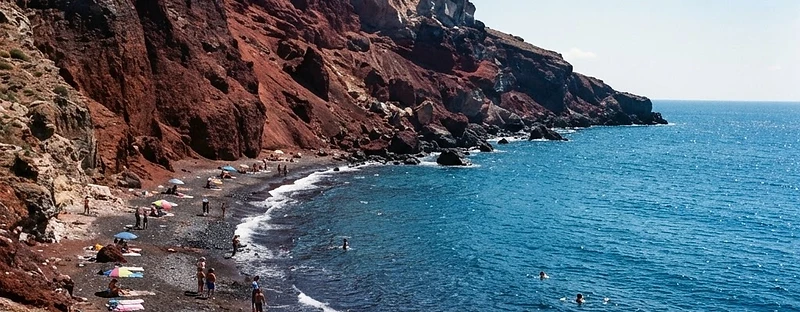
The rust-red scarp rising straight off the water is the clearest visual evidence of Santorini's volcanic violence reachable without a boat. From the path over the headland, the raw iron-rich volcanic rock presents an intense geological cut that makes the white-washed villages to the north look like cardboard cutouts. It delivers an immediate, raw visual impact that few other coastal spots in the Cyclades can match. Yet the practical reality of being there rarely matches the vantage point from above. The walkable track from the Akrotiri car park skirts loose scree and marked rockfall zones that are routinely sealed off after heavy rains or minor tremors. Once down on the shore, the strip is narrow, choked with dark volcanic pebbles, and densely packed with sunbeds during peak season. Space is scarce, the cliff face looms close overhead, and the water deepens rapidly over rough stones. The sensible approach is brief. Walk the trail to the ridge, examine the strata, take your photographs, and head elsewhere. Spend ten minutes taking in the sheer wall of red earth, then move south to the long open sands of Perissa or the wind-carved pumice bluffs at Vlychada for an actual swim.
Understand the place
The rust-red cliff and dark pebble cove below ancient Akrotiri, reached on foot around the headland.
Related
More beaches in Greece
Booking links
Commercial links: we may earn a commission if you book through them, at no extra cost to you.
Plan this trip
Greece Field Guide helps you decide. When you're ready to arrange it, take your saved places to an itinerary.