Hydra Town
The Verdict
It empties completely at five, when the day boats leave. That silence, and the swimming rocks beyond the port, are what you are paying for.
Why go
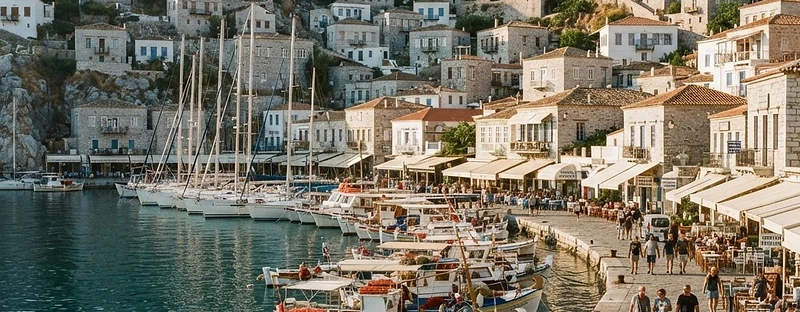
Hydra Town is built in a sheer stone bowl around a deep port. Because wheeled vehicles are banned, the waterfront operates entirely on foot and hoof: donkeys haul luggage over cobbles, and every supply arrives by boat. During midday the quayside is crowded with day-trippers from Athens, but at five in the afternoon the tour vessels depart. The waterfront settles, and the town reverts to its actual character: quiet, dry, and residential. Behind the harbour, paved lanes climb steeply toward massive granite mansions built by eighteenth-century merchant admirals. There are no sand beaches nearby. Instead, swimming means walking the paved coastal paths to Spilia and Hydronetta, where concrete platforms and sheer limestone ledges drop straight into deep water. You spend afternoons on the rocks, walk back along the coastal wall, and eat on harbour terraces where the only noise is the clatter of halyards against masts. The trade-off is physical effort. Hydra offers zero vehicular compromise; every trip from the dock to your room involves steps, often steep and poorly lit. Accommodation carries a premium for what is ultimately a rock with limited water. But for travellers who value absolute quiet at night and deep water access over convenience, the town earns its reputation.
Understand the place
A car-free stone port town in an amphitheatre around its harbour, with captains' mansions from the island's shipping fortunes.
Nearby
Related
More towns in Greece
Sources
Booking links
Commercial links: we may earn a commission if you book through them, at no extra cost to you.
Plan this trip
Greece Field Guide helps you decide. When you're ready to arrange it, take your saved places to an itinerary.