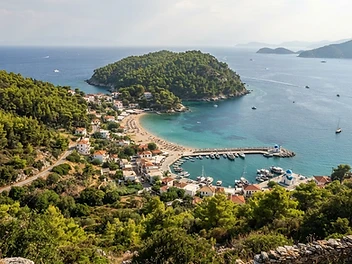
Greek Islands Where You Don't Need a Car

Editorial collection

Greek Islands Where You Don't Need a Car

9 min read · 6 places

The Case Against Renting

Greece sells you the rental car as romance: open roads, coastal switchbacks, the freedom to find your own beach. On most islands that's a lie. The roads above Oia are one and a half lanes wide with a cliff on one side and a line of rental ATVs driven by people who've never ridden one before. Parking in Fira in August doesn't exist. Lindos has a hairpin descent that tour buses and rental sedans fight over every single afternoon. A car on these islands doesn't buy freedom — it buys a parking problem and a higher chance of an insurance claim.

This list is for the traveler building a Greece trip who doesn't want that fight: someone doing ten to fourteen days, hopping by ferry, walking from the port to the hotel, and using a local bus the three times a week they actually need to go somewhere. It's not for the person chasing a specific undeveloped beach that's only reachable by dirt track, and it's not for someone who actually wants to drive — Crete, the Peloponnese, and parts of Naxos reward a car in ways these four islands don't.

Santorini, Hydra, Paros, and Rhodes solve the car problem four different ways, which is the point. Santorini has a cable car, a donkey path, and buses that run the caldera-rim towns constantly, if slowly. Hydra has solved it by banning cars outright — mules and water taxis only, since forever. Paros has a real bus network connecting Parikia and Naoussa on a schedule you can set a watch to. Rhodes has a walled Old Town built for feet, centuries before anyone needed to park, plus buses out to Lindos and the beaches. Different mechanisms, same outcome: you never need keys.
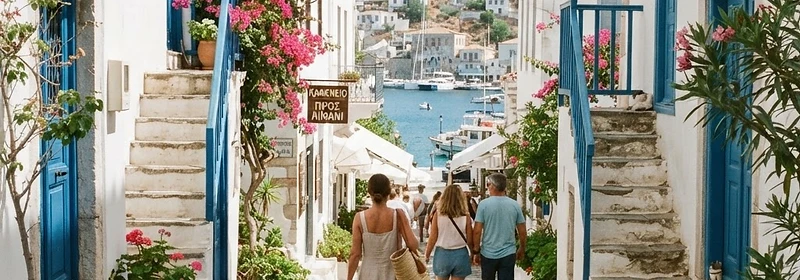
What They Don't Share

Don't mistake this for four similar islands. They're in three different seas, two different ferry networks, and in Rhodes's case, arguably a different trip altogether. Santorini and Paros are both Cyclades and connect to each other by a short high-speed ferry. Hydra is Saronic, a world served out of Piraeus that barely touches the Cyclades ferry map. Rhodes is Dodecanese, closer to the Turkish coast than to Mykonos, usually reached by direct flight rather than threading it onto an island-hopping itinerary.

They differ in what they ask of you, too. Santorini asks for your wallet and your patience with crowds in exchange for a caldera view that genuinely earns the superlatives everyone overuses on it. Hydra asks almost nothing — it's a short hydrofoil from Athens, no overnight commitment required, though it rewards one anyway. Paros asks you to treat it as infrastructure as much as destination, which it does without resentment because Naoussa and Lefkes are good enough to deserve a few days on their own merits. Rhodes asks for a longer flight or a different leg of planning, and pays it back with a medieval walled city that has no real Cycladic equivalent and a season that runs into late October when Santorini's already winding down.

The traveler mistake is assuming these four stack neatly into one itinerary just because they share a list. They don't, geographically. What they share is a category: no car required, each for its own reason. That's a useful filter, not a map.

Why This Order

The order here isn't a route — you can't ferry Hydra to Santorini without going back through Piraeus, and Rhodes isn't connecting to any of these without a flight. The order is a priority ranking for building a car-free Greece trip, from most non-negotiable to most separate.

Santorini goes first because most first-time Greece travelers are going regardless of what any guide says, crowds and pricing included. The job here isn't to talk you out of it, it's to tell you how to do it without wasting a week on it: two nights, caldera-side if you can afford it, in and out before the cruise-ship crowds wear you down. It's first because it's the fixed point everyone else's itinerary bends around.

Hydra comes second because it's the easiest high-value addition to any Athens-based trip — a day or overnight you can bolt onto either end of a Greece trip with almost no planning cost, since it's a straight shot from Piraeus and doesn't require touching the Cyclades ferry system at all. It's positioned right after Santorini as the low-effort, high-reward move: if you're already flying into Athens, there's no excuse to skip it.

Paros comes third because it only makes sense once you've committed to multi-island hopping — it's the base you build a Cyclades itinerary around, not a headline in itself, even though it could be. And Rhodes comes last because it's a different decision entirely: a separate archipelago, often a separate trip, best understood as the answer to "what if I want Greece outside the Cyclades season and crowd pattern." The order moves from mandatory to optional to foundational to separate — that's the logic, not geography.

What To Cut

If you're building a short trip and need to cut this list down, cut Hydra first. It's the best value add here, but it's still an add-on, not a pillar — skip it without damaging a Greece itinerary built around Santorini and Paros, which together form a complete, car-free introduction to the Cyclades in under a week.

Cut Rhodes next if your trip is Cyclades-only. It's a genuinely different island group and pretending otherwise just to squeeze it in usually means an inefficient flight routing and a rushed two days that don't do the Old Town or Lindos justice. Rhodes deserves its own trip framing — paired with Symi or Kos, or as a shoulder-season standalone when Santorini's gone cold and overpriced-feeling in the wrong way.

Don't cut Santorini to save money or dodge crowds — just discipline your stay to two nights as the verdict says, and spend the saved nights and budget on Paros instead, where the money goes further and the island asks less of your patience. Paros is the one entry here that nobody should cut; it's doing double duty as both a worthwhile stop and the connective tissue for everything else in the Cyclades.

If you're choosing exactly one island from this list because you've got five days and nothing else, choose Paros. It's the only one built to function as a complete, car-free Greece trip on its own — beach days, a real town, a bus network, and the option to day-trip to Antiparos without planning a thing.

How To Read This List

Read this list as a decision tree, not an itinerary. Ask first whether you're doing the Cyclades or the Dodecanese — that single question moves Rhodes in or out before anything else matters. If you're in the Cyclades, Santorini and Paros are your spine; Hydra is a bonus only if Athens bookends are already in the plan.

The item notes that follow each explain a role — anchor, easy add, hub, standalone — rather than repeating what's already obvious from a map or a photo. Use them to decide not whether an island belongs in Greece generally, which they all clearly do, but whether it belongs in your specific trip, which is a narrower and more useful question.

What unites all four, and the reason this list exists at all, is that each solves the no-car requirement through a different mechanism rather than through luck or a short visit that happened not to need a car. That distinction matters: an island that's merely small enough to survive without a car for three days isn't the same as one that's genuinely built that way, like Hydra, or dense enough that walking beats driving every time, like Rhodes Old Town.

Use the order as given if you're new to Greece and building a first trip — it reflects what to prioritize under time pressure. Use the cut section if you're compressing. And treat Rhodes as its own decision from the start rather than something to wedge in at the end once the Cyclades leg is already booked.

The list, in order

Each place, with the editorial reason it is here and in this position.

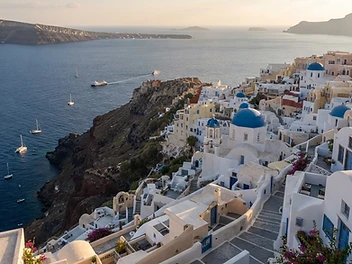
Santorini caldera village with blue domes above the Aegean
islandTrip Anchor

“The caldera really is extraordinary. The crowds and pricing are real too. Two nights is enough for many Greece itineraries.”

Why this, why here

Santorini is first because it's the fixed point almost everyone's trip bends around, not because it's the most car-free of the four — it's simply the one nobody skips, crowds and pricing notwithstanding. It earns its slot by actually delivering on the caldera view, and it earns its position as the anchor by demanding discipline in return: two nights, not five, is the right dose. Walking the Fira-to-Oia path and leaning on the bus network covers everything a car would, badly, at ten times the stress. It goes first in this list as the non-negotiable you plan everything else around, including how much time and money you have left for the other three.

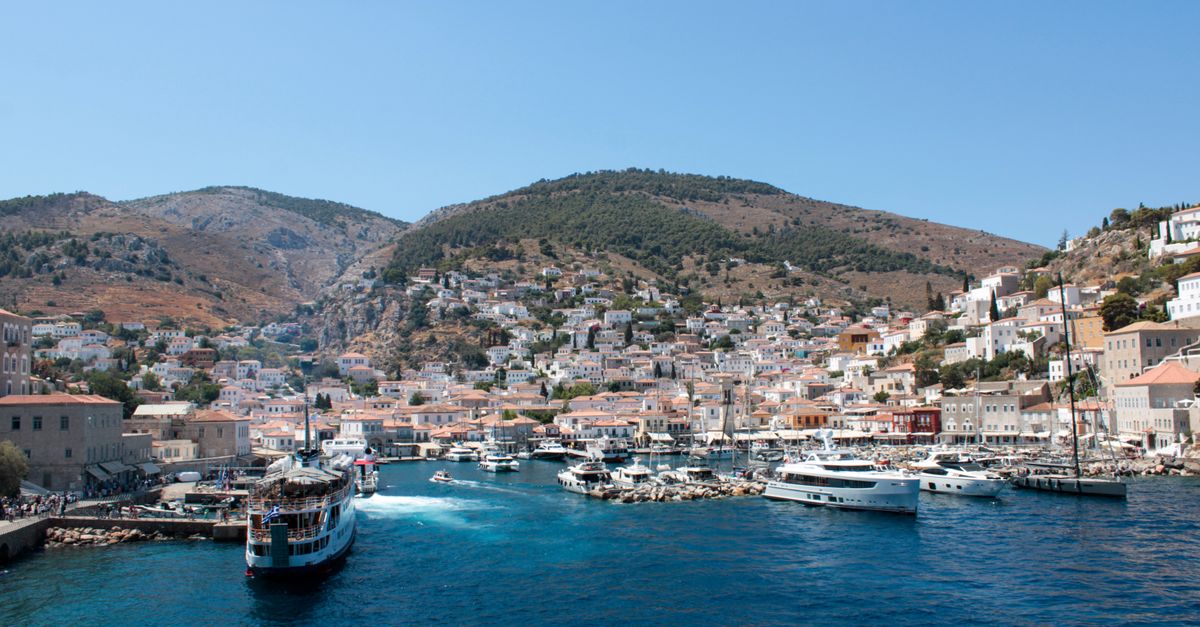
Boats and stone houses around the harbour of Hydra
islandOvernight

“The one Saronic island genuinely worth a short stay — car-free, stone-built, and a fast trip from Athens.”

Why this, why here

Hydra sits second as the easy, high-value add-on — the one with the lowest planning cost and the best ratio of effort to payoff. Cars have been banned here outright, so this isn't an island that happens to be walkable, it's one built on mules and water taxis by design, closer to Athens than any Cyclades option by a wide margin. It follows Santorini in the order because it's the natural bolt-on for anyone already routing through Piraeus, not a destination that demands its own dedicated week. Cut it first if your trip is tight; include it first if you're padding an Athens-based itinerary with one genuinely worthwhile day.

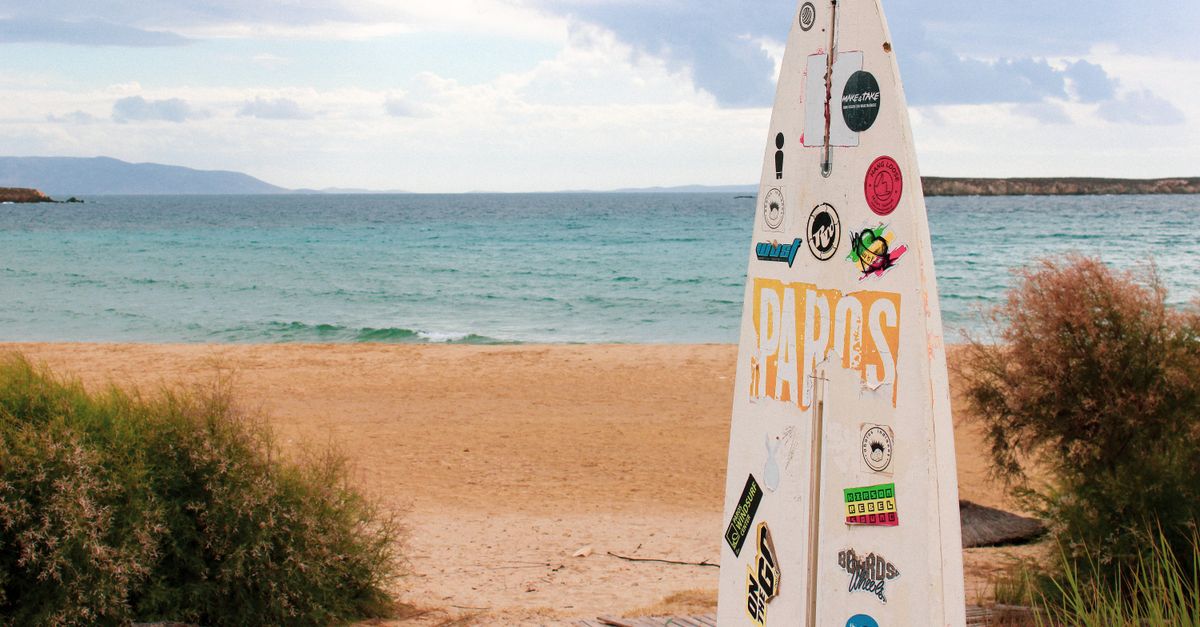
A surfboard with stickers on Paros beach with cloudy skies and a tranquil sea.
islandBase

“The most convenient base for Cyclades island hopping, with enough of its own character to stand alone.”

Why this, why here

Paros is third because it only earns its full value once you've committed to hopping multiple Cyclades islands — it's the base everything else connects through, with a ferry schedule and bus network reliable enough to build a trip around. It sits after the headline act (Santorini) and the easy bonus (Hydra) because its job is structural: this is the island you don't cut, the one that works whether you're there for two days or seven, and the one that makes the case against ever renting a car in the Cyclades in the first place. If forced to pick one island from this whole list, pick this one.

The coast and walled city of Rhodes from the air
islandTrip Anchor

“The best Dodecanese island for a first visit — medieval history, family beaches, and a season that runs later than the Cyclades.”

Why this, why here

Rhodes is last because it's not really part of the same trip as the other three — different sea, different ferry network, usually its own flight. It's included as the standalone: the best Dodecanese pick for a first visit, with a medieval walled Old Town that has no Cycladic equivalent and a season that runs into late autumn after Santorini's gone quiet. Its position at the end signals a separate decision, not a lesser one — treat it as the answer to a different question than the one Santorini, Hydra, and Paros are answering, and don't force it into a Cyclades itinerary just because it's on the same list.

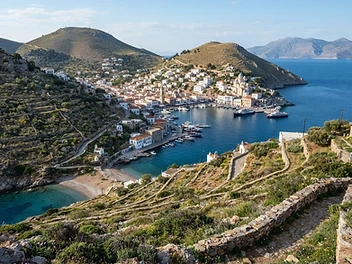
The twin hills and harbour of Ermoupoli on Syros seen from the surrounding hillside.
islandBase

“The Cyclades' working capital: a neoclassical port town with year-round life, a Catholic hill village above it, and beaches you can reach by bus.”

Why this, why here

A town you can walk end to end, with buses to the sandy beaches at Galissas and Kini.

Pine forest running down to sandy bays and a small harbour on Skiathos, seen from the hillside.
islandBase

“The Sporades with an airport and a nightlife: pine woods over most of it, a single bus route of sandy beaches, and a town that stays up late.”

Why this, why here

The island bus runs the whole south coast to Koukounaries, with water taxis to the beaches in between.