Greece Without Santorini or Mykonos

Editorial collection

Greece Without Santorini or Mykonos

10 min read · 7 places

Why Not Santorini or Mykonos

Santorini's caldera view from Oia is real — volcanic cliffs dropping into the sea, blue-domed churches staged against black rock in a way the eye never fully adjusts to. Mykonos's Little Venice bars really do put you two feet from Aegean spray at sunset, and its nightlife is the real thing, not a brochure line. Neither island is overrated. They are, however, maxed out: July and August turn Fira's main street into a shuffling line of selfie sticks, cruise ships unload four thousand people at a time onto Mykonos's harbor, and a basic room on either island in peak season can run three times what the same square footage costs on Naxos or Sifnos.

This collection is not for travelers priced out of those two islands and settling for less. It's for travelers who've already done the caldera photo, or never wanted it in the first place, and who want what actually makes the Cyclades good — white-cube villages wrapped around the same blue domes, the same fish-taverna economy, the same marble-and-wind landscape — without surrendering three hours a day to crowd management. Naxos, Paros, Milos, Sifnos and Hydra deliver real Cycladic (and in Hydra's case, Saronic) substance: proper beaches, serious kitchens, mountain villages that function as towns rather than film sets.

Every island on this list could be someone's only Greek island trip and they would leave satisfied. That's the test. None of these five is included because it is 'almost as good' as Santorini — each earns its spot on its own terms, and in several categories, geology on Milos, food on Sifnos, access on Hydra, beats the famous two outright.

What These Islands Share

Four of these five are Cycladic islands sitting within the same marble-and-schist geology, built from the same whitewashed-cube architecture, operating on the same ferry network out of Piraeus. Naxos, Paros, Milos and Sifnos all grow something — Naxos has actual agriculture (potatoes, citrus, cheese), Sifnos has almond groves and dry-stone terracing, Milos has mining history (obsidian, then sulfur and bentonite) alongside farming. None of them exist purely to receive tourists. Hydra is the outlier geographically, a Saronic island closer to the Peloponnese than to Mykonos, but it belongs here for the same reason the others do: it offers a complete version of a Greek island experience without demanding a week and a transatlantic flight's worth of crowd tolerance.

What unites all five is restraint in built environment. None has a strip of resort hotels blocking beach access. None has turned its main town into a single tourist corridor the way Mykonos Town's Matoyianni Street has become. Walk into Naoussa on Paros, Apollonia on Sifnos, or Plaka on Milos on a Tuesday night in August and you'll find locals eating at the same tables as visitors, not a town that empties out once the day-trippers leave.

They also share a food standard that genuinely outperforms the big two. Fresh fish is not automatically good just because it's an island — it's good when the taverna is run by people who fish, which is still common on Naxos, Paros and especially Sifnos. Santorini's restaurant scene, by contrast, is increasingly driven by caldera-view pricing rather than kitchen quality. These five islands haven't had that incentive distort their food in the same way.

The Logic of the Order

The order here is a ranking first and a route second. Naxos leads because it's the strongest single-island case in the group — mountain villages like Halki and Apeiranthos, the Tragaea olive valley, beaches from Agios Prokopios to Plaka that run for kilometers, and a town, Naxos Chora, anchored by the Portara, that's as good a sunset as anything in the Cyclades. If a traveler can only pick one island from this list, it's Naxos, and it goes first because everything after it is measured against what it does well.

Paros comes second not because it's less interesting but because its real strength is logistical: it sits at the center of the Cyclades ferry network, making it the natural place to base an island-hopping trip or land at before fanning out to Naxos, Milos or Sifnos. Naoussa's harbor and Parikia's old town carry enough character that Paros doesn't need to borrow it from its neighbors, but its position in this list reflects its function — it's the hinge the itinerary turns on, which is why it sits second rather than first or last.

Milos is third because it needs the other two to land properly. Sarakiniko's white rock and the sea caves at Kleftiko are the single most dramatic coastal landscape in this collection, genuinely Santorini-level drama minus the caldera crowds, but Milos is a smaller, quieter island with less going on in town. Visiting it after Naxos and Paros means arriving with your pace already slowed down, ready to spend full days on boats and beaches rather than needing a town with restaurant density and nightlife options.

Sifnos sits fourth deliberately, as the comedown from Milos's visual intensity. This is the island for people who've already seen the dramatic coastline and now want the food — Sifnos produces more good cooks per capita than anywhere else in the Cyclades, a legacy traceable to Nikolaos Tselementes, the island's most famous culinary export, still visible in every taverna serving revithada baked overnight in clay pots. Hydra closes the list because it's a genuinely different trip: no cars, no Cycladic ferry logic, a two-hour boat from Piraeus rather than an overnight from the islands above. It works as a bookend — the first or last 48 hours of a Greece trip, not a fifth island in a five-island hop.

What to Cut First

If you have four nights, cut Hydra and Milos, and spend the time on Naxos and Paros plus a day trip to Sifnos — Sifnos is a few hours by ferry from either island and can be done as a two-night addition without redrawing the whole itinerary. If you have ten nights, add Milos first; the extra geology is worth the extra ferry transfer more than extra beach days would be.

Hydra is the first cut for anyone building a pure Cyclades trip, not because it's weaker but because it's structurally separate — it belongs to an Athens stopover, not an island-hopping route through the Cyclades proper. Cut it unless you're already starting or ending in Athens with a free day or two to spare.

After Hydra, cut Milos before Sifnos. Milos rewards travelers who have at least five full days for boat trips and coastal exploring; its best features, Kleftiko and the sea caves, require a half-day boat tour that eats into an already short stay. Sifnos, by contrast, delivers its best version — the food, Apollonia's old town, the walk to Chrysopigi monastery — in a single efficient 48 hours.

Naxos and Paros are not optional. They're the floor of this collection: the minimum combination that gives a traveler real Cycladic range, mountains and beaches on Naxos, convenience and harbor life on Paros, in under a week.

How to Use This List

Treat the order above as a build, not a fixed itinerary — ferry schedules in the Cyclades are a real constraint, and routes between these five islands aren't uniformly daily outside of July and August. Check Paros–Milos and Paros–Sifnos connections specifically; in shoulder season (May, June, September, October) some routes run two or three times a week rather than daily, and building a trip around the wrong day can cost you an unplanned night somewhere you didn't plan to stay.

Book accommodation on Naxos and Paros at least a month out for July–August travel; both islands have grown fast in the last five years and their best small hotels and rooms-to-let sell out earlier than you'd expect from islands still marketed as alternatives. Milos and Sifnos have more breathing room, and Hydra, being a day-trip-heavy destination from Athens, rarely sells out entirely even in peak season, though its best waterfront rooms do.

Use this list as a five-island standard, not a checklist to complete in one trip. Most travelers will do two or three of these in a single visit and save the rest for a return — which is the right instinct. The Cyclades reward slowness more than any other part of Greece, and an itinerary that tries to hit all five in ten days will leave you with less than one that commits to Naxos and Paros properly and comes back another year for Milos, Sifnos and Hydra.

The list, in order

Each place, with the editorial reason it is here and in this position.

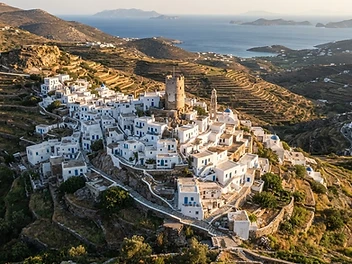
Cycladic mountain village in Naxos above the Aegean
islandBase

“One of the strongest all-around Cycladic islands if you want beaches, mountain villages and excellent food without Santorini's spectacle or Mykonos's nightlife focus.”

Why this, why here

Naxos opens the collection because it's the strongest standalone case in the group — the island a single-destination traveler should pick if forced to choose only one. It has what Santorini's drama distracts from: real mountain villages (Halki, Apeiranthos), a marble-quarrying interior, beaches that run for kilometers rather than coves measured in meters, and a town built around the Portara that gives you a genuine sunset without caldera pricing. Every island after it in this list is implicitly measured against what Naxos does well. It goes first not because it's easiest logistically, but because it sets the standard: beaches, mountains, food and a real town, all on one island, without extreme crowding.

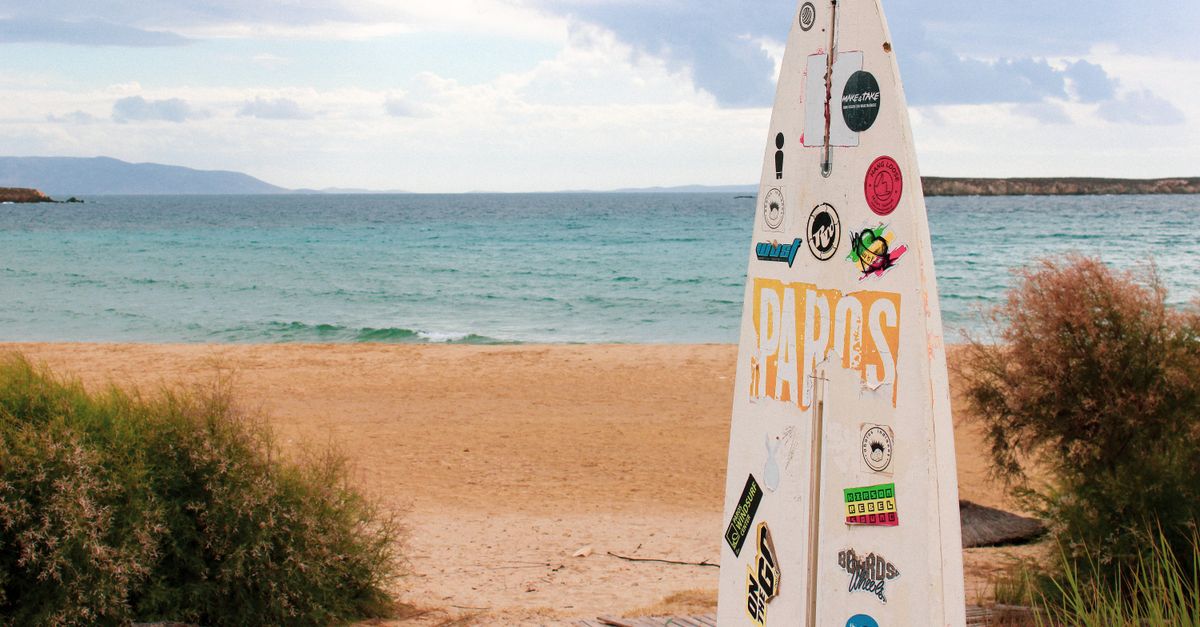
A surfboard with stickers on Paros beach with cloudy skies and a tranquil sea.
islandBase

“The most convenient base for Cyclades island hopping, with enough of its own character to stand alone.”

Why this, why here

Paros sits second because its real value is structural, not scenic — it's the ferry hub that makes island-hopping through this collection practical, sitting within short range of Naxos, Milos, Sifnos and the smaller Cyclades. That logistical role doesn't make it filler: Naoussa's harbor and Parikia's old town hold their own against islands with flashier landscapes. But its position reflects function. Placed second, it works as the hinge a hopping itinerary turns on — land here, base here, or pass through here between the more singular experiences of Naxos, Milos and Sifnos. Cut Paros and the rest of the trip gets considerably harder to execute cleanly.

Discover the serene beauty of Milos Island's bay, featuring crystal clear waters, boats, and rocky cliffs.
islandBase

“The most visually dramatic of the lesser-visited Cyclades — coastal geology that rivals Santorini without the crowds.”

Why this, why here

Milos is the collection's visual peak, placed third because it needs the other two islands to land properly. Sarakiniko's white volcanic rock and the sea caves at Kleftiko are the most dramatic coastline in this list — arguably more striking than Santorini's caldera, minus the crowds and sunset-viewing logistics. But Milos is quieter and smaller in town life than Naxos or Paros, better suited to travelers who've already slowed their pace and are ready to spend full days on boats rather than needing restaurant density at night. It's the payoff island: the one you build toward, not the one you open with.

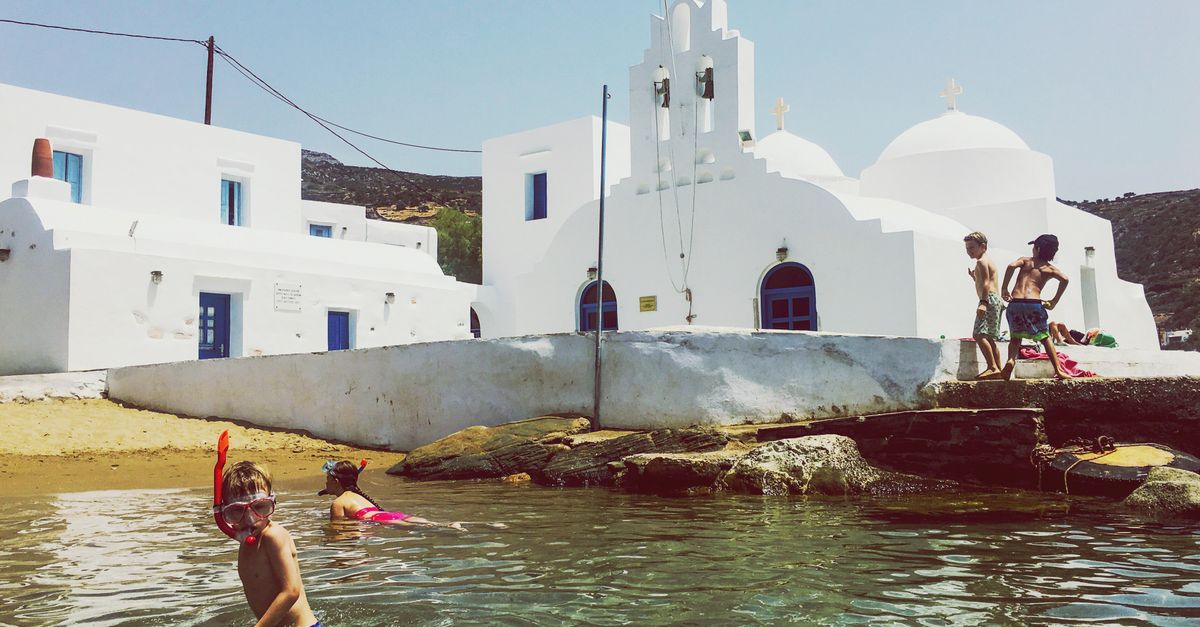
Children enjoying snorkeling near a white church on a Greek island with the Greek flag waving above.
islandOvernight

“The Cycladic island for travelers who care about food — a quietly excellent place that never tries too hard.”

Why this, why here

Sifnos comes fourth as the deliberate comedown from Milos's visual intensity — the island for travelers who've seen the dramatic coastline and now want the food. Sifnos produces more serious cooks per capita than anywhere else in the Cyclades, a reputation traceable to Nikolaos Tselementes and still evident in every taverna serving revithada baked overnight in clay pots. It's quieter and smaller than the three islands before it, which is the point: after Naxos's range, Paros's logistics and Milos's drama, Sifnos slows the trip down and proves that uncrowded doesn't mean thin. It's the island that rewards doing less, better.

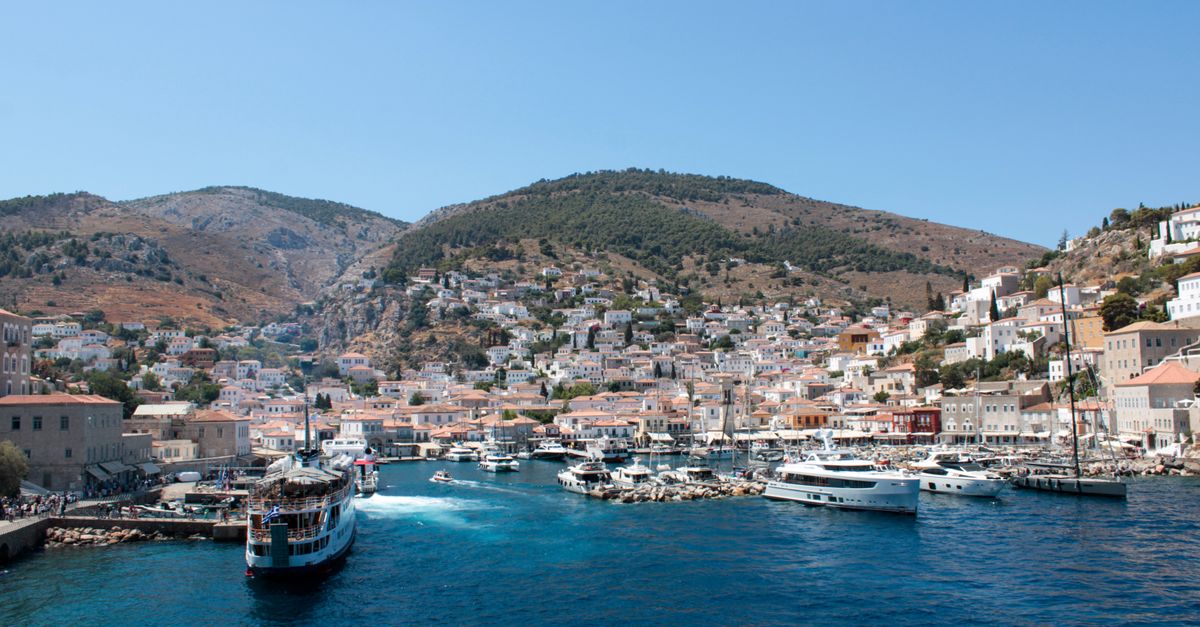
Boats and stone houses around the harbour of Hydra
islandOvernight

“The one Saronic island genuinely worth a short stay — car-free, stone-built, and a fast trip from Athens.”

Why this, why here

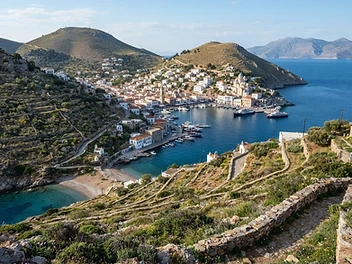
Hydra closes the list because it's a genuinely different trip, not a fifth Cycladic island — it's Saronic, car-free, a two-hour boat from Piraeus rather than an overnight ferry from the islands above. It works as a bookend: the first or last 48 hours of a Greece trip, done from Athens rather than folded into an island-hopping route. Stone mansions built by eighteenth-century shipping merchants, donkeys instead of cars, and a harbor you can walk the full circumference of in twenty minutes make it worth the detour on its own terms. Placed last, it's the comedown after four islands of ferries and packing — short, close, and easy to end on.

The twin hills and harbour of Ermoupoli on Syros seen from the surrounding hillside.
islandBase

“The Cyclades' working capital: a neoclassical port town with year-round life, a Catholic hill village above it, and beaches you can reach by bus.”

Why this, why here

The Cyclades capital: a neoclassical port town with a real winter, which no other island in the group manages.

Traditional stone dovecotes on the terraced slopes of Tinos, Greece.
islandBase

“Two islands at once: a pilgrimage town that fills with Greeks in August, and a marble-carving hill country that almost nobody visits. The villages are the reason to come.”

Why this, why here

The best village island in the Cyclades — marble villages, hill country and a pilgrimage church in the port town.