The Best Places in Greece for Food

Editorial collection

The Best Places in Greece for Food

9 min read · 5 places

Food as the Trip, Not a Bonus

Most Greece itineraries treat meals as a function of location — you eat where you happen to be standing when you're hungry. This list inverts that. It's built for travelers who will reroute a day because a market closes at two, who care whether the fish was caught that morning or trucked in from somewhere else, who'd rather sit through a three-hour lunch down a backstreet in Thessaloniki than rush to the next ruin. If that's not you, use this guide differently — but don't ignore it, because even a casual traveler eats three times a day for two weeks, and getting that right changes the whole trip.

Greece's food reputation abroad is mostly wrong, or at least incomplete. Tourists arrive expecting souvlaki and bad moussaka reheated under a sun umbrella, and in the worst harbor towns — the ones built entirely around cruise traffic and ferry schedules — that's exactly what they get. The places on this list are the corrective: a city and four islands where food culture runs deep enough that bad meals are the exception, not the rule, and where the good meals are good because of history, geography, and stubbornness rather than marketing.

Five places, one city and four very different islands and old towns, covering Greece's real range: Ottoman-inflected northern cooking, Cycladic island produce, a Cretan culinary tradition that predates the modern Greek state, and an Athens that has quietly become one of Europe's more interesting dining cities. This isn't a best-of in the sense of ticking boxes — it's five places that actually earn a seat at a food-focused itinerary, ranked by how essential each is to that specific trip.

What Separates Them

Thessaloniki and Athens are cities first, food destinations second — except that in both cases the food is good enough to flip that order for the right traveler. The difference between them is personality: Thessaloniki wears its Ottoman and Sephardic Jewish inheritance openly, in its bougatsa shops and its spice markets, and it has never fully performed for tourists because it's never needed to — Greeks go there to eat, not foreigners. Athens has the opposite problem and the opposite solution: everyone passes through, so for years it under-delivered on food, coasting on location. That's no longer true, and the city belongs on this list precisely because so many travelers still don't believe it.

Naxos, Sifnos, and Chania operate in a different register entirely — food as an expression of place rather than urban food culture. Naxos is the generalist: strong potatoes, strong cheese, a mountain-village food culture backed up by real beaches, which makes it the island you send someone who wants one Greek island that does everything well. Sifnos is the specialist: smaller, quieter, built around a genuine ceramic-pot cooking tradition and a level of culinary seriousness per capita that has nothing to do with scale. Chania is Crete distilled — a Venetian harbor town sitting on top of what might be Greece's most internally coherent food culture, built on olive oil, wild greens, and a diet that locals will tell you, correctly, kept their grandparents alive into their nineties.

What they share is harder to fake: none of these places needed tourism to develop a food identity. They had one already, and tourism either left it alone (Sifnos), amplified it (Chania), or is only just catching up to it (Thessaloniki, Athens).

Why This Sequence

This list is ranked, not itinerary-ordered, and the ranking does real work. Thessaloniki sits at number one because it's the biggest argument this guide makes: that Greece's best food city isn't Athens and isn't on an island, and most travelers never go there. If you take one thing from this collection, take that — Thessaloniki is worth a dedicated trip, not a day-trip footnote to Athens.

Naxos at two and Sifnos at three represent a deliberate choice between breadth and depth. Naxos comes first because it's the stronger all-around island — the one to pick if this is someone's only Greek island and they want beaches, villages, and food in one place without specializing. Sifnos follows as the move for travelers who've already done an island like Naxos, or Santorini, or Paros, and now want the version of a Cycladic trip that prioritizes eating above everything else, including nightlife and spectacle, which Sifnos has neither of and doesn't want.

Chania at four acknowledges that Crete runs on its own logic, separate from the Cycladic islands above it — different ferry networks, different distances, often a different kind of trip entirely, built around a car and a longer stay. It ranks below Naxos and Sifnos not because the food is worse — arguably it's the most important food culture in the country — but because Chania demands more logistical commitment, and this list ranks by how directly a place serves a food-focused trip rather than purely by how good the food is on its own terms.

Athens closes the list deliberately, as the corrective rather than the anchor. Putting it last makes the argument: don't let Athens be an afterthought, but don't let it dominate the trip either. It's the place most travelers will touch regardless of what else they do, so it earns its spot by changing what people do with time they were already going to spend there.
What to Cut

If you only have one stop, it's Thessaloniki — full stop, even though it means skipping islands entirely, because no other place on this list makes as strong a case for being wrong about what you thought you knew about Greek food. If you're building an island-only trip and have to lose one, lose Sifnos before Naxos; Naxos does more for a broader range of travelers, and Sifnos only pays off if food is genuinely the main event of the trip.

Chania is the easiest cut for a short, Cyclades-focused trip — Crete deserves its own week, not a bolt-on, and cramming it into a ten-day islands trip usually means arriving tired and leaving before the food culture has made its case. Athens is the hardest cut to justify and the easiest one people make anyway, mostly out of habit; if time is truly impossible, at minimum keep one real meal there instead of eating at the hotel before an early flight.

Using This List

Treat the ranking as a priority order, not a checklist — you don't need all five to have a serious food trip in Greece, and trying to hit every entry on a two-week holiday usually means doing all of them badly. Two or three is the right number for most itineraries: Thessaloniki plus one island is a strong, uncommon combination that most visitors never consider; Naxos and Sifnos together make an excellent Cyclades-only food trip if islands are the whole point.

What this list won't do is tell you where to eat specific meals — that's a different kind of guide, and food cultures this real don't reduce well to a top-ten restaurant list anyway. What it does is tell you where to spend your time if eating well is actually the priority, not an incidental benefit of being somewhere good-looking. Start with Thessaloniki if you can. Build outward from there based on how much specialization versus range you want. And don't let Athens be the city you merely pass through on the way to somewhere else — it's on this list for a reason, and that reason gets stronger every year.

The list, in order

Each place, with the editorial reason it is here and in this position.

Stunning aerial night view of Thessaloniki's illuminated waterfront in Greece.
cityTrip Anchor

“Greece's best food city and a genuine northern alternative to Athens — worth a trip in its own right.”

Why this, why here

This is the anchor, and it's first because it argues against the whole premise most visitors arrive with — that Greece's best food is on an island or in Athens. Thessaloniki's Ottoman and Sephardic layers give it a food identity no other Greek city has: bougatsa at dawn, spice markets that supply the rest of the north, a bar and meze culture that runs late because it was never built for tourists in the first place. It ranks above every island here deliberately. If this collection only convinces you of one thing, it should be that a dedicated Thessaloniki trip beats another loop through the Cyclades for anyone who takes eating seriously.

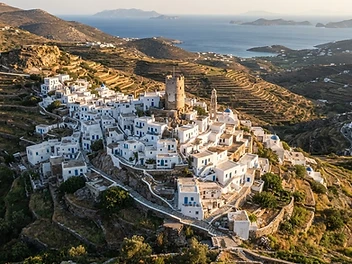
Cycladic mountain village in Naxos above the Aegean
islandBase

“One of the strongest all-around Cycladic islands if you want beaches, mountain villages and excellent food without Santorini's spectacle or Mykonos's nightlife focus.”

Why this, why here

Naxos is the warm-up and the generalist pick — the island you choose when food matters but it can't be the only thing that matters. It ranks second because it does more work for more travelers than any other island here: strong mountain-village cooking, real cheese and produce from its own interior, plus beaches and towns that satisfy people who aren't purely eating-motivated. It sits above Sifnos because it's the safer, broader bet for a first or only Greek island. Choose Naxos when you want one island that doesn't require you to pick a lane.

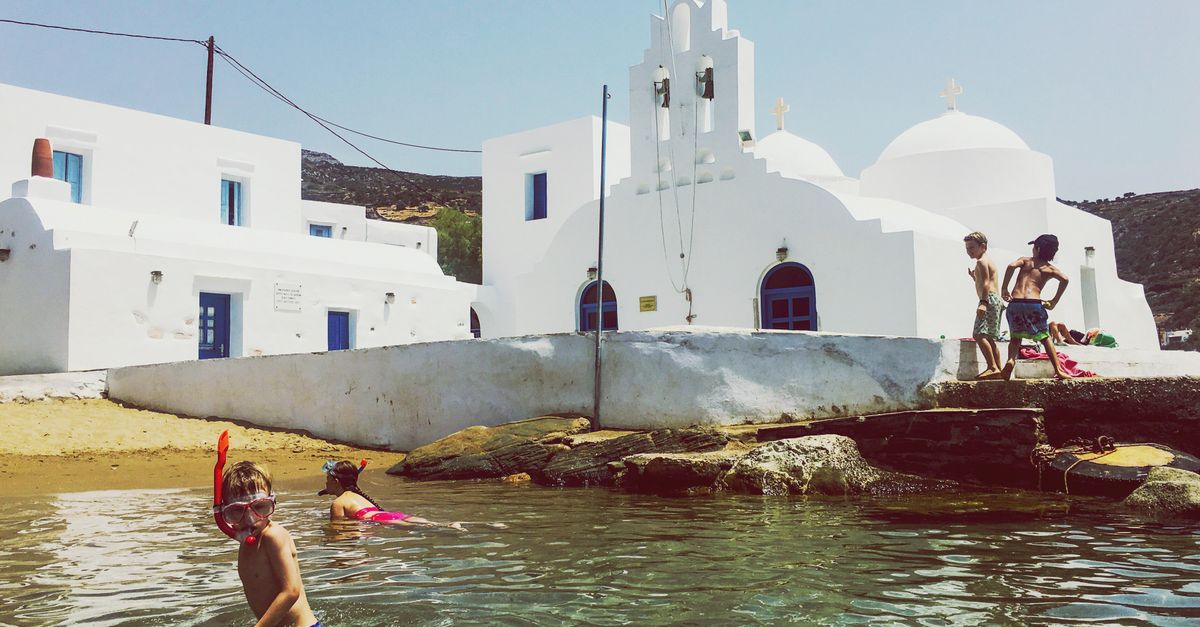
Children enjoying snorkeling near a white church on a Greek island with the Greek flag waving above.
islandOvernight

“The Cycladic island for travelers who care about food — a quietly excellent place that never tries too hard.”

Why this, why here

Sifnos is the specialist, placed third because it rewards travelers who've already done the broad version of a Greek island and now want the narrow, serious one. Its food culture is built on a ceramic-pot cooking tradition and a level of per-capita culinary seriousness that has nothing to do with size or spectacle. It ranks below Naxos because it asks more of you — less nightlife, less obvious scenery, more trust that the food itself is the reason to be there. This is the pick for someone who has stopped caring about ticking off famous islands.

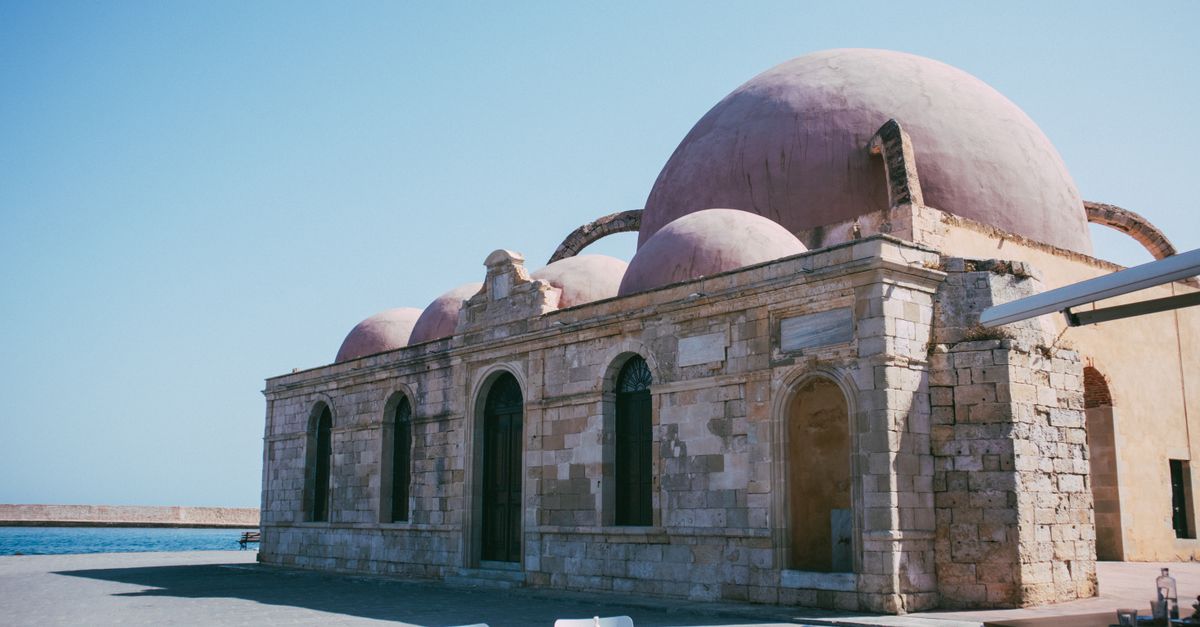
View of a historic Ottoman mosque with domed architecture by the sea.
cityBase

“The strongest base in Crete — a Venetian old town good enough to be a destination on its own.”

Why this, why here

Chania ranks fourth not because the food is weaker — Crete's culinary tradition may be the most coherent in the country — but because it demands a different kind of trip: a car, more days, a separate ferry or flight network from the Cyclades above it. It's the Crete base, placed here to acknowledge that this list ranks by how directly a place serves a food-focused itinerary, not purely by culinary merit. Chania earns its spot through sheer depth — olive oil, wild greens, a diet locals credit with their grandparents' longevity — but it's the one requiring the most commitment to access properly.

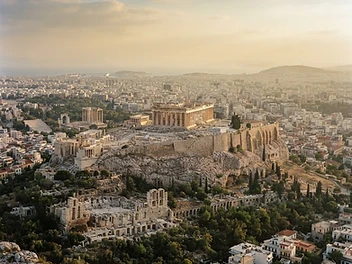
The Acropolis and Parthenon above Athens
cityTrip Anchor

“Don't treat Athens as the airport before the islands — two or three days here genuinely improves most Greece trips.”

Why this, why here

Athens closes the list on purpose, as the come-down and corrective rather than the anchor. It's last because most travelers already pass through regardless of what else they plan, so its job here isn't to compete with Thessaloniki for top billing — it's to change what people do with time they were already going to spend in the city. Athens used to under-deliver on food and coast on location; that's no longer true, and placing it fifth makes the real argument: don't skip it, and don't shortchange it with one rushed taverna meal before a ferry.