The Best Beaches in Greece

Editorial collection

The Best Beaches in Greece

12 min read · 8 places

Eight Different Deals

This isn't a top-ten countdown of Greek beaches — most of those lists just recycle the same six photographs from Instagram geotags. This is a shortlist of distinct propositions, each one answering a different question about what a beach trip in Greece can actually deliver. If you're chasing a single week-long island holiday and want to know which beach experiences are worth rearranging an itinerary for, this is the field guide for that decision, not a census of every good patch of sand in the Aegean and Ionian.

The traveler this serves has already picked an island or two and is deciding how hard to work for a beach day. Some of these require nothing more than a ten-minute walk from a hotel; others mean a ninety-minute drive down a mountain road in western Crete, or a boat trip you have to book the night before. The list assumes you're willing to do at least some of that work, but it also tells you, plainly, when the work isn't worth it — see Navagio, below.

What ties these eight together is that each represents a different idea of what a beach means, geologically and experientially. Sarakiniko is lunar rock, not sand. Elafonissi and Balos are color — pink grain and lagoon turquoise — more than they are swimming. Porto Katsiki and Myrtos are vertical drama, cliffs doing the work the water can't. Navagio is a photograph you've already seen a thousand times, delivered in person at a markup. Plaka and Kolymbithres are the opposite of spectacle: long, swimmable, built for an entire day rather than twenty minutes with a camera.

The order below is not alphabetical, geographic, or a simple ranking of beauty. It's a progression — from the most singular and least conventional, through pure cliff drama, past a cautionary case study, and into the two beaches built for actual use. Read it in sequence once, then raid it by island.

Rock, Not Sand

Sarakiniko opens the list because nothing else on it, or really anywhere else in Greece, looks like it. White volcanic rock, sanded smooth by wind and sea into shapes that read more like sculpture than coastline, with no actual sand anywhere in sight. It's first because it's the least conventional entry and the most unrepeatable; you could stand in front of Sarakiniko for the first time and genuinely not know what country you're in. Everything else on this list has some comparison point somewhere in the Mediterranean. Sarakiniko doesn't.

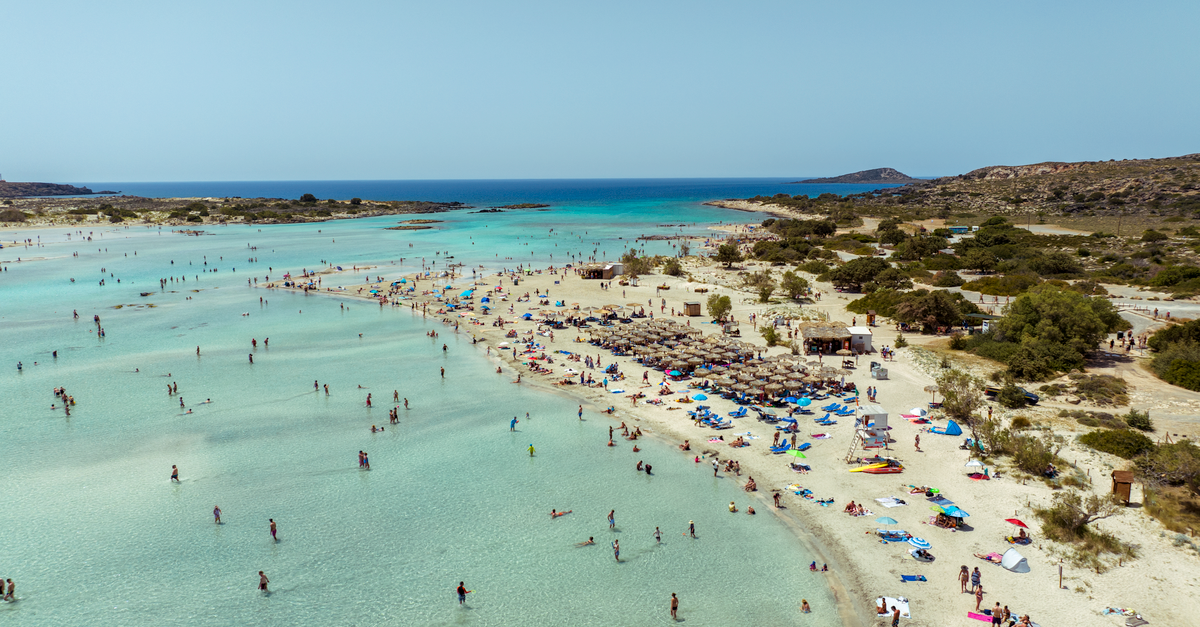
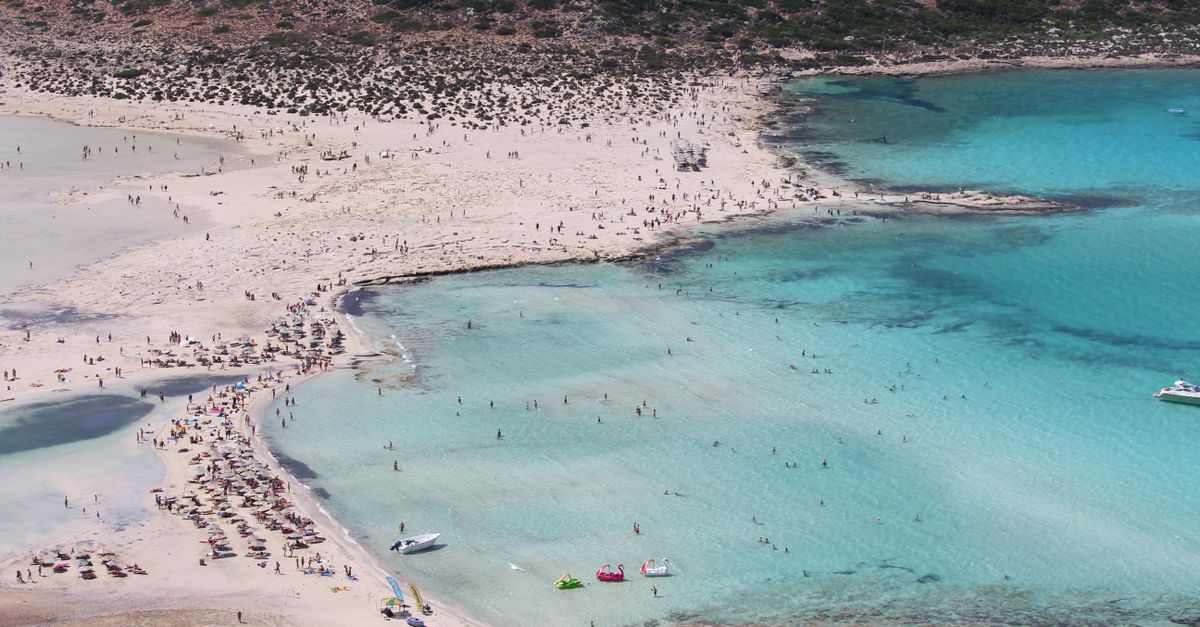
Elafonissi and Balos follow as a pair because both are selling color rather than swimming conditions, and both demand real commitment to reach — Elafonissi across the width of western Crete, Balos via a punishing dirt road or a boat from Kissamos. Elafonissi comes first in the pair because the pink sand is a genuine physical property of the place, visible underfoot and in your hand, not a trick of water depth and sun angle. Balos is a close second: the lagoon is arguably more dramatic as a composition shot from the viewpoint above, but the beach itself is shallower, hotter, and more crowded once you're standing in it rather than photographing it from the ridge.

Putting these three before the cliff beaches isn't a swimmability ranking — it's a rarity ranking. You can find a dramatic cliff beach in Albania, Croatia, even parts of Italy. You cannot find Sarakiniko's rock or Elafonissi's actual pink sand anywhere else in the country, arguably anywhere else in Europe. The list front-loads uniqueness, then moves into spectacle that's merely excellent rather than singular.

Cliffs Over Water

Porto Katsiki and Myrtos are the pivot point of the list — the moment it stops being about geological novelty and starts being about pure visual drama delivered at a dependable location, no permits or local knowledge required. Both are Ionian, both are a white crescent of sand or pebble under a sheer limestone wall, and both are reachable by a flight of stairs or a switchback road rather than a boat charter. They're grouped together because they're functionally the same beach with different coastlines attached: Porto Katsiki on Lefkada, Myrtos on Kefalonia, separated by water but not by concept.

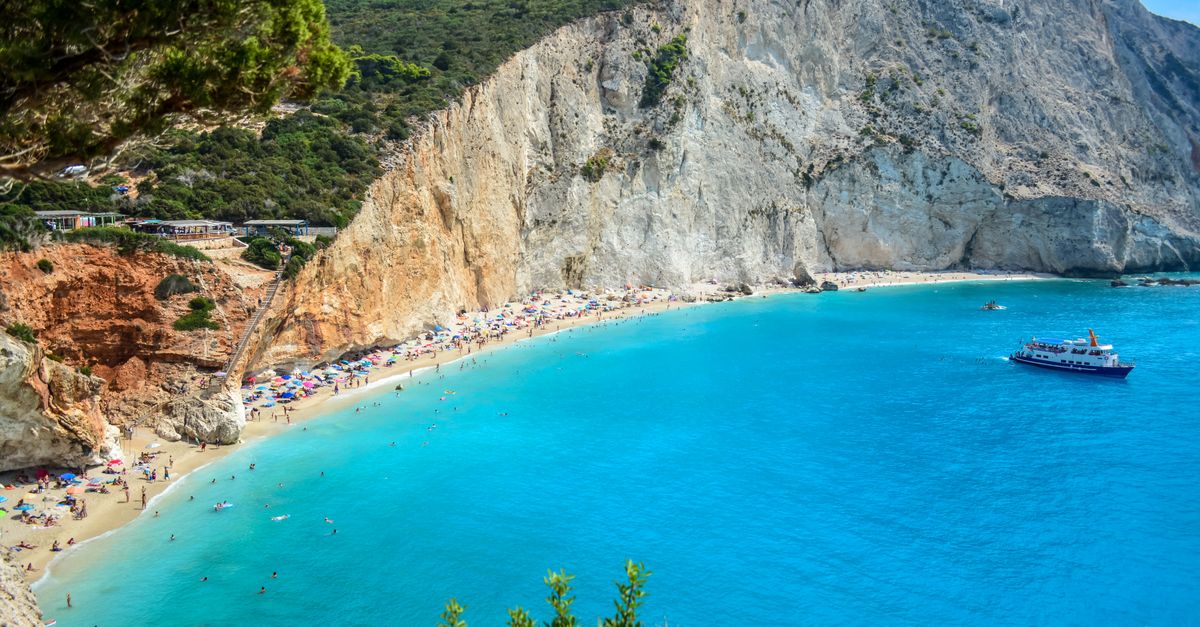
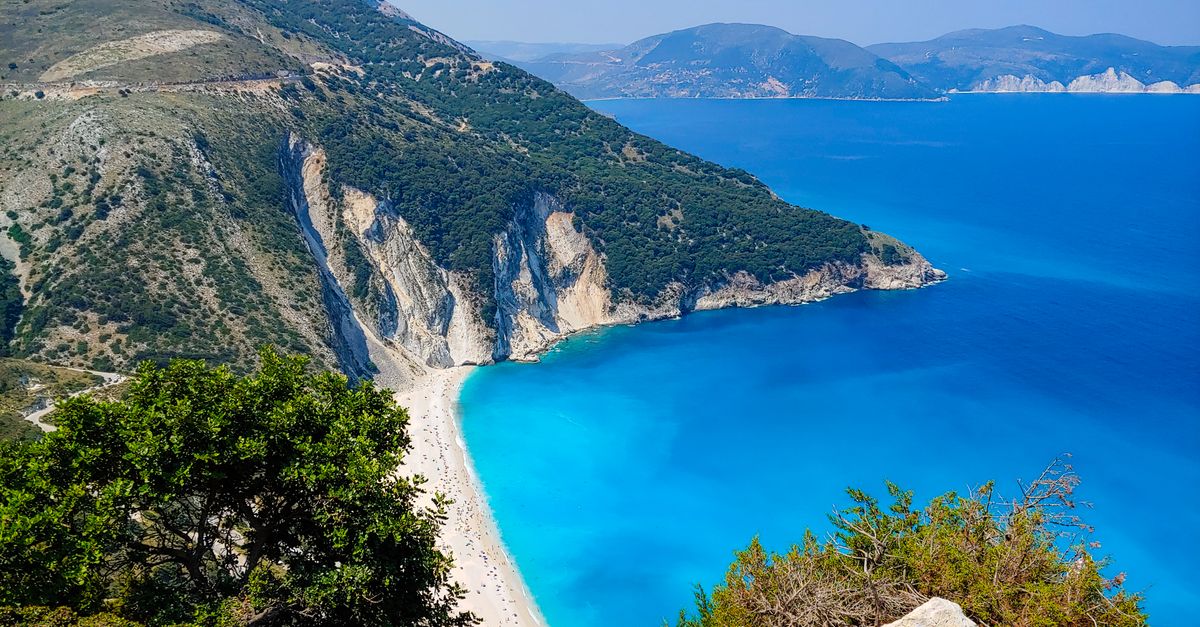
Porto Katsiki edges ahead in the order because the cliff-to-beach ratio is more extreme — the descent steeper, the strip of sand narrower, the sense of being swallowed by the rock more total. Myrtos is the slightly more comfortable version: a longer beach, an easier approach, water that's arguably even better for actual swimming because the bay is wider and the current gentler. If Porto Katsiki is the postcard taken at a dramatic angle, Myrtos is the same postcard with room to actually lay a towel down.

Their position in the middle of the list, after the geological outliers and before Navagio, is deliberate. They're the most purely photogenic beaches that also function as real beach days — you can swim at both, unlike at Sarakiniko, and you don't need the pink-sand or lagoon gimmick to justify the trip. They're the strongest all-around entries on the list. If you had to build a trip around only two beaches in this collection, pick these two before anything else, Sarakiniko included.

The Navagio Warning

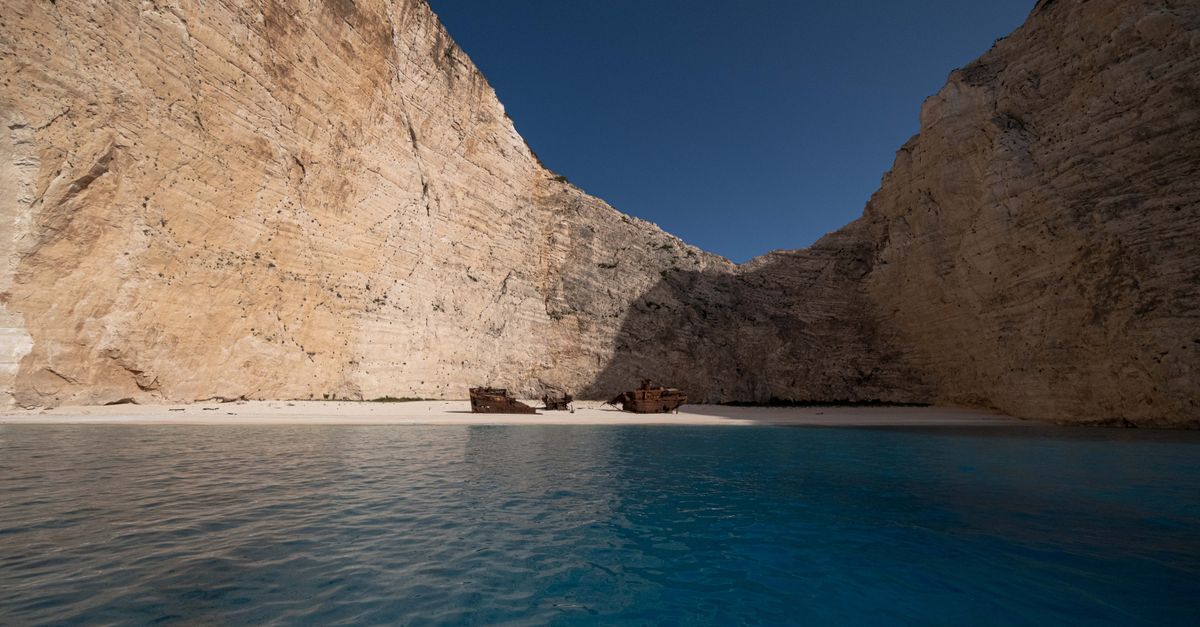
Navagio sits sixth, deliberately after the beaches that deliver on their promise and right before the two that are built for actual use, because it's the cautionary tale of the collection. The shipwreck cove is one of the most reproduced images of Greece — you've seen it on posters, mugs, someone's profile picture — and from the clifftop viewpoint on Zakynthos it earns every bit of that reputation. Get down to the actual sand, though, and the experience collapses into a procession of tour boats dropping fifty people at a time onto a beach with no shade, no amenities, and a schedule dictated entirely by boat operators rather than you.

It's included because leaving it off the list entirely would be dishonest — it's one of the most famous beaches in the country and this is a field guide, not a campaign against popularity. But it's ranked where it is, below five beaches that are either more distinctive or more usable, as a corrective. Myrtos and Porto Katsiki are more dramatic and you can actually enjoy being there for three hours. Navagio is best experienced as a twenty-minute viewpoint stop on a Zakynthos road trip, not a dedicated beach day, and the list's placement is a quiet instruction to treat it that way.

This is also the point in the list where the whole premise shifts. Everything before Navagio has been about looking at something extraordinary. Everything after it is about actually living on a beach for a day — which is the thing Navagio, for all its fame, cannot offer you.

What To Actually Swim

Plaka and Kolymbithres close the list because they're the comedown in the best sense — the beaches you go to not for a single remarkable photograph but for an entire day of actually swimming, reading, eating lunch under a tamarisk tree, and not fighting a boat schedule or a parking lot. Plaka, on Naxos, is one of the longest stretches of genuinely good swimming sand in the Cyclades, flat and shallow enough for anyone, long enough that you can walk away from the sunbed rows and still find a stretch to yourself. Kolymbithres, on Paros, trades Plaka's length for texture: granite boulders weathered into coves and sculpted pools, a beach with more personality per square meter than almost anywhere else on this list, minus the crowds that come with Sarakiniko-level fame.

They're last not because they're the weakest entries — they might be the most reliably enjoyable of the eight — but because they're the least urgent. You don't need to reroute a trip to see them the way you might for Balos or Elafonissi; you simply need to be on Naxos or Paros, which a huge number of Cyclades itineraries already include. The list ends on usability rather than spectacle, which is the honest note to end on: spectacle is what gets a beach onto a shortlist, but usability is what gets you to actually enjoy the day.

If you're cutting this list down for a shorter trip, protect Sarakiniko and Myrtos first — one for rarity, one for the best balance of drama and swimmability — and cut Navagio without guilt; the viewpoint photo exists online in better light than you'll get in person. Elafonissi and Balos should only make the cut if you're already committed to western Crete, since neither justifies a dedicated flight or ferry on its own.

Use this list the way it's built: as a sequence of increasingly practical questions. Start by asking whether you want to see something genuinely unrepeatable (Sarakiniko, Elafonissi, Balos). Then ask whether you want drama you can also swim in (Porto Katsiki, Myrtos). Decide for yourself whether Navagio's view is worth the boat queue. And wherever you land, save at least one day for Plaka or Kolymbithres — the beach day that actually works is still the point of a beach trip.
The list, in order

Each place, with the editorial reason it is here and in this position.

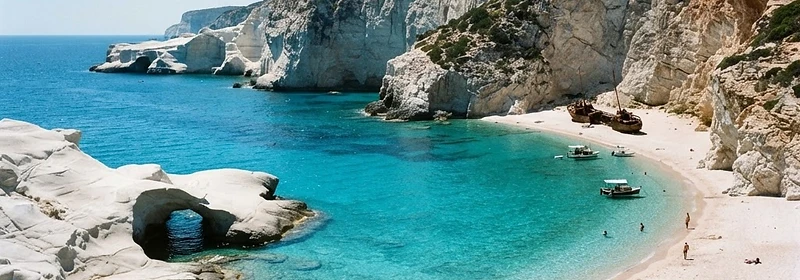
Smooth white volcanic rock above the sea at Sarakiniko, Milos
beachEssential

“Essential if you're on Milos — a lunar landscape of white volcanic rock bent into smooth curves above the sea, unlike any beach in Greece.”

Why this, why here

Sarakiniko opens the list because it has no analog anywhere else in Greece, or arguably in Europe — volcanic rock sanded into smooth white curves with no actual sand in sight. It's the anchor, not because it's the most comfortable beach to spend a day at (there's little shade, no real swimming beach, just rock shelves to dive from) but because it's the least substitutable. Every other beach here has some comparison point elsewhere in the Mediterranean; Sarakiniko doesn't. Putting it first signals the organizing principle: uniqueness before comfort, novelty before practicality. If you only see one beach on Milos, and arguably one beach on this whole list, this is it.

Discover the pristine sands and turquoise waters of Elafonissi Beach, Crete, Greece, from above.
beachRecommended

“Recommended — a pink-sand lagoon so shallow and turquoise it looks artificial; worth the long drive across western Crete.”

Why this, why here

Elafonissi follows Sarakiniko because it's the second entry in the collection's uniqueness tier — pink sand that's a genuine physical property underfoot, not a trick of light or water. It sits second rather than first because getting there costs more: a long drive across western Crete, crowds by midmorning, and a beach that's more about color than swimming comfort. It's recommended rather than essential because the payoff depends on commitment — you have to build a day around the drive. Placed right after Sarakiniko, it continues the same argument: these early entries aren't the most practical beaches in Greece, they're the most singular, and singular is worth the detour exactly once.

The shallow turquoise lagoon at Balos, western Crete
beachRecommended

“Recommended — one of the most photographed beaches in Greece, and worth the effort if you're already in western Crete.”

Why this, why here

Balos closes out the opening trio of look-don't-just-swim beaches, and it ranks third rather than second because the lagoon is better as a composition from the viewpoint above than as an experience once you're standing in the shallow, crowded water below. It still earns its place — the color is real and the setting is unmatched in western Crete — but it's the weakest of the three alien-landscape entries, which is why it closes the group rather than opening it. If you're already making the Balos detour for the view, factor in that the actual beach time is secondary to the hike or boat ride that gets you there.

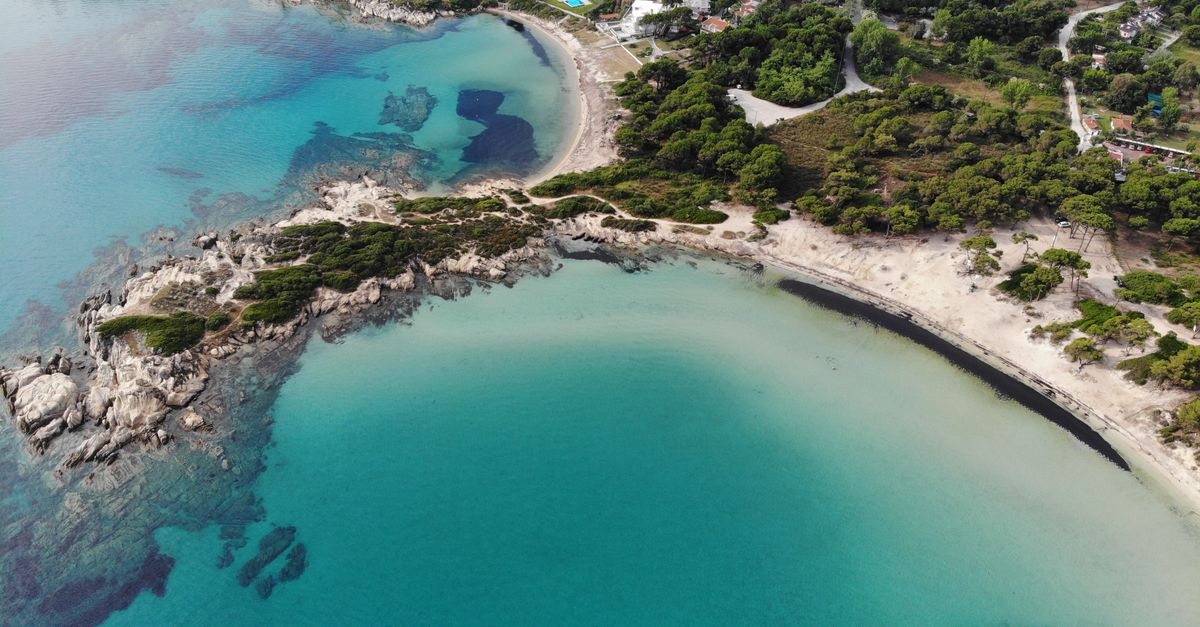
Aerial view of the stunning Porto Katsiki beach with turquoise waters and cliffs in Lefkada, Greece.
beachRecommended

“Recommended — one of the most dramatic Ionian beaches: a strip of white sand at the foot of a cliff.”

Why this, why here

Porto Katsiki marks the pivot in the list, where geological novelty gives way to pure cliff drama you can actually swim beneath. It ranks ahead of Myrtos because the proportions are more extreme — a narrower strip of sand, a steeper wall, a more total sense of being dwarfed by the rock. This is the point where the collection stops asking whether you've seen anything like this before and starts asking whether the beach is actually good to spend time at, and Porto Katsiki answers yes on both counts. It's grouped with Myrtos as the strongest all-around pairing on the list — the two to protect first if you're cutting the trip down.

Stunning aerial view of Myrtos Beach with turquoise waters and rugged cliffs on Kefalonia Island, Greece.
beachRecommended

“Recommended — the most photographed beach in the Ionian, a white crescent below towering cliffs.”

Why this, why here

Myrtos sits just behind Porto Katsiki because it trades a little extremity for comfort — a longer beach, gentler water, an easier approach — while matching it almost photograph for photograph. Together they're the most reliable pairing in the collection: dramatic enough to justify the drive, swimmable enough to justify staying all day. Myrtos's position, second in the cliff-drama pair rather than first, reflects a small preference for Porto Katsiki's rawness, but the gap is narrow. If a shorter trip only has room for one Ionian beach rather than two islands, Myrtos is the safer, more complete choice — the one you won't regret giving a full afternoon.

Stunning view of Navagio Beach with its famous shipwreck and turquoise waters in Greece.
beachOptional

“Optional — the famous shipwreck cove is stunning from above, but the beach itself is a crowded, boat-herding experience.”

Why this, why here

Navagio sits sixth on purpose — directly after the five beaches that deliver on their reputation and right before the two built for actually living on a beach for a day. It's the cautionary entry: the clifftop photograph is genuinely one of the best in Greece, but the cove itself is a boat-scheduled procession with no shade and no real control over your own time. Leaving it off entirely would be dishonest given its fame, so it's here, ranked below more distinctive and more usable beaches, with the position itself serving as the verdict — see the viewpoint, skip the forced beach landing unless the boat queue genuinely doesn't bother you.

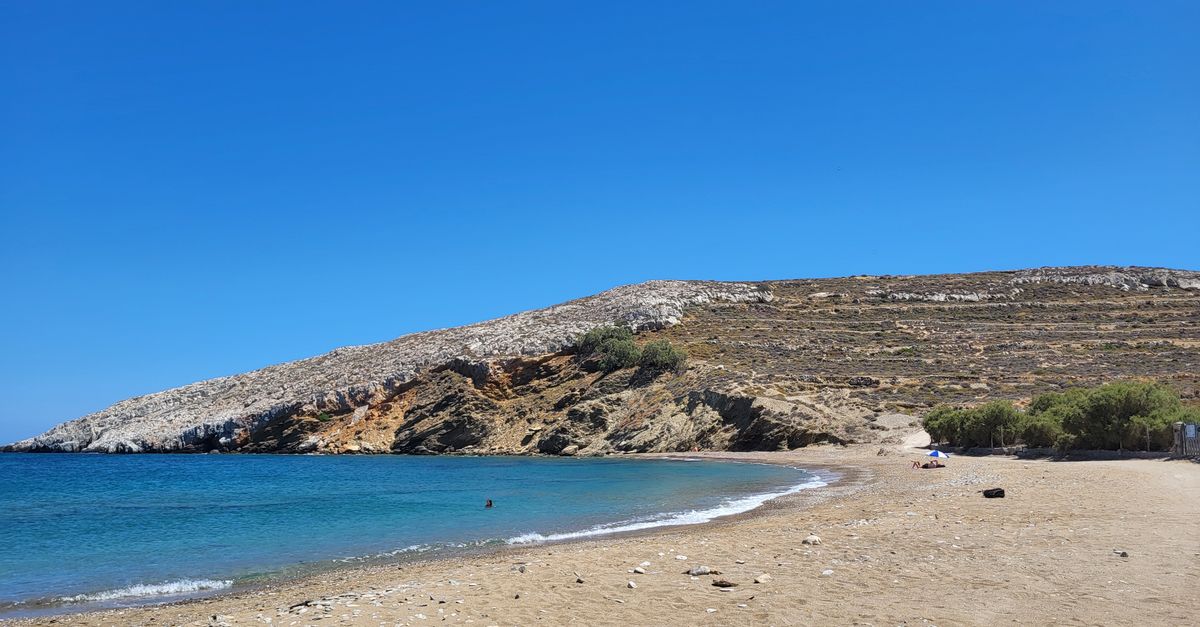
Idyllic beach view in Karavostasis, Folegandros, Greece with clear blue waters and rugged cliffs.
beachRecommended

“Recommended — one of the longest, easiest sandy beaches in the Cyclades, and a reason to base in Naxos.”

Why this, why here

Plaka opens the closing pair and marks the list's shift from spectacle to usability — a long, flat, genuinely swimmable stretch of sand on Naxos that rewards an entire day rather than twenty minutes with a camera. It ranks ahead of Kolymbithres because it's the more universal recommendation: easier to reach, longer, suited to nearly any traveler rather than specifically those drawn to texture and rock formations. After five beaches built around looking at something remarkable, Plaka is the reminder that the simplest format — long sand, shallow water, room to spread out — is still often the best beach day available in the Cyclades.

Granite boulders forming sheltered sea pools at Kolymbithres, Paros
beachRecommended

“Recommended — smooth granite boulders forming sculpted sea pools, the most distinctive beach on Paros.”

Why this, why here

Kolymbithres closes the list as the comedown with the most personality — granite boulders weathered into coves and pools on Paros, a beach built on texture rather than length or color. It's last not because it's the weakest entry but because it's the least urgent: you don't reroute a trip for it, you simply enjoy it if you're already on Paros, which plenty of Cyclades itineraries already include. Ending here rather than on Navagio's crowds or Sarakiniko's novelty is deliberate — the list wants to leave you with a beach you'd actually want to return to tomorrow, not just one you photographed once and moved on from.