Ancient Sites Worth Planning Around

Editorial collection

Ancient Sites Worth Planning Around

11 min read · 5 places

The Trip This Serves

This list isn't for travelers doing Greece as a seven-day island hop with one afternoon in Athens bolted onto the front. It's for people building an itinerary around history on purpose — renting a car, reading a chapter of Herodotus or a Mycenaean primer before they land, accepting that some days will be entirely consumed by one site and a long drive. The traveler this serves wants the Acropolis to be the reason they're in Athens, not a stop between the hotel and dinner reservations.

That means accepting real logistics. Athens to Delphi is roughly two and a half hours each way, more with traffic out of the city. Delphi to Meteora is another two and a half to three hours north. A Peloponnese loop that includes Mycenae usually also means Nafplio, Epidaurus, and a night somewhere that isn't Athens. Akrotiri means a ferry or flight to Santorini and then competing with every other visitor who showed up for the caldera and stumbled onto the ruins almost by accident. None of this is incidental — it's the cost of admission for sites substantial enough to matter.

This isn't the guide for someone who wants Greece reduced to Santorini sunsets and a Mykonos boat day. If that's the trip, skip straight to Akrotiri and skip everything else here. But if the traveler wants to understand what they're standing on — why the Parthenon's columns bulge slightly outward, why pilgrims climbed to Delphi to ask a priestess in a trance about the future, why monks hauled building stone up sheer rock towers by rope and net — this list gives them the five places where that understanding is unavoidable, not optional.

The common traveler profile: patient, willing to arrive early (all five sites are brutal by midday, either from heat or crowds or both), and willing to spend money on a guide or at minimum a guidebook rather than winging it with a wall placard. These sites don't explain themselves. They reward someone who did the reading.

What These Sites Share

Every site here is large enough to reshape a day, not fill a gap in one. You don't "swing by" the Acropolis on the way to lunch. You don't see Meteora in forty-five minutes. Mycenae's Lion Gate and beehive tombs take a full morning to walk properly, and Akrotiri's covered excavation, despite being compact compared to the others, demands slow attention to streets and frescoes most visitors rush past in twenty minutes flat. Scale is the first filter. If a ruin can be seen in under an hour and understood in less, it didn't make this list.

The second shared trait is that each site rewards prior knowledge disproportionately. A tourist who shows up to Delphi without knowing what an oracle was, or why Apollo mattered more here than almost anywhere else in the Greek world, will see a hillside of broken columns and nothing more. A tourist who understands the Pythia's role, the Sacred Way, and why city-states funded elaborate treasuries here to outdo each other walks away with something closer to the actual significance of the place. These sites punish laziness and reward preparation more severely than almost anywhere else in the country.

Where they differ matters just as much. The Acropolis is civic and political — a fortified hill turned into a monument to Athenian democracy and military confidence after the Persian Wars. Delphi is religious and pan-Hellenic, neutral ground where rival city-states competed through architecture rather than armies. Meteora is monastic and geological, a Byzantine answer to isolation built into sandstone pillars that look improbable even standing beneath them. Mycenae is Bronze Age and martial, predating classical Greece by nearly a thousand years, the world of Agamemnon and fortified palaces rather than temples and democracy. Akrotiri is domestic and commercial, a Minoan-era trading town buried by the Thera eruption, offering streets, drainage systems, and multi-story buildings instead of temples at all.

Together they span roughly two thousand years of history and five entirely different reasons humans built monumentally in this part of the world — worship, war, governance, trade, and retreat. That range is the actual argument for including all five rather than picking one or two "representative" ruins and calling it done.
Why This Order

The order isn't a strict ranking of importance — all five are rated Essential except Akrotiri, which is Recommended — but it does track how an intentional Greece itinerary actually moves, and secondarily, it moves backward through time the deeper you go.

The Acropolis comes first because it's the natural entry point for almost every Greece trip: most travelers land in Athens, and the Acropolis is the single site in the city that justifies building an extra day around it rather than squeezing it into an afternoon. Delphi follows because it's the logical next drive north from Athens, and because visiting it after the Acropolis gives you a direct comparison — civic Athens versus pan-Hellenic, oracle-driven Delphi — that sharpens both experiences. Meteora caps the northern loop: it's the payoff site, the one that exceeds its photographs, and putting it third means travelers earn it after two demanding classical sites rather than front-loading the most visually dramatic stop and deflating everything after.

Mycenae sits fourth because it belongs to a different branch of the trip entirely — the Peloponnese, not the Athens–Delphi–Meteora corridor — and because chronologically it drags the traveler backward a thousand years, from classical Greece into the Bronze Age. That's deliberate. By the time you reach Mycenae, you've already absorbed what classical and Byzantine Greece looked like; seeing the earliest layer last within the mainland sequence makes its age land harder, not softer.

Akrotiri closes the list because it requires leaving the mainland altogether, it's a Recommended rather than Essential stop, and it functions as a quiet rhyme with Mycenae: another Bronze Age site, another civilization frozen rather than built upon, except preserved by volcanic ash instead of time and reuse. Ending on Akrotiri means ending on the site most visitors wouldn't think to prioritize on an island built around caldera views and sunset bars — which is exactly the point of closing the list there.

What To Cut

If the itinerary is short, Acropolis and Delphi are non-negotiable for any mainland Greece trip — cut neither. They're the two sites where skipping them means skipping the actual spine of why Athens and central Greece matter historically, and both are accessible without extreme logistics.

Meteora is the first candidate to cut only if the trip doesn't already involve heading north, or if the traveler has fewer than nine or ten days total. It's not a quick add-on; it demands its own overnight in Kalambaka or Kastraki. But if the itinerary is already running Athens to Delphi, continuing to Meteora rather than looping back early is almost always worth the extra two days, given how rarely a site this photographed actually earns the reputation in person.

Mycenae is the one to cut if the Peloponnese isn't on the route at all — it's not worth a special detour on its own, only as part of a loop through Nafplio and Epidaurus. Trying to justify a standalone trip to Mycenae without that pairing wastes a day that could go toward Delphi or Meteora instead.

Akrotiri is the easiest cut of the five, and that's reflected in its Recommended rather than Essential rating. If Santorini is purely a beach-and-sunset stop with two nights and no interest in history, skip it without guilt. But if there's already a full day on the island with nothing booked, Akrotiri is the one addition that changes what Santorini means — proof the island was inhabited and sophisticated fifteen hundred years before the caldera view existed.

How To Use This List

Treat this as a skeleton, not a complete itinerary. These five sites are the anchors around which smaller stops — a museum here, a village lunch there — get scheduled, not the other way around. Build driving days and overnight stays around reaching each one at the right time of day, which usually means arriving at opening rather than mid-morning, especially at the Acropolis and Akrotiri where crowds and heat both peak by noon.

Book ahead where it matters. The Acropolis and Akrotiri both benefit from timed-entry tickets purchased in advance, particularly in high season. Delphi, Meteora, and Mycenae rarely require advance booking, but all three benefit from a guide or a dense guidebook chapter read the night before — these are not sites where an audio guide at the gate substitutes for arriving with context already in hand.

Use the order as a rough route, not a rigid rule. A traveler doing Athens, then north to Delphi and Meteora, then back south through the Peloponnese to Mycenae, then out to Santorini for Akrotiri is tracing something close to how many well-built Greece itineraries already move. But if the trip runs in reverse, or skips the north entirely for an Peloponnese-and-islands trip, the sites still function independently — this is a short list of five, not a numbered sequence that collapses if reordered.

Finally: don't let this list stand in for the rest of Greece. These are the five sites substantial enough to plan days around, not the only five worth seeing. Everything else in the country — smaller sanctuaries, museums, lesser ruins — gets slotted in around these anchors, filling the gaps between them rather than competing for the same kind of attention.

The list, in order

Each place, with the editorial reason it is here and in this position.

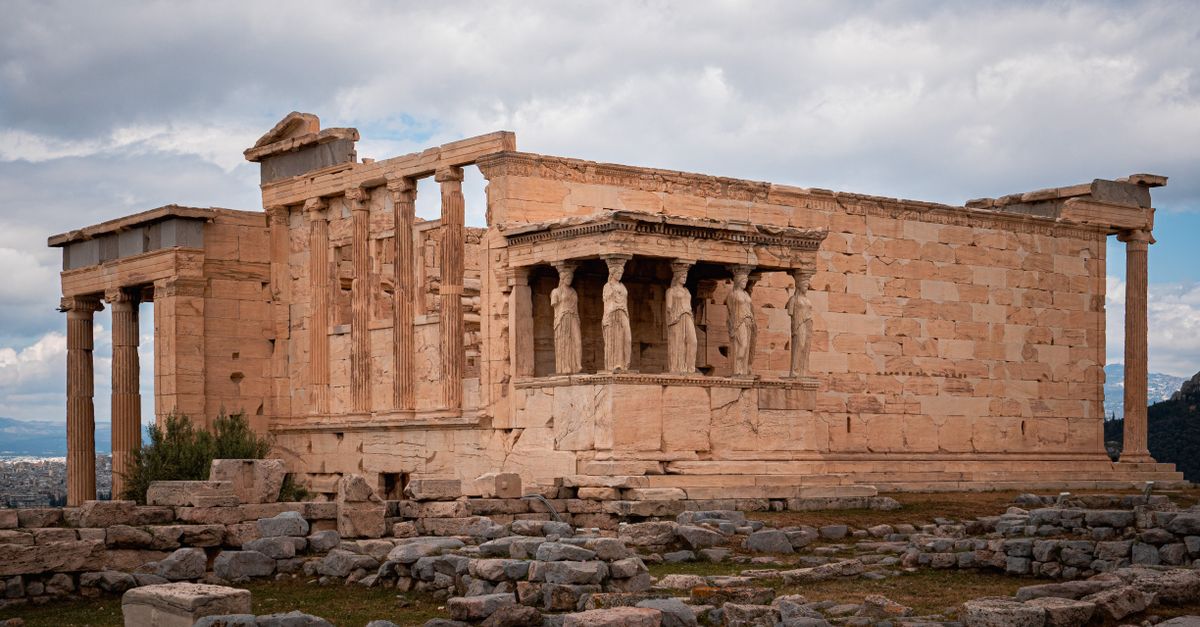
View of the ancient Erechtheion Temple with its iconic Caryatids, located at the Acropolis in Athens, Greece.
archaeological siteEssential

“Essential — the one ancient site in Greece that belongs on almost every trip through Athens.”

Why this, why here

First on the list because it's first on almost every real Greece itinerary — the Acropolis is the site that converts a layover city into a destination worth an extra day. It's here as the entry point, the place that establishes what "ancient Greece" actually looked like in stone before the traveler goes anywhere else. Putting it first also sets the comparison point for everything that follows: civic, political, classical Athens against which Delphi's religious authority, Meteora's monastic isolation, and Mycenae's older, rougher Bronze Age world will all read differently. Skip this and the rest of the list loses its baseline. It's not negotiable, and it shouldn't be rushed into an afternoon between museum visits.

Explore the majestic ruins of Delphi's Temple of Apollo, a UNESCO World Heritage Site.
archaeological siteEssential

“Essential — worth the detour even for travelers who think they've already seen enough ancient ruins.”

Why this, why here

Second because it's the natural next stop north from Athens, and because it needs the Acropolis as a reference point to land properly. Delphi earns its Essential rating specifically for travelers who think they've already seen enough columns and courtyards — it isn't about the architecture alone, it's about understanding why city-states funded treasuries here to out-compete rivals, and why a trance-state priestess shaped political decisions across the ancient world. Positioned after Athens, it reads as the religious counterpart to the Acropolis's civic weight. Positioned before Meteora, it sets up the physical and tonal climb — geographically and historically — toward the trip's visual peak.

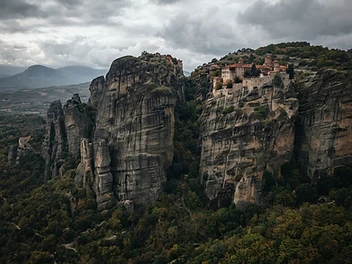
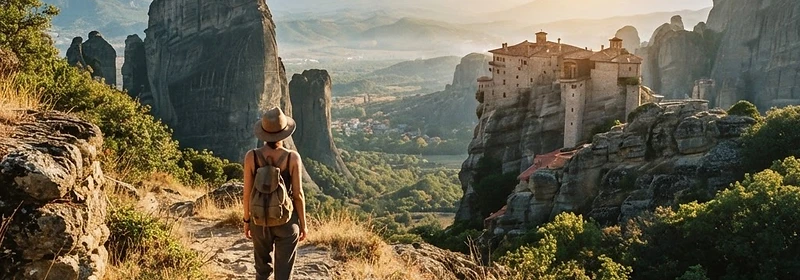
Meteora monasteries on sandstone rock pinnacles
monasteryEssential

“Essential — one of the few places in Greece that genuinely exceeds its photographs.”

Why this, why here

Third, and deliberately placed as the payoff after two demanding classical sites rather than front-loaded for easy photographs. Meteora earns Essential status for a rare reason on this list: it's one of the few places in Greece that exceeds its own photographs, and arriving here after the Acropolis and Delphi means the traveler has already built up historical stamina before confronting something that's more geological spectacle than archaeological site. It requires its own overnight stay and shouldn't be squeezed into a day trip. In the sequence, it functions as the climax of the mainland northern loop — the site everything before it was building toward.

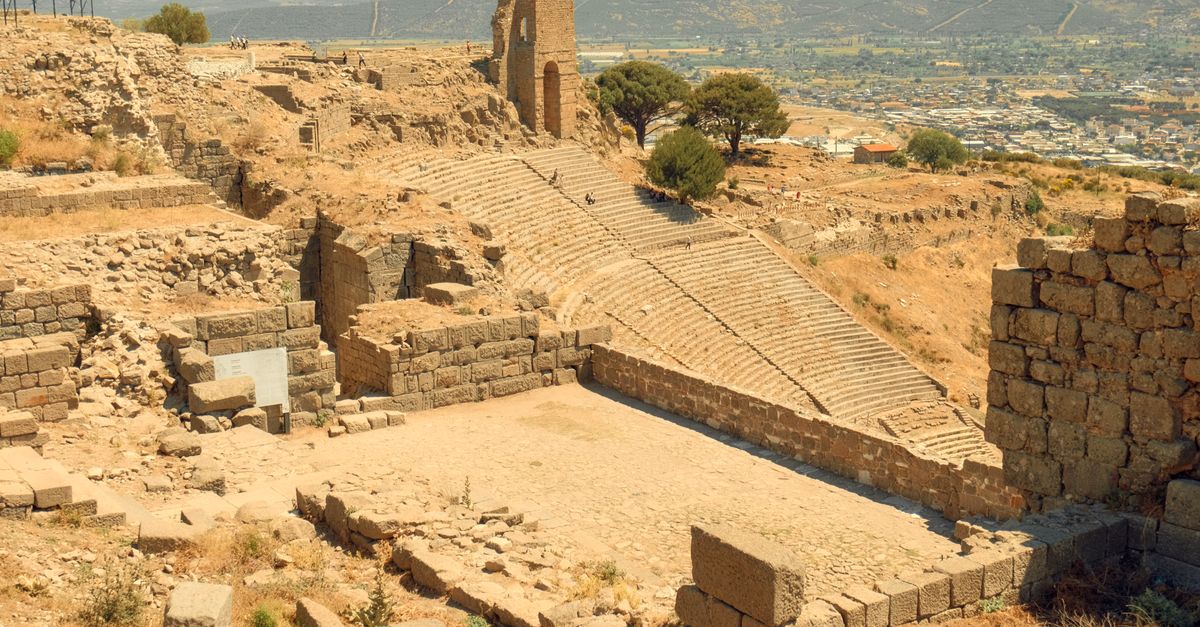
Ancient theater ruins in İzmir, Türkiye showcasing historical architecture. Perfect for history enthusiasts.
archaeological siteEssential

“Essential for anyone driving the Peloponnese — the earliest great civilization of mainland Greece.”

Why this, why here

Fourth, and intentionally set apart from the Athens–Delphi–Meteora corridor because it belongs to a different branch of any Greece trip: the Peloponnese. Mycenae is included because it's the earliest great civilization on mainland Greece, predating the Acropolis and Delphi by roughly a thousand years, and its position here drags the traveler backward through time just as they're settling into a classical-and-Byzantine mental frame. It's Essential specifically for anyone already driving the Peloponnese loop through Nafplio and Epidaurus — not worth a standalone detour otherwise. Placed fourth, it resets the traveler's sense of scale before the final, older site closes the list.

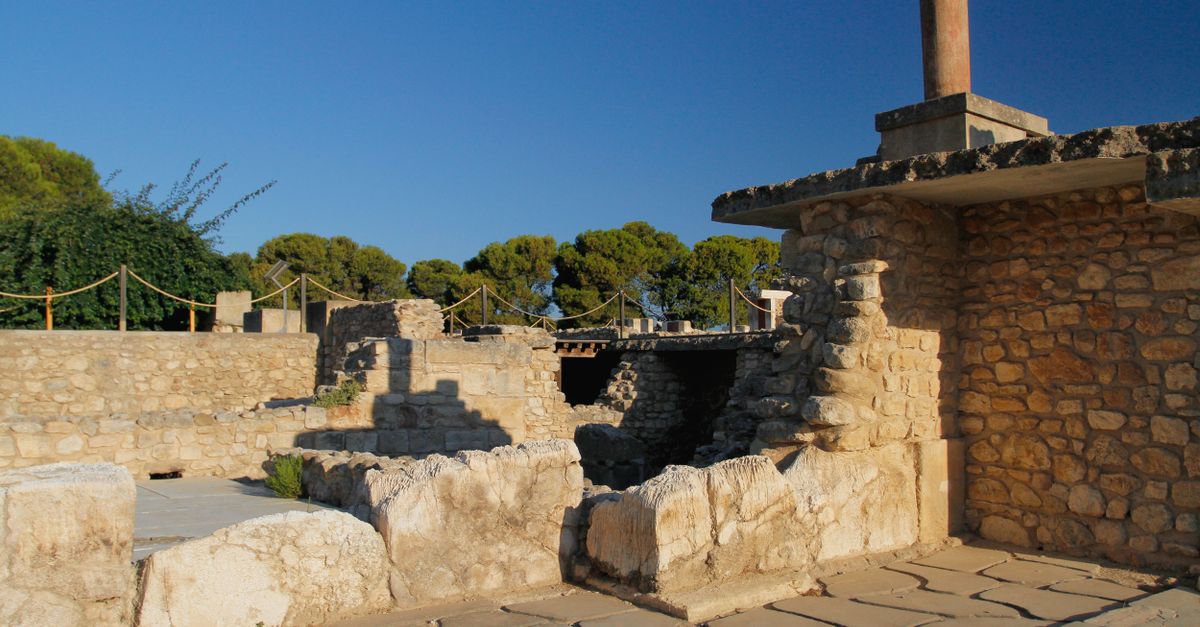
The excavated Minoan settlement of Akrotiri, Santorini
archaeological siteRecommended

“Recommended — the one site on Santorini that adds real depth beyond the caldera view.”

Why this, why here

Last, and the only Recommended rather than Essential entry, Akrotiri is the come-down stop — the site most Santorini visitors wouldn't think to prioritize on an island sold almost entirely on caldera views and sunset bars. It closes the list deliberately: a second Bronze Age site to rhyme with Mycenae, except preserved by volcanic ash rather than time and reuse, offering streets and multi-story buildings instead of palaces and tombs. Its position last reflects both its optional status and its function as a quiet final rebuttal to the idea that Santorini is only a beach destination. Skip it for a pure beach trip; add it if there's a single open day.