Places We'd Visit in September

Editorial collection

Places We'd Visit in September

9 min read · 5 places

Why September Changes the Math

Most Greece lists get written for July and then get recycled for every other month, which is lazy and wrong. By September the meltemi has usually eased, the sea is at its warmest after months of absorbing summer heat, and the crowds that make Oia or the Palace of Knossos unbearable in August have thinned by half. Ferry schedules are still at full summer frequency — Blue Star, SeaJets, and the smaller Dodecanese lines haven't started cutting routes yet — so you get the logistics of peak season without the body count.

That window isn't the same length everywhere, and that's the organizing fact behind this collection. The south — Crete, Rhodes — holds its warmth and its ferry service well into October. The Cyclades, Naxos and Santorini included, cool faster and get windier as the month goes on. Athens doesn't care about any of this; it's a city, not a beach, and September just means better walking weather and restaurant terraces that aren't swamps of humidity.

So this isn't five great places thrown together because they're all "good in September." It's five places chosen because September is specifically when each one shows its best version of itself, and ordered so that version builds into a coherent trip rather than a scattered checklist. A traveler with three weeks can do all five. A traveler with ten days needs to know what to cut and why — and that's addressed directly in each entry, not left for you to guess.

The traveler this serves is someone doing a real Greece trip, not a resort week. You want ruins and swimming, you want at least one island with actual mountain villages and not just a harbor and a hotel strip, and you're willing to take a ferry or a short flight to get it. If you want a single all-inclusive beach for seven days, none of this applies to you, and that's fine — this isn't that list.
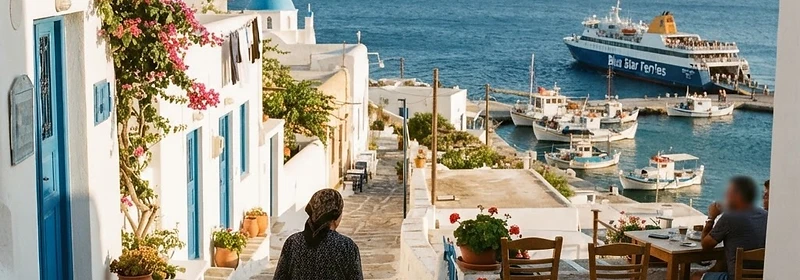
Crete Leads Because It Can Carry the Trip

Crete goes first because it's the only island here that works as a complete trip rather than a stop on one. It's bigger than most Greek départements, with its own mountain range, its own cuisine, a Minoan archaeological record that outclasses anything else in the country, and coastline long enough that Elafonisi in the southwest and Vai in the far east feel like different countries. In September you can still swim at Elafonisi's pink sand in the morning and be eating in a taverna in Anogia, up in the Psiloritis foothills, by evening — a range of experience no other single island offers.

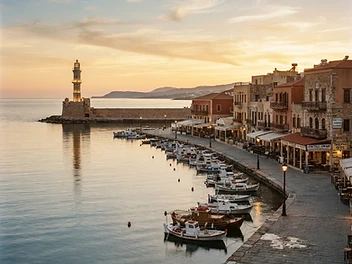
Putting Crete first also sets the tone for everything that follows: this collection rewards travelers who want substance, not just a view. Crete has no single postcard shot driving its reputation the way Santorini does. What it has is Knossos, the Samaria Gorge, Chania's Venetian harbor working as a real town and not a backdrop, and villages like Sfakia that have nothing to prove to anyone. That's a harder sell than a caldera sunset, and that's exactly why it needs to be the anchor and not the afterthought.

September specifically favors Crete because its season runs long and its size absorbs crowds that would wreck a smaller island. Chania in September still has full restaurant hours and warm water through the month, without the July crush at Balos lagoon. If your trip only allows one island, stop reading the rest of this list and go to Crete. Everything after this entry is about what to add once Crete has set your baseline.

Rhodes and Naxos Do Different Jobs

Rhodes comes second for a structural reason: it's the best entry point into the Dodecanese, and the Dodecanese's season runs later into autumn than the Cyclades' does, so it belongs near the front of a September itinerary rather than squeezed at the tail end when ferry options thin out. Its Old Town is the only medieval walled city in Greece you can actually live inside for a few days — not a roped-off ruin but a functioning neighborhood with 600-year-old buildings. Add Lindos's acropolis-over-a-beach combination and the genuinely good family swimming at Prasonisi, and Rhodes earns its reputation as the strongest first-time Dodecanese choice.

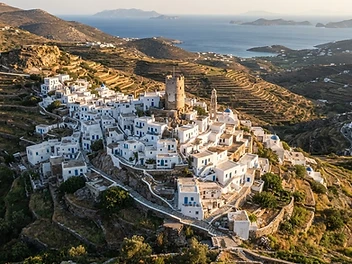
Naxos sits third as the pivot into the Cyclades, and it's here deliberately as the corrective to what most people think a Cycladic island is. Where Santorini sells a view and Mykonos sells a scene, Naxos sells balance: the Portara ruin at the harbor mouth, mountain villages like Apiranthos and Halki that still produce their own cheese and citron liqueur, and beaches at Plaka and Mikri Vigla good enough to rival anything in the Cyclades without the markup. If your trip can only afford one Cycladic island and you're tired of hype, Naxos is the answer.

The two islands aren't interchangeable and shouldn't be read as alternates. Rhodes gives you history at a civic scale — walls, gates, a Grand Master's Palace. Naxos gives you a working island where tourism is one industry among several, not the whole economy. Together they're the proof that this list isn't just chasing famous names; Rhodes and Naxos are both doing real work in the middle of this trip, extending the warm, uncrowded version of Greece that Crete opened and that Santorini, next, will spend down fast.

Santorini Earns Its Spot, Briefly

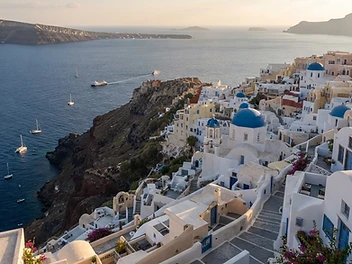
Santorini is fourth, not first, and that placement is the point. The caldera is real — nothing else in Greece produces that specific collision of black cliff, white town, and blue water, and no amount of travel-writer fatigue changes that fact. But Santorini is also the most expensive, most crowded, and most schedule-dependent island on this list, even in September, and it rewards a short, deliberate visit far more than an open-ended one.

Two nights is the right dose for most itineraries. That's enough time for one sunset from Imerovigli instead of the scrum at Oia's castle, one proper dinner in Pyrgos away from the caldera-view markup, and a day trip to Akrotiri's excavated Bronze Age town, which is a serious archaeological site and gets a fraction of the Oia crowd. Beyond two nights, the island's limitations — the lack of real swimming beaches, the tourist-bus density, the prices — start outweighing the view.

Its position in this list is deliberate: it's the spike, not the baseline. After Crete, Rhodes, and Naxos have established what a grounded, well-paced Greece trip looks like, Santorini is the intentional detour into spectacle — worth taking, dangerous to overstay. Travelers who front-load their whole trip around Santorini usually leave disappointed by the actual mechanics of staying there; travelers who treat it as a capped, two-night event tend to call it the best two nights of the whole trip.

Athens Closes, It Doesn't Open

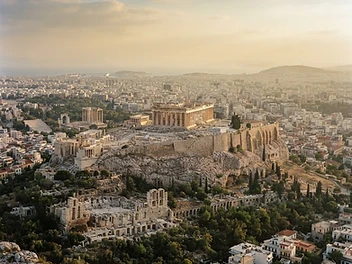
Athens goes last because that's structurally and practically correct, and because most visitors do it backward. The standard mistake is treating Athens as a layover — one rushed day before or after the islands — when two or three full days there measurably improves the rest of the trip. The Acropolis Museum alone needs half a day if you're paying attention, and neighborhoods like Koukaki and Psiri in September, with the heat broken and outdoor tables comfortable again, are better versions of Athens than July ever offers.

Closing with Athens also matches how flights actually work: most international connections route through Athens, so ending there rather than starting there means your last days are a real city with good food and museums, not a jet-lagged blur before you've acclimated. It's the comedown in the best sense — mentally transitioning from beach-and-ruin mode back into a dense, loud, historically stacked capital before you fly home.

If the trip has to shrink, cut in this order: Santorini first, because its value is front-loaded into a short visit that a longer trip doesn't need twice; then Rhodes, if the Dodecanese's later season doesn't matter to your dates; keep Crete and Naxos as the core, and keep Athens at the end regardless of length, even if it's only two days. Use this list as a spine, not a fixed script — swap Naxos for a neighboring Cycladic island if you've already done it, but preserve the shape: grounded anchor first, spectacle in the middle, capital city last.

The list, in order

Each place, with the editorial reason it is here and in this position.

Chania Venetian harbour at golden hour
island groupTrip Anchor

“Crete isn't another island stop — for many travelers it's a whole trip of its own, and the strongest single-island choice in Greece.”

Why this, why here

Crete opens the list because it's not competing with the other four entries — it's the standard they're measured against. Its size, culinary depth, and archaeological weight make it the only island here that functions as a complete trip on its own, and putting it first establishes the baseline this collection is built on: substance over spectacle. September extends its usable season on both coasts, so there's no rush and no compromise. If a traveler can only act on one entry in this list, it's this one. Everything that follows assumes Crete has already set the bar for what a good day in Greece looks like.

The coast and walled city of Rhodes from the air
islandTrip Anchor

“The best Dodecanese island for a first visit — medieval history, family beaches, and a season that runs later than the Cyclades.”

Why this, why here

Rhodes sits second as the gateway into the Dodecanese, placed early because that island group's September season runs longer than the Cyclades' and deserves priority scheduling, not leftover days. Its walled Old Town does something no other entry here does — put you inside functioning medieval architecture rather than a roped-off site. Paired with Lindos and Prasonisi, it gives the trip history and family-grade beaches in one stop. It's the second pillar of the "grounded" half of this list, extending Crete's logic of depth over hype before the itinerary shifts toward the lighter, more scene-driven Cyclades.

Cycladic mountain village in Naxos above the Aegean
islandBase

“One of the strongest all-around Cycladic islands if you want beaches, mountain villages and excellent food without Santorini's spectacle or Mykonos's nightlife focus.”

Why this, why here

Naxos is the pivot point, positioned third as the corrective to whatever assumptions Santorini and Mykonos have built about what a Cycladic island is. It's here because it does everything — beaches, mountain villages, serious local food — at a level that doesn't depend on spectacle or nightlife to justify the visit. Ranked after Crete and Rhodes, it keeps the trip's grounded momentum going into the Cyclades before the itinerary intentionally detours into Santorini's intensity. If a traveler wants exactly one Cycladic island and distrusts hype, Naxos is the answer, and its placement here argues that case directly.

Santorini caldera village with blue domes above the Aegean
islandTrip Anchor

“The caldera really is extraordinary. The crowds and pricing are real too. Two nights is enough for many Greece itineraries.”

Why this, why here

Santorini is fourth deliberately, not reluctantly. It's the spike in this itinerary — the one entry built around a view rather than a place to live in for days — and it's positioned after three grounded, substantial stops so its spectacle reads as a reward, not the whole trip. The two-night cap referenced in its verdict is the real argument for its rank: long enough for the caldera and Akrotiri, short enough to dodge the cost and crowd problems that come with overstaying. It's the first entry to cut if the trip shortens, precisely because its value doesn't scale with extra time.

The Acropolis and Parthenon above Athens
cityTrip Anchor

“Don't treat Athens as the airport before the islands — two or three days here genuinely improves most Greece trips.”

Why this, why here

Athens closes the list because that's where it actually belongs in a real itinerary, not as the rushed bookend most trips make it. Its position matches how international flights route through the city and argues for ending there rather than starting there — two or three unhurried days before departure instead of a jet-lagged day before the islands. It's the comedown: dense, historical, and food-forward rather than beach-paced, and September's broken heat makes its outdoor neighborhoods genuinely livable. Regardless of how much else gets cut from a shorter trip, this entry stays fixed at the end.